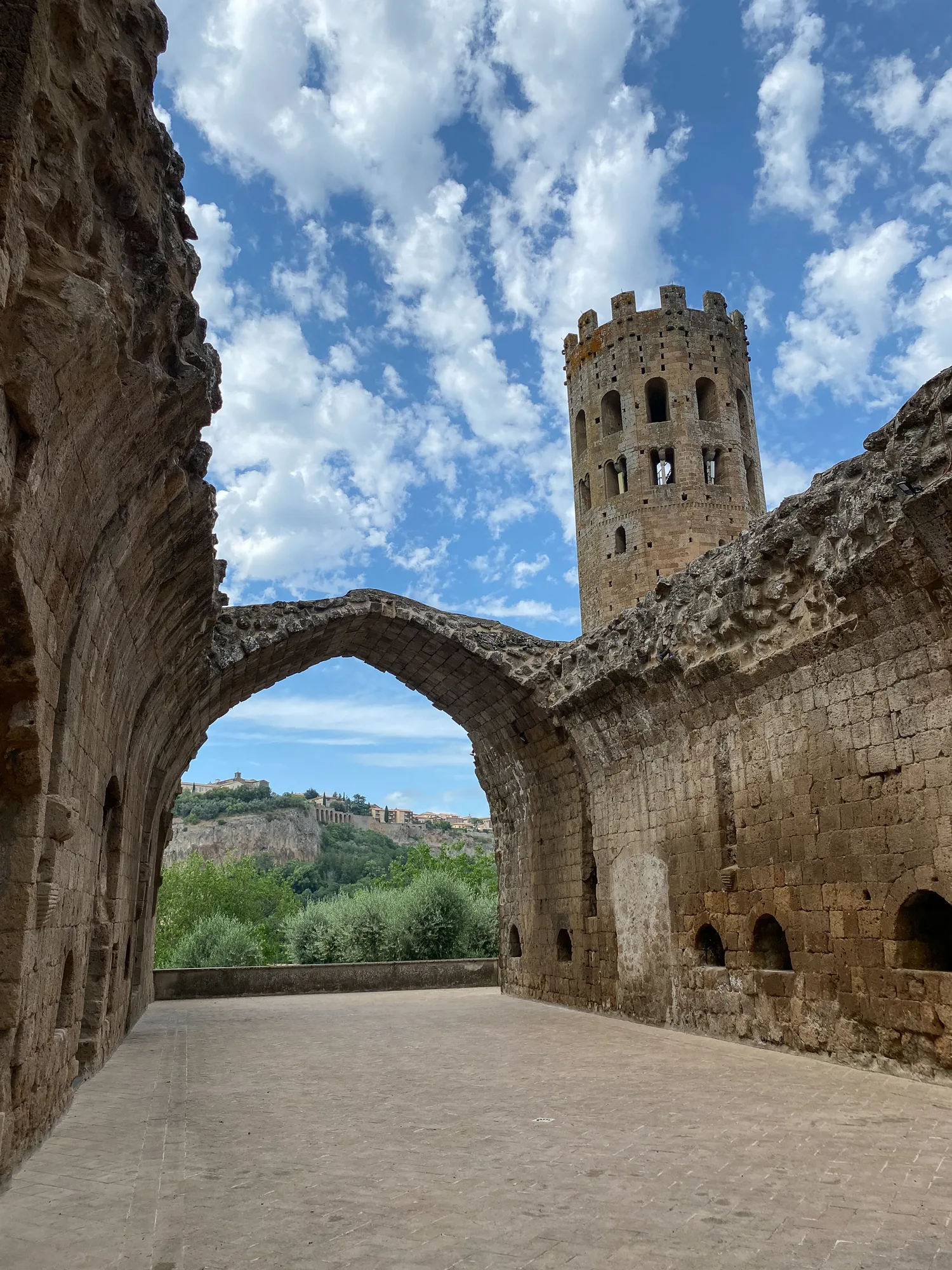

On the way from Tuscany to Rome, Pokin found us somewhere to stay that was exactly Bob’s speed.
La Badia di Orvieto. A 12th-century Benedictine abbey, converted into a hotel. One of the oldest hotels in Italy. Bob used to work as a chaplain, so staying in an actual abbey was basically a professional field trip for him.
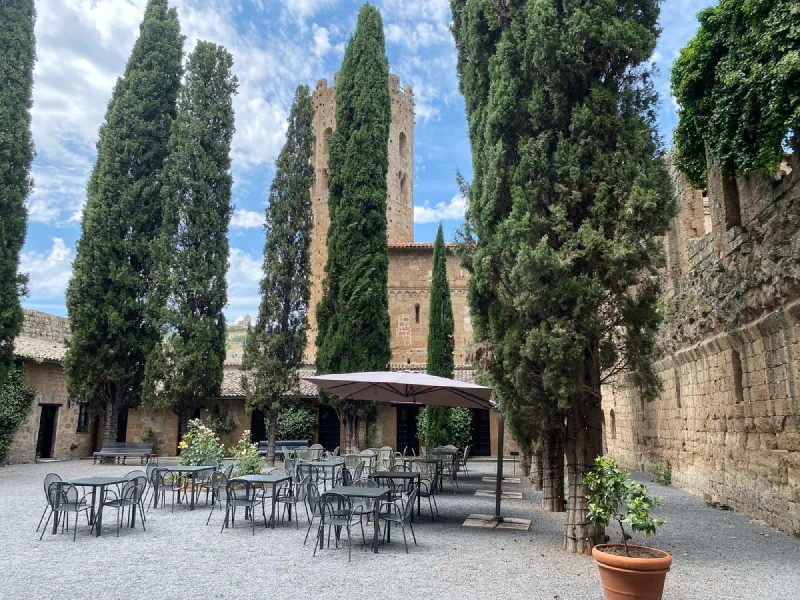
The abbey was founded around 1100 by Benedictine monks and has been through the usual Italian gauntlet of centuries — built, abandoned, fought over, rebuilt, abandoned again, eventually converted into a hotel by someone who understood that tourists will pay good money to sleep where monks used to pray.
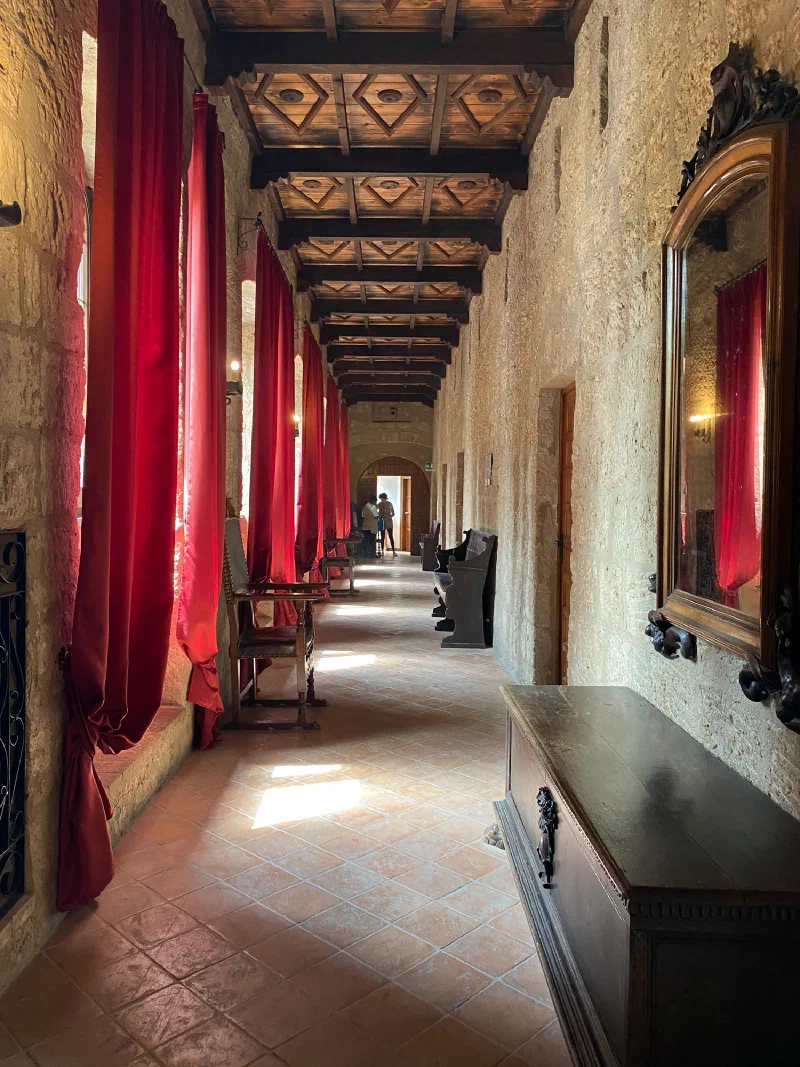
The inside is all rough stone walls, antique furniture, and the kind of coffered ceilings that make you wonder how many people it took to carve all that by hand. The rooms used to be monks’ cells, which sounds grim until you see the view from the window.
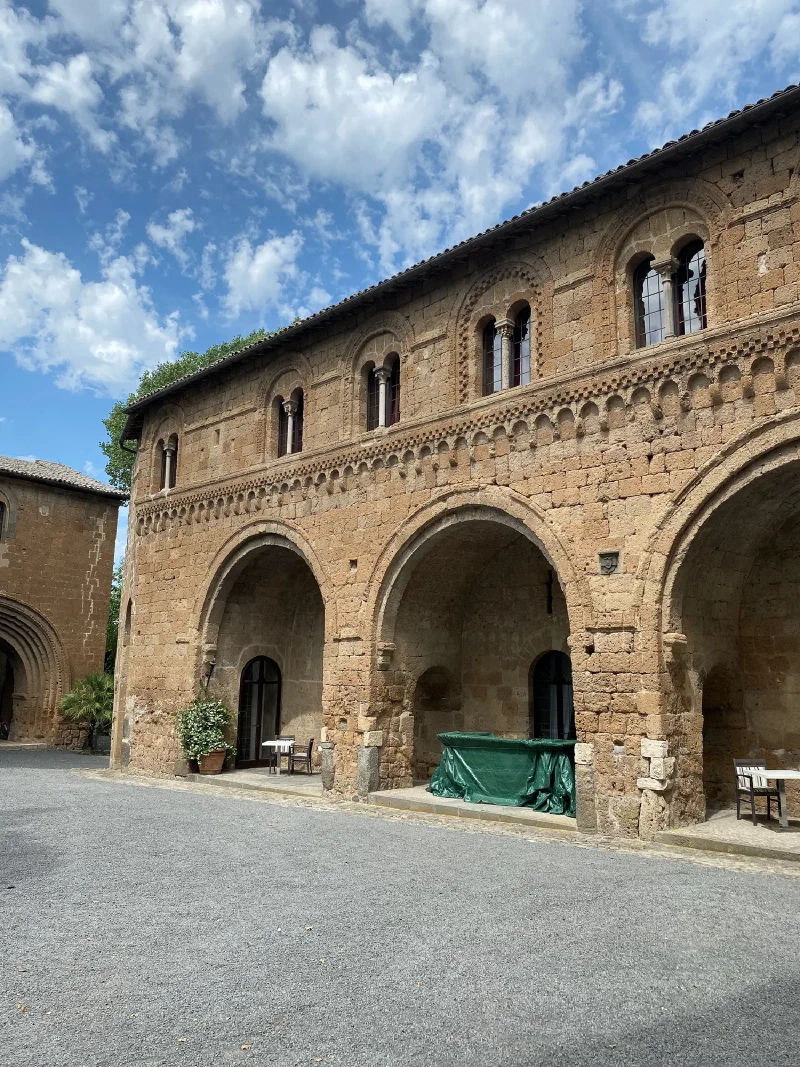
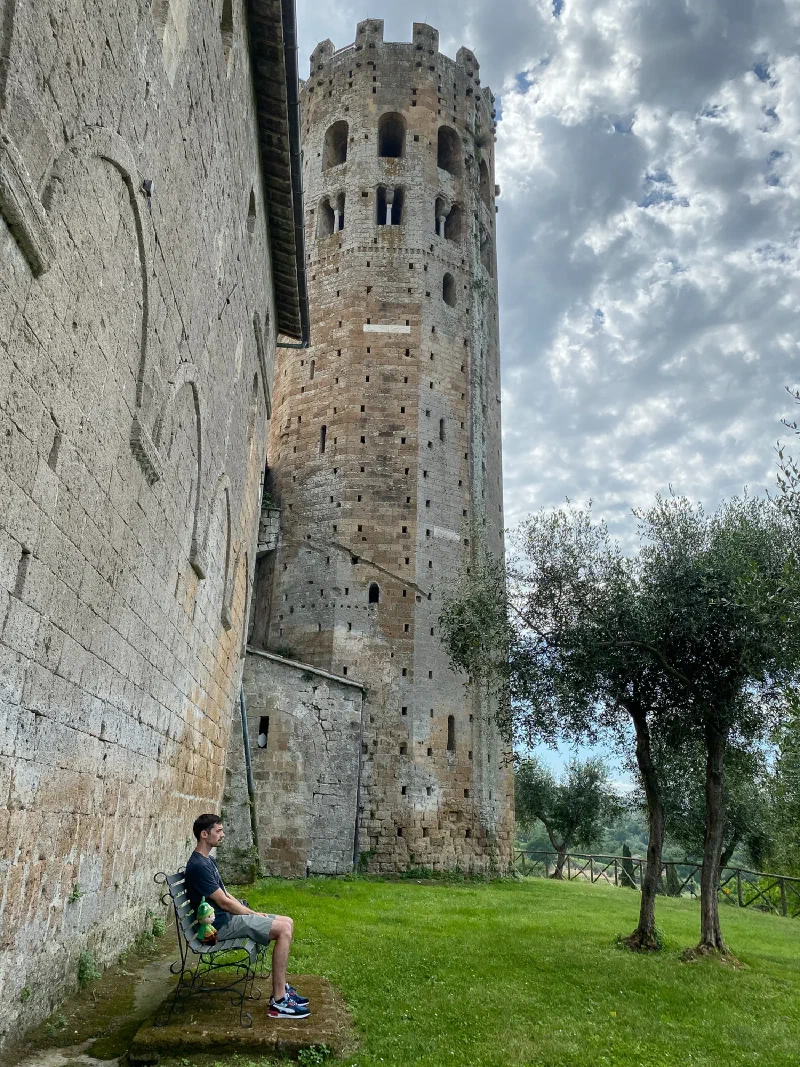
The tower is a twelve-sided Romanesque structure with a crenellated top. Twelve sides. Not eight, not ten. Twelve. Someone in the 12th century decided a round tower wasn’t complicated enough and a square tower was too boring. I respect the commitment to geometry.
But the real draw was the ruins.
Part of the original abbey church is still standing — roofless, open to the sky, with Gothic arches framing views of Orvieto on its cliff in the distance. It’s the kind of place where you walk through a pointed stone archway and suddenly feel like you’ve wandered into a video game cutscene.
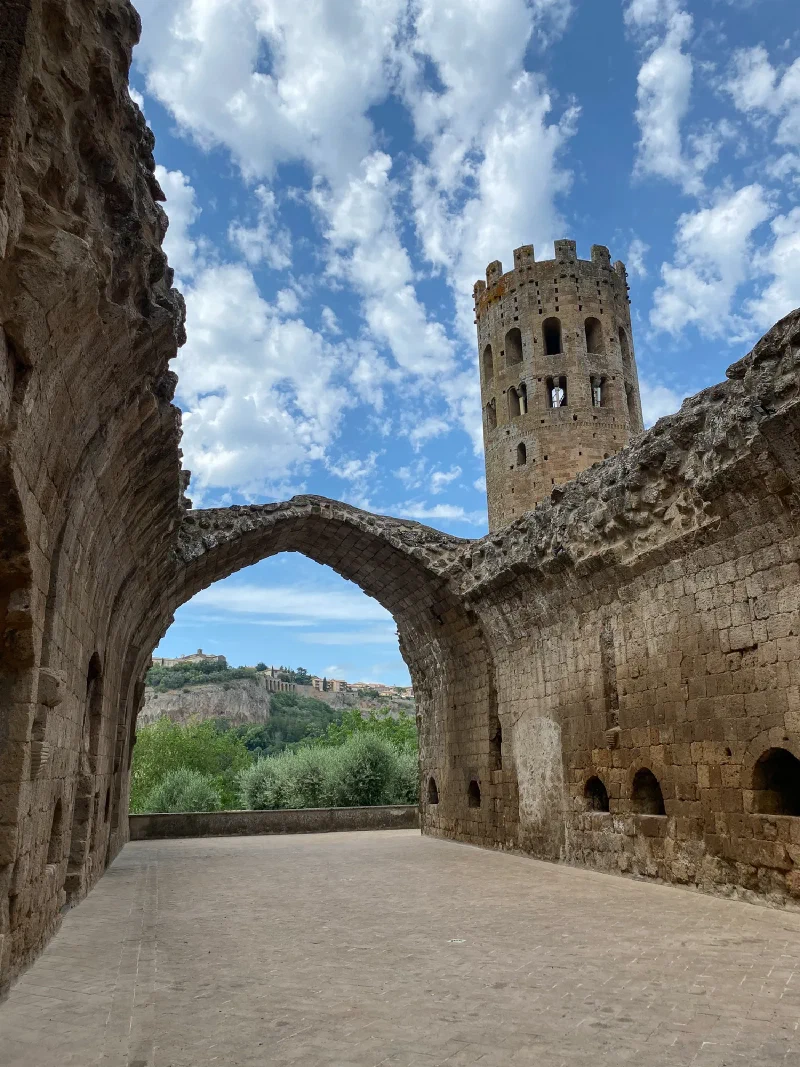
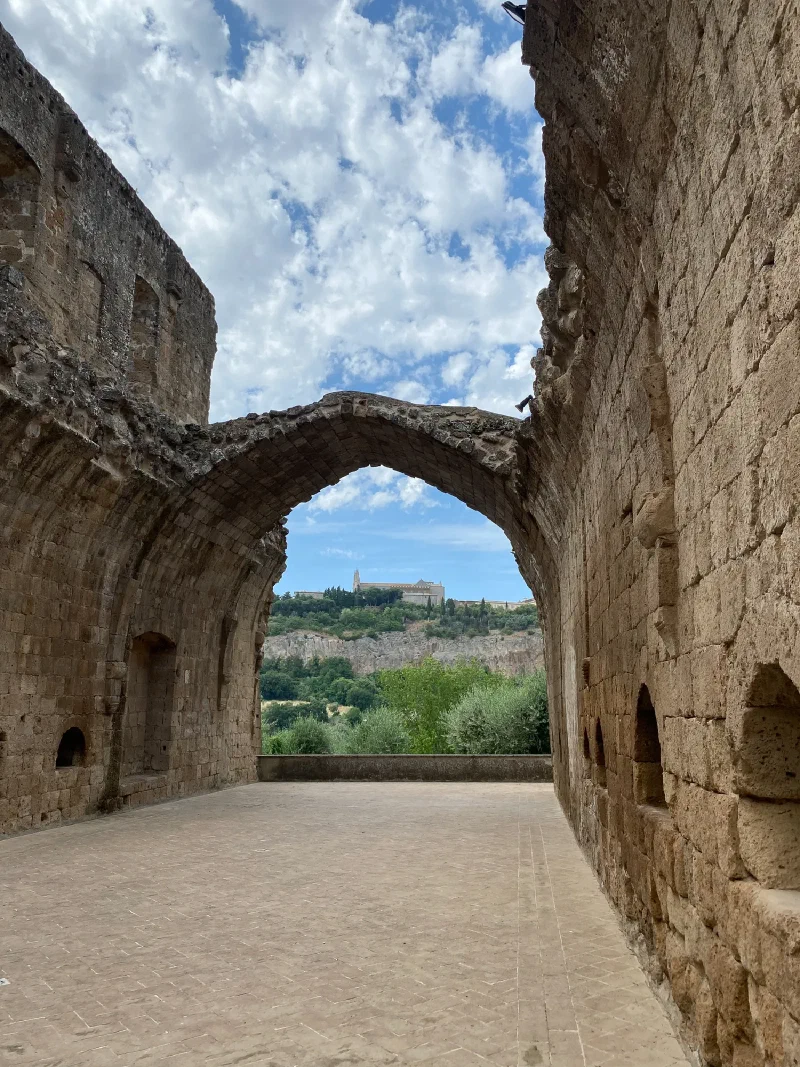
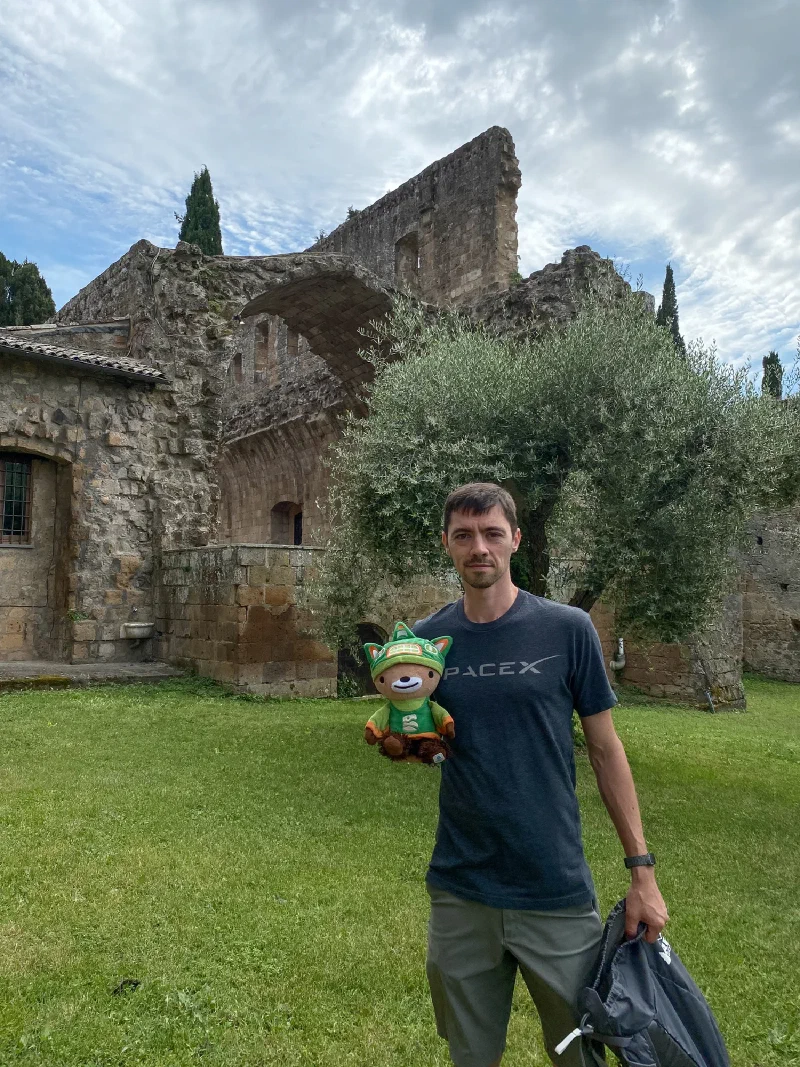
The abbey was actually for sale around this time. Someone with deep pockets and a love for medieval restoration could have bought the whole thing. I looked into it. Briefly. But I’m not sure the credit card I took from Nicholas’s wallet would cover it.
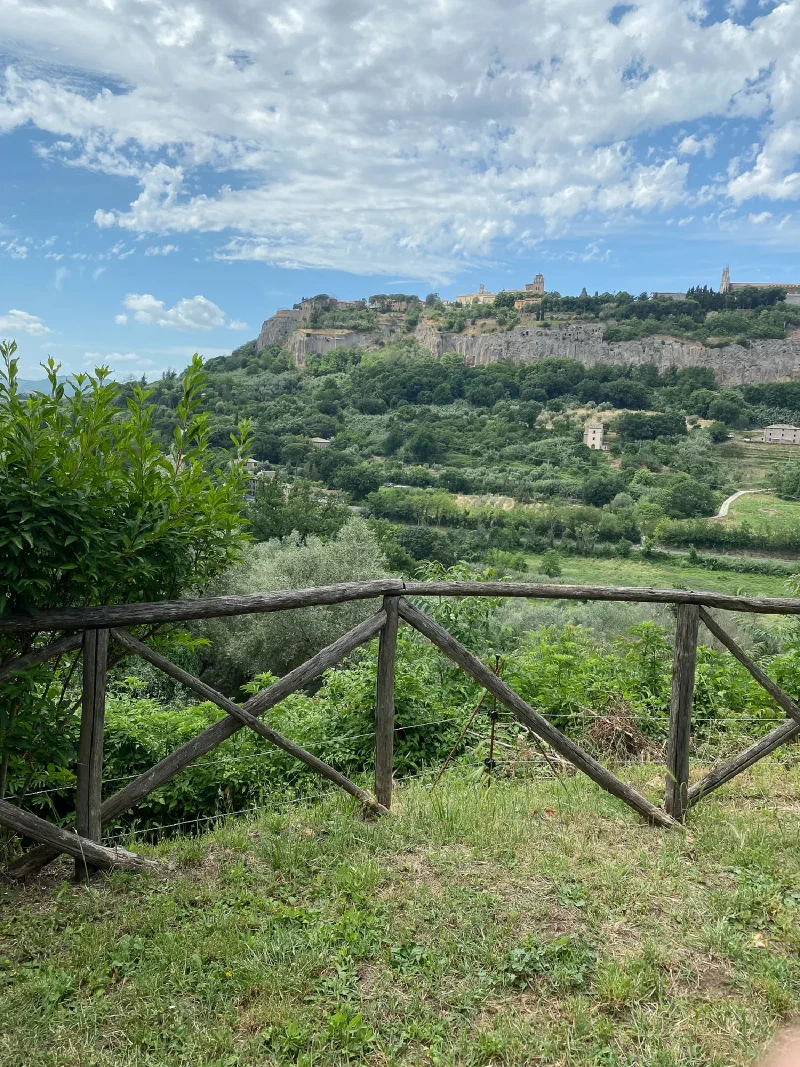
After exploring the abbey, we headed up to Orvieto itself. The town sits on top of a massive tufa cliff, and unless you feel like driving up a series of increasingly questionable switchbacks, you have two options: a funicular (a cable railway up the cliff face) or the Percorso Meccanizzato — a system of escalators and moving walkways carved directly through the rock.
We took the funicular up and the escalators down. Because why use one ridiculous cliff transport when you can use both.
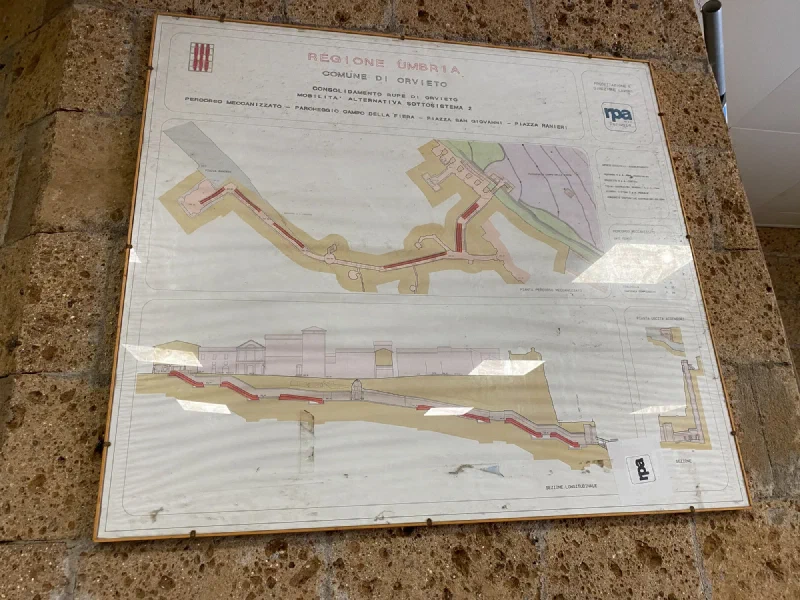
Yes. Escalators. Through a cliff. Most towns build stairs. Orvieto said no, we’re going to carve a mechanized pathway through solid tufa and install moving walkways inside it. The funicular gets all the fame, but the escalator tunnel is the real flex.
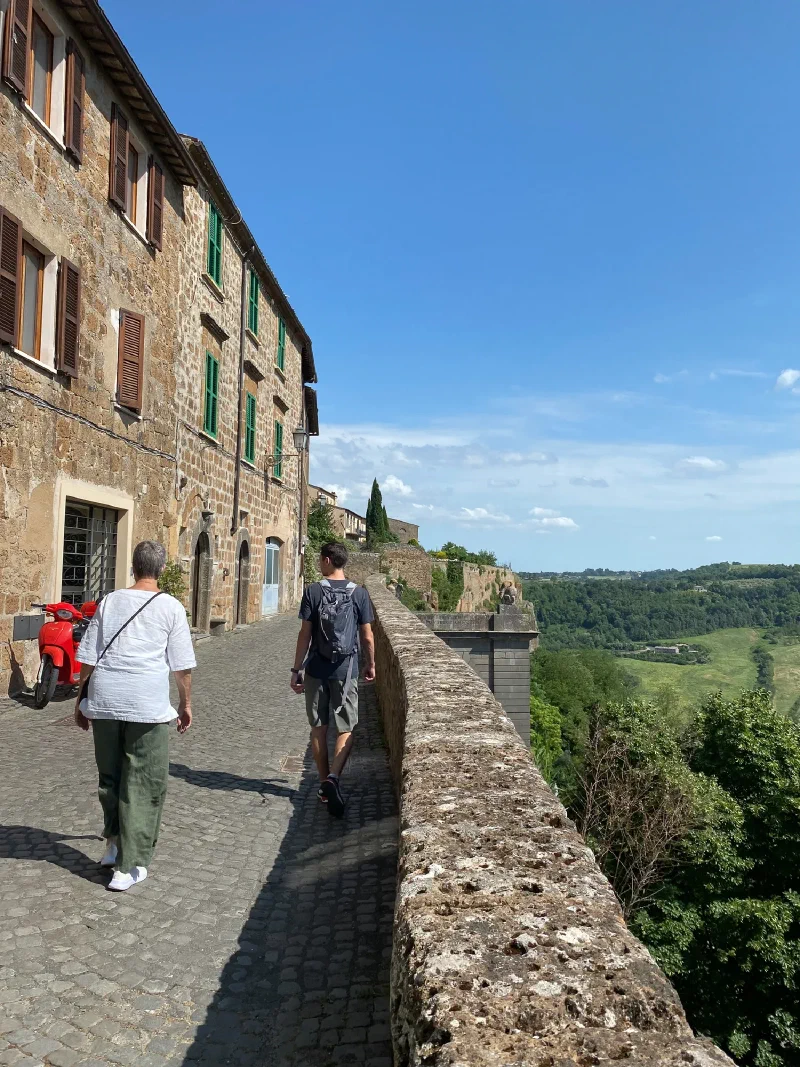
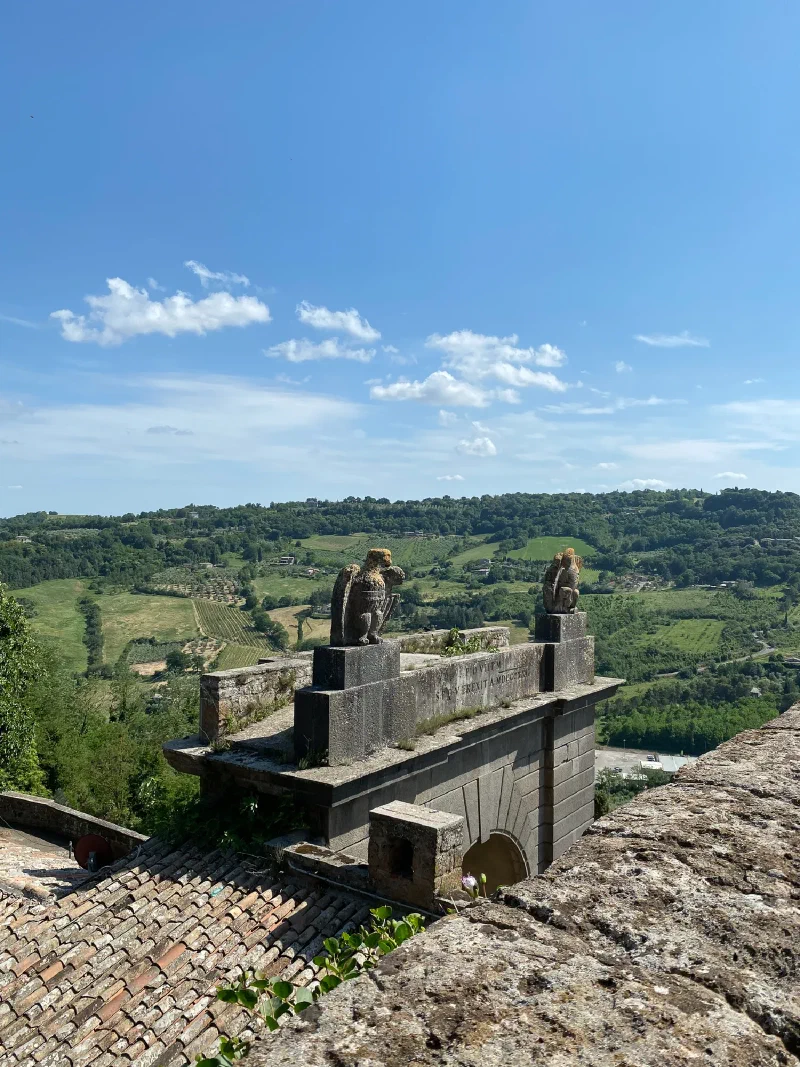
Once you’re up, Orvieto is classic Italian hilltop town — cobblestone streets, stone buildings, and views that drop off into the Umbrian countryside like someone forgot to build a railing.
And then you turn a corner and see the Duomo.
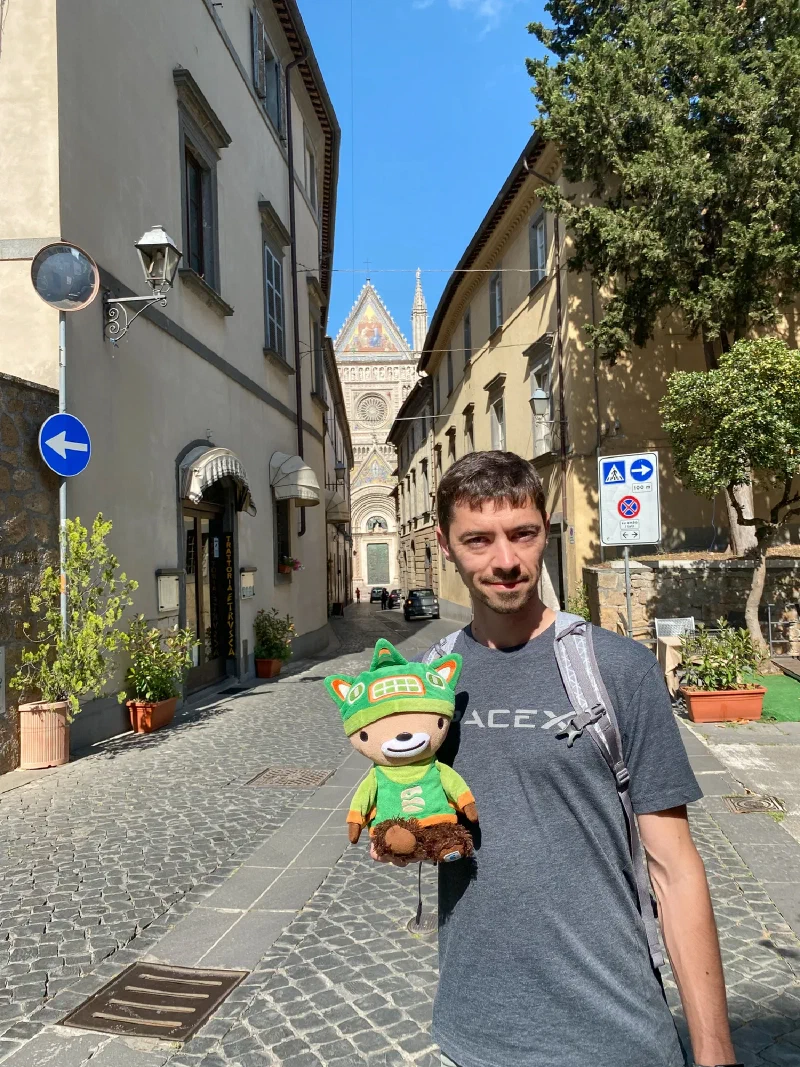
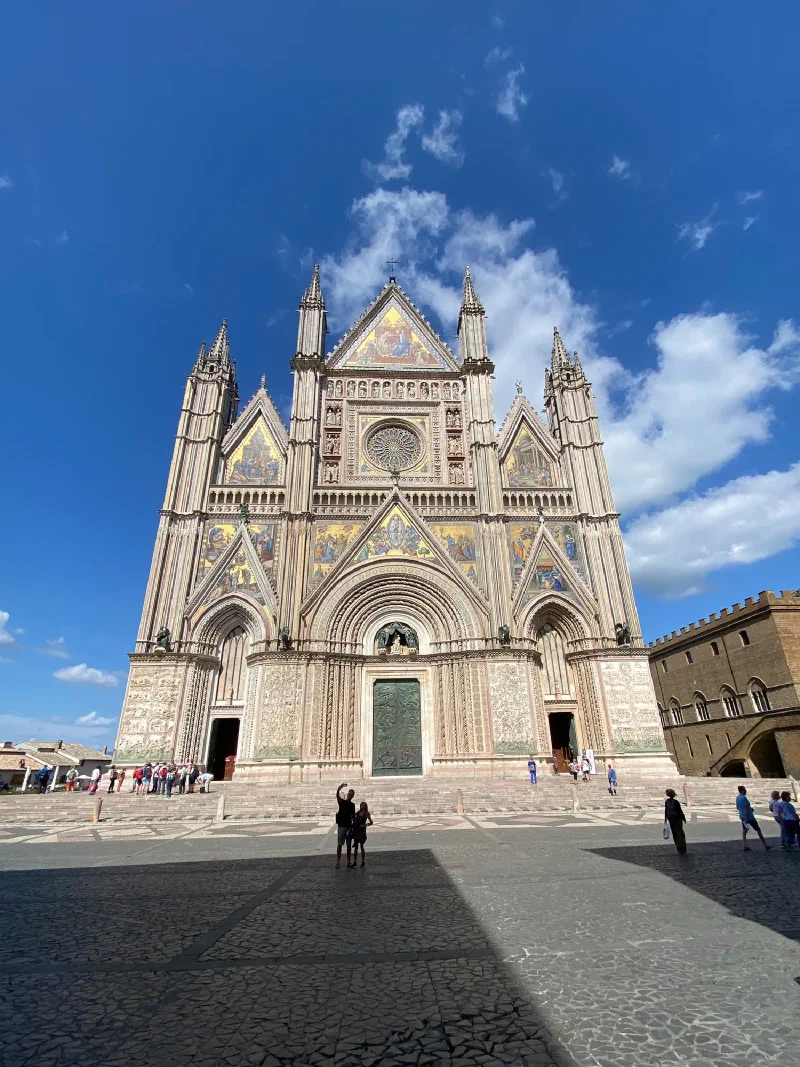
Orvieto’s Duomo is absurd. Gold mosaics, Gothic spires, a rose window the size of a small apartment, carved portals, striped marble — it looks like someone took a normal cathedral and then let a very enthusiastic committee add things for 300 years. Construction started in 1290 and the facade wasn’t finished until the 17th century. That’s the kind of timeline that produces this level of excess.
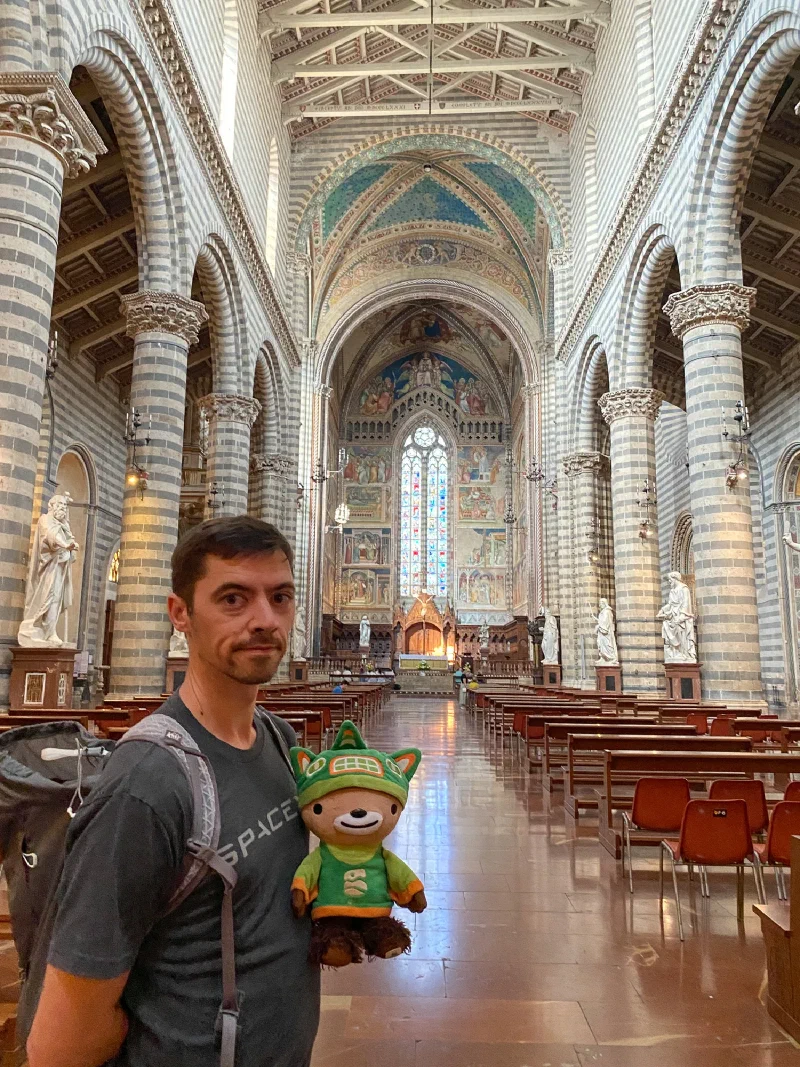
The interior is all alternating dark and light striped columns — a style that makes the whole nave feel like it’s vibrating. Frescoes, stained glass, and the kind of silence that only exists in buildings where people have been whispering for seven centuries.
I tried to get everyone to visit the weapons museum. There is, apparently, somewhere in Orvieto where you can see medieval arms and armor. But nobody wanted to go. “We’ve been walking all day” and “my feet hurt” and other excuses. An actual weapons museum. In a medieval town. On top of a cliff. And we skipped it. I’m still upset.
We ended the day the way we ended most Italian days.
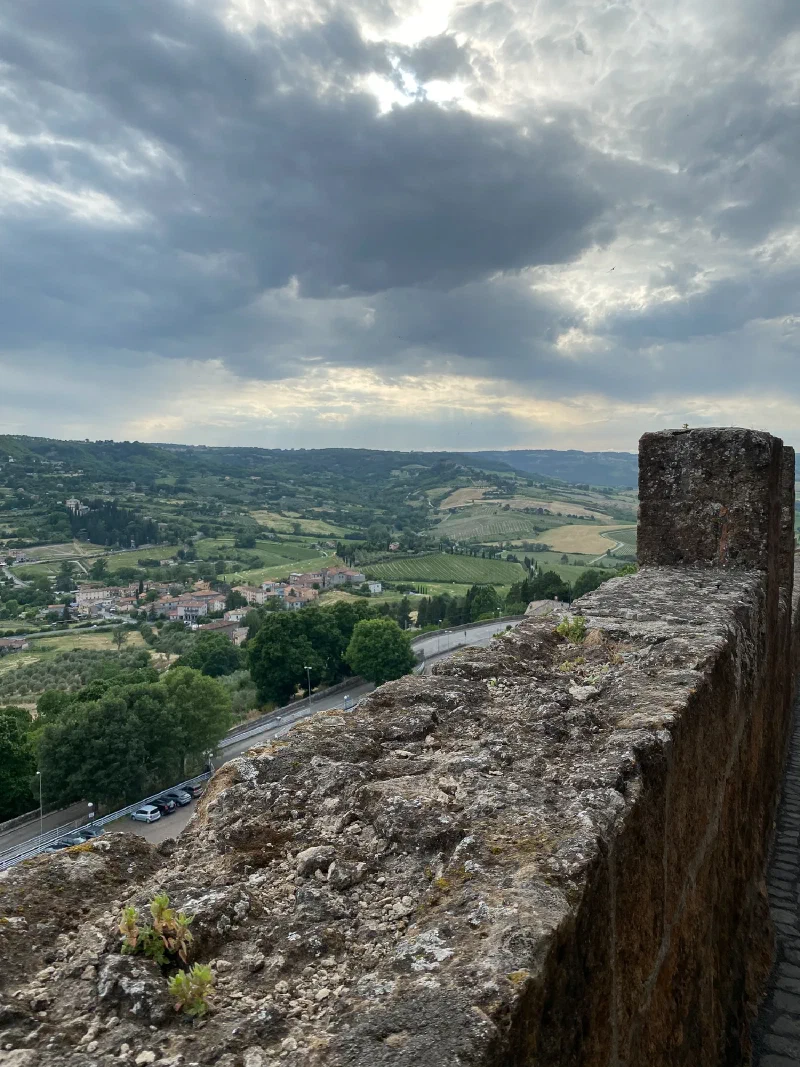

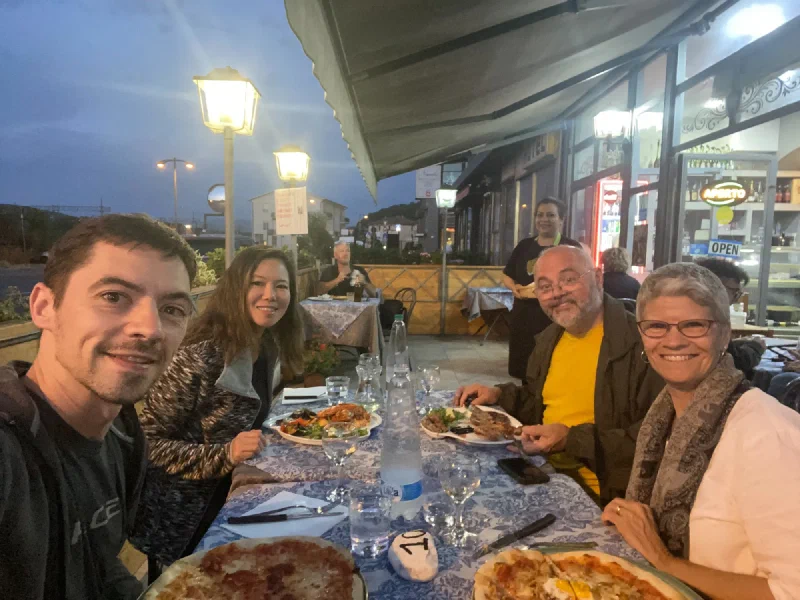
Dinner on a terrace as the sun went down over the Umbrian hills. Pizza, because sometimes after a day of 12th-century abbeys and Gothic cathedrals and escalators through cliffs, you just want pizza.
Tomorrow: Rome.