
Meet the Fredriksson brothers. Nicholas’s great-great-grandfather Johannes on the left. His older brother Andreas on the right.
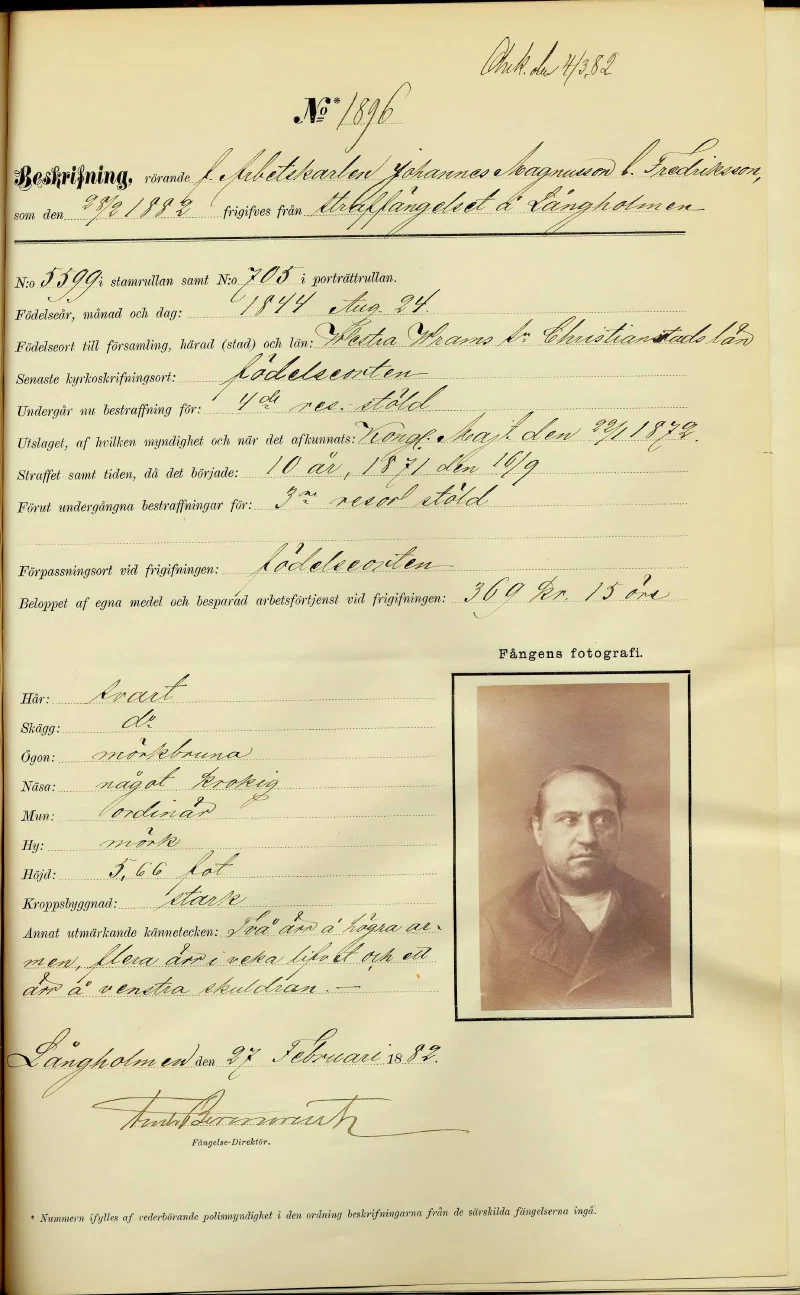
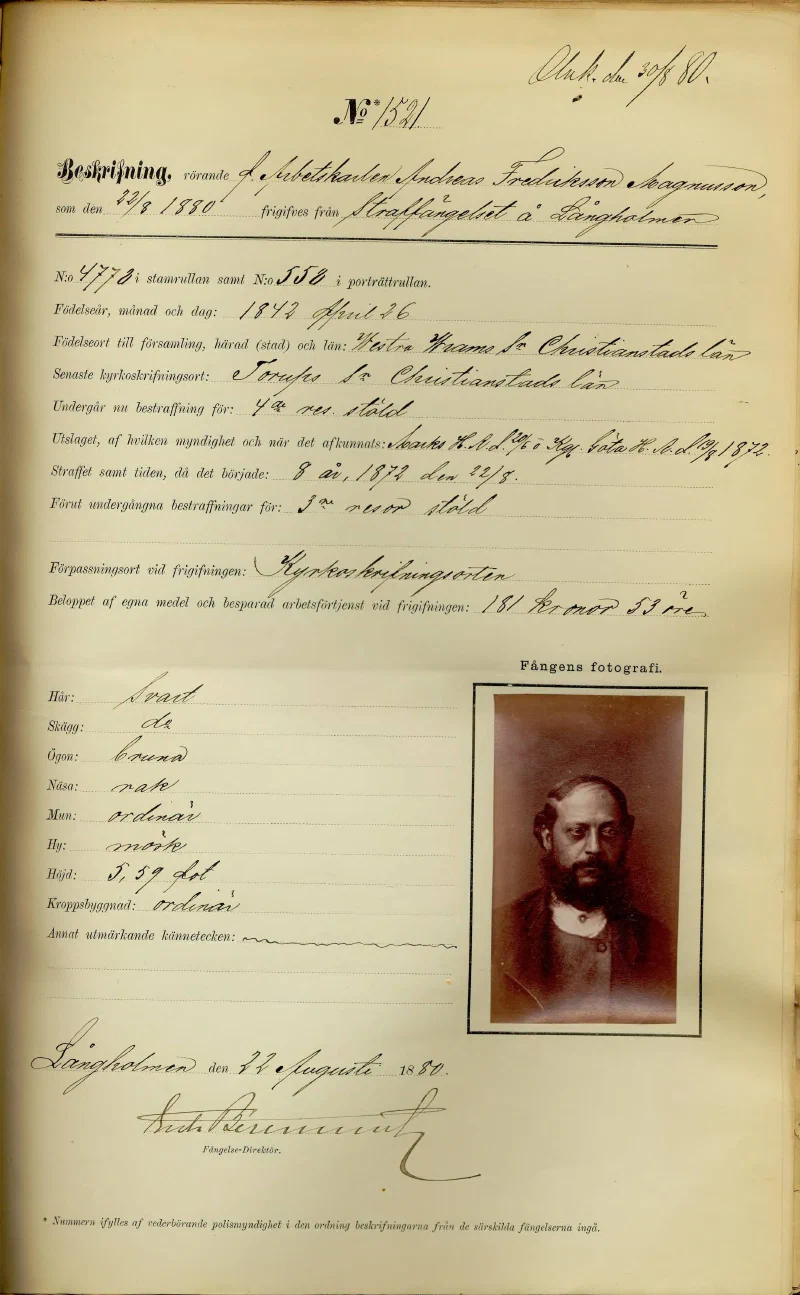
Yes, those are their prison intake documents. From Långholmen Central Prison in Stockholm, Sweden. Both brothers. Both convicted of fourth-time theft. Both served years.
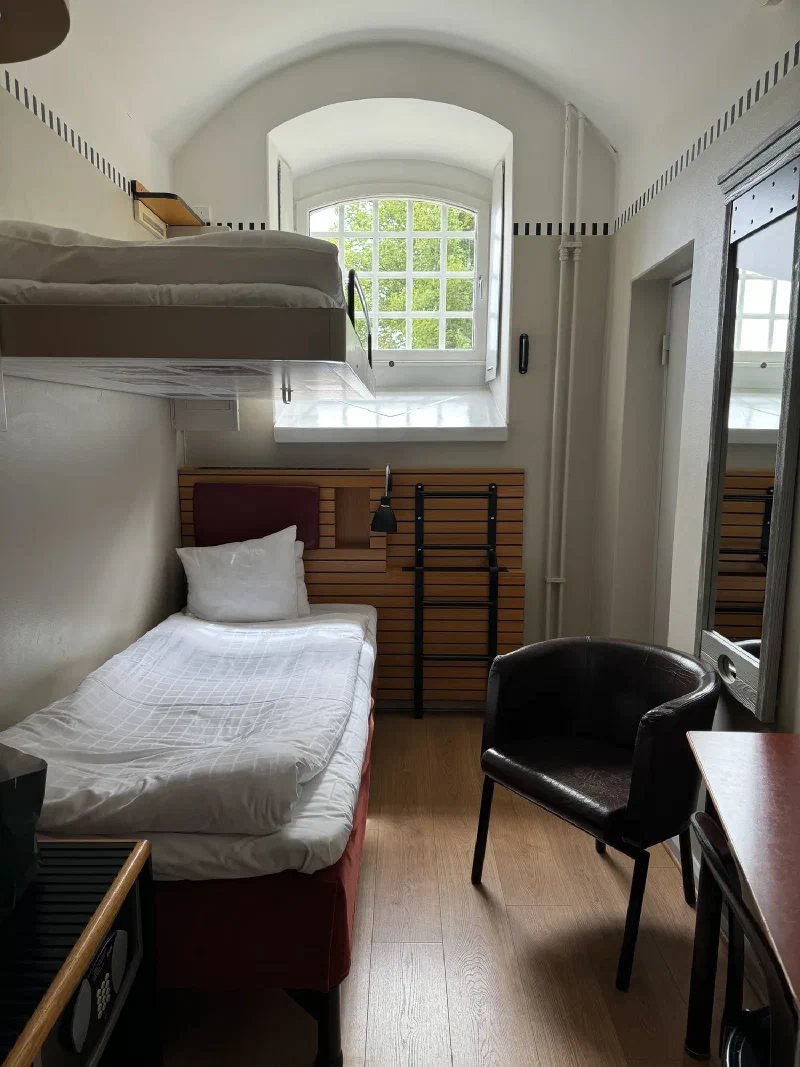
Långholmen was Sweden’s largest prison. Over 500 cells. Built starting in 1874, it operated for a century before closing in 1975 and being converted into, of all things, a boutique hotel. You sleep in the cells. Real cells.
So naturally, we booked a room.
The Brothers Fredriksson#
Here’s the short version, because the long version sounds like a season of television that nobody would believe.
The brothers’ father was reportedly the family mastermind who sent his sons to steal so he wouldn’t take the blame. Both brothers got caught. Multiple times. Andreas served eight years at Långholmen. Johannes got ten. Their sentences overlapped by eleven months, so they were doing time together. In the same building.
After prison, Johannes got his marriage paperwork signed by the Långholmen prison chaplain, married a woman named Johanna Sofia on April 10, 1882, and left for America the next day. April 11. Prison chaplain to wedding to transatlantic voyage. The man did not waste time.
They spent five years in America. Two children were born there. Neither survived. They came back to Sweden. Their son Oskar, Nicholas’s great-grandfather, was born in 1888.
Then Johannes left the family and married his brother Andreas’s ex-wife.
Meanwhile, Andreas got mixed up in a brawl where someone died. He grabbed his new wife, who was also his much younger cousin, and vanished from Sweden entirely. Changed his name. Boarded a ship. Nobody has found him since. A Swedish cousin named Ann-Marie has been doing serious genealogy work for years trying to track him down. Nothing.
Johannes went back to America again in the early 1900s. The family thinks he was visiting Andreas, wherever he ended up. The brothers who stole together and served time together apparently couldn’t stay apart.
And Oskar? His mother died when he was ten. Her will said he was not to live with his father. He was placed with a farmer who treated him like cheap labor. As a teenager he was kicked by a horse, the wound went gangrene, and his lower leg was amputated. So he became a barber, because it was work he could do in one spot. In 1923 he sailed through Ellis Island, started cutting hair in Chicago, and changed the family name from Johansson to Johnson. Never talked about any of it.
His son Charley was Nicholas’s grandfather.
Nicholas’s mom changed the family name back to Johansson in 2003, before she even knew the full history. Ann-Marie found her on a genealogy website in 2020 and cracked a century of family secrets wide open.
That’s the short version.
Checking In#
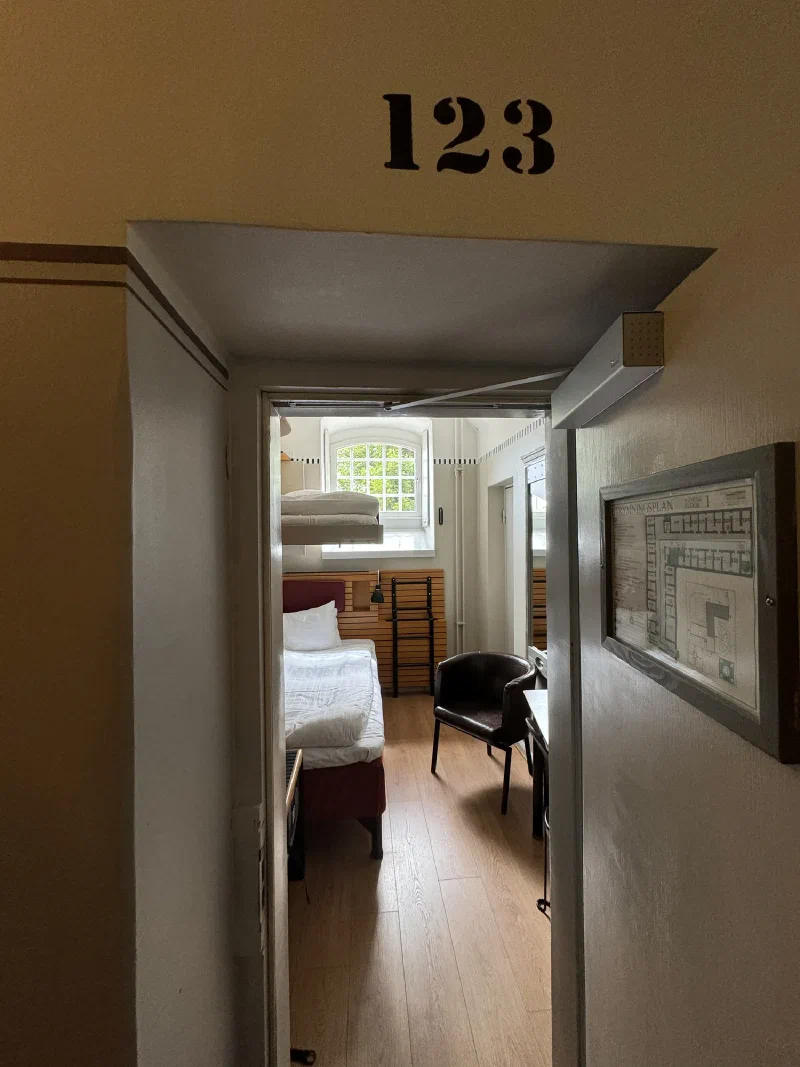
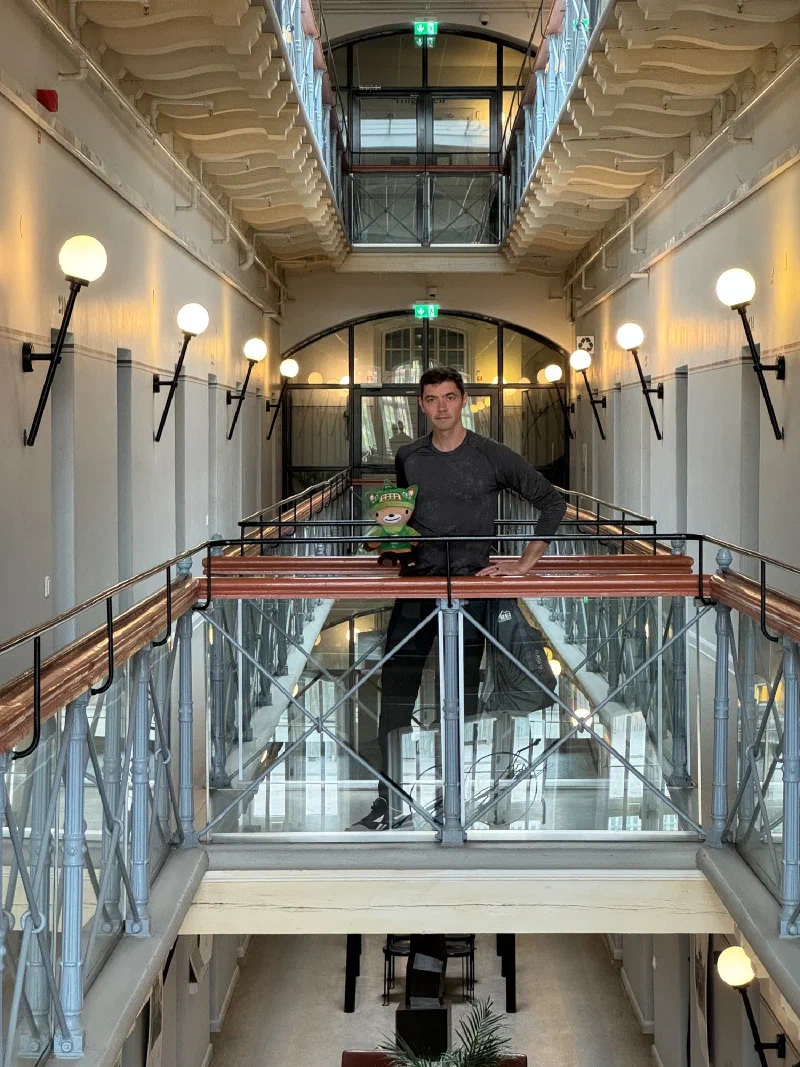
The corridors are the real showstopper. The old cell block has been preserved with its full atrium, upper walkways, and rows of cell doors. They added leather chairs, rugs, and plants. It looks like a prison that hired an interior designer, which is exactly what it is.
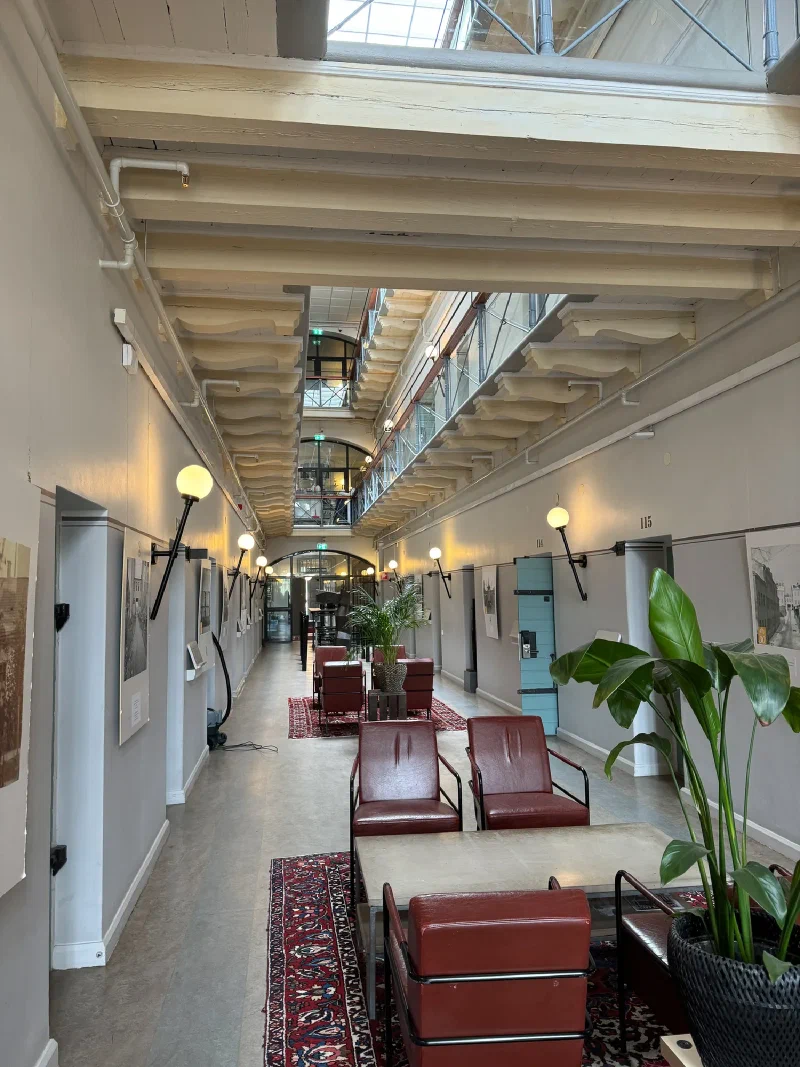
Andreas entered this building in 1872, two years before it was even finished being built. He may have literally helped construct the prison he was locked in. And in 1879, his brother Johannes showed up. For eleven months, both brothers were here. Same corridors. Same walls. Same food hatches. Doing time as a team, like they did everything else.
Exploring the Grounds#
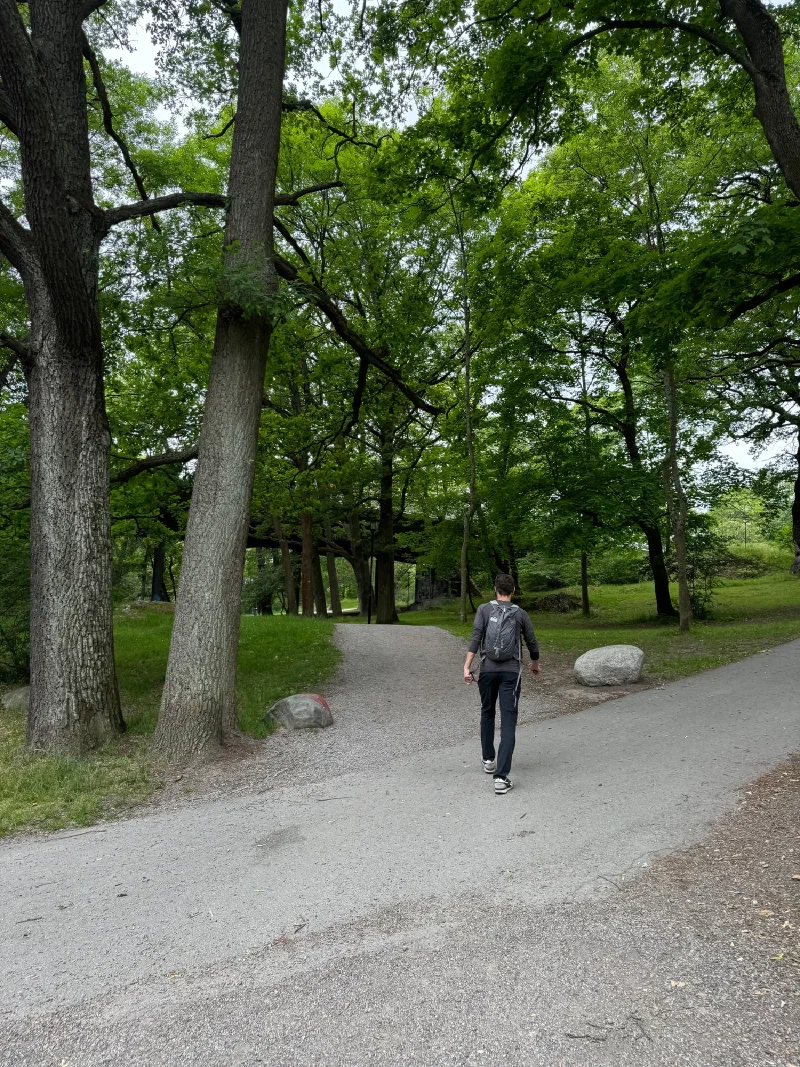
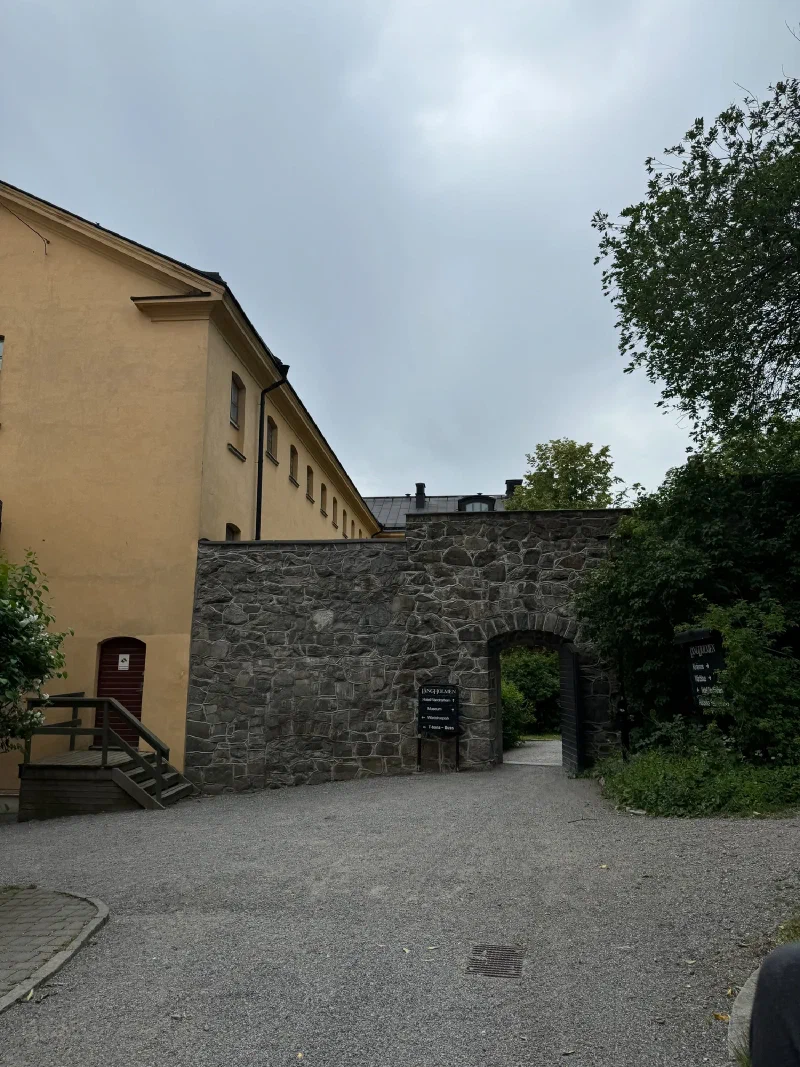
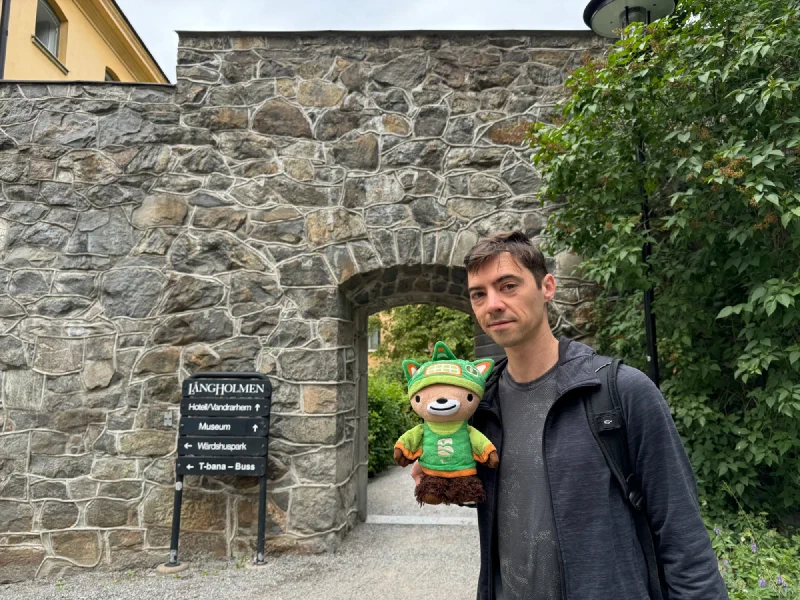
The next morning we walked the island. Långholmen is surprisingly nice for a place that held over 500 prisoners. Tall trees, gravel paths, the old stone walls covered in greenery.
Bunkmates#
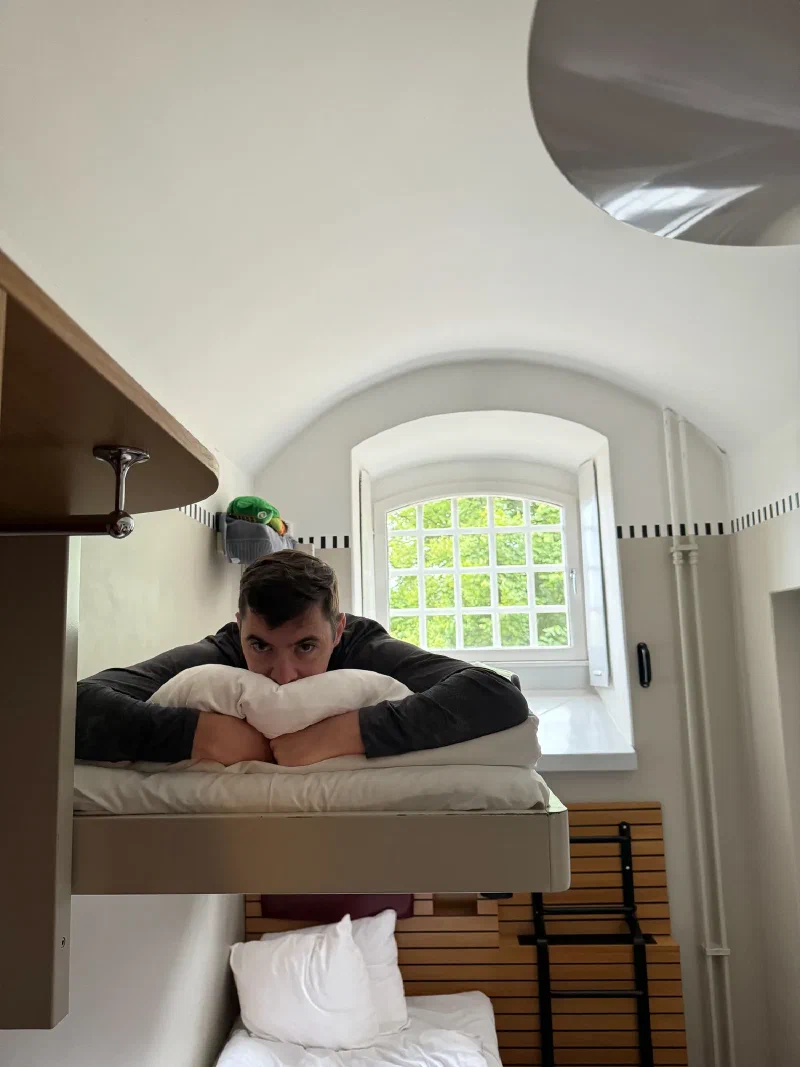
The night before, Nicholas had claimed the top bunk. Which meant I got the shelf above the top bunk. The highest bunk. The bunk that doesn’t officially exist but absolutely should count.
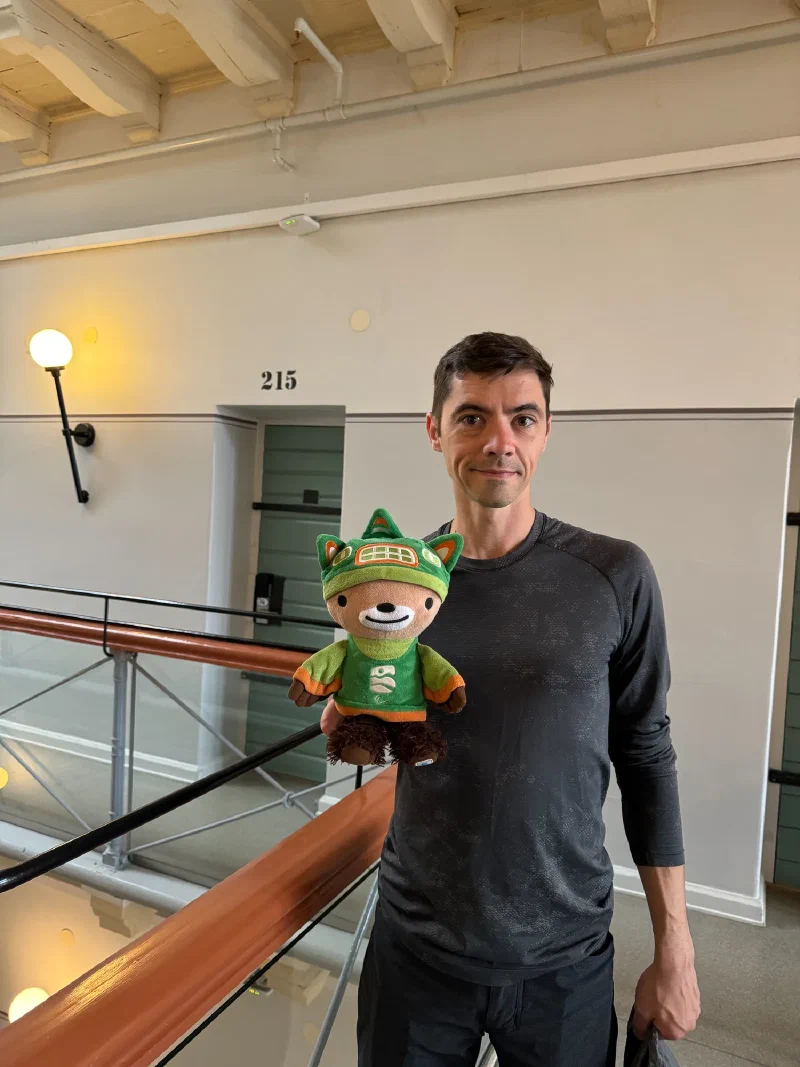
The old upper walkways still have the original railings, the globe lights, the cell doors with their numbers. Room 215 behind us. The whole place feels like it could wake up and start being a prison again at any moment.
Prisoner 7208500#
Then we found the gift shop.
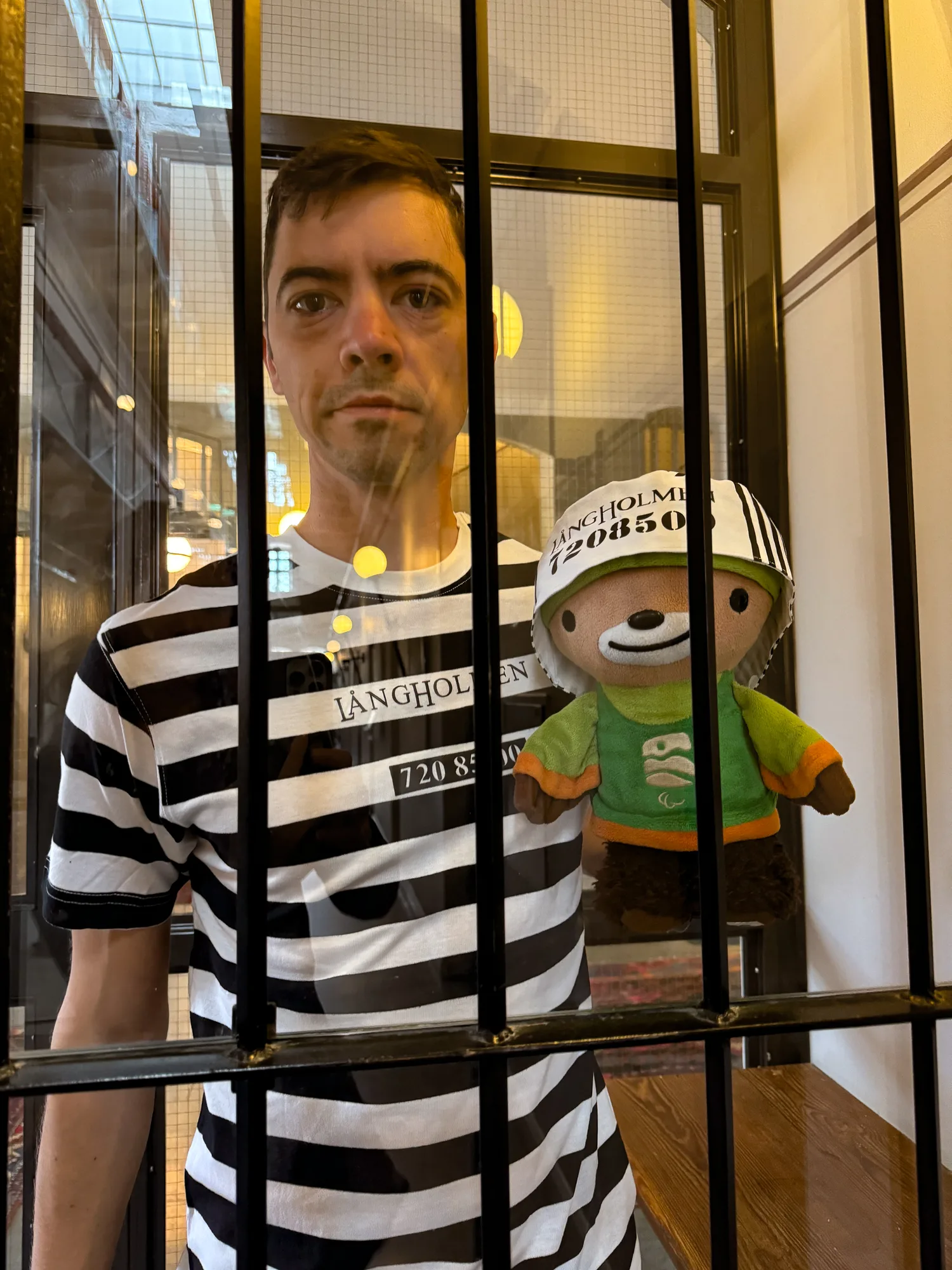
The gift shop at Långholmen sells striped prisoner outfits. Shirts, caps, the works. Printed with “LÅNGHOLMEN” and a prisoner number. Nicholas and Adam looked at each other. I looked at both of them. We all knew what was happening.
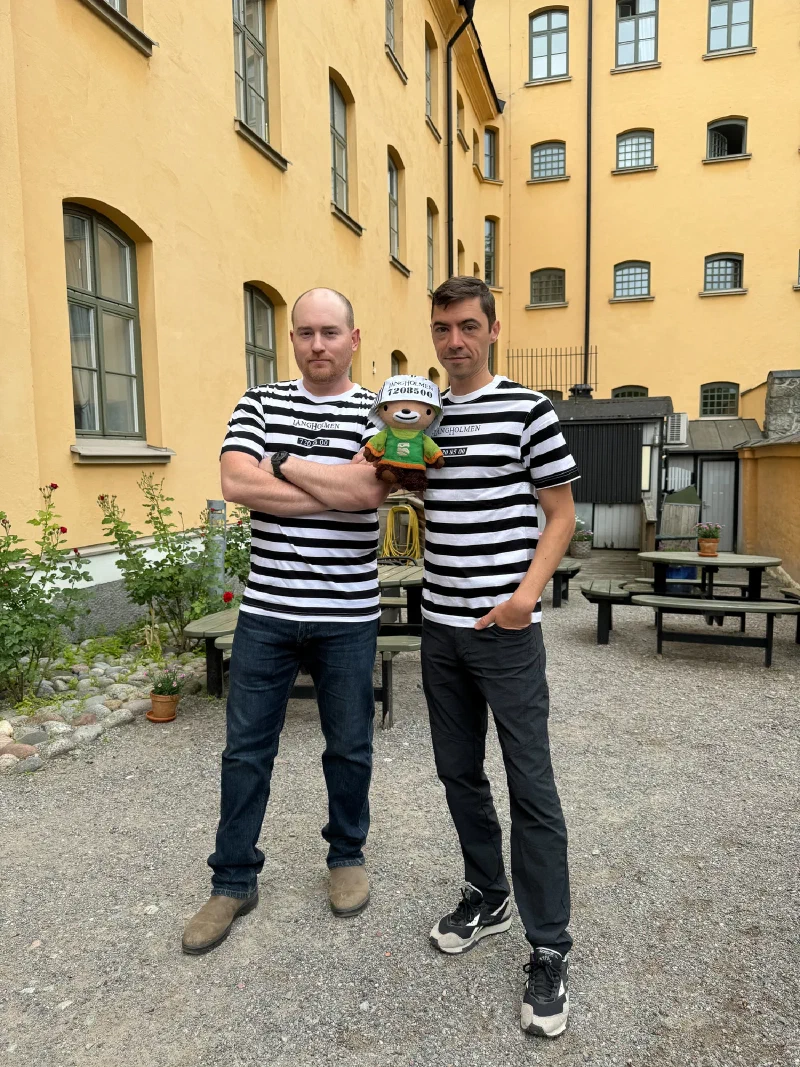
They bought the shirts. They got me a cap. And then we spent the next hour being the most committed method actors Långholmen has seen since it closed in 1975.
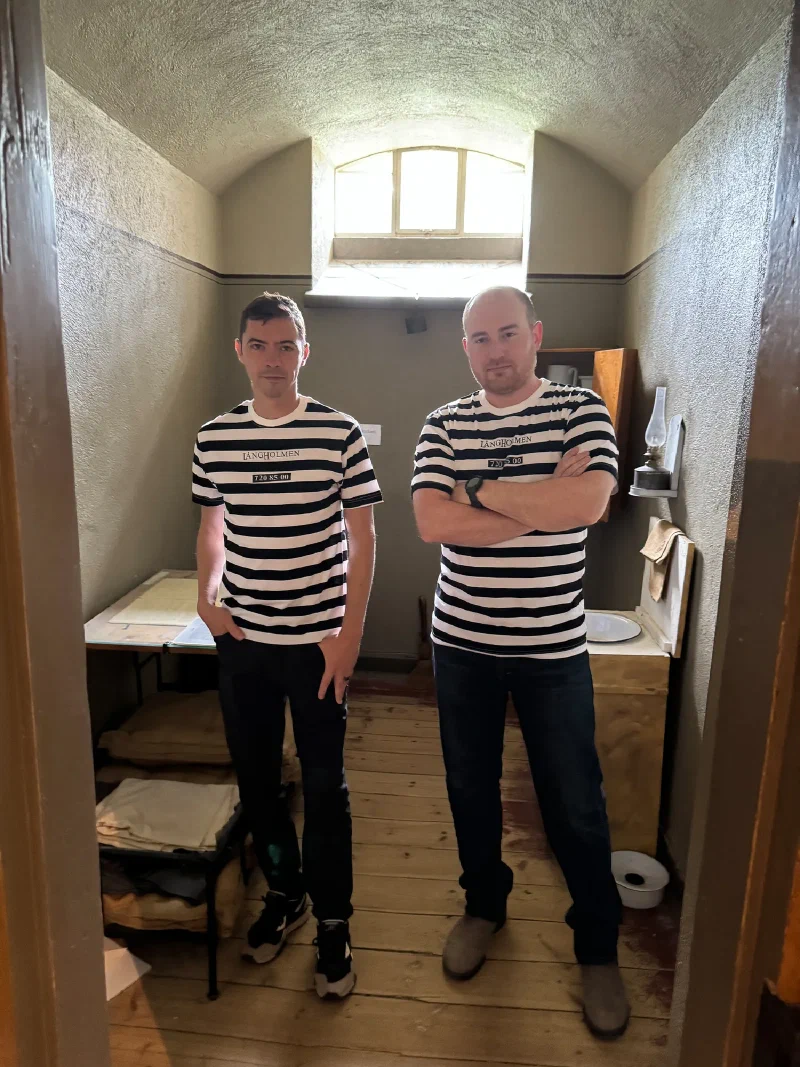
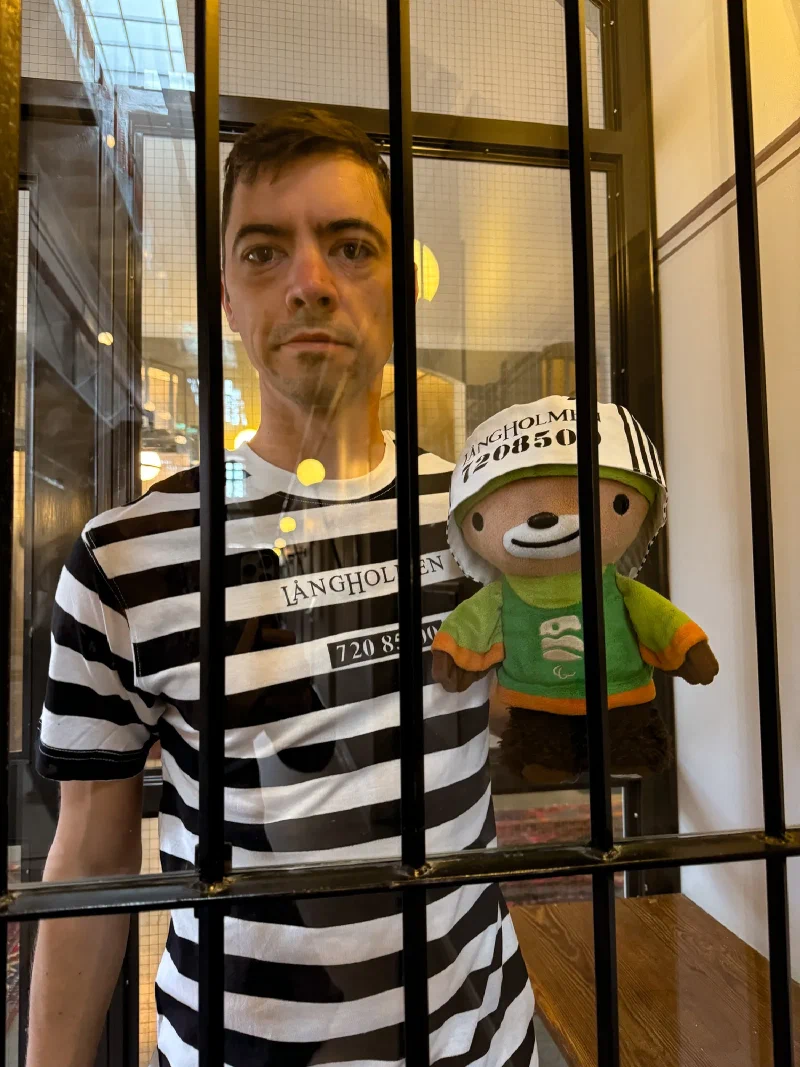
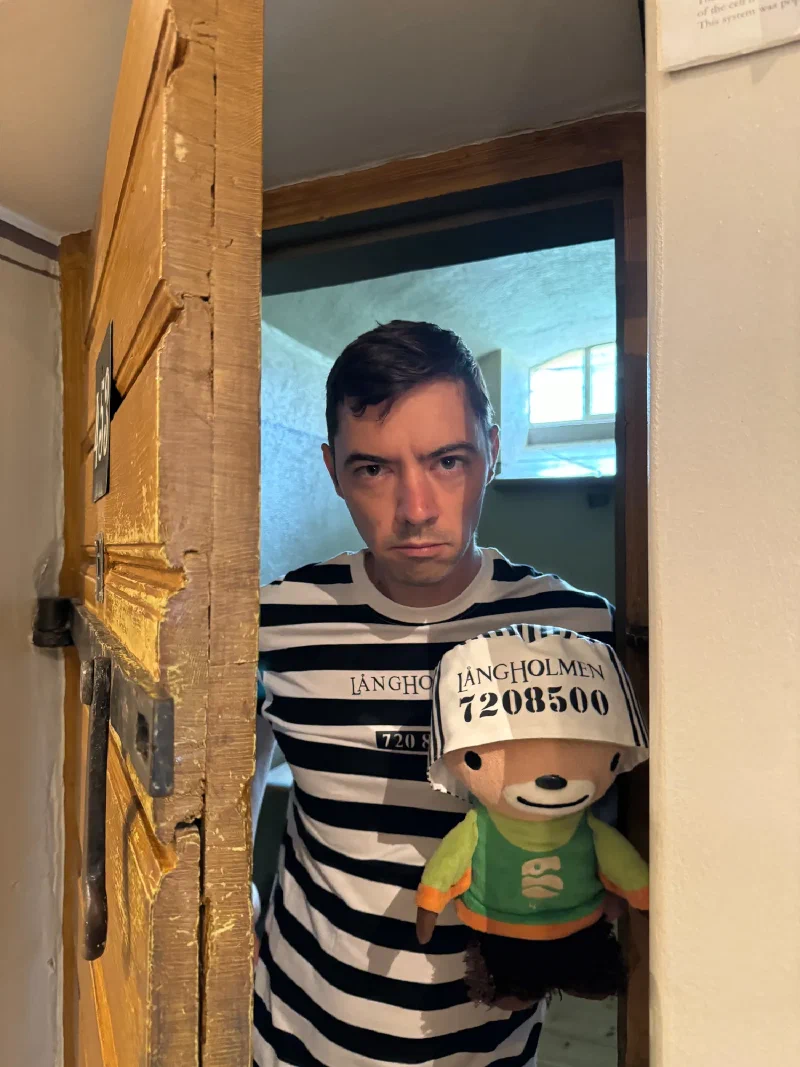
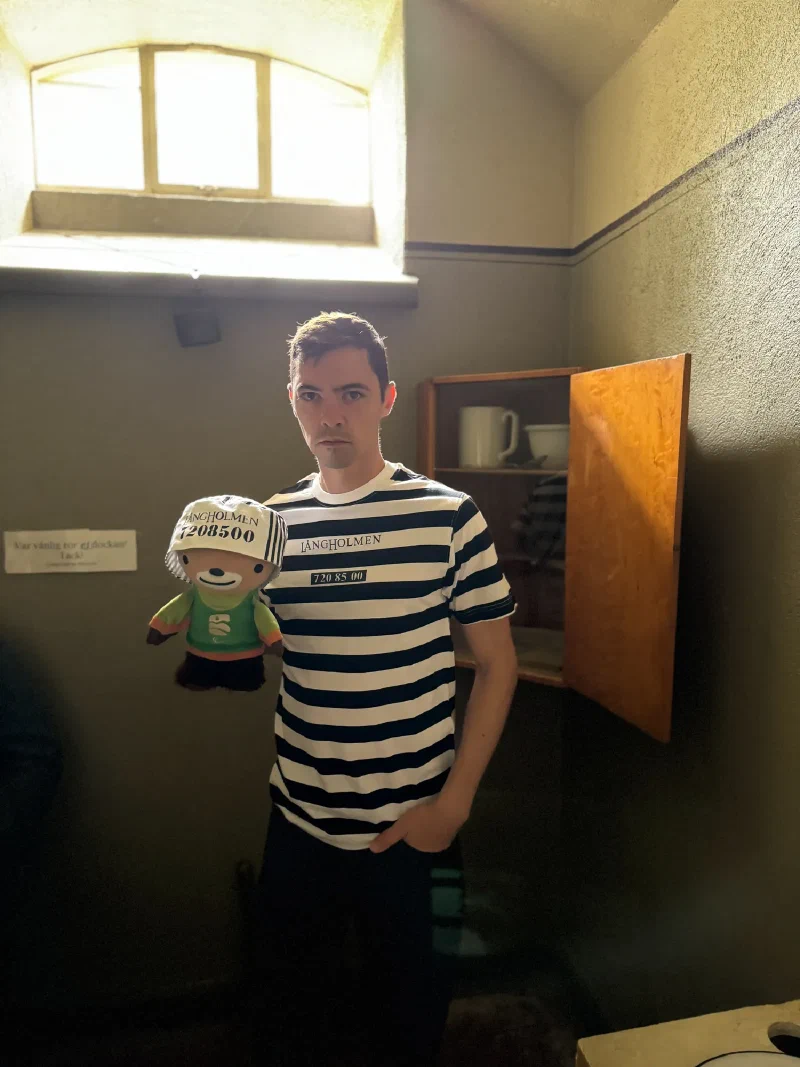
I did my own investigating. The cells have these small metal hatches in the walls. Food slots. Observation windows. The kind of thing that exists because someone decided prisoners didn’t deserve doors that open all the way.
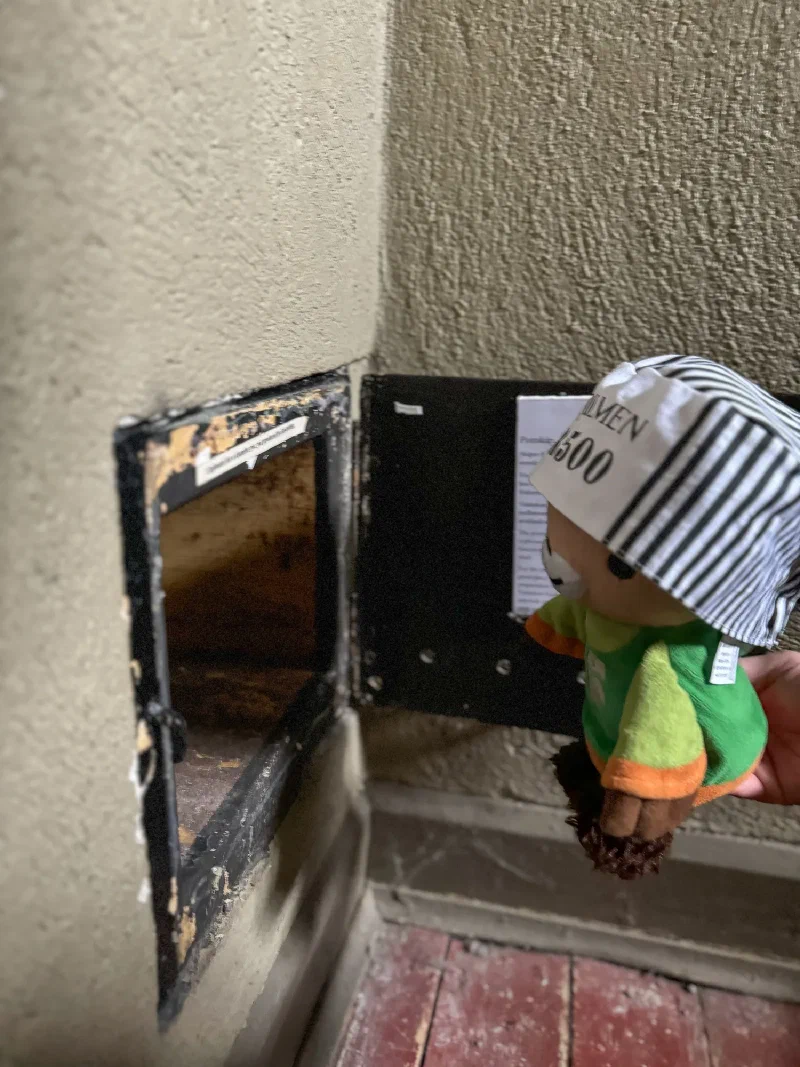
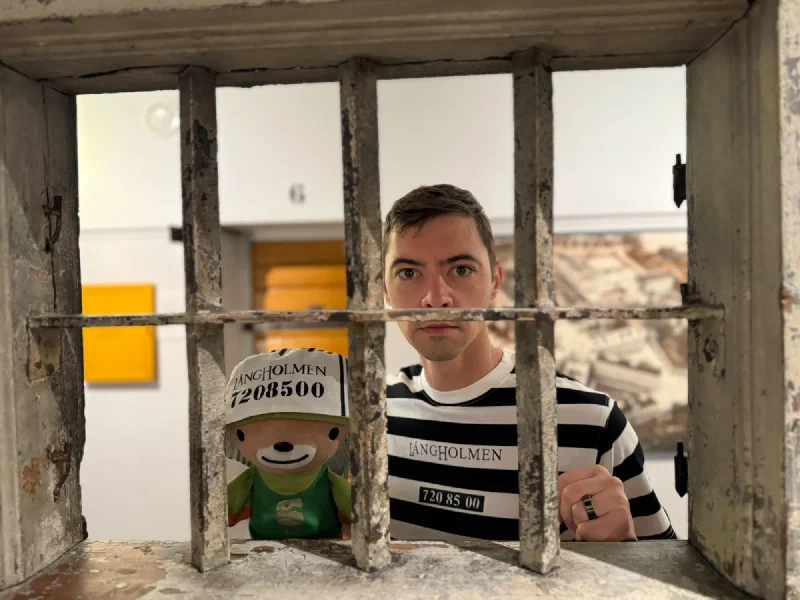
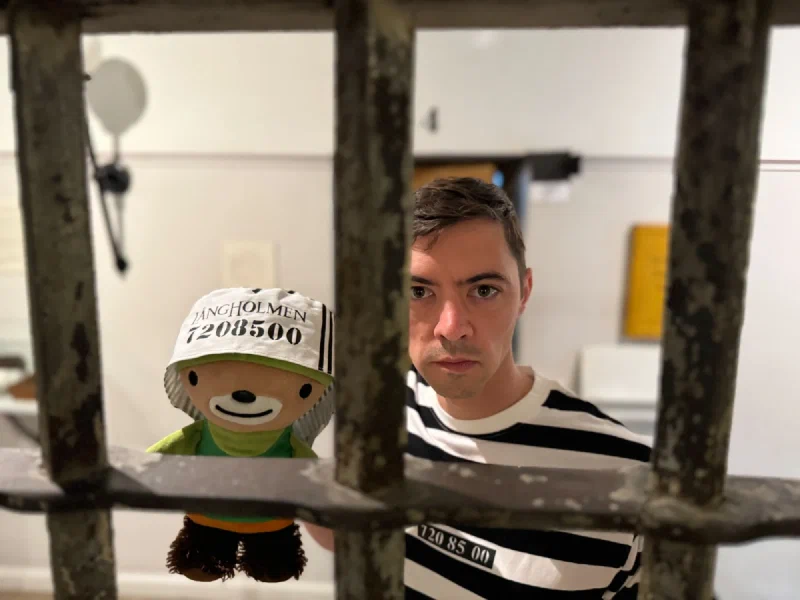
Johannes served years behind bars like these. He ate through a hatch like that one. He slept in a cell like the ones we were posing in. Then he got his marriage paperwork from the prison chaplain, walked out, got married, and was on a boat to America before the ink dried.
Breaking Out#
We checked out of prison the next morning. Voluntarily, which is the main difference between us and the Fredriksson brothers.
Stockholm, One Last Time#
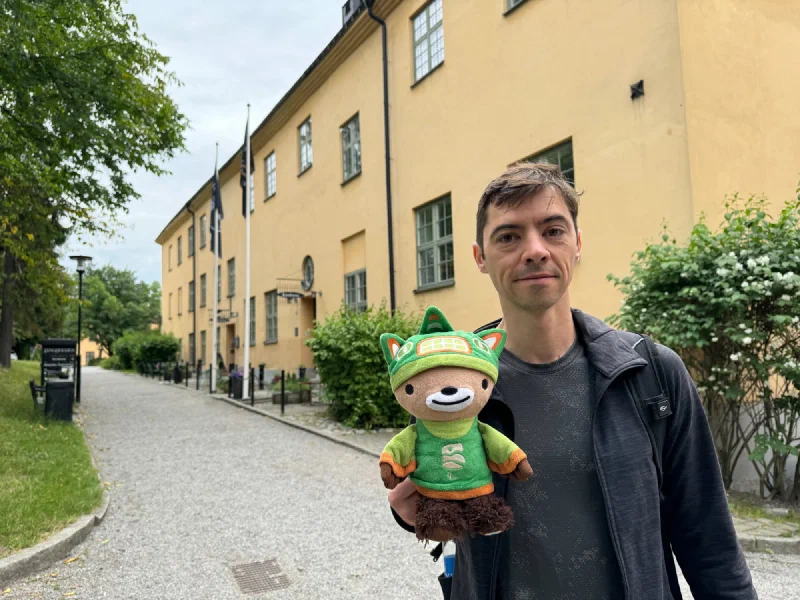
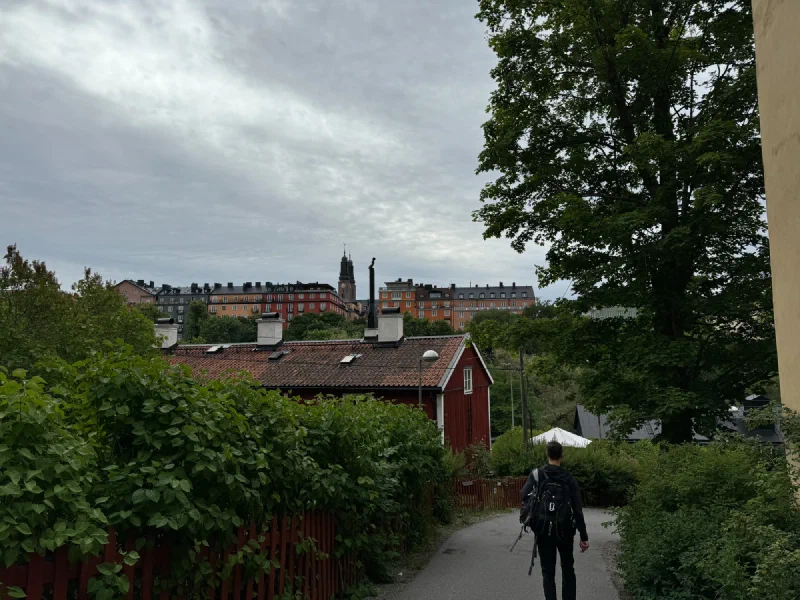
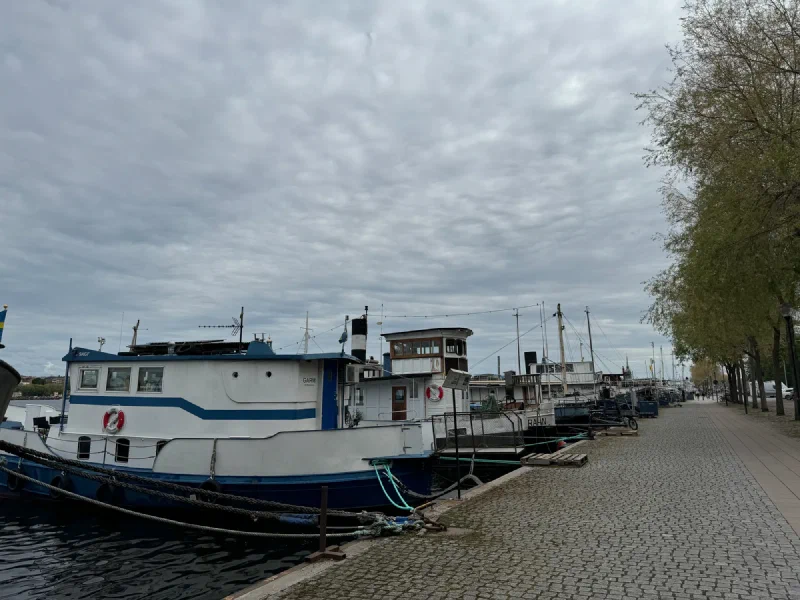
Free bears (and humans) loose in Stockholm. We walked through Södermalm, past red houses and church spires, down to the waterfront.
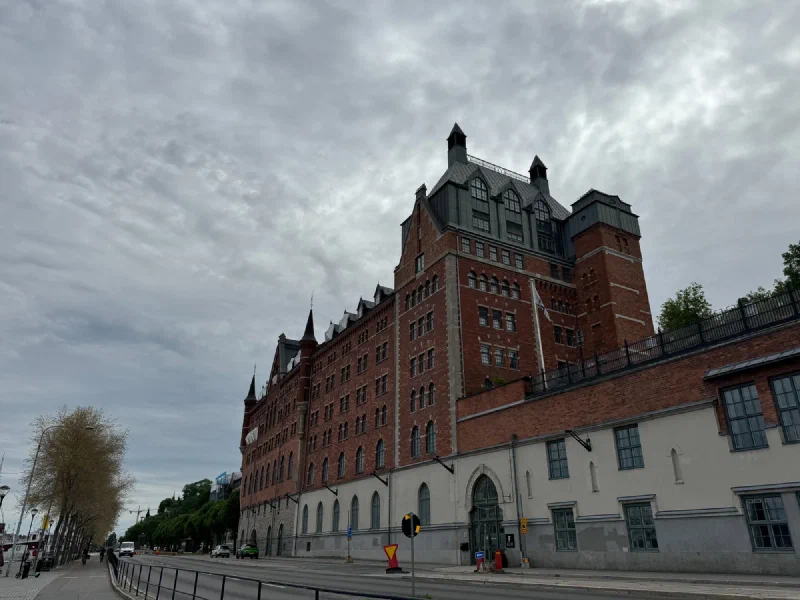
We checked into a proper hotel. One with full-sized windows and no bars on them.
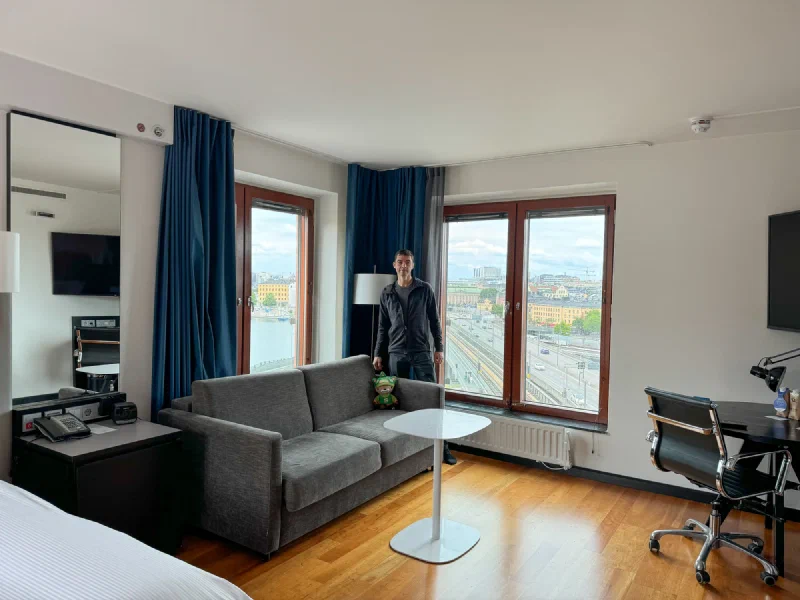
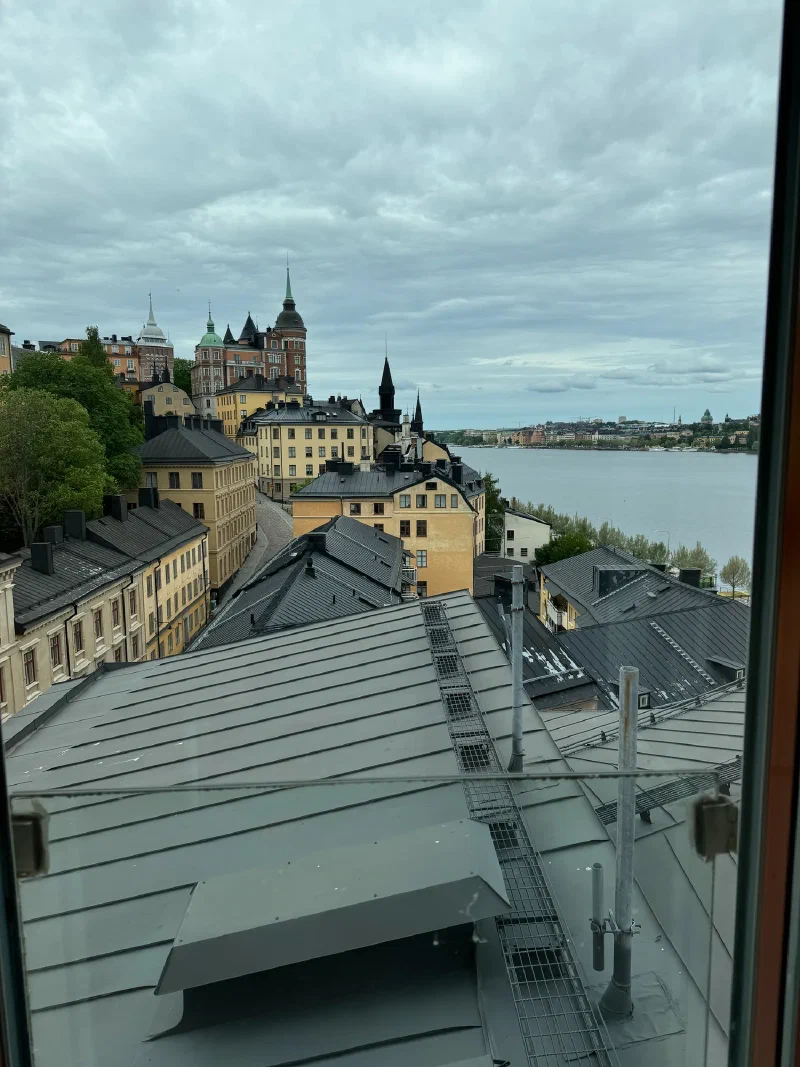
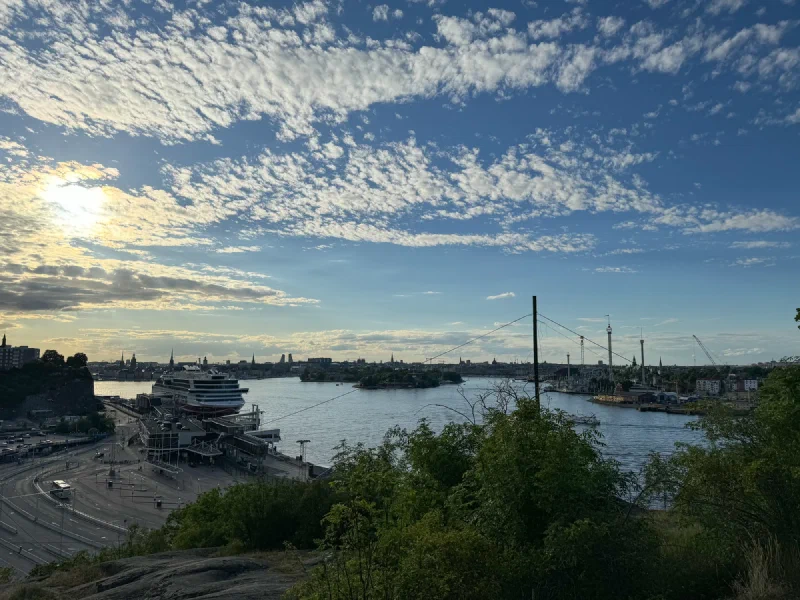
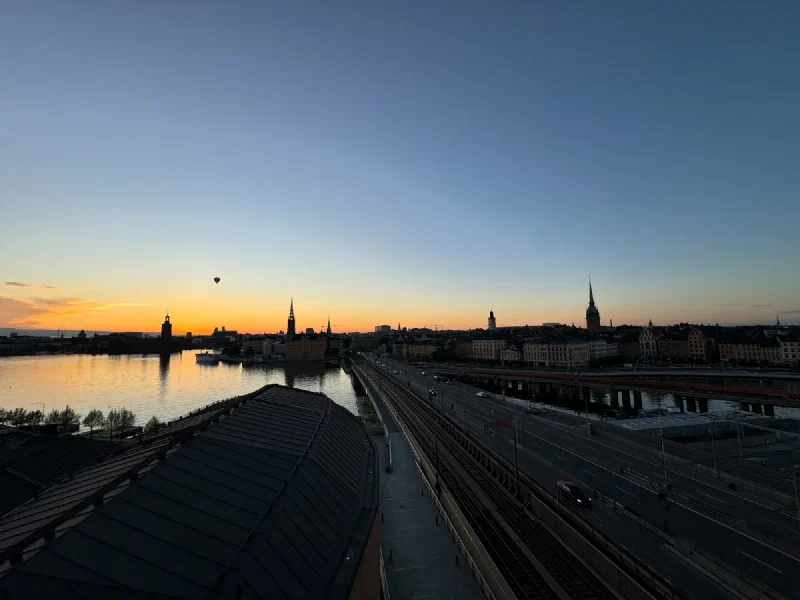
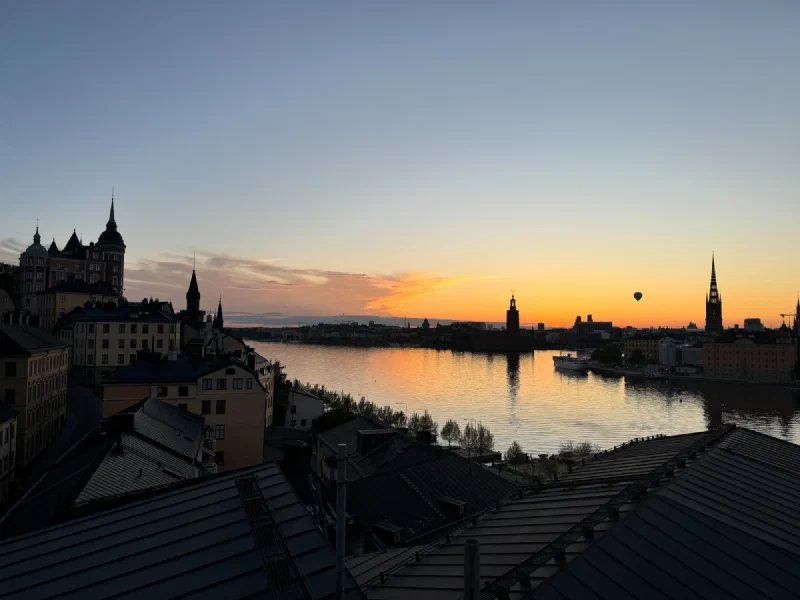
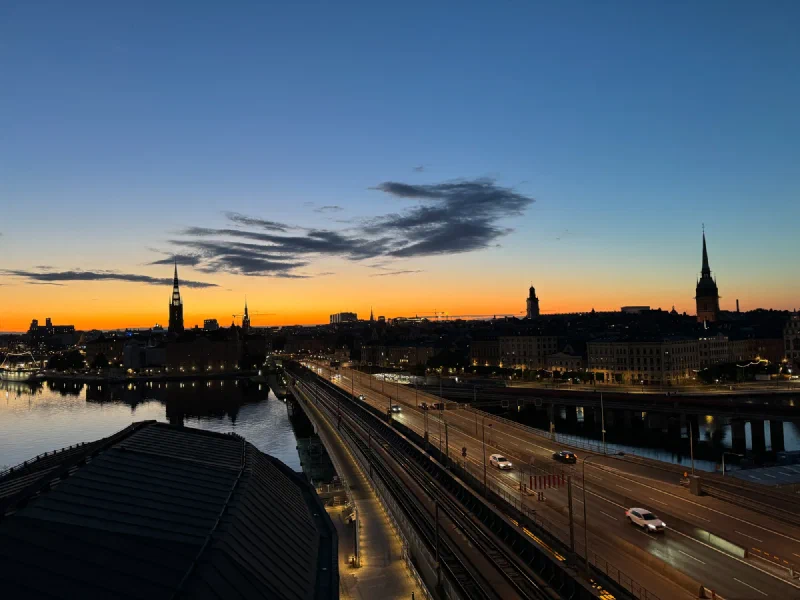
The last evening in Stockholm. The last evening in Sweden. The last evening of the whole Europe trip. Nicholas walked up to Maria Hissen on Södermalm, where the old elevator connects the hilltop to the waterfront below, and the golden hour light turned everything warm.
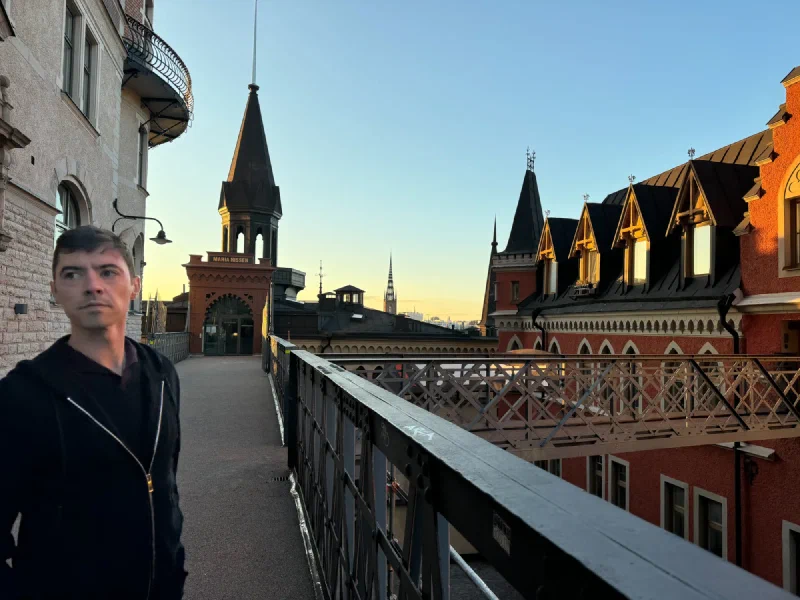
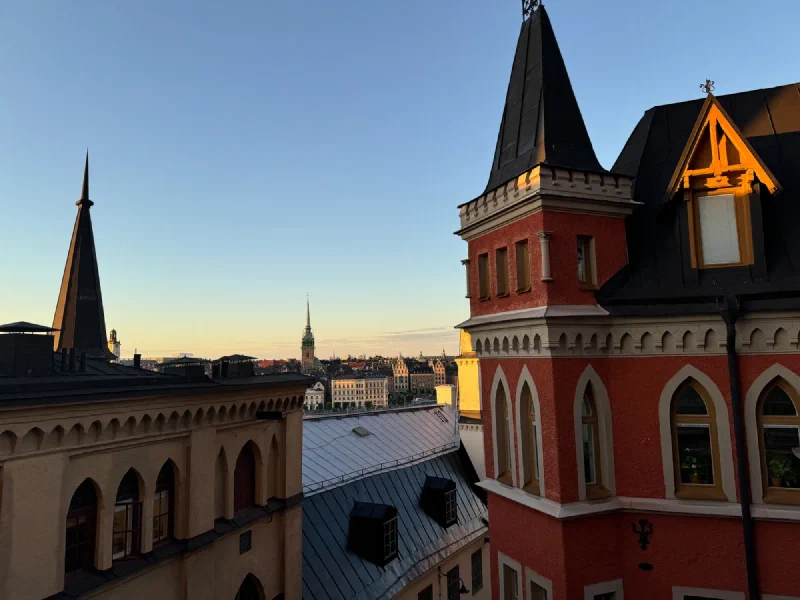
And then the sunset. A hot air balloon drifting over the skyline. Church spires going dark against the orange. The water catching the last of the light.
We flew home the next day. Back to Las Vegas. Back to the desert heat. Fleeing Sweden for the free country, just like the Fredrikssons before us.
But for two nights, we slept where Johannes and Andreas slept. We walked the corridors they walked. We stood behind the bars they stood behind. 144 years later, the family came back to Långholmen not in handcuffs, but in matching striped shirts from the gift shop.
Andreas is still missing, by the way. Changed his name, boarded a ship, and vanished. Ann-Marie has been looking for years. If you happen to have a great-great-grandfather who was suspiciously Swedish, suspiciously good with horses, and suspiciously vague about his past, we’d like to talk.
We have questions. And a striped shirt in his size.