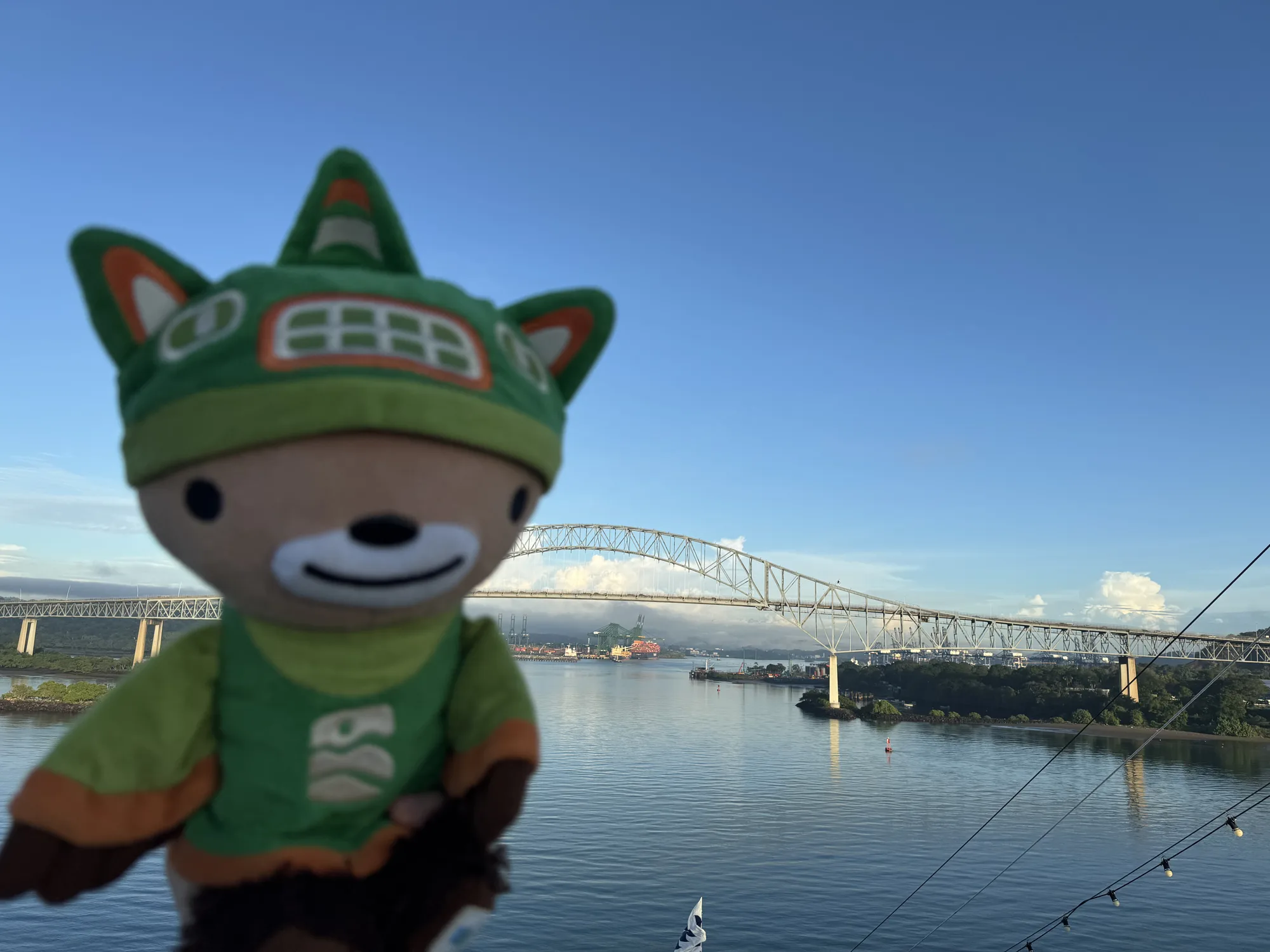

I woke up in the dark.
Not because anyone asked me to. Not because there was an emergency. Because today was the day. The Panama Canal. The full crossing. Pacific to Atlantic. And I was not about to let some family of early risers steal my viewing spot on deck.
It was 5 AM. The ship was still. Nobody else was out here yet. Just me, the warm tropical air, and the faint glow of the canal infrastructure somewhere ahead.
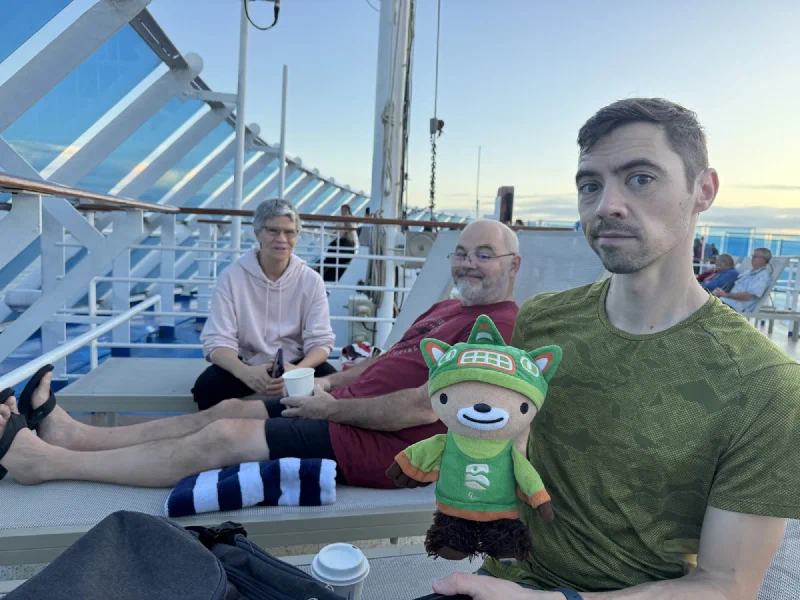
Eventually the sun came up, the coffee appeared, and everyone else finally dragged themselves out.
Then it appeared. The Bridge of the Americas. The Pacific entrance to the canal. Once you pass under that bridge, you’re committed.
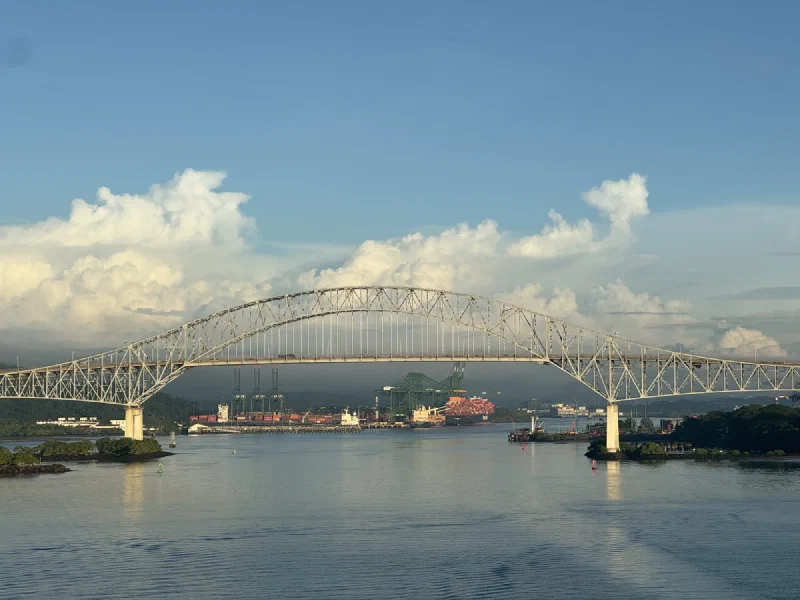
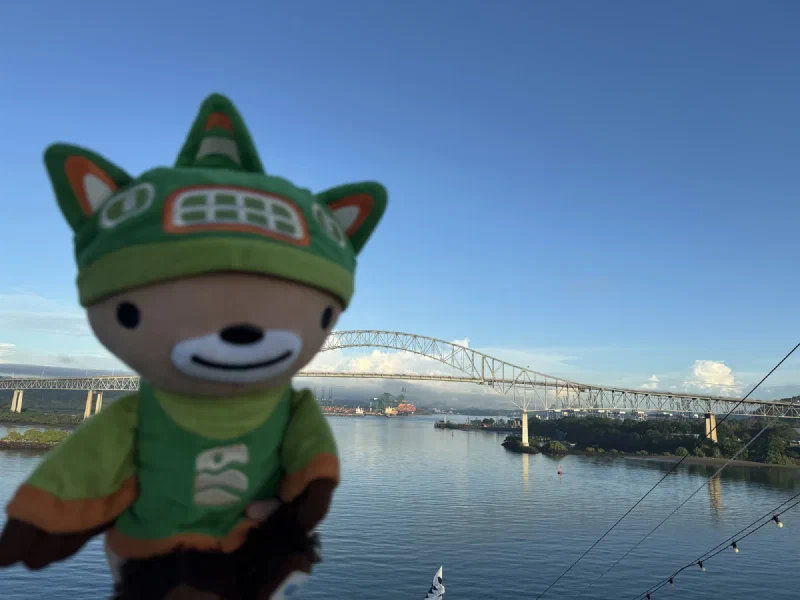
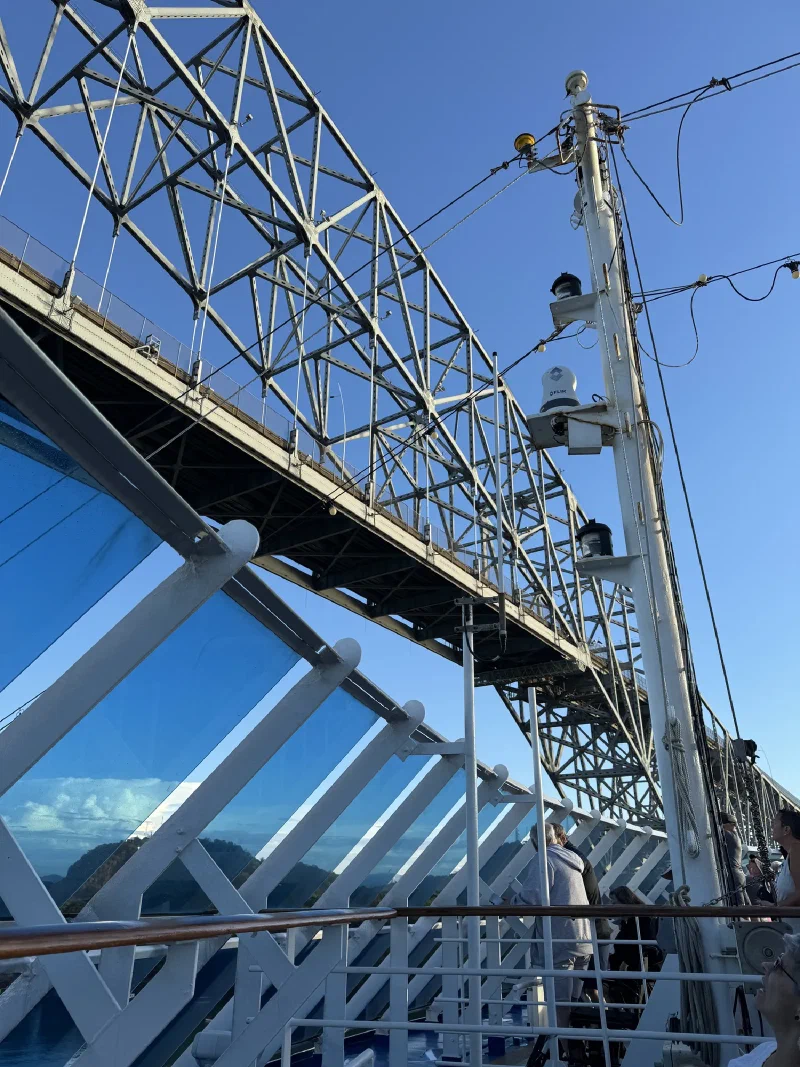
The scale of this thing hits differently in person. The canal is 82 kilometers long. Ships have been transiting it since 1914. Over a million vessels have made this crossing. It took 75,000 workers and ten years to carve through the Continental Divide. The French tried first and failed. The Americans finished it by building the world’s largest dam, flooding an entire valley to create Gatun Lake, and engineering a lock system that lifts ships 26 meters above sea level and then drops them back down on the other side.
We’re doing that today. On a cruise ship. With a buffet.
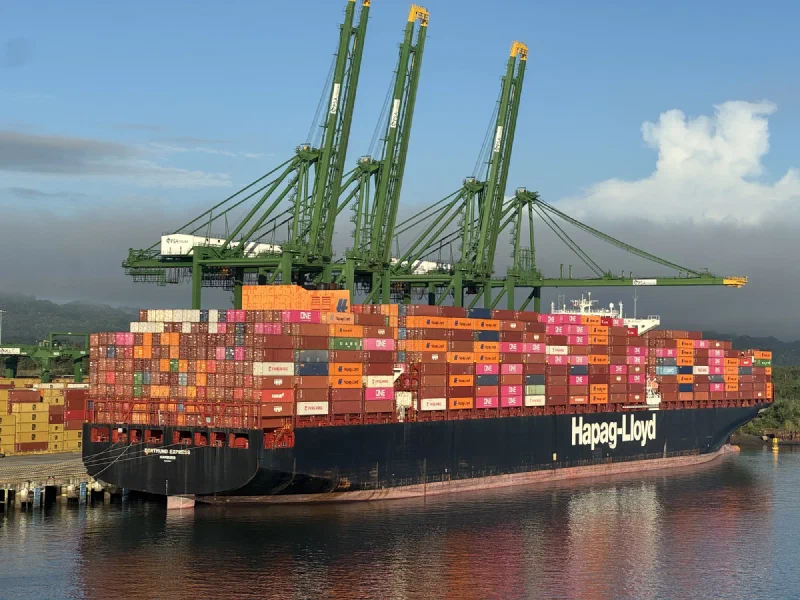
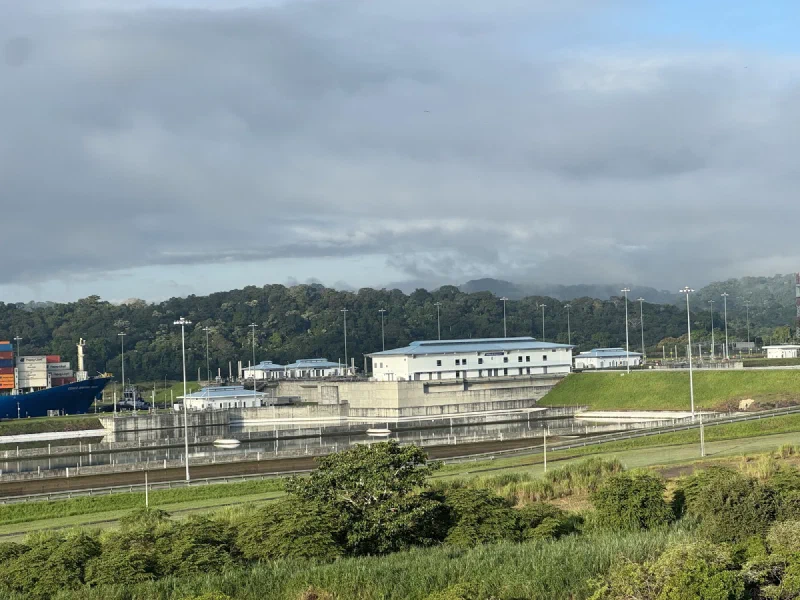
The approach to the first locks was slow and deliberate. You could see the system from a distance. Massive concrete chambers, steel gates, railroad tracks running along the sides.
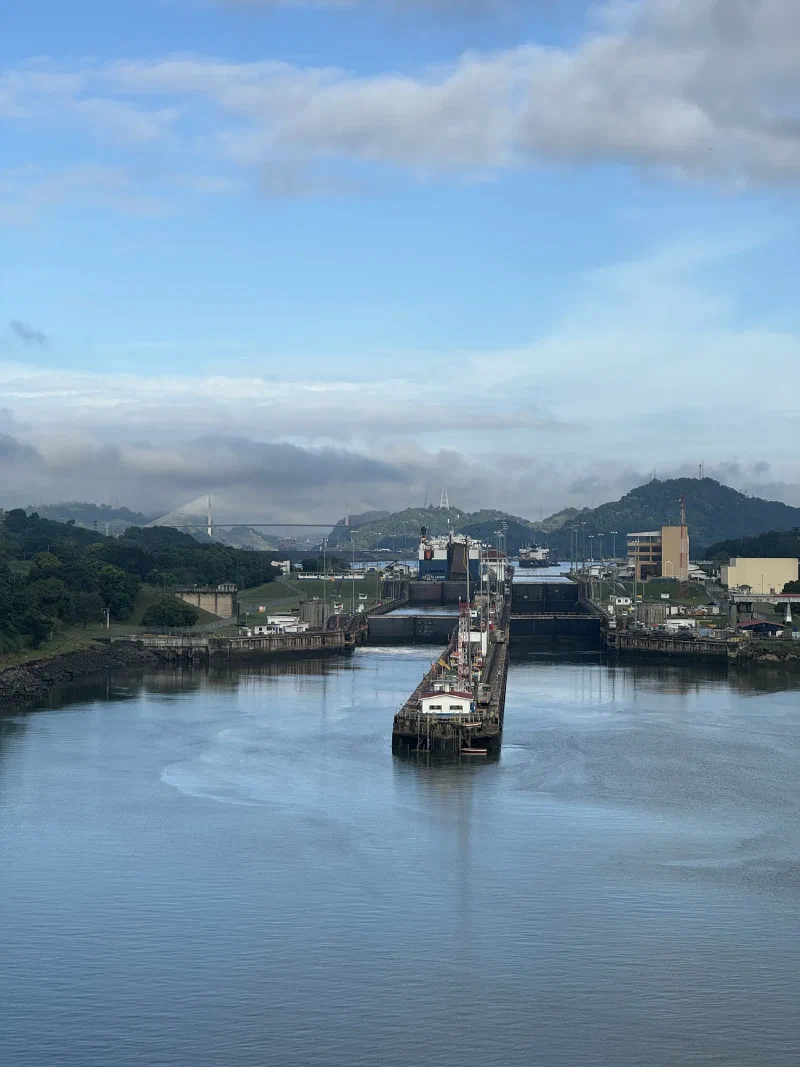
Then we were in. The lock gates up close are enormous. Each leaf weighs 700 tons. They swing open and closed on hinges like a door, no wheels, no tracks. Just hinges and gravity. They’ve been doing this for 110 years.
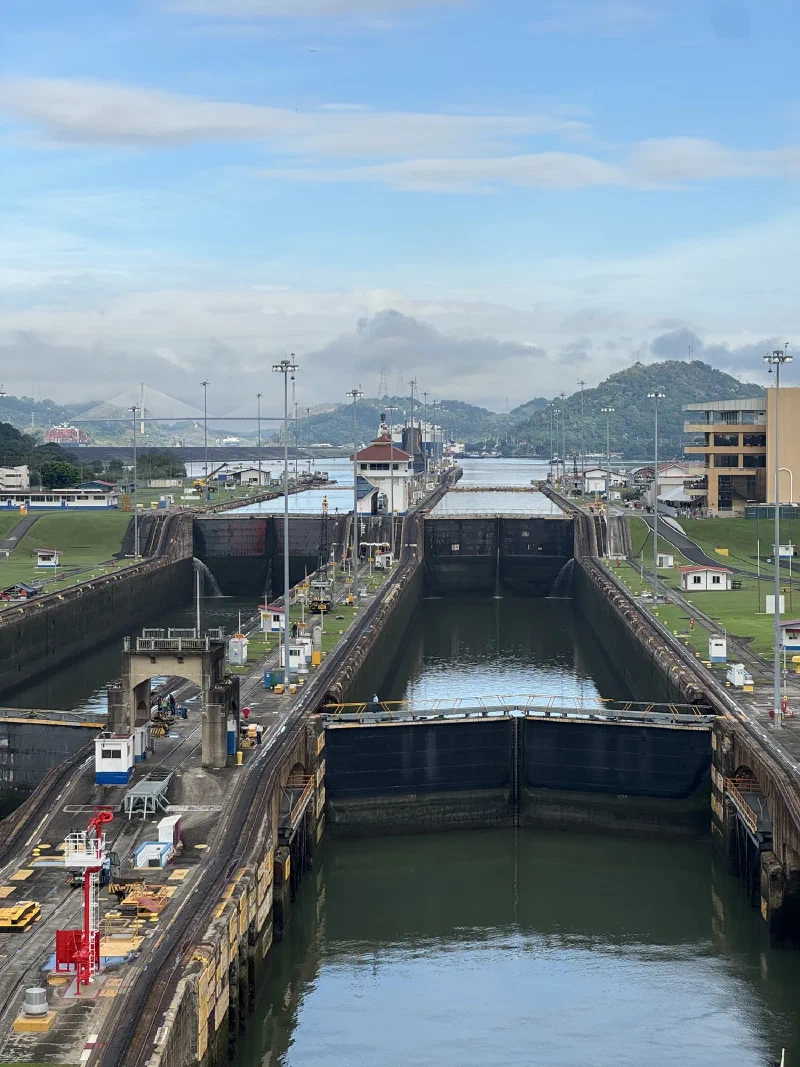
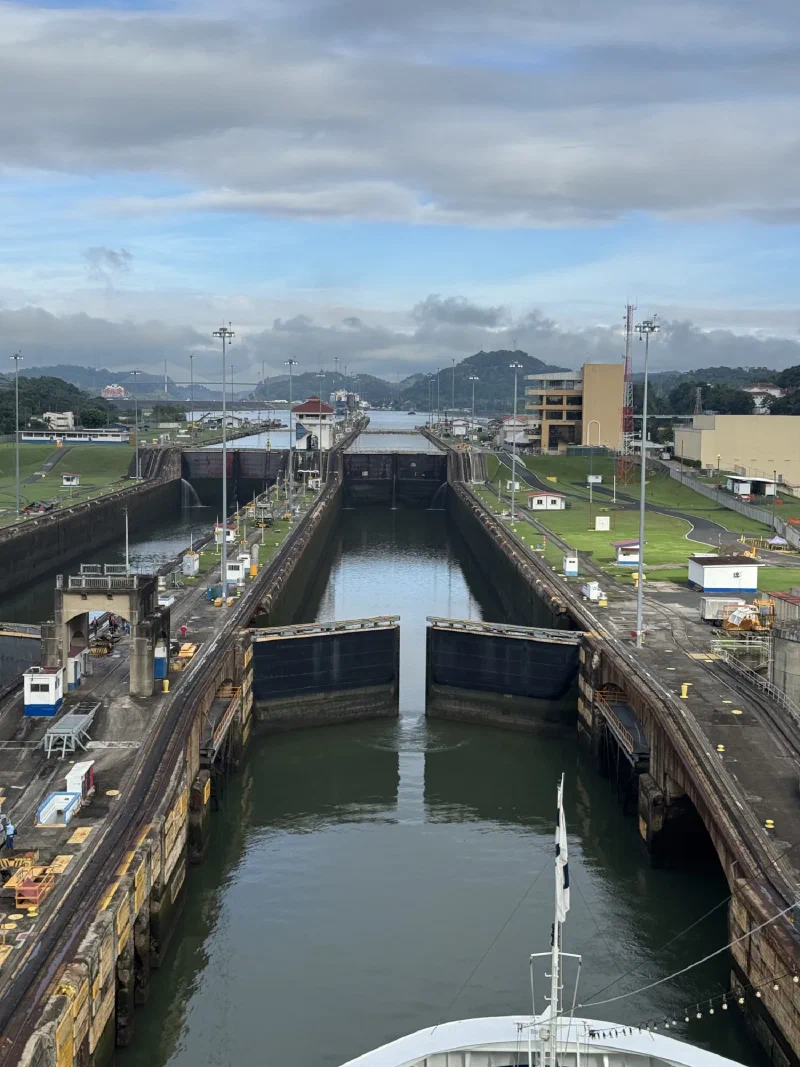
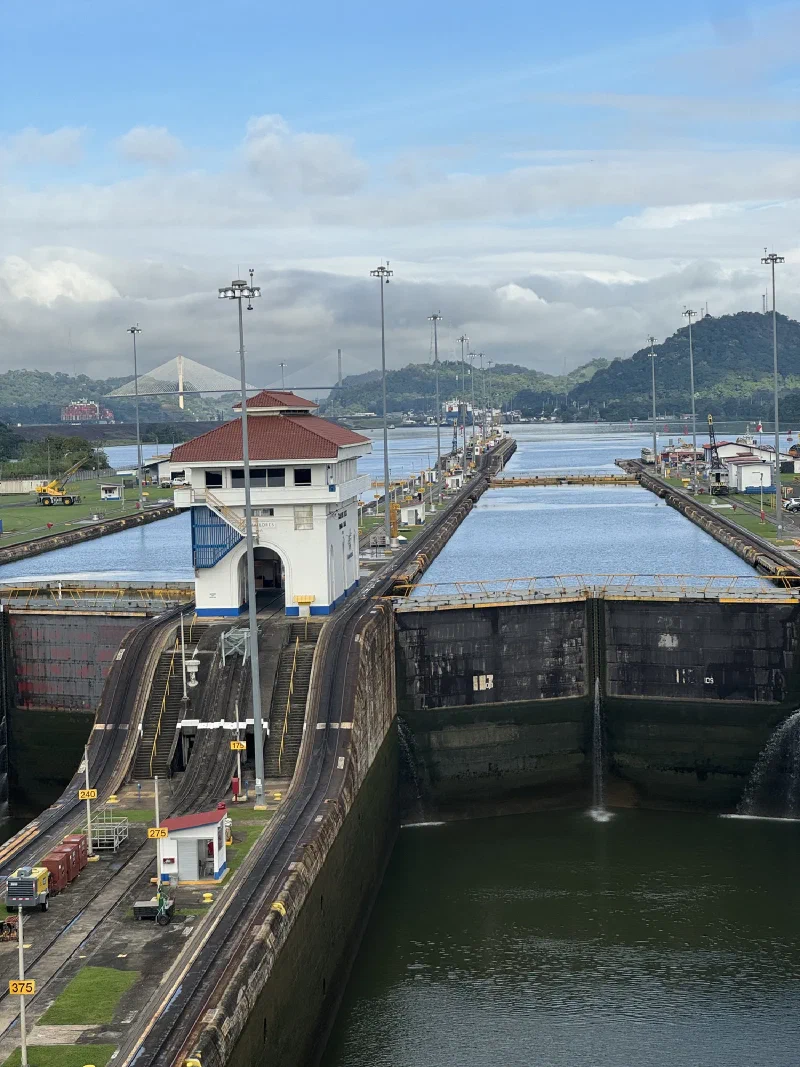
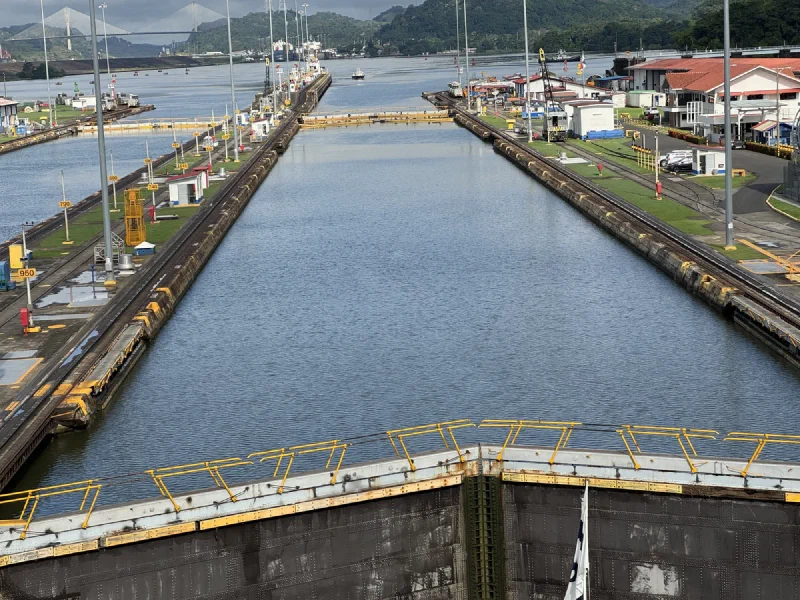
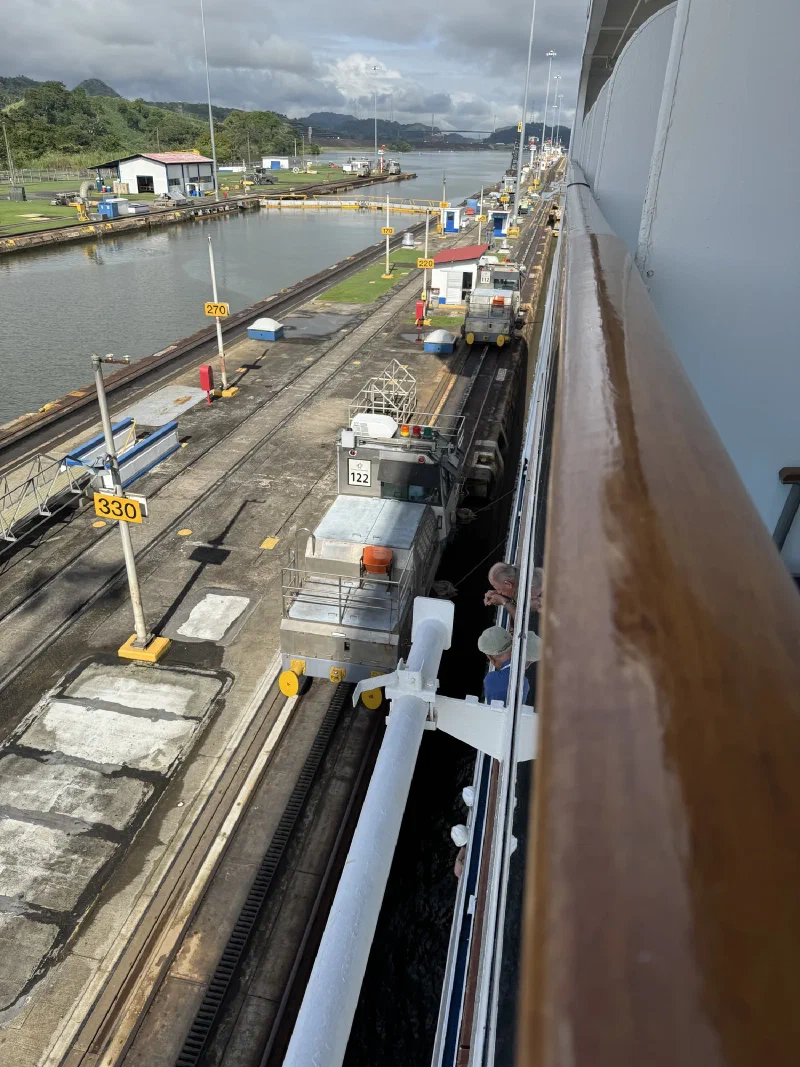
The locomotives running along the sides are called “mules.” They don’t pull the ship. They keep it centered in the chamber using steel cables so the hull doesn’t scrape the walls. Each one weighs 50 tons and costs about $2.4 million.
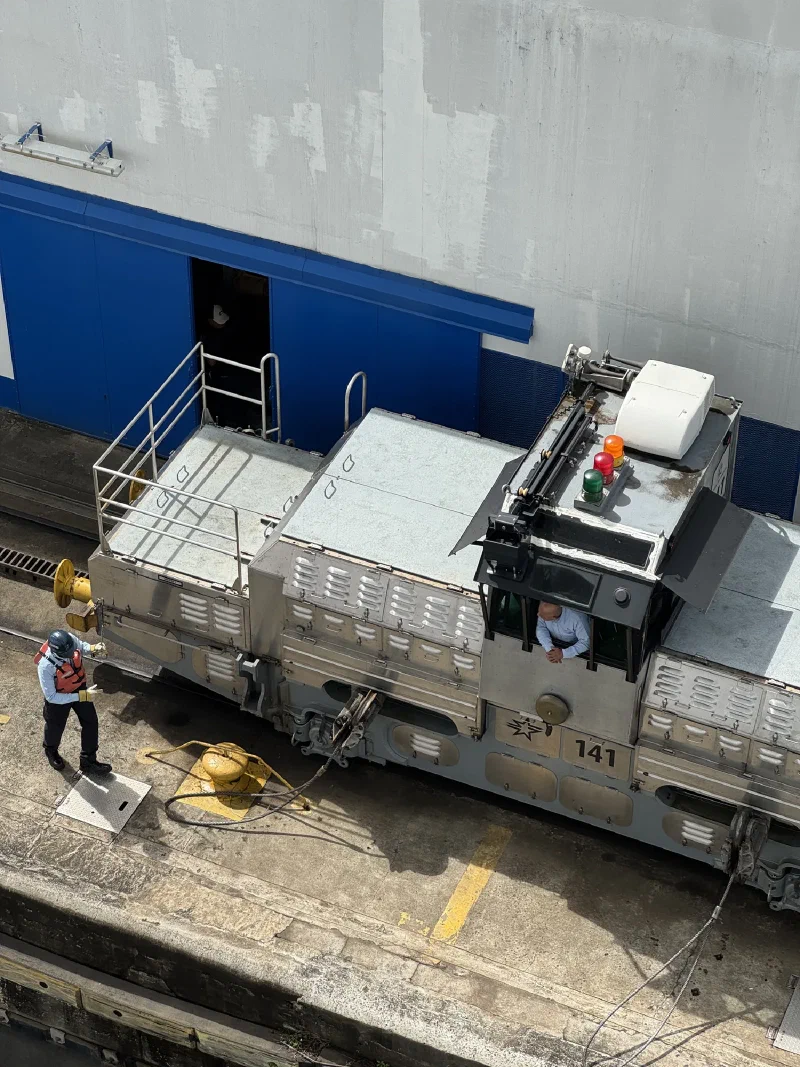
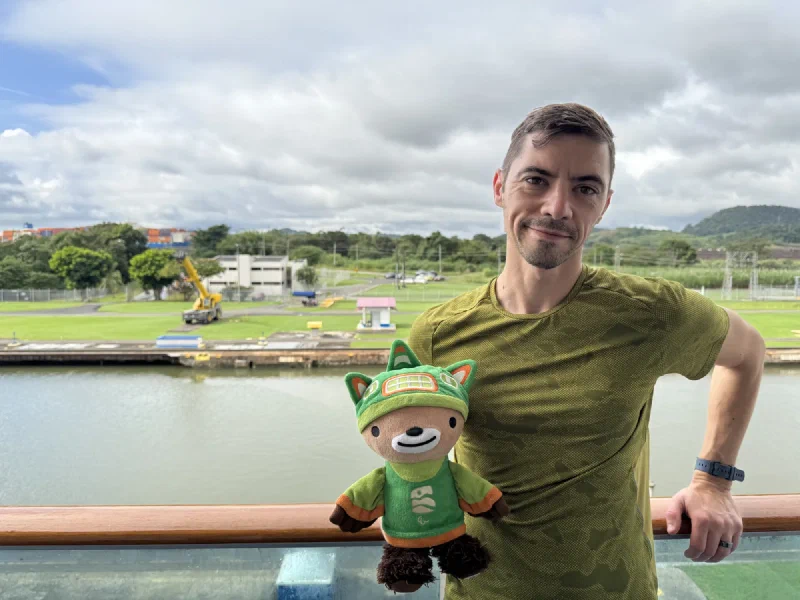
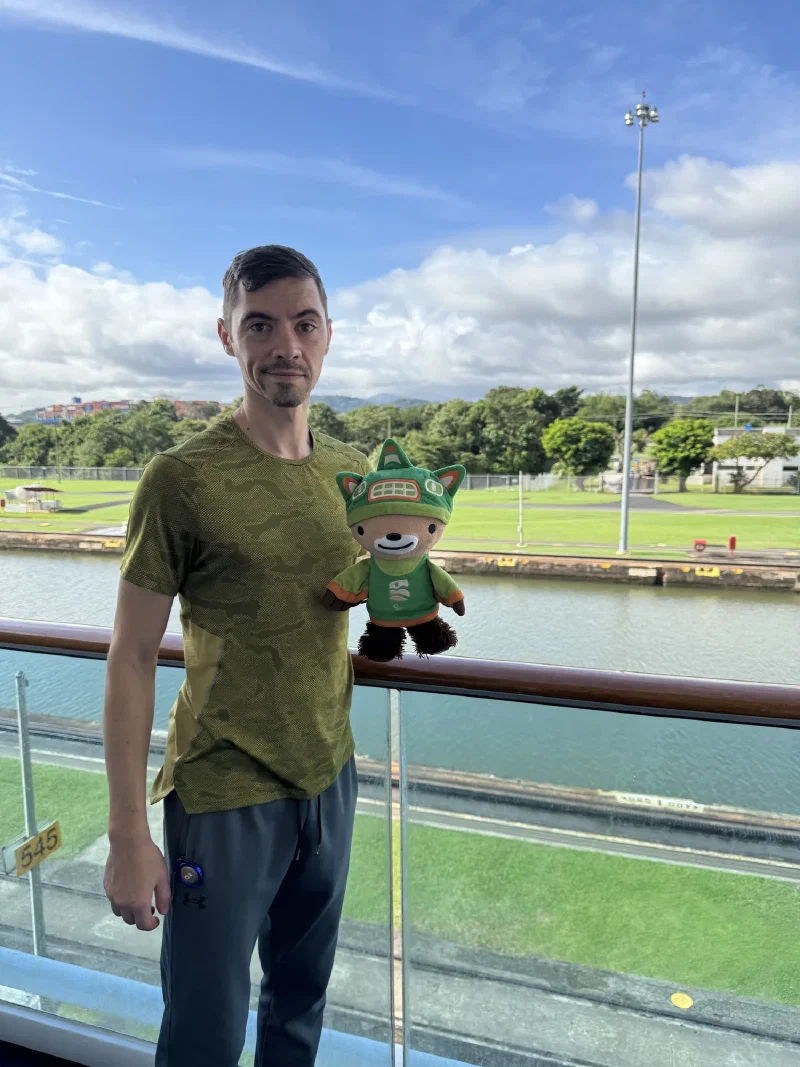
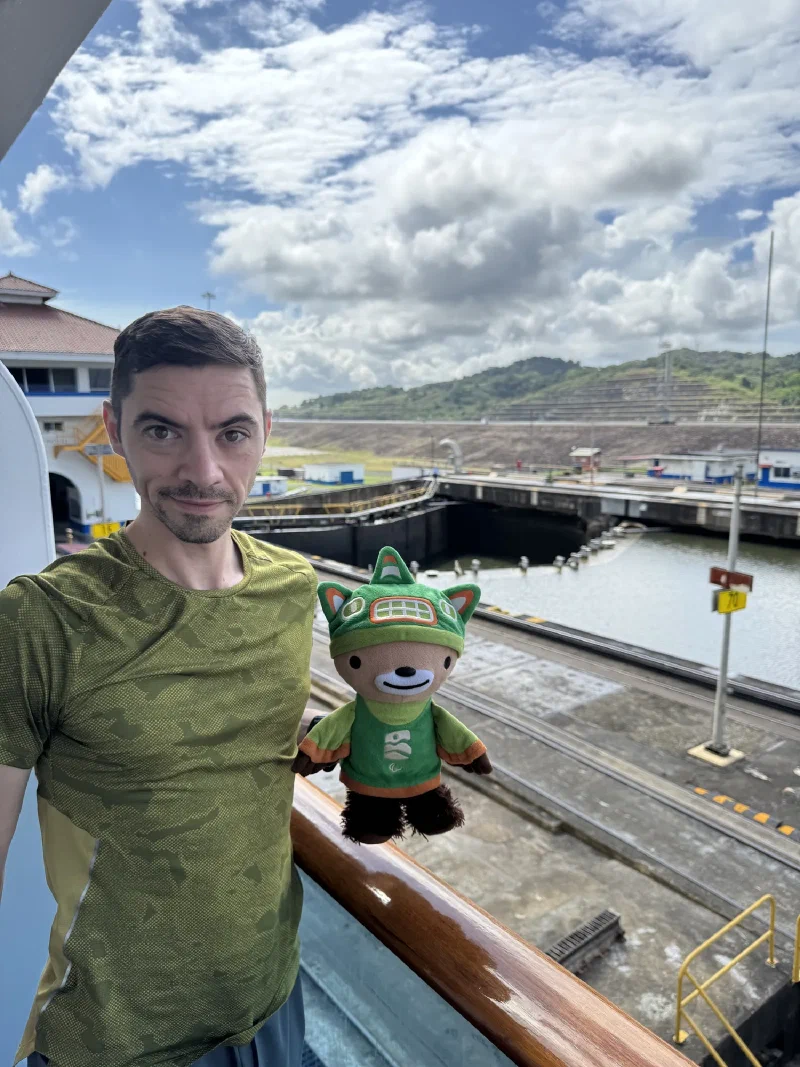
Then: Gatun Lake. The artificial lake at the center of the canal, 26 meters above sea level. Created by damming the Chagres River. When it was finished in 1913, it was the largest man-made lake in the world.
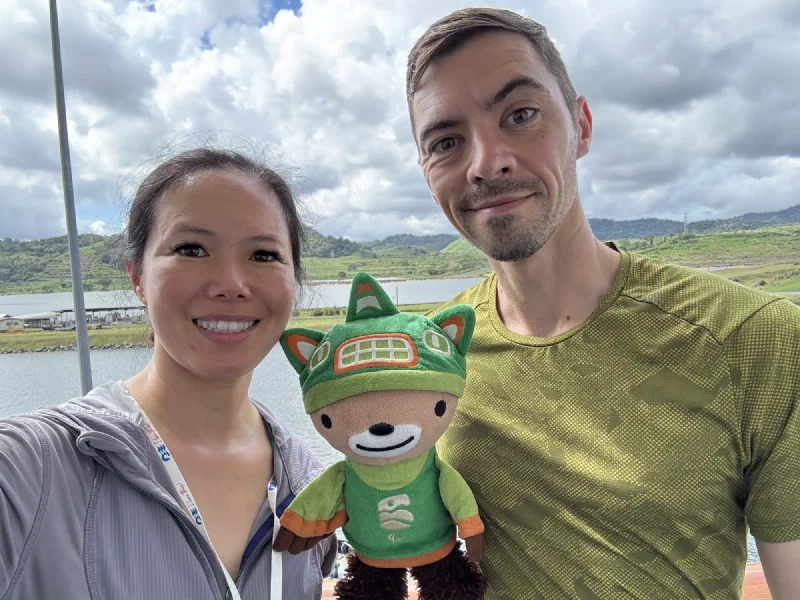
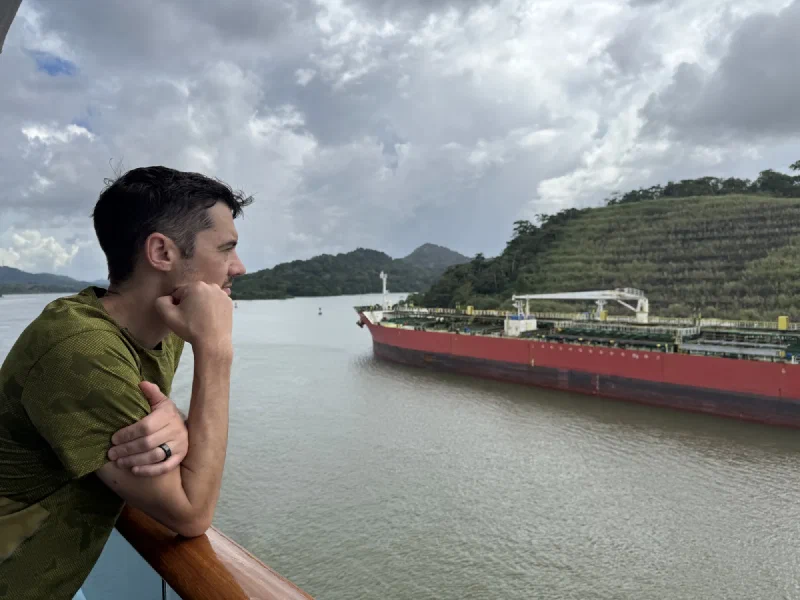
The crossing from Pacific to Atlantic takes about 11 hours total. You rise through the Miraflores and Pedro Miguel locks on the Pacific side, cross Gatun Lake, then descend through the Gatun Locks on the Atlantic side.
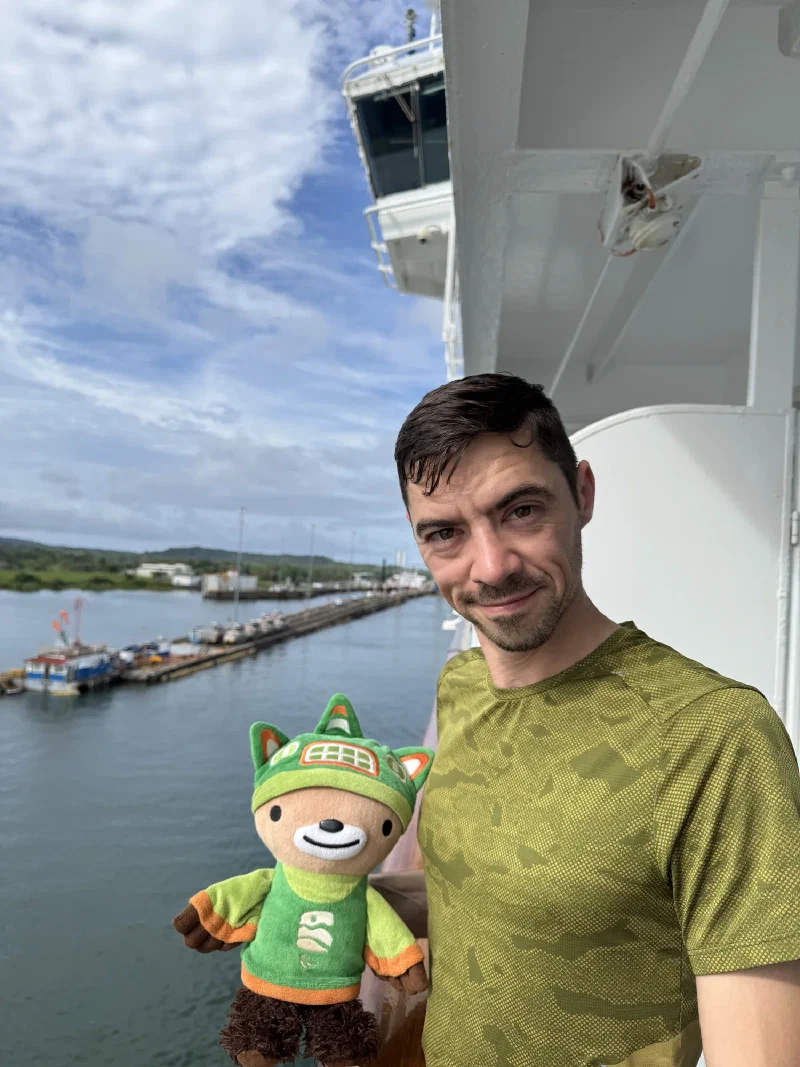
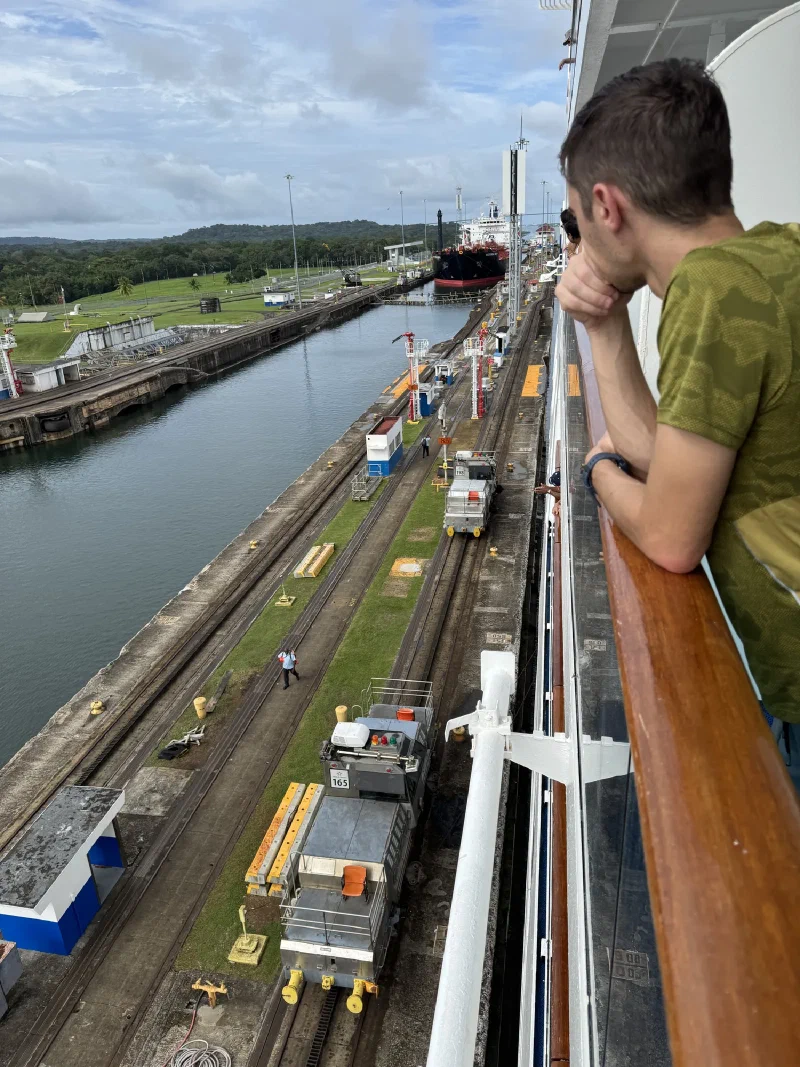
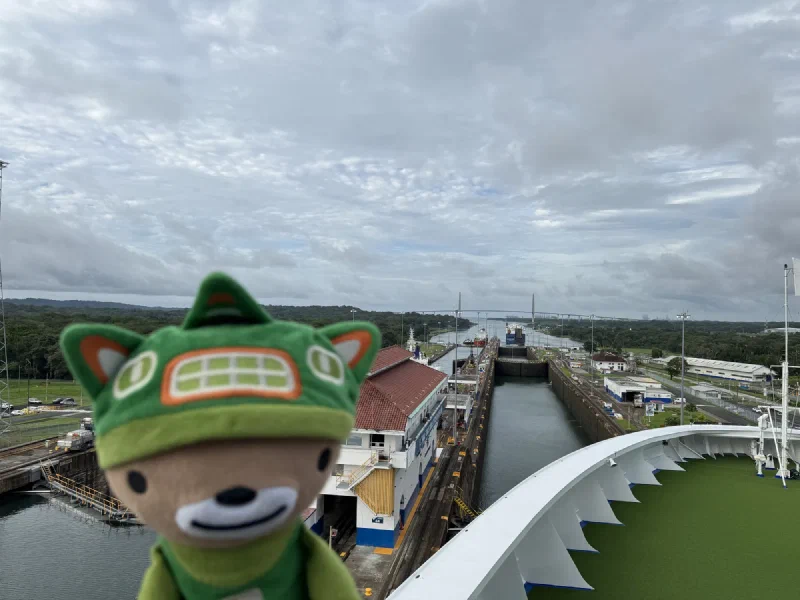
We made it. Pacific to Atlantic. 82 kilometers. Three lock sets. One full day from the pre-dawn darkness to late afternoon sunlight on the Caribbean side.
Nicholas was right to want to do this. It’s one of those things where seeing it on a screen gives you zero sense of the actual scale. The weight of those gates. The precision of the mules. The sheer audacity of flooding an entire valley and building a staircase for ocean ships across a continent.
I sat on that deck for eleven hours and didn’t once wish I was somewhere else.