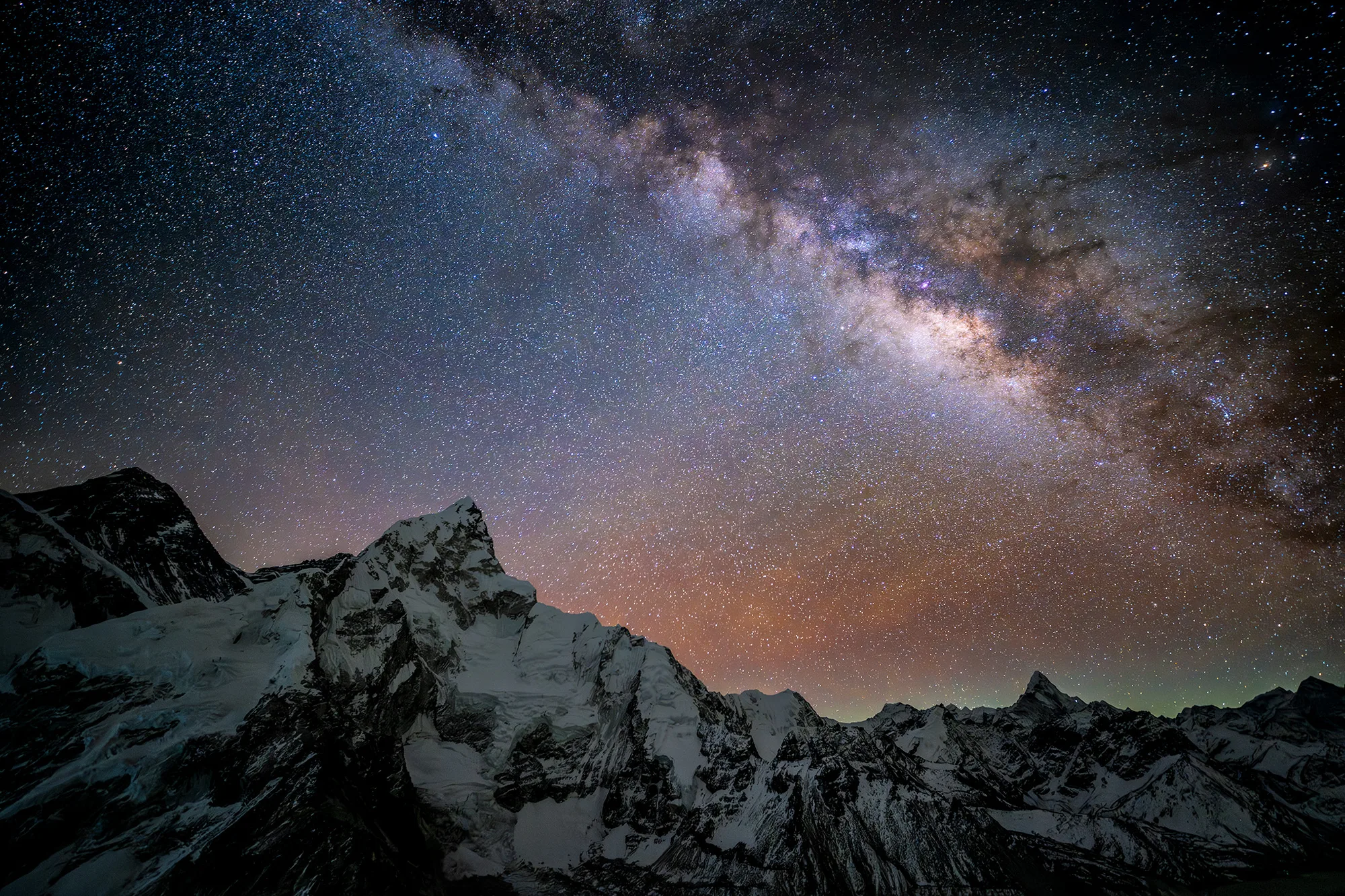

A while back I posted a preview. One frame, color graded on a phone in a freezing lodge, with a promise that the real versions were coming once we got home to actual monitors and actual software.
We’re home. They’re done. Four nights of no sleep at altitude, and here is what survived.
A quick reminder of what went into these, because I am not going to let it go. Four nights, Nicholas climbed out into the cold while the rest of us were sensibly unconscious and let the camera shoot the sky for hours. I supervised from inside a sleeping bag, which is the correct division of labour.
First, the Sherpa Memorial at Chukpi Lhara, near Lobuche. The one from the preview, except now it looks the way it was supposed to look. The Galactic Center over the valley, the snow peaks catching starlight, and a single cluster of lights at the bottom, which is the village of Dingboche being very far away and very small. Full story: Redemption at the Sherpa Memorial.
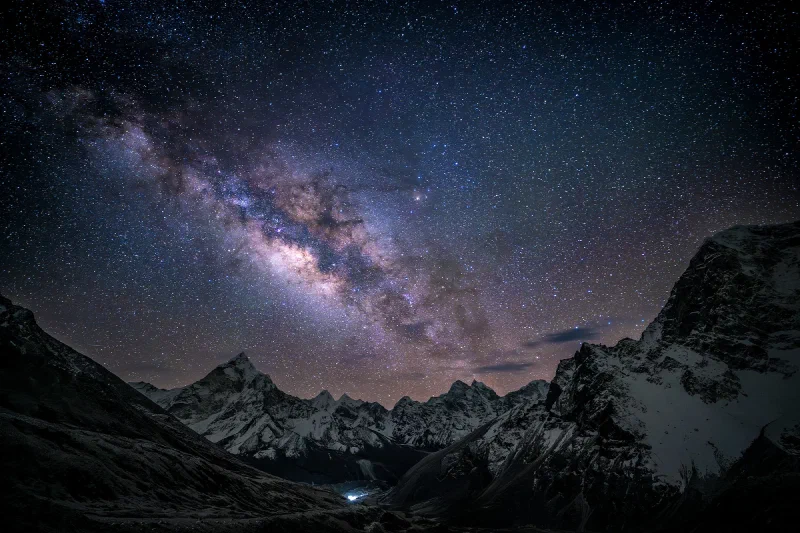
Second, Everest, from Kala Patthar at 1 AM. The highest and coldest of the bunch. No valley, no village lights, just a wall of jagged snow peaks and the most colorful sky of the set, a band of orange airglow on the horizon with a faint touch of green off to the side. The climb behind it: The Kala Patthar Speed Run, at 5,164 meters on three hours of sleep.
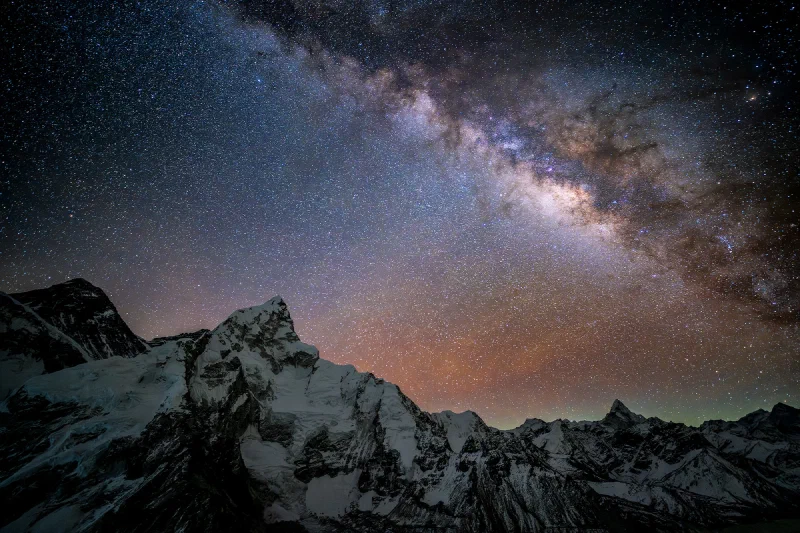
Third, Thukla, on the way back down. The hill Nicholas crossed an unfinished bridge to reach, because the sensible route did not exist yet and that was apparently not reason enough to pick a different hill. The path winds down toward more village lights, the core parked right over the central peak. The saga: Sleeping on the Mountain.
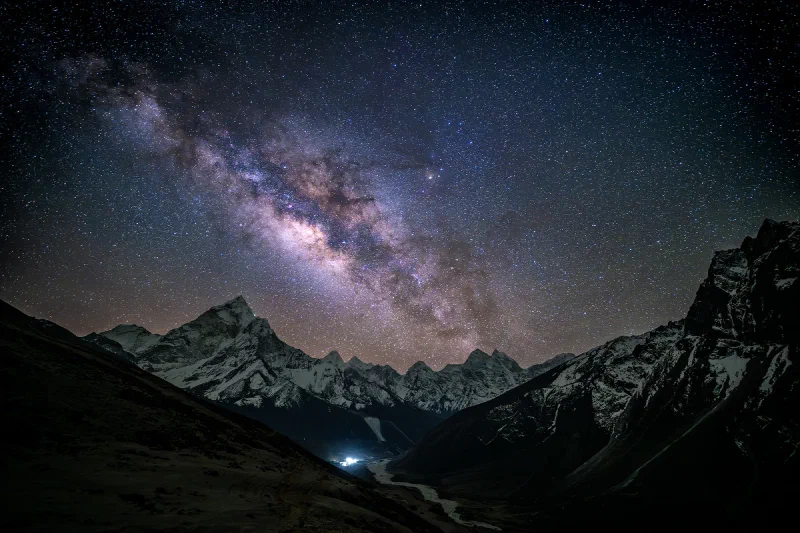
And then there is the one that got away. The first frame from the night framed on Ama Dablam, with a new moon and the Milky Way set to rise right behind the peak. You can see it starting. The dust band curling out from behind the mountain, green airglow along the ridge, and the Galactic Center still tucked behind that big peak on the left, about to climb into the open.
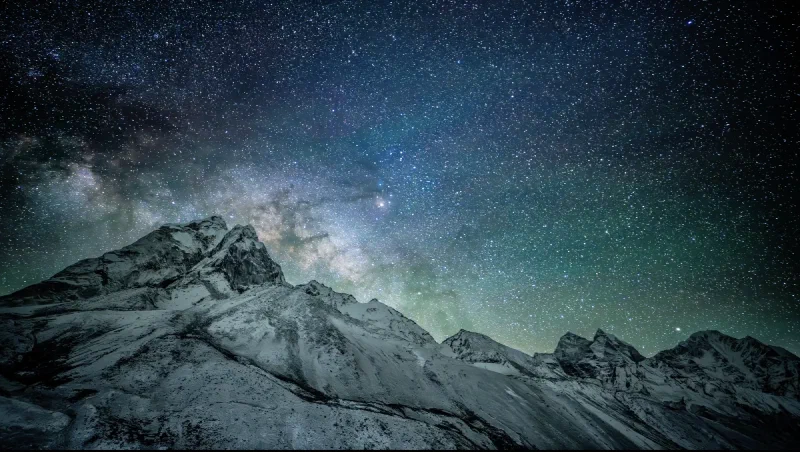
It never made it. A frozen lens quietly dropped its aperture a few frames in, and everything after this went pure black. Five hundred photographs of nothing, and one early frame that survived to show what it would have been. The full, gutting story is in The Astrosaster.
The stills are only half of it. The real point of standing in the cold for hours was the motion, the stars actually wheeling over the Himalayas, which does not fit in a photo. So Nicholas cut it into a short film.
Four nights of suffering, three keepers, and one bear who stayed warm the entire time and regrets nothing.