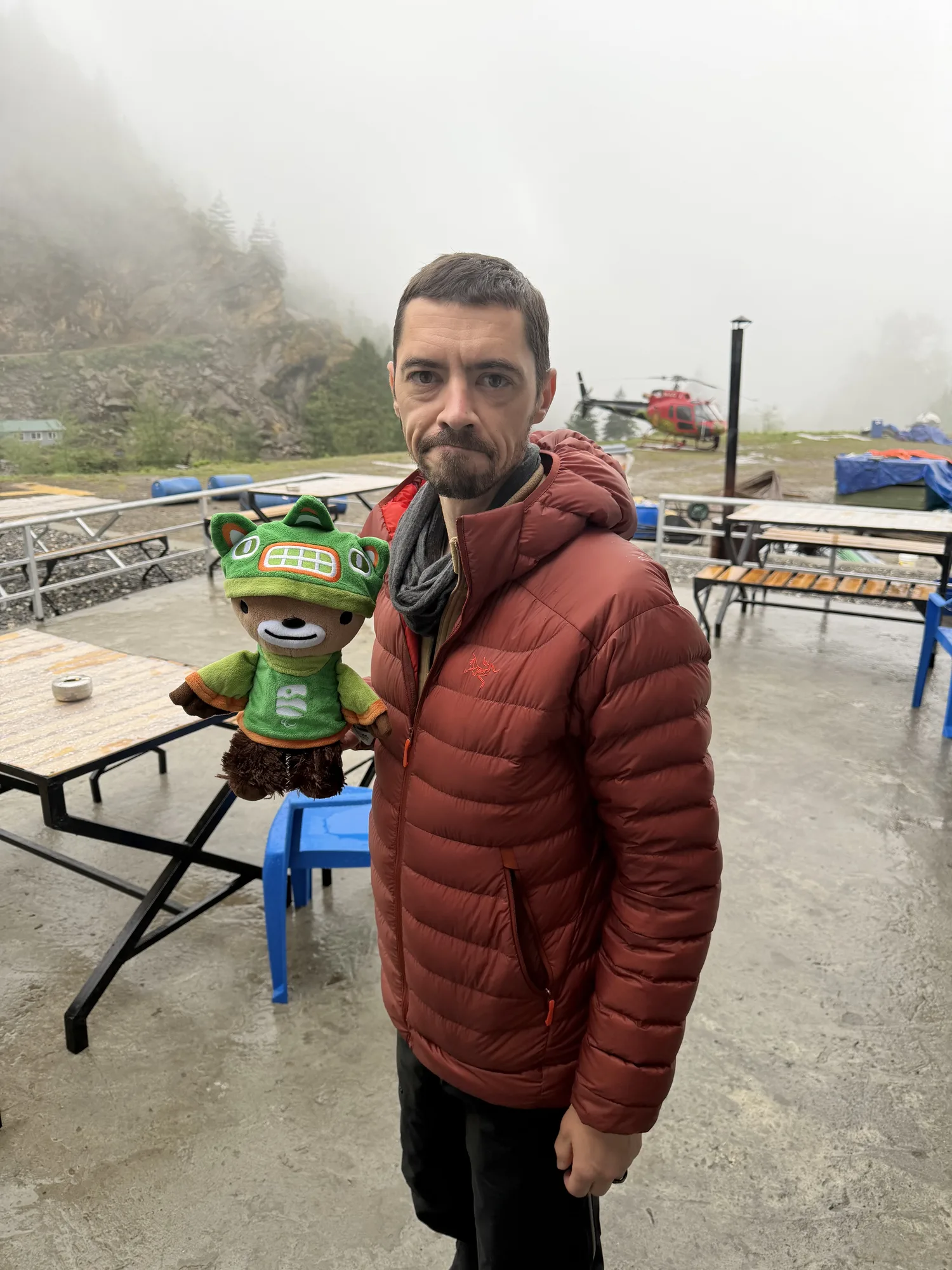

The trek was officially behind us. We’d said the goodbyes, handed out the red envelopes, eaten the farewell dinner under the golden dragon ceiling. All that was left was the easy part. Pack up, walk over to the Lukla airport, climb into our helicopter, and float back to Kathmandu in time for a hot shower and a soft bed. After two weeks on the mountain, we had earned the lazy exit.
Then we woke up and looked outside. Rain.
Here is the thing nobody tells you about flying in the Himalayas. The helicopters and the little planes can only fly VFR. That stands for Visual Flight Rules, which is exactly what it sounds like. The pilot flies by looking out the window. No flying through clouds, no trusting the instruments to thread you between two mountains you cannot see. If it is socked in, you do not go. And I can fly, so I am allowed to be smug about knowing this.
So a rainy morning at Lukla is not a delay. It is a maybe.
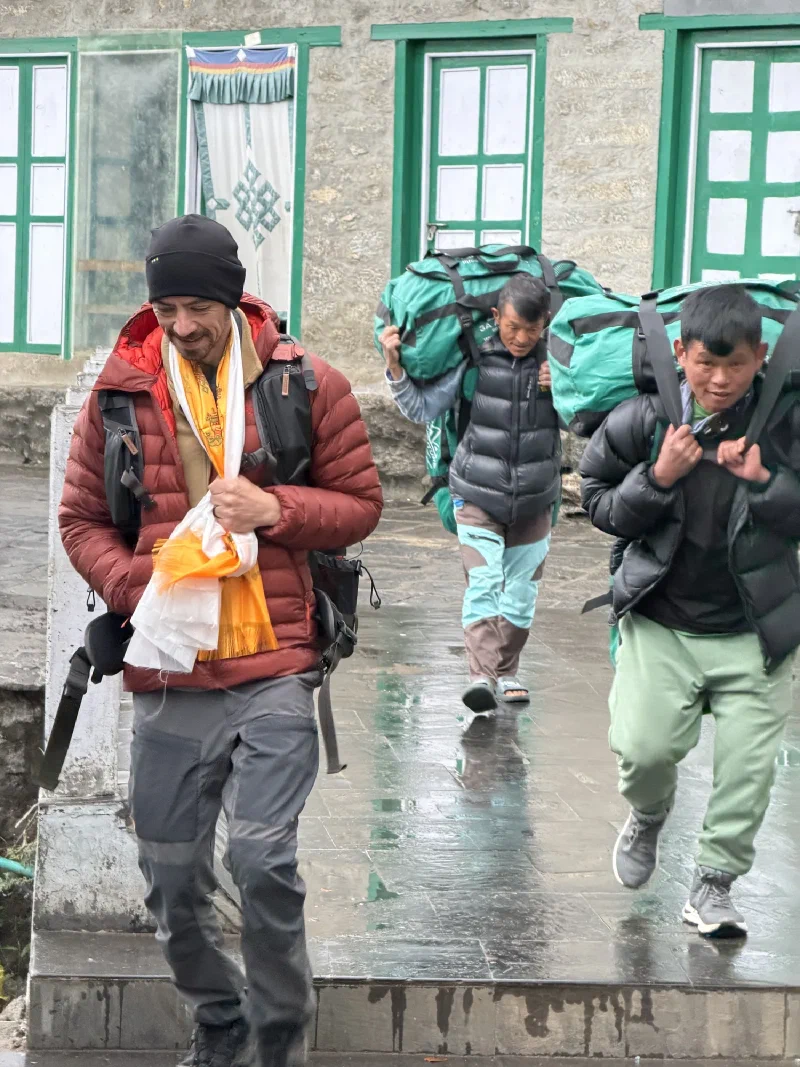
We went anyway, because the airport tells you to come anyway. They handed Nicholas a fan of boarding passes for a helicopter that was not there and might never be.
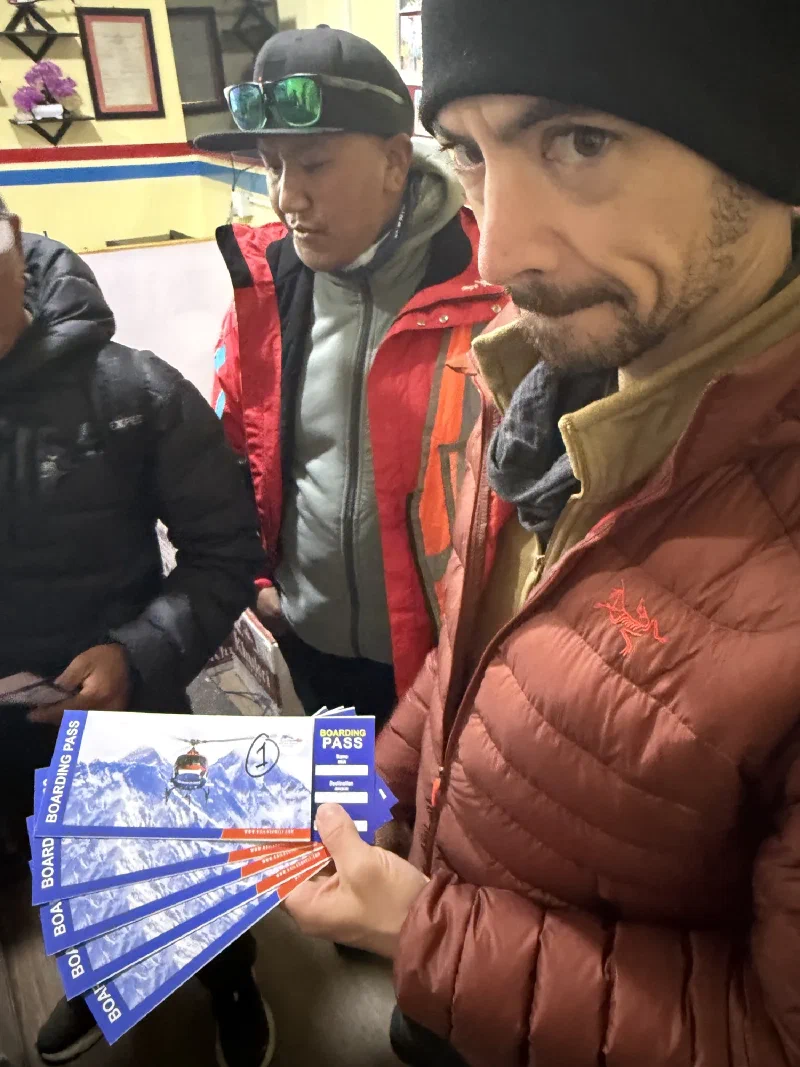
Just wait a little, the airport said. The sun might come out. The helicopters might make it up. We looked out the window. The sky was getting foggier, not clearer.
After about thirty minutes, D.B. explained how this actually works. The cloud layer settles down into the valley as the day goes on. Mornings are clearest. So the longer you wait at Lukla, the worse your odds get, not better. But there was a move. If we left right now and hiked straight downhill for an hour and a half, we could reach the next town, which sits low enough that the clouds were still above it. The helicopters could land there. We could still get out today.
The catch with simply waiting it out: if the weather goes bad, everyone who was supposed to fly today is stuck in Lukla too. Then tomorrow there are twice as many people fighting for the same flights. A few bad days in a row and you get a genuine traffic jam of trekkers with no way down. There is always walking, of course. That only takes about two weeks. Or you can take a jeep from the next town, which is two days across the kind of washed-out dirt roads that are somehow less safe than flying through clouds.
So we made the call. Book it downhill on foot and try to beat the weather to the next helipad. A race against the sky.
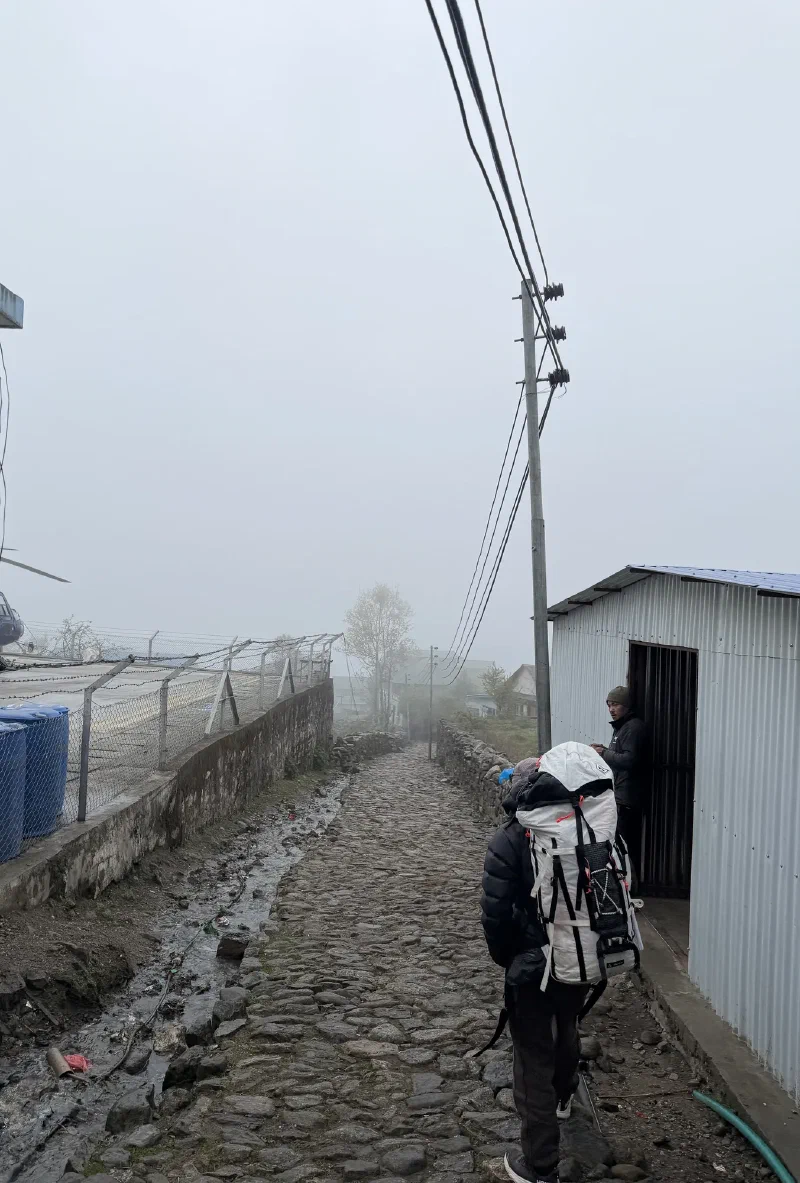
Nicholas and Pokin did not look convinced that the weather was going to be any better down the hill. Pokin especially, who was still sick and now hiking again instead of sitting on a helicopter like a normal recovering person.
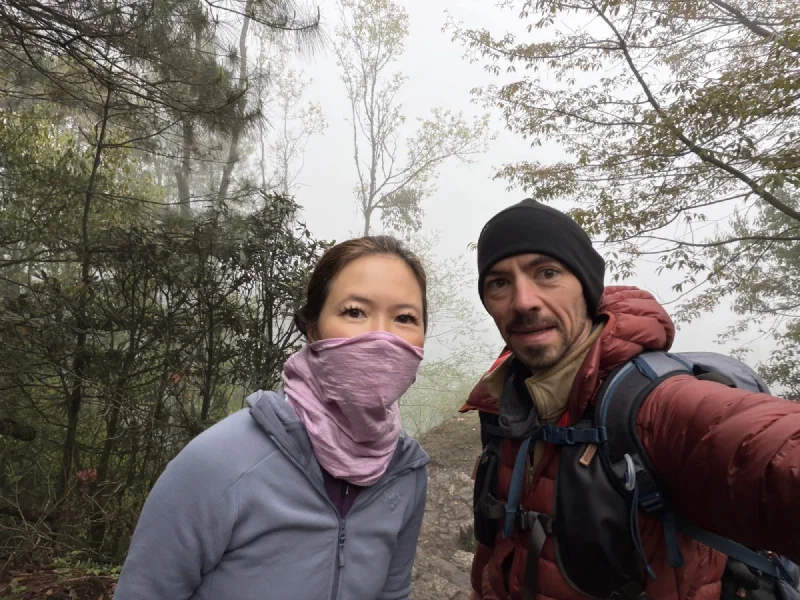
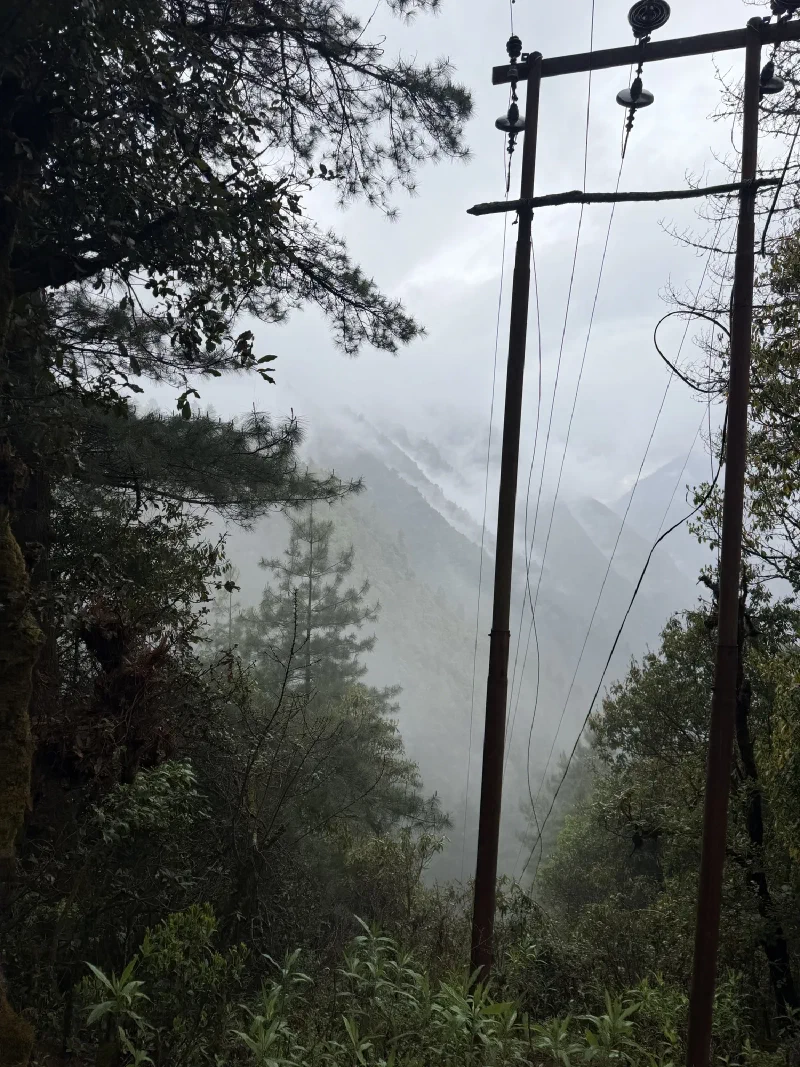
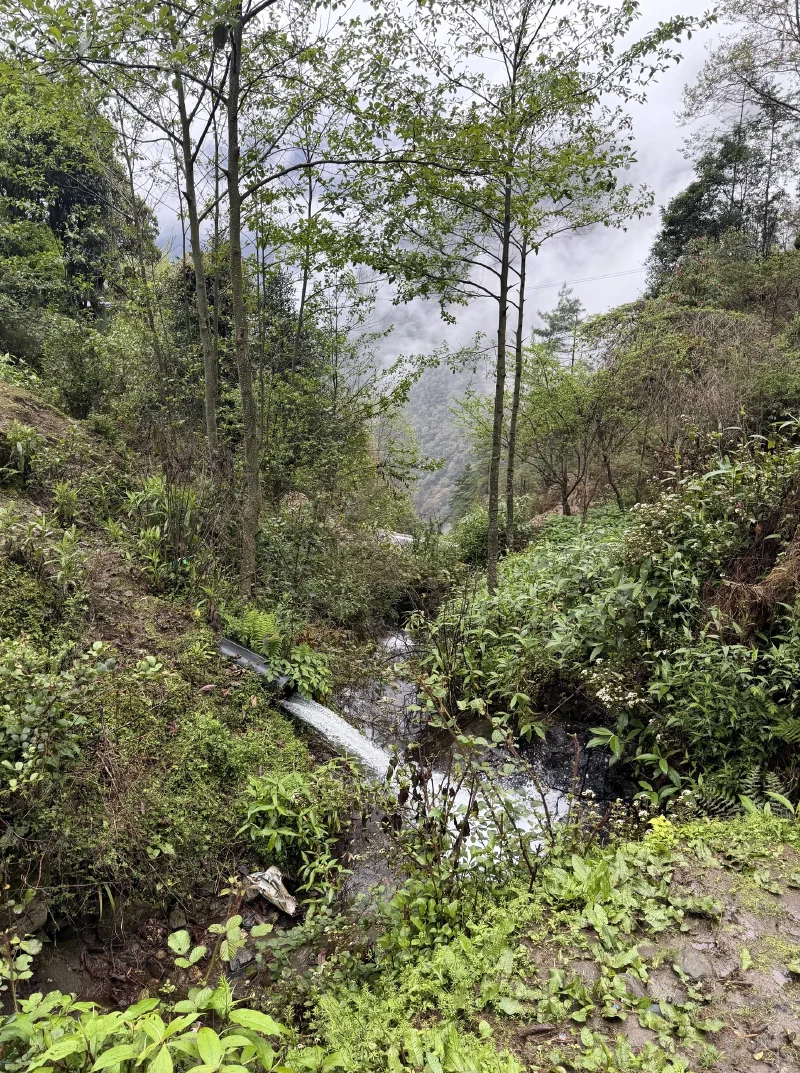
The skies did not improve. They committed to the bit.
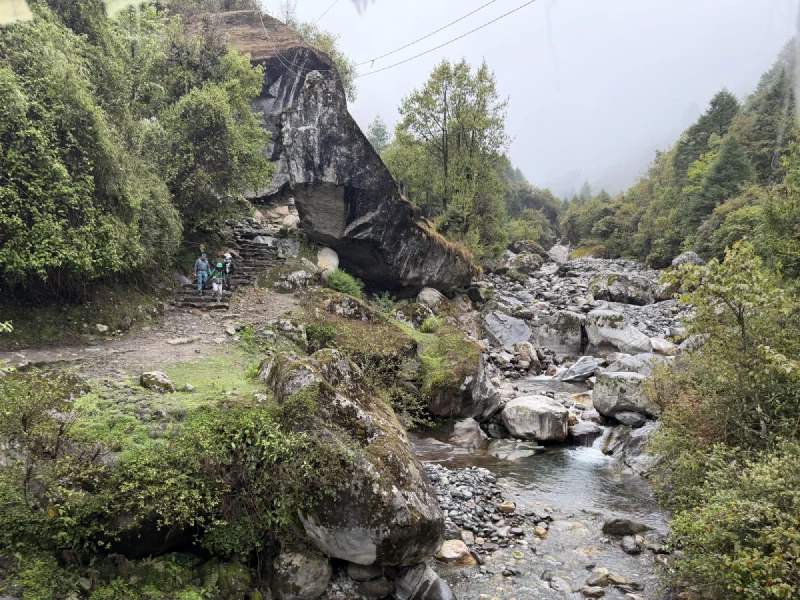
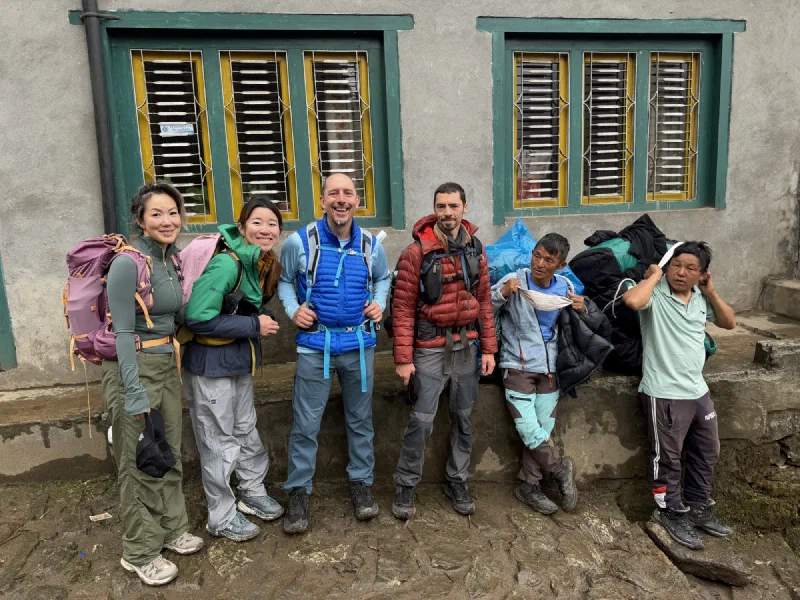
Halfway down, the crew stopped at a trail hut to regroup and practice looking optimistic. Po On, Alice, Steve, Nicholas, and the guides, all wearing the specific expression of people who have decided that smiling at the weather might help.
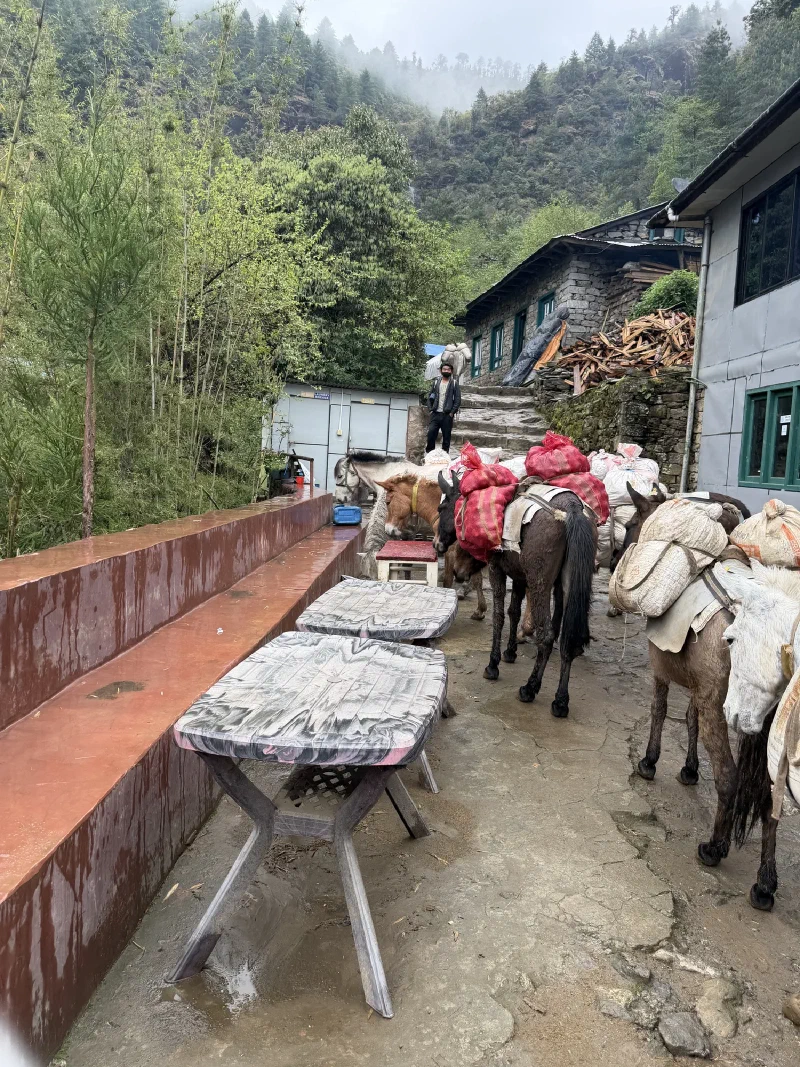
We passed loaded pack mules and the trail got properly rugged. This was not the gentle victory-lap descent anyone had pictured.
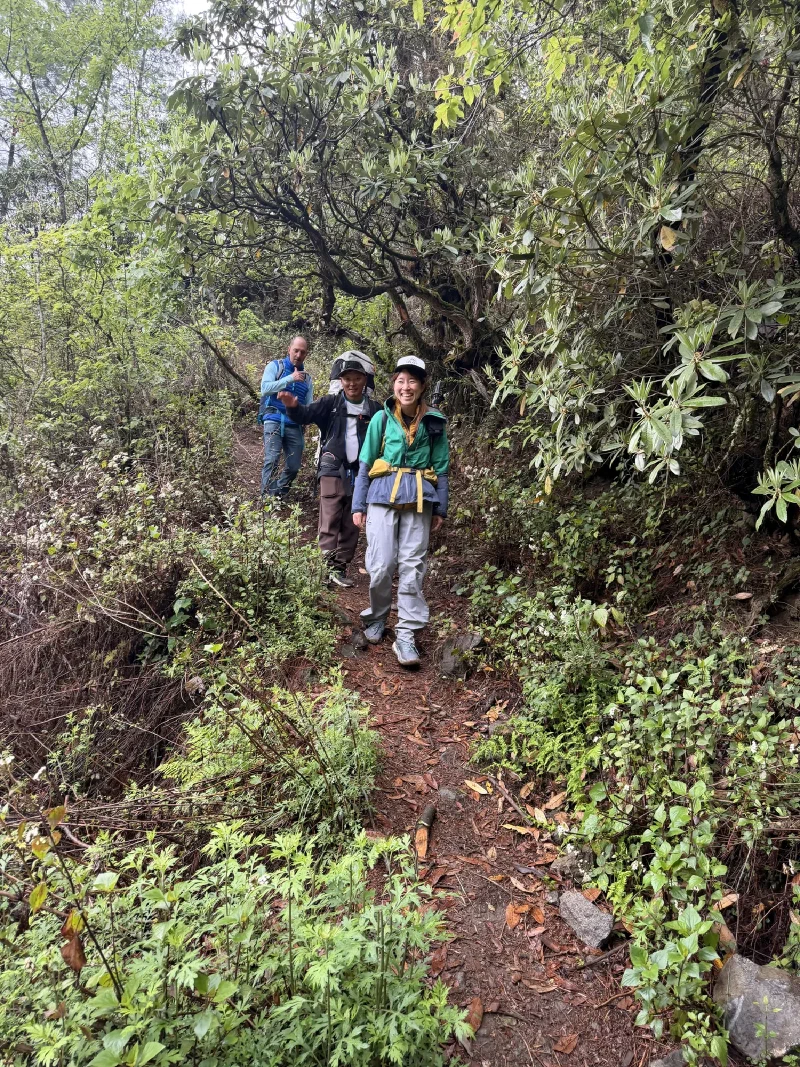
Then Surke came into view, a village with a half-built monastery on the hill above it. Somewhere down there was the helipad that was going to save us. In theory.
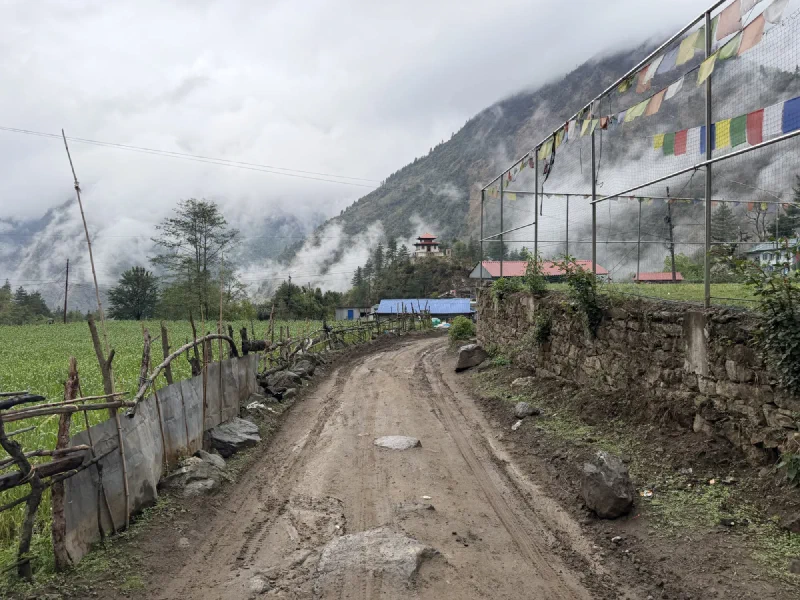
We got to the airport. I use the word loosely. It is a couple of helipads, a little terminal-slash-restaurant run by a Sherpa, and a whole lot of weather. Two helicopters were on the pad when we arrived. One of them lifted off almost immediately, empty, bolting for the valley before the clouds dropped any further and taking none of us with it. The clouds were not above us anymore. They were around us. There was no version of this that counted as VFR.
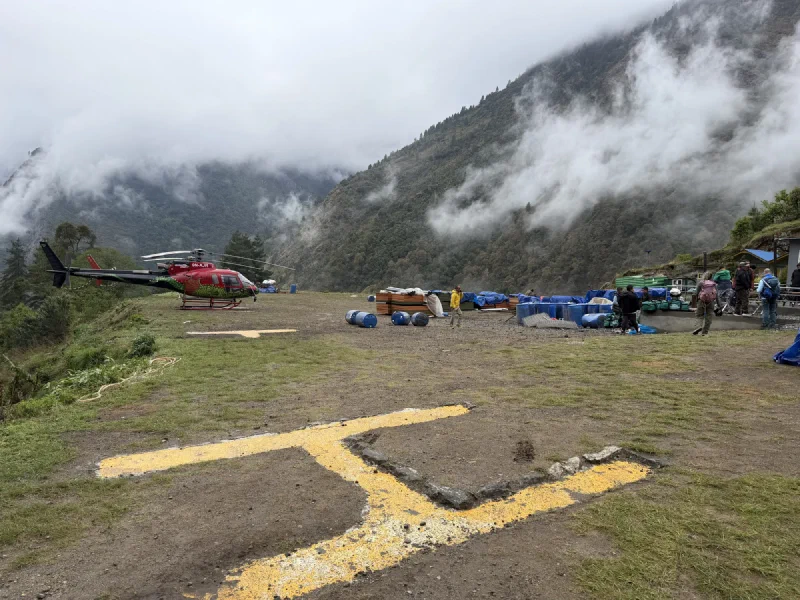
The porters peeled off here too. We’d already given them the proper send-off back in Lukla, dinner and tips and cookies, so this was just the practical goodbye. They were catching jeeps home from Surke, and they were not about to stand around in the fog waiting on our flight that clearly was not coming.
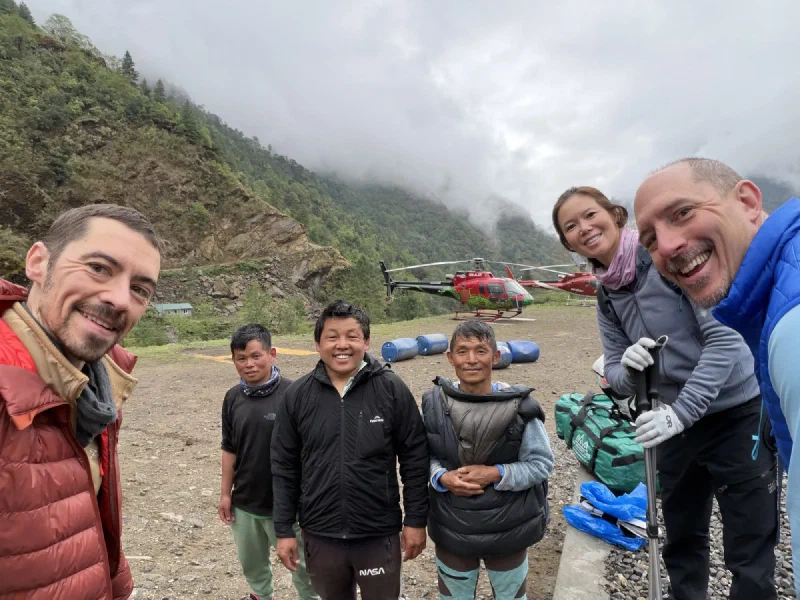
Here is where it got interesting. That second helicopter, the one still sitting on the pad, was not ours either. Ours, like most of the others, had tried to come up and been forced to turn back. But this pilot was about to make his own run for it, ducking out under the clouds toward Kathmandu before things got worse. He had room for exactly one more passenger.
That seat had originally been D.B.’s. With the rest of us grounded, he offered it up. Alice took it.
And off Alice went, alone, into a sky that was, in my professional aviation opinion, absolutely not fit for flying. The pilot swore it was clear down low and he had a line of sight out. Maybe. I am a bear who can fly under my own power, and I would not have braved that. But Alice has more nerve than sense, which I respect, and she made it.
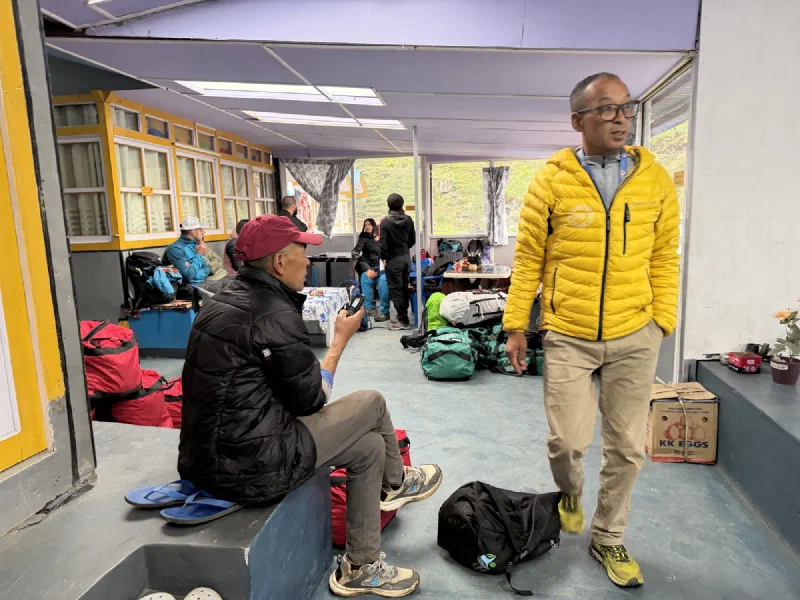
The rest of us went inside to wait. The man running the terminal, a Sherpa who clearly does this every season, promised the sun would burn off the fog and our helicopter would land in just a little bit.
It did not.
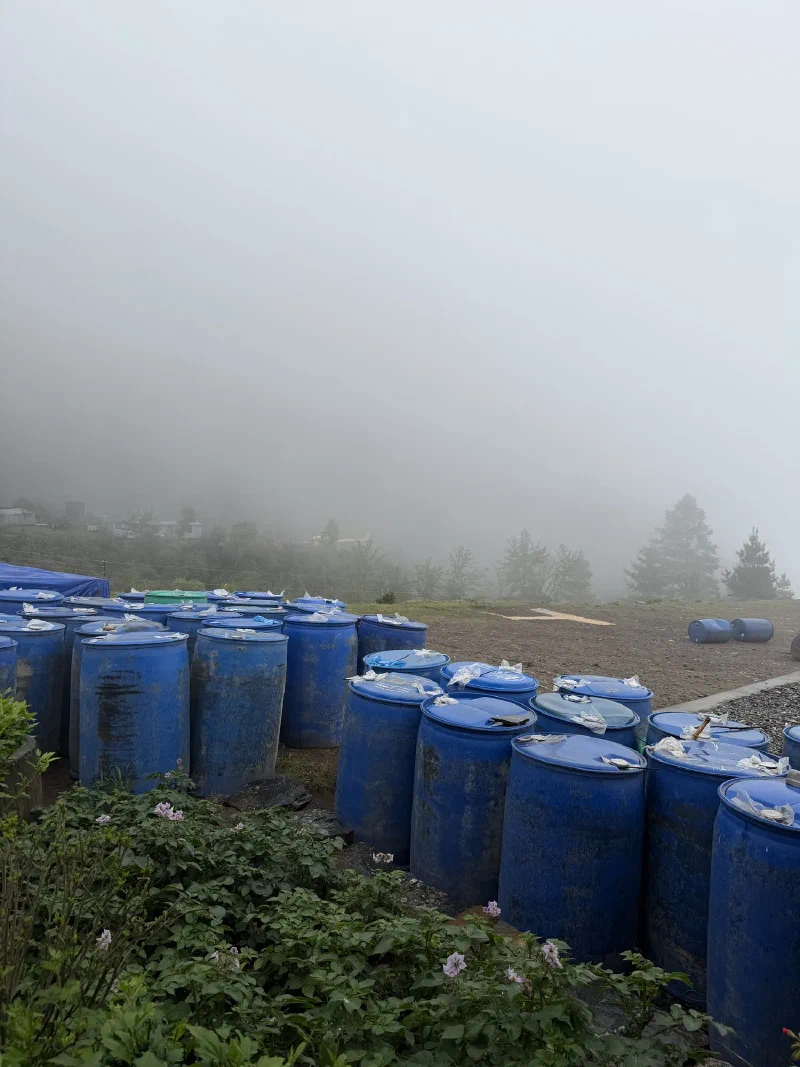
We got drinks. We got lunch. We kept looking outside. At one point we heard a helicopter, which we should not have, and a Fishtail chopper somehow came down out of the murk and landed. Not ours. He dropped some people off, took one look at the sky toward Lukla, and parked. Too foggy to climb back up. D.B. immediately booked him to take us out instead the moment things cleared.
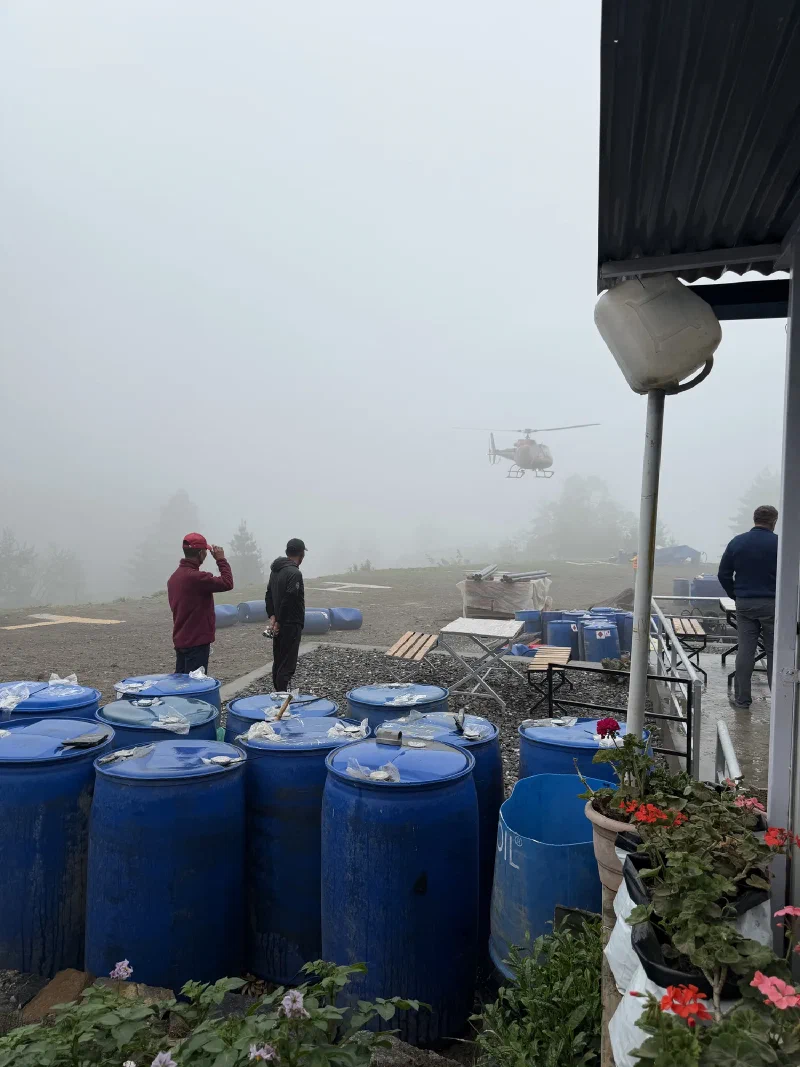
Spoiler: things did not clear.
Our buddy Sven from the trail turned up too, also bumped from a canceled flight, also stuck, on his way to attempt the two-day jeep escape. He stopped in to say hello to the rest of the grounded.
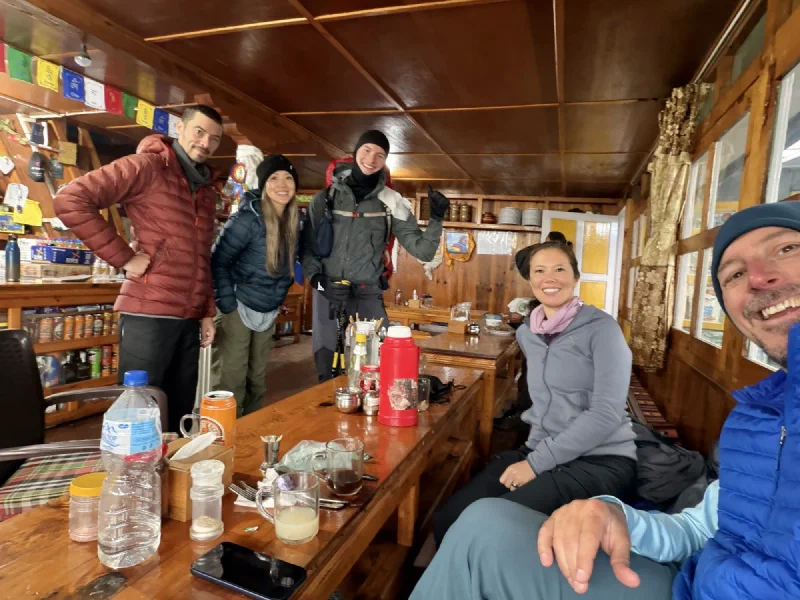
So we sat. And sat. The fog whited out the windows. Nicholas stopped pretending to be cheerful about it.
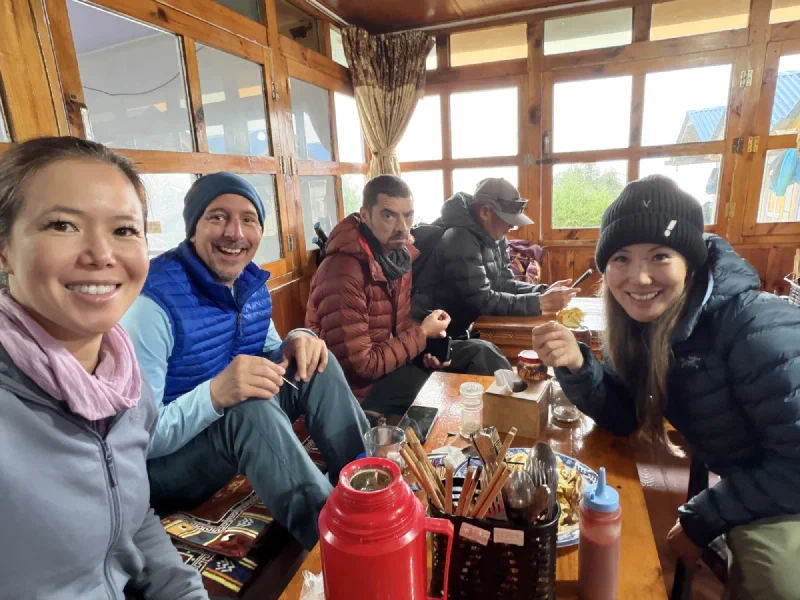
There is a hard cutoff. Around three in the afternoon, the last flight has to leave with enough daylight to reach Kathmandu safely. By then the fog had only thickened. The pilot of the parked helicopter made the call: he was camping at the airport overnight and trying again in the morning.
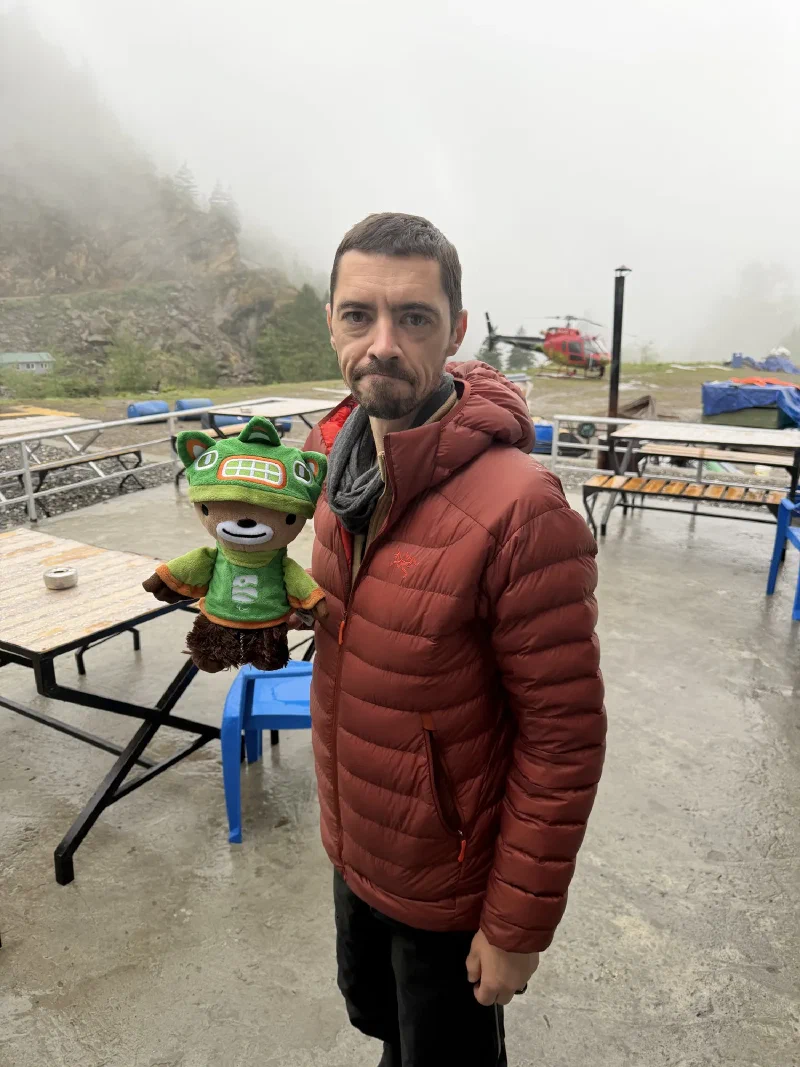
So that was that. We could hike three hours back up to Lukla to try our luck there in the morning, except that is three hours uphill and Pokin was in no condition for it. The weather down here was the better bet anyway, even if the forecast for the next few days looked, in the technical meteorological term, grim. Our porters had already left with the jeeps, so we had no way to move the bags even if we wanted to.
Which left the Surke airport’s accommodation. Two beds in a box. The most basic rooms I have ever lowered my standards into.
Looks like we were camping a little longer than planned.