
One hour of sleep. That’s what Nicholas got between returning from the Sherpa Memorial astrophotography session and the alarm going off again. One hour. And now we were hiking to Everest Base Camp.
The plan: Lobuche to Gorak Shep, have lunch, then the final push along the ridge to EBC. Take photos at the rock. Hang around for ten minutes. Turn around. Sleep at Gorak Shep. Simple enough if you ignore the part where we were doing it at 5,300 meters (17,400 feet) on a combined sleep total that wouldn’t fill a nap.
But first, a bit of backstory.
The Tea Invitation#
Back in Namche, we’d run into another group at the hotel. One of them was a guy named Kia who, at some point in the conversation, casually mentioned he was in “god-tier shape.” Now, I respect that energy. I consider myself a god-tier bear, so I appreciate when someone commits to the bit. Turns out Kia actually backed it up. He was heading to Everest Base Camp to summit Everest. For the third time.
Why would anyone climb Everest three times? I don’t know. Nicholas wanted to find out.
Kia invited us to visit their camp when we got up to EBC. “Come find us, have some tea, hang out.” Their tent was the very last one, the biggest camp, at the far end of Base Camp. Sounded great. We thought nothing of it at the time.
Lobuche to Gorak Shep#
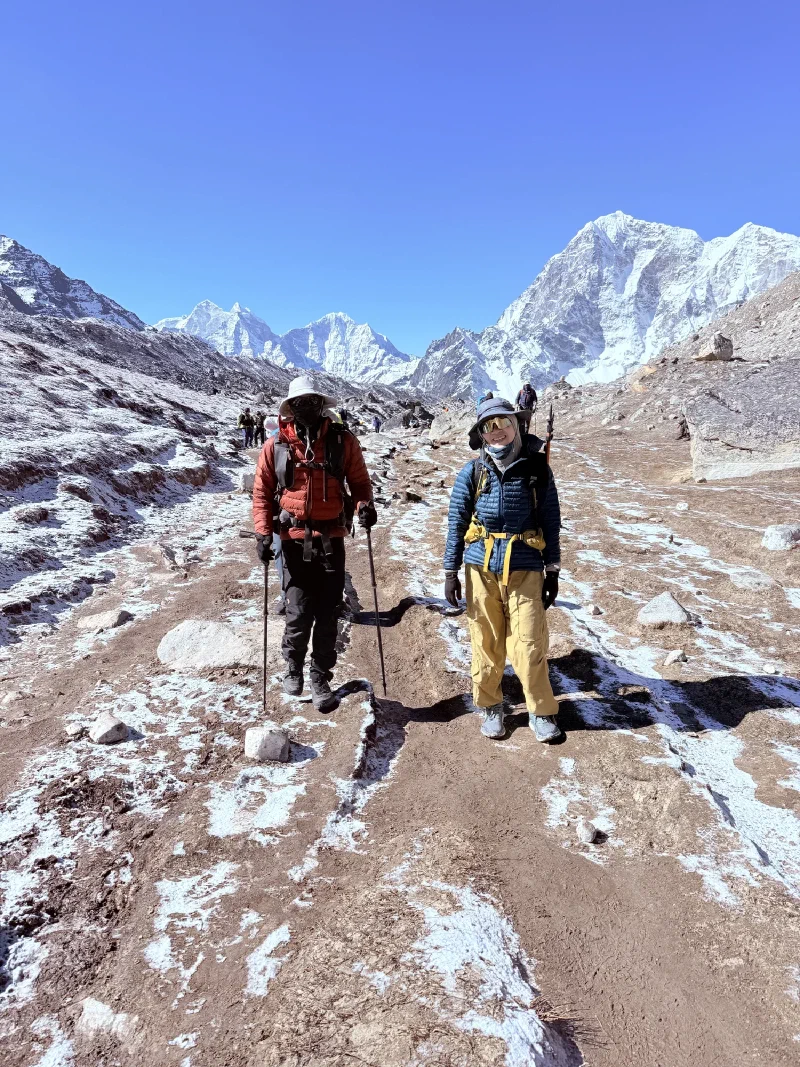
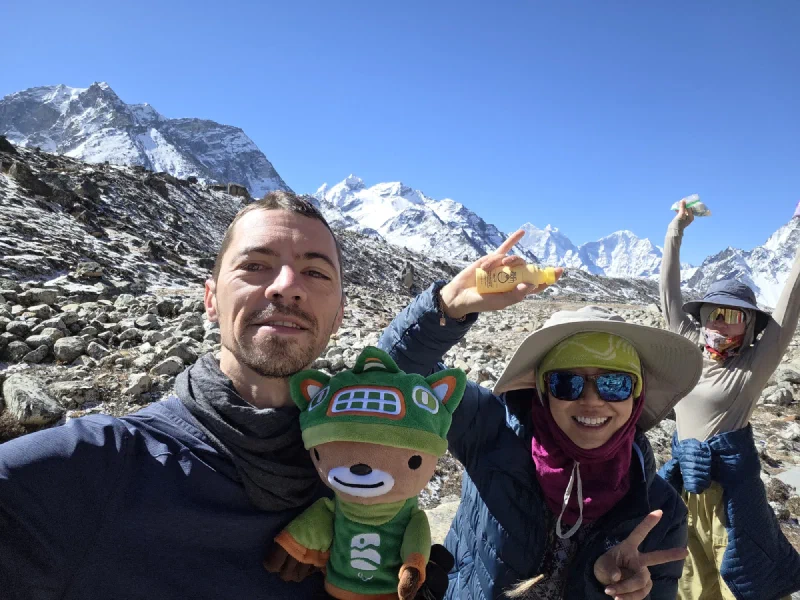
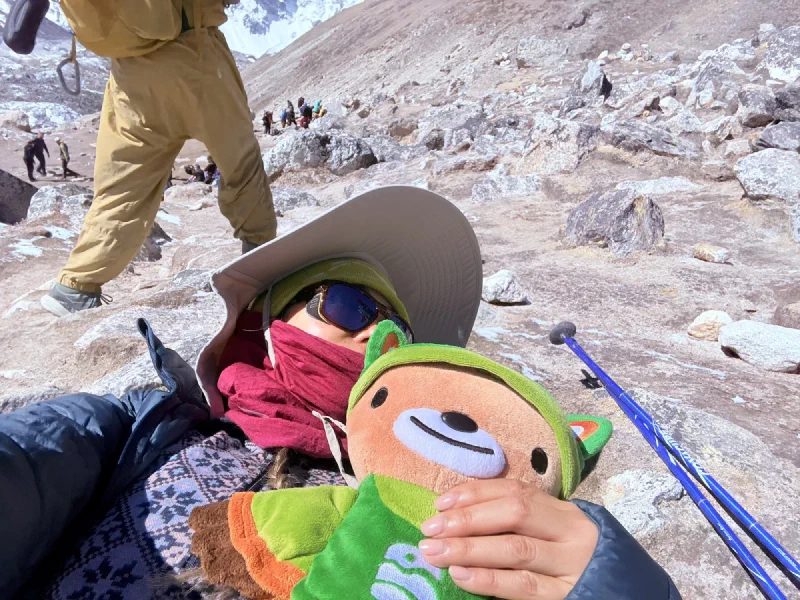
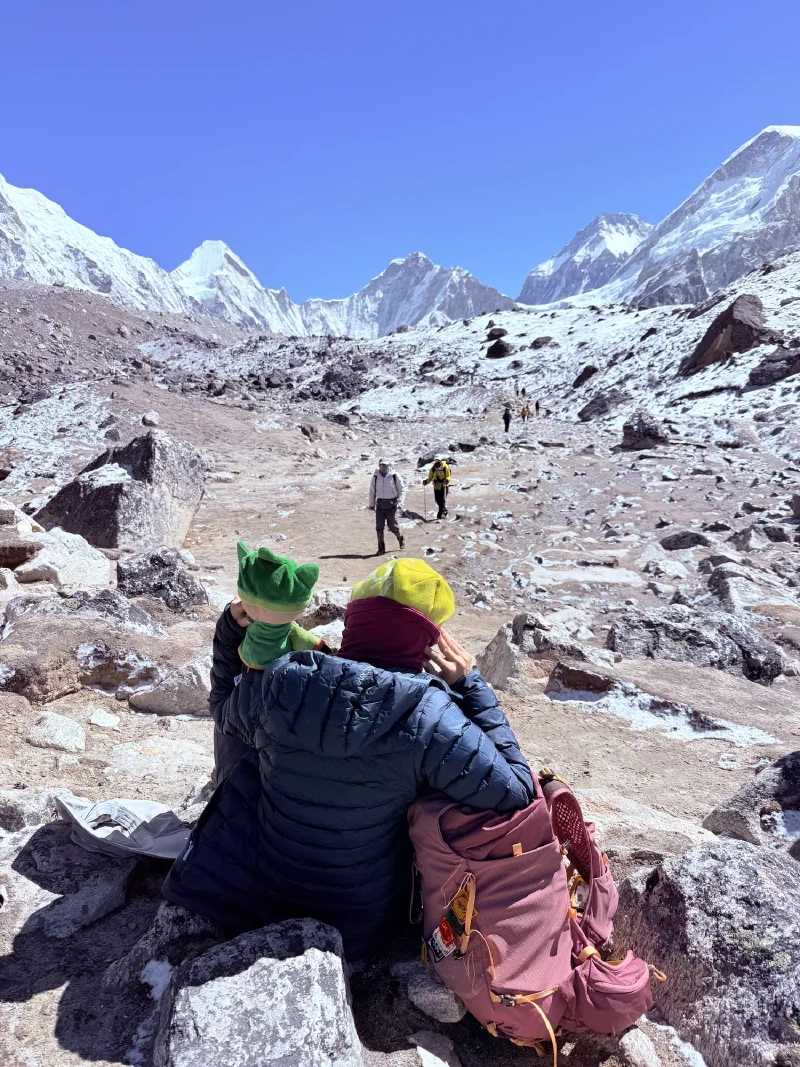
The hike from Lobuche to Gorak Shep was where the oxygen started to thin out in earnest. Walking felt like wading through something. Every step required a little more effort than it should, like someone had turned up the gravity a few percent. Nicholas thought it was manageable. Po On was starting to struggle. The altitude was creeping up on her: tiredness, dizziness, slowing down. AMS doesn’t announce itself politely.
The Approach#
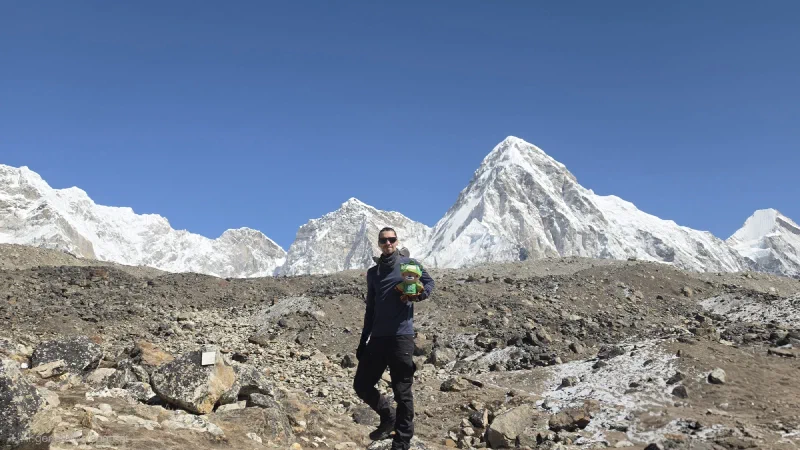
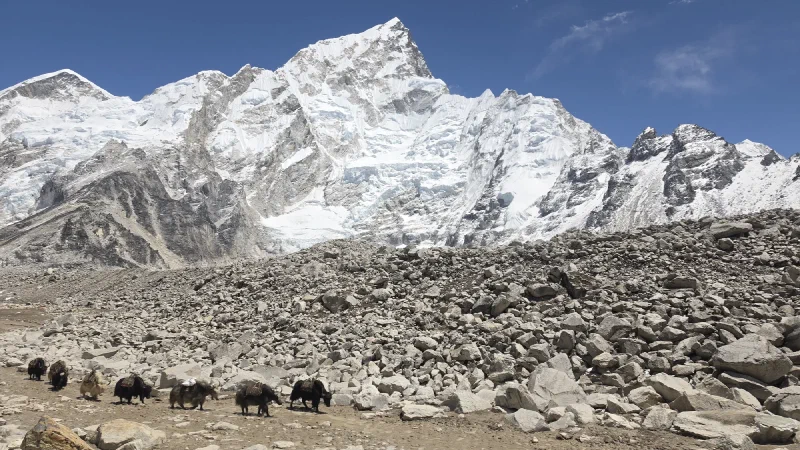
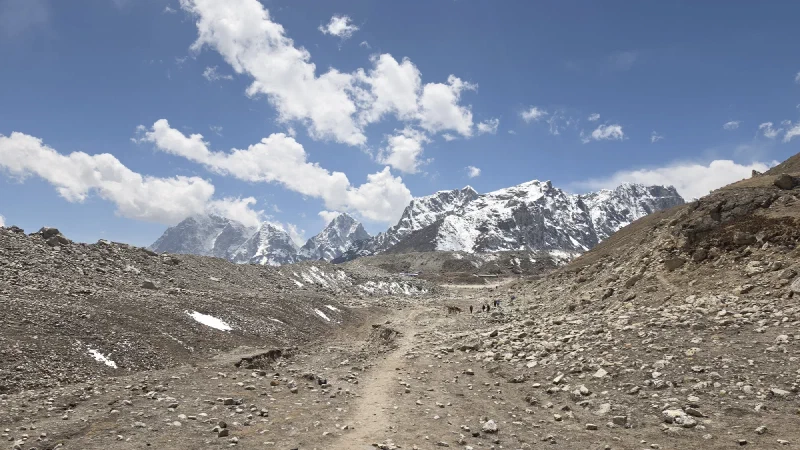
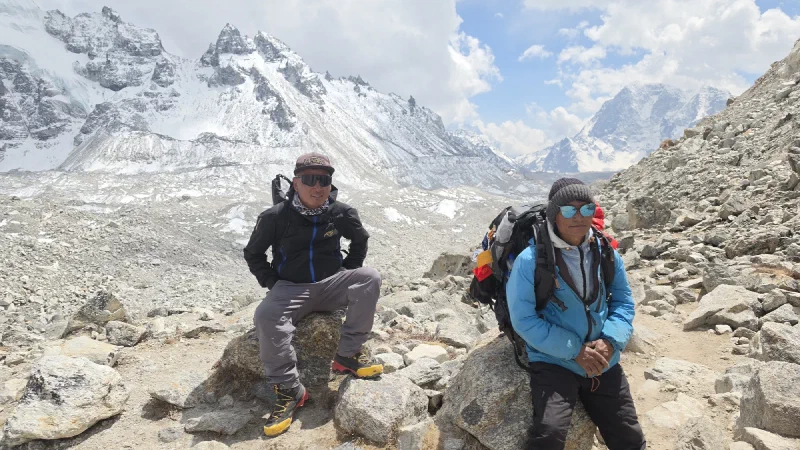
Past Gorak Shep, the trail turns into something else entirely. The ground is glacier moraine: loose rock, grey dust, and ice. Yak caravans haul supplies through like it’s a highway, except the highway is made of rubble and sits at the altitude of a small airplane.
The Rock#
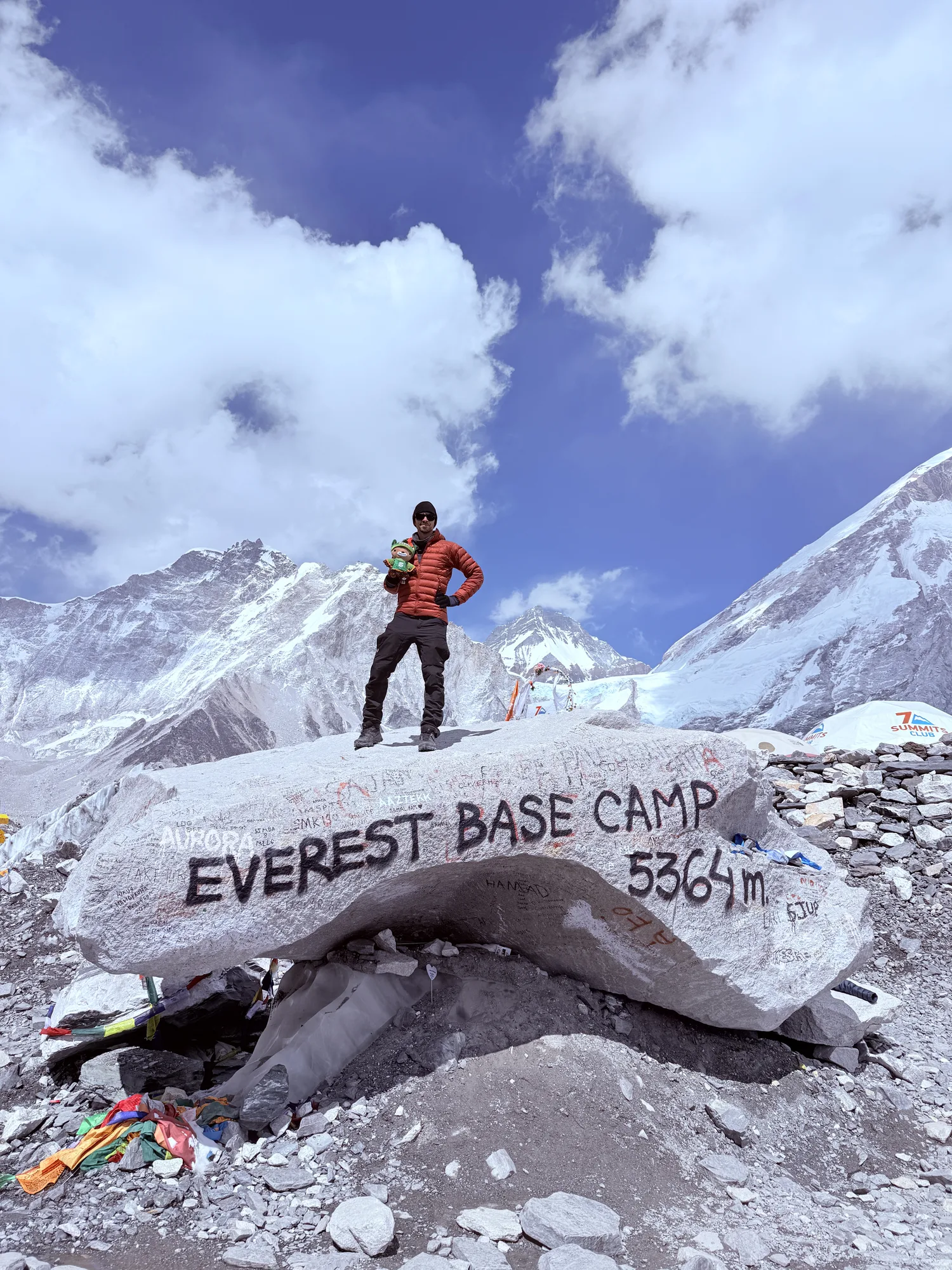
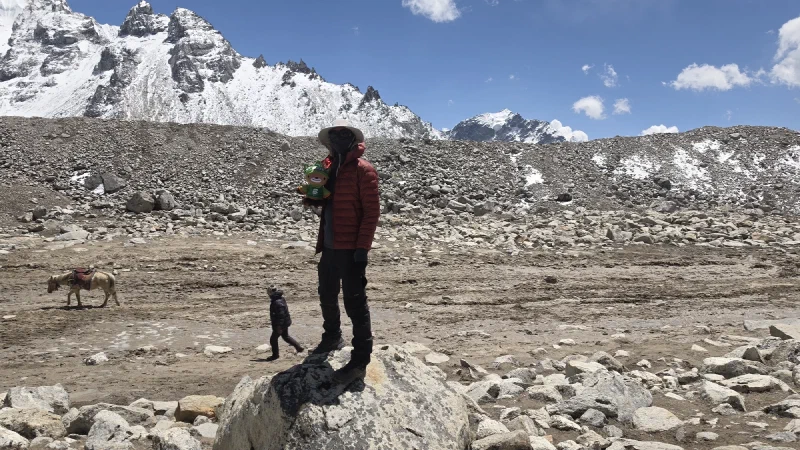
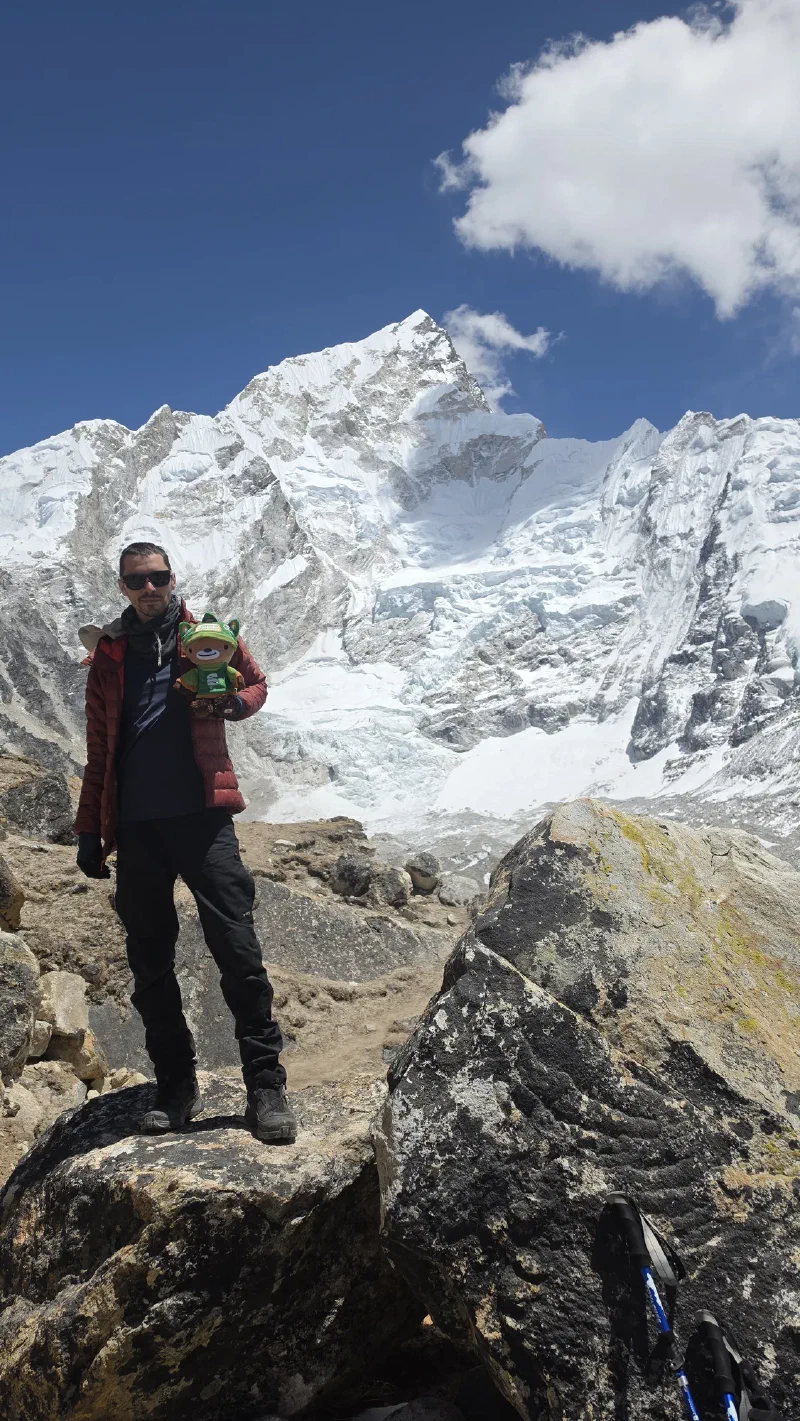
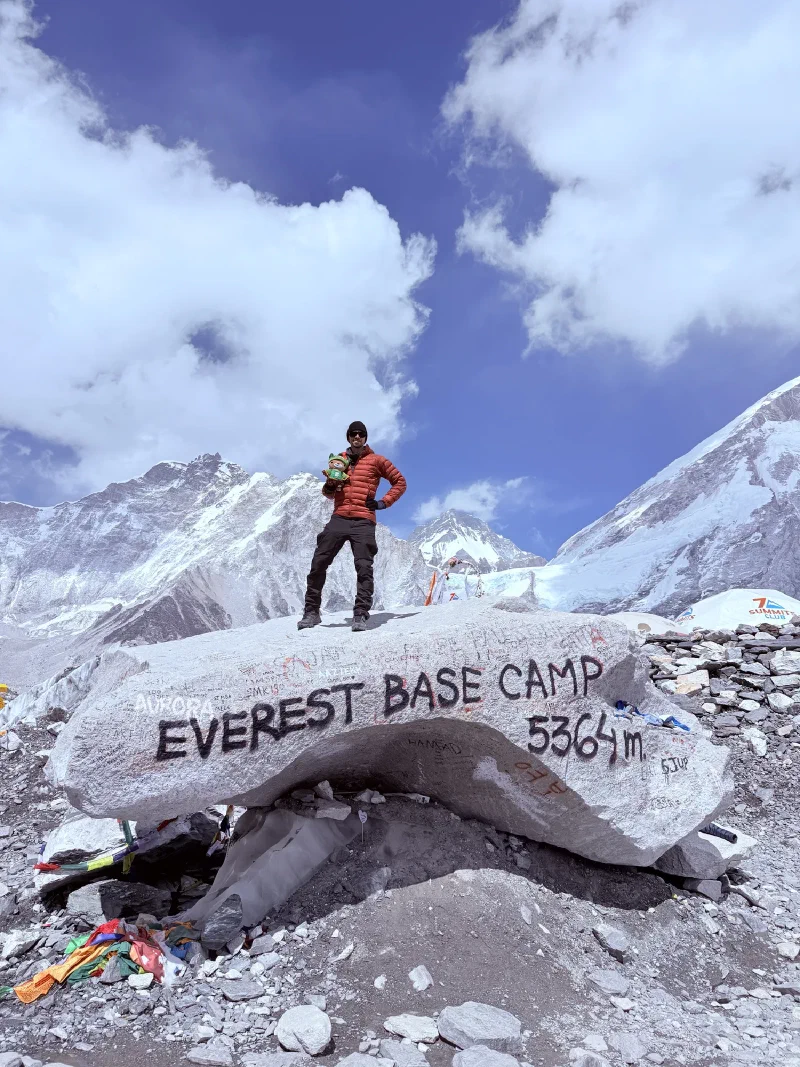
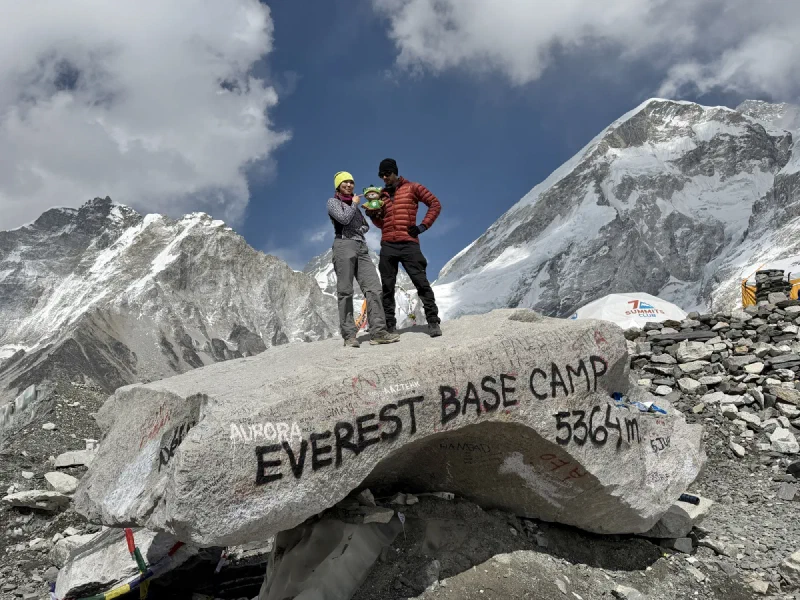
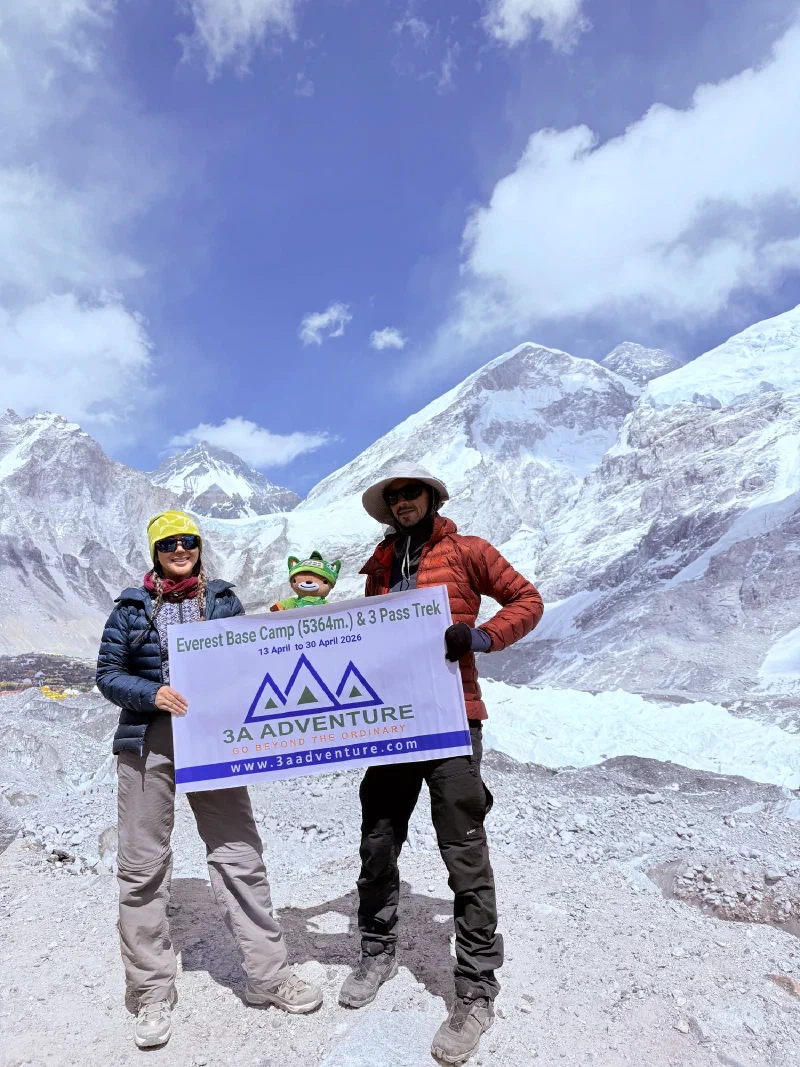
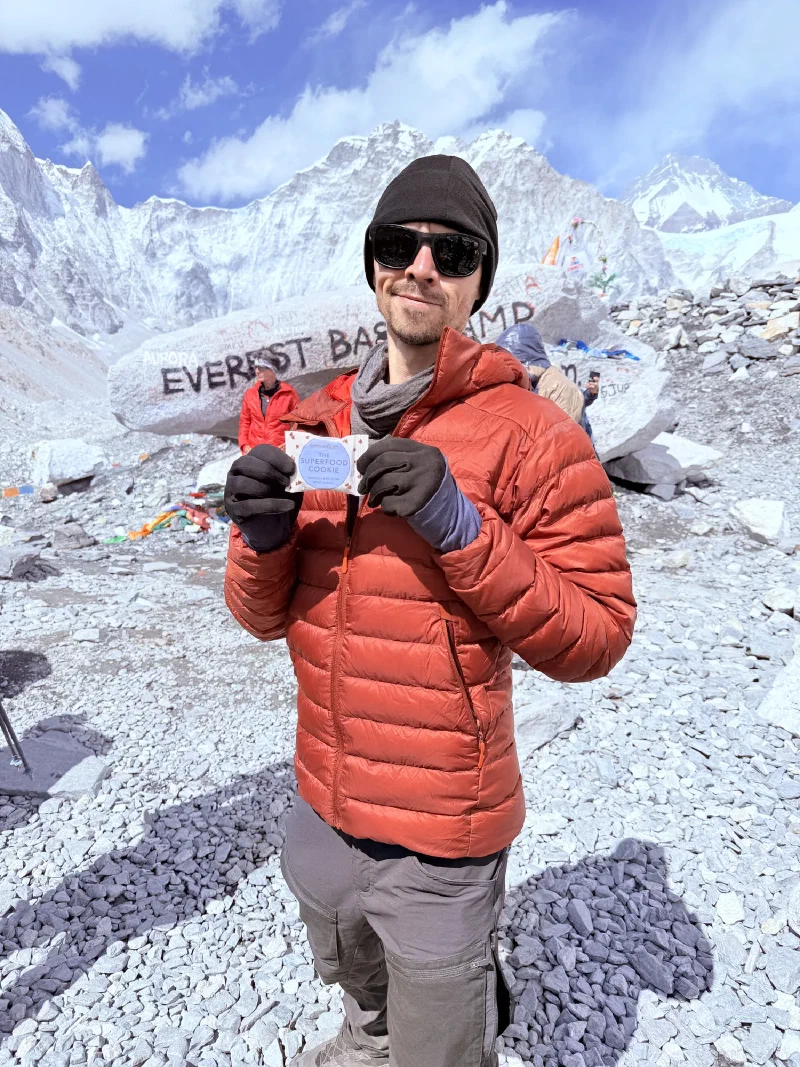
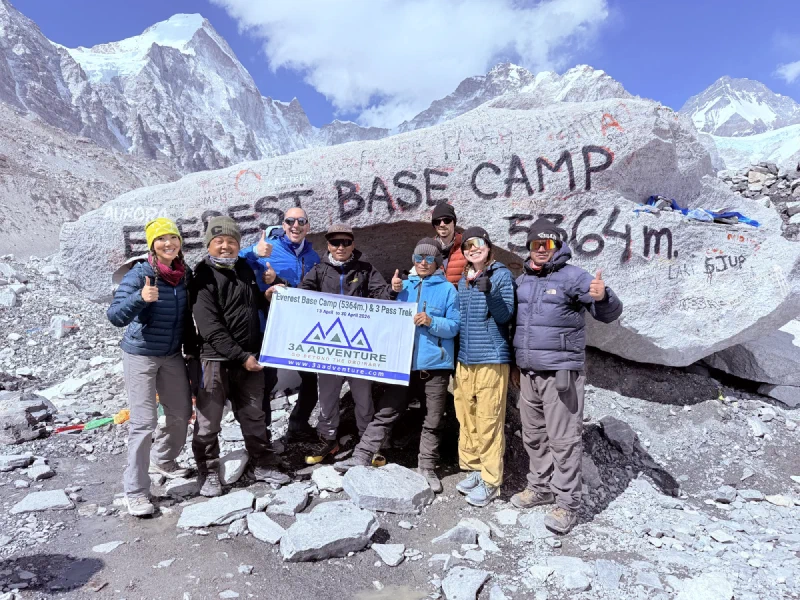
And then we were there. Everest Base Camp. The rock. The one you see in every photo from every trekker who’s ever made it this far. We climbed on it.
The Tents#
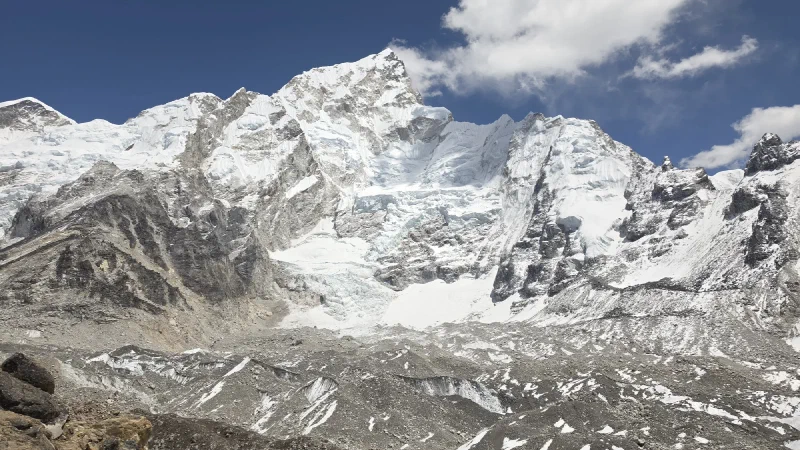
Here’s one thing they don’t tell you about Everest Base Camp: despite being called the Everest trek, you don’t really see Everest. It’s tucked behind other mountains the entire time, just the tip peeking out occasionally like it’s shy. You’d think the mountain named in the trip title would show up more. Kala Patthar, a nearby peak at 5,545 meters (18,192 feet), is where you go if you actually want a view. But that’s tomorrow’s problem.
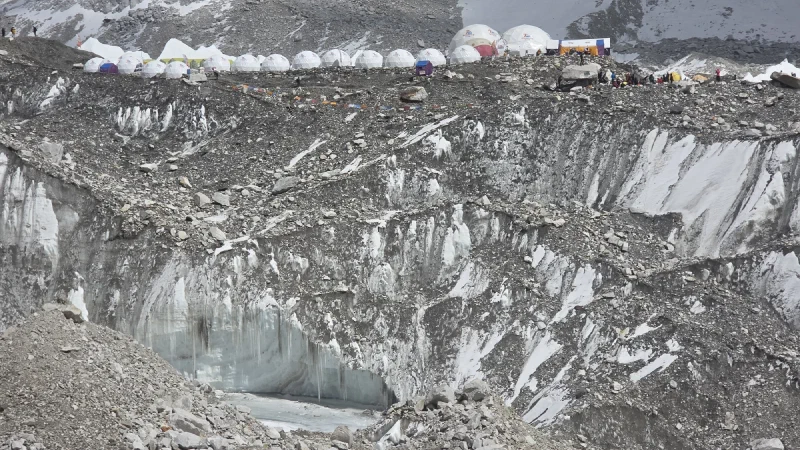
Po On looked at the tents stretching into the distance and asked DB if she could quickly run to the far end to find Kia’s camp. DB laughed. Not a polite laugh. The kind of laugh that means “absolutely not.” He explained that getting to the other side of EBC wasn’t a quick walk. It’s over a mile of navigating ice ridges, moraines, and crevasses. It would take ages. And Po On looked like she was about to pass out from the altitude, so she gave up.
Nicholas, on the other hand, did not give up.
The Speed Run#
“Can I go find Kia’s tent?” Nicholas asked DB.
DB looked at him. “Yeah, sure. Meet you back at Gorak Shep.”
So while Po On and the group turned around to head back, Nicholas and I started blitzing through Everest Base Camp. And here’s the thing about Base Camp that you don’t appreciate until you’re in it: the place is enormous. It stretches over a mile across the Khumbu Glacier, a sprawling city of expedition tents, supply depots, and ice ridges. Getting from one end to the other isn’t a stroll. It’s a full hike across unstable moraine and glacier, at 5,300 meters, and it took Nicholas about 45 minutes of speed-hiking to cross. Kia said his tent was the very last one at the far end. Fine.
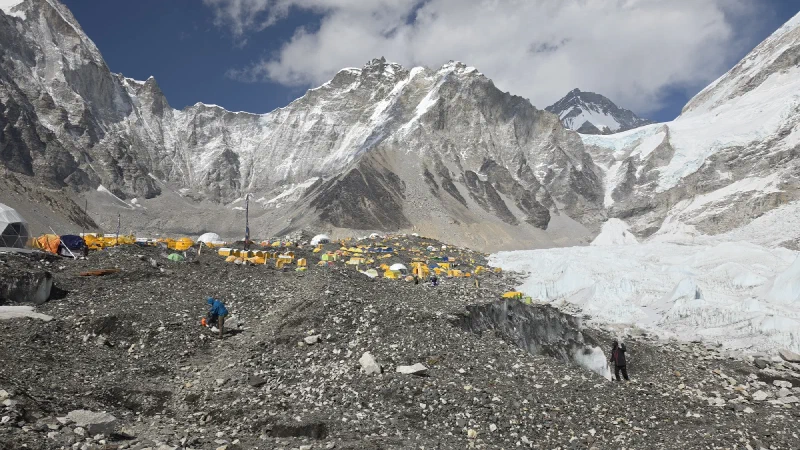
Nicholas finally reached the far end and started asking around. “Hey, do you know Kia?” Everyone said “Kia who?” Not helpful. So he started doing what Nicholas does: pulling out the camera and interviewing random climbers. “Hey, what are you doing here? Oh, climbing Everest? Can I ask you some questions?”
Mid-interview, someone popped their head out of a tent. “Are you looking for Kia?”
“Yeah! Where is he?”
“The tent at the very end. The one with the giant pirate flag.”
A pirate flag. Of course. A man who climbs Everest three times, calls himself god-tier, and flies a pirate flag over his tent. That’s either someone you want to know very badly or someone you want to avoid entirely. No middle ground.
Unfortunately, Kia had just left for a hike and wouldn’t be back for hours. Nicholas was disappointed. I was devastated. A kindred spirit. Someone who clearly operates on the same level of ambition and self-regard as me, and we missed him by minutes.
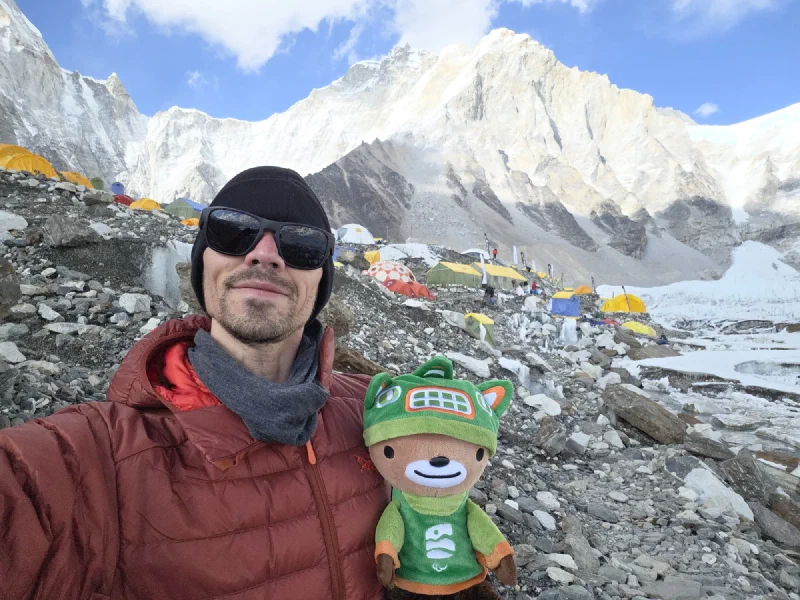
With daylight running out and no headlamp (because of course he forgot it), Nicholas turned around and speed-ran the entire length of Base Camp back to the ridge, then down to Gorak Shep.
What’s Next#
Nicholas got back to Gorak Shep and looked at the schedule. The group was set to wake up at 3:30 AM to climb Kala Patthar for sunrise photos. Kala Patthar is 5,545 meters (18,192 feet), the highest point on the entire trek, and one of the only spots where you can actually see Everest properly.
And Nicholas’s brain, running on trail dust and whatever neurochemical is responsible for bad decisions at altitude, thought: “What if I went up Kala Patthar tonight? For astrophotography? Milky Way over Everest?”
The hike from Gorak Shep to the summit of Kala Patthar is a three-hour slog straight uphill. At night. In the cold. At extreme altitude.
Nicholas found DB. “Hey, are any of your porters crazy enough to carry my camera gear up Kala Patthar at midnight if I tip them well?”
DB thought he was joking.
He was not joking.
DB asked the group. Kerman, the absolute goat, said “Sure, I’ll do it.”
Departure time: midnight. That left a few hours for another nap.
Let’s see how this one plays out. It can’t possibly work.