
Remember how the last post ended with “hope for the best”?
Yeah. About that.
Nicholas and Pokin woke up with full-on fevers. Not “maybe it’s the pollution” sore throats anymore. Actual fevers. Two hours before a 6 AM helicopter flight to Lukla. The start of a twenty-two day trek through the highest mountains on Earth.
So much for wearing masks on every flight. So much for hand sanitizer. So much for skipping the temple visit to rest. The universe had other plans, and those plans involved being sick at the worst possible time.
They called D.B. to figure out options. Stay in Kathmandu and rest? That would mean canceling the flight, rebooking every tea house along the route (nearly impossible mid-season), and either splitting the group up or forcing everyone else to wait. Not great options when three other people are ready to go.
The decision: get to the airport, take the flight, take it easy on arrival, and reassess from Lukla. At least from there they wouldn’t need a second flight later.
The Helicopter Research#
Quick detour on how we even picked a helicopter company, because this matters for what happens next.
Pokin did what Pokin does: researched every operator flying the Kathmandu-to-Lukla route. And it turns out that flying to Lukla by fixed-wing plane is considered one of the most dangerous commercial flights in the world. The runway is short, sloped, carved into a mountainside, and ends in a cliff. The alternative is a 1 AM wakeup and a six-hour drive on Nepal’s roads, which frequently get washed out.
So helicopter is actually the safe option. But not all helicopter companies are equal.
Fishtail Air does a lot of high-altitude mountain rescues. Heroic work, but those rescue attempts carry a high fatality rate when they don’t succeed, and the numbers show it. Basecamp Helicopters had a recent fatality and was implicated in an Everest poisoning scam. Yes, a poisoning scam. On Everest. I’ll let that sink in.
Kalish was the only company Pokin could find that had never had a fatality. They were also the only helicopter to have successfully completed a rescue off the summit. So: Kalish. Done. Settled.
Right?
The Night Before#
The night before departure, D.B. told us Kalish’s helicopters were stuck on other mountains and couldn’t make our 6 AM flight. Would we like to fly Fishtail or Basecamp instead?
Absolutely not.
So the 6 AM became a 10 AM.
Now, here’s the thing about a 10 AM flight to Lukla versus a 6 AM flight. Mountain weather follows a predictable daily cycle. Early morning, the air is calm, cold, and stable. As the sun heats the ground, thermals build, clouds form in the valleys, and wind speeds pick up. By mid-morning the turbulence is noticeably worse. By afternoon, cloud cover can completely smother the mountain passes, visibility drops, and flights get canceled outright.
Every Lukla flight is scheduled for early morning for exactly this reason. A 10 AM departure was already pushing it. But between a calmer ride with a company that takes risks and a bumpier ride with the company that doesn’t crash, we went with the bumpier ride.
Pokin agonized over this. Hour-by-hour weather forecasts. Multiple conversations. But the logic held: pick the pilot who doesn’t take unnecessary risks, even if the air is choppier.
Loading Up#
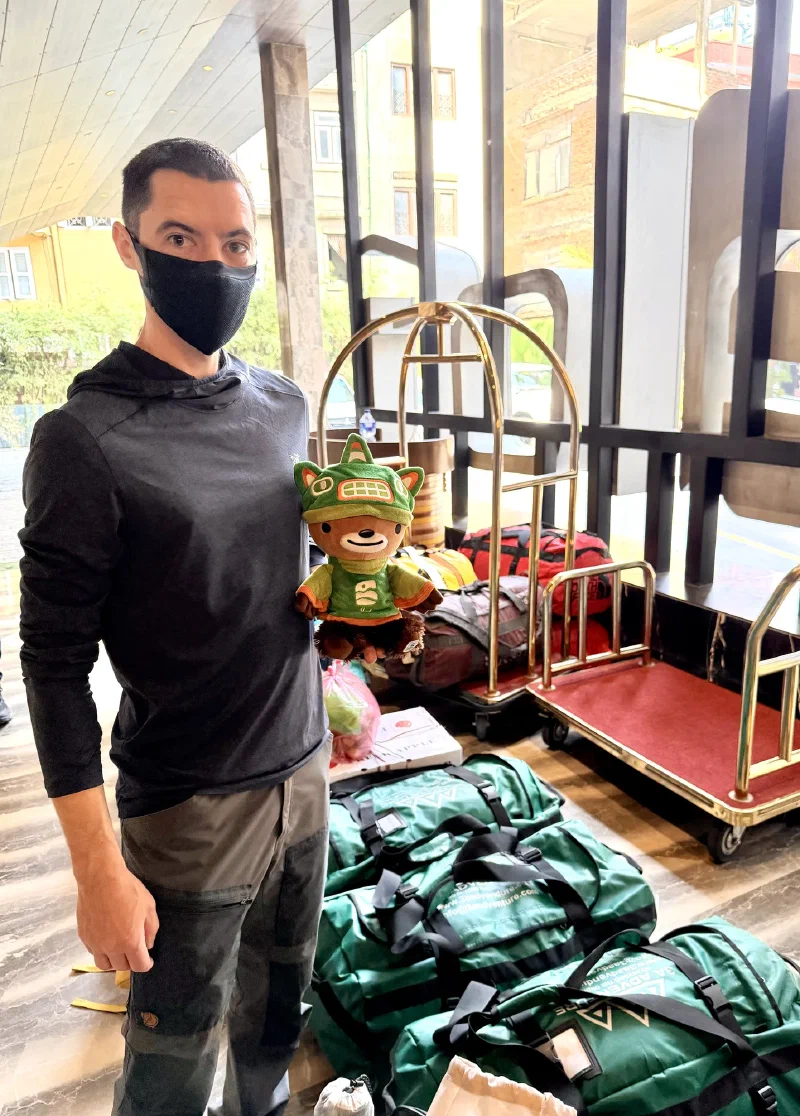
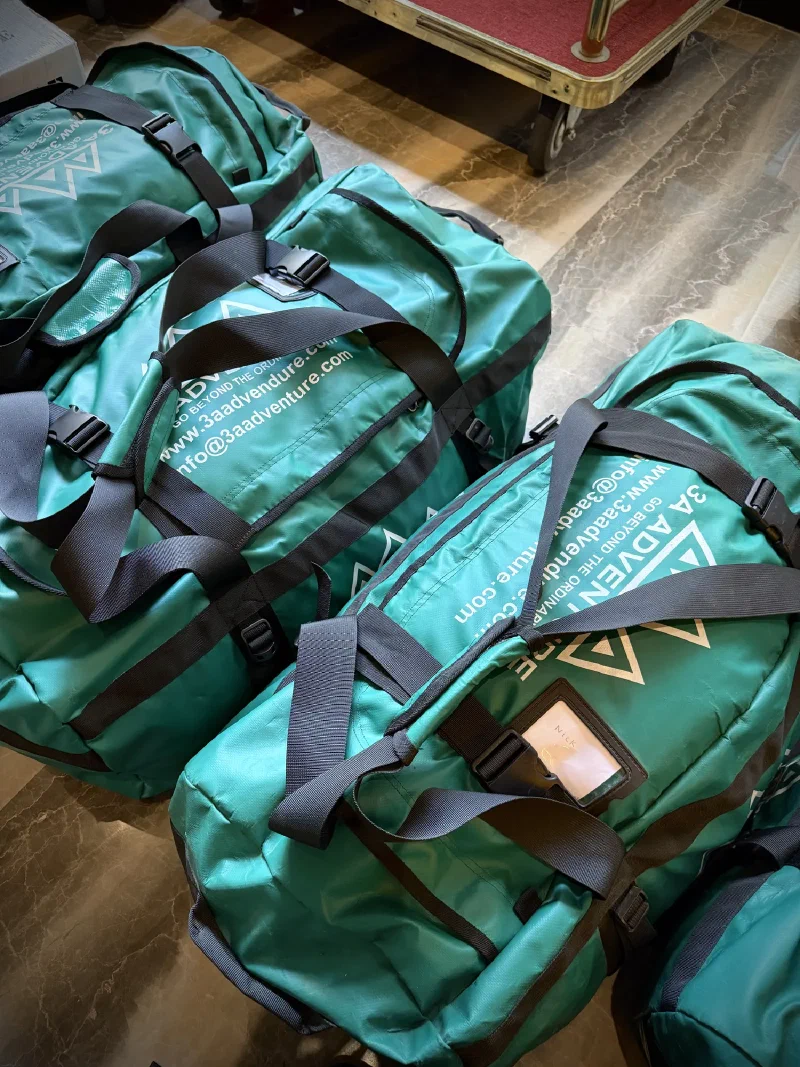
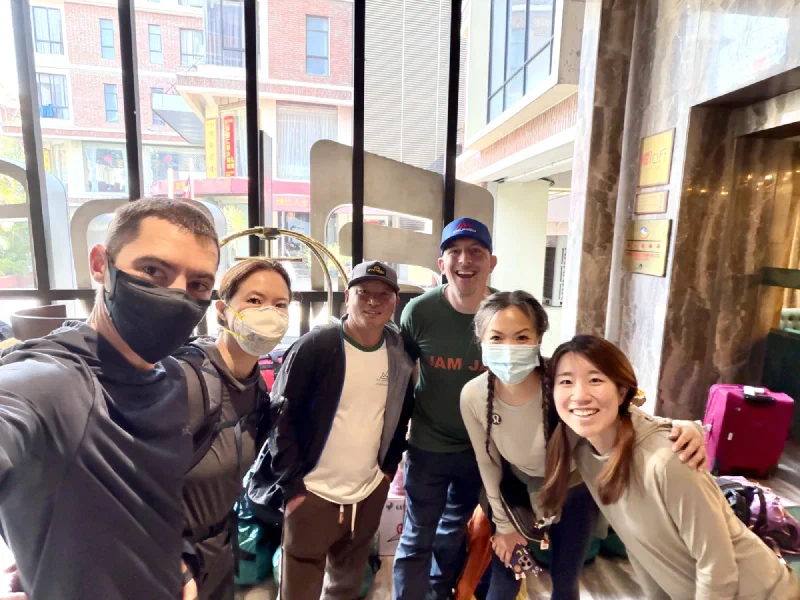
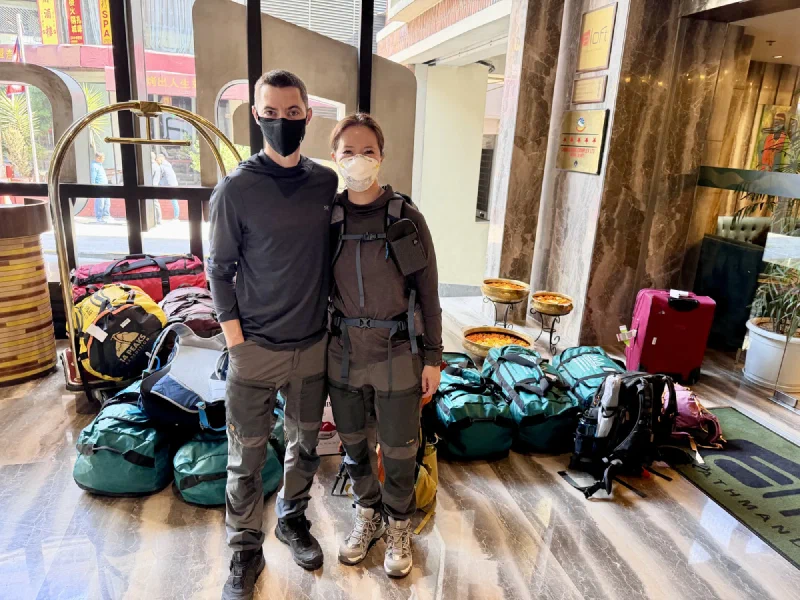
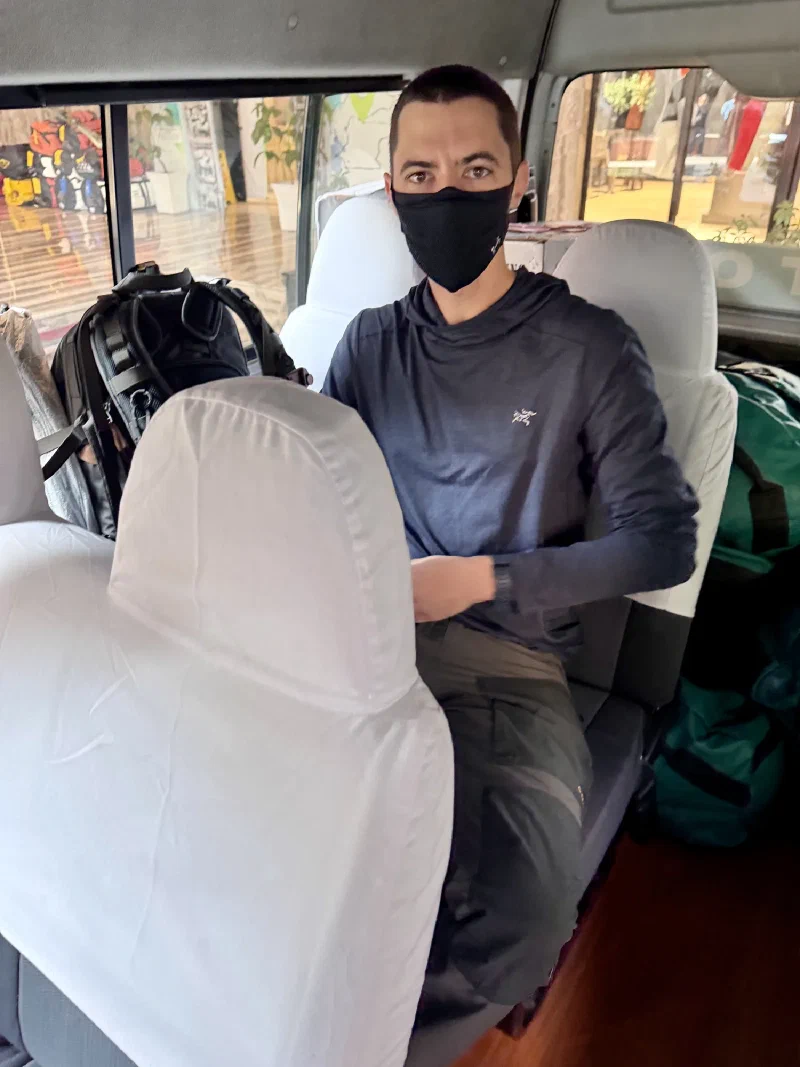
Morning in the Aloft lobby. Duffel bags piled up, daypacks strapped on, everyone trying to look ready while two of us were running fevers and pretending we weren’t.
The Airport#
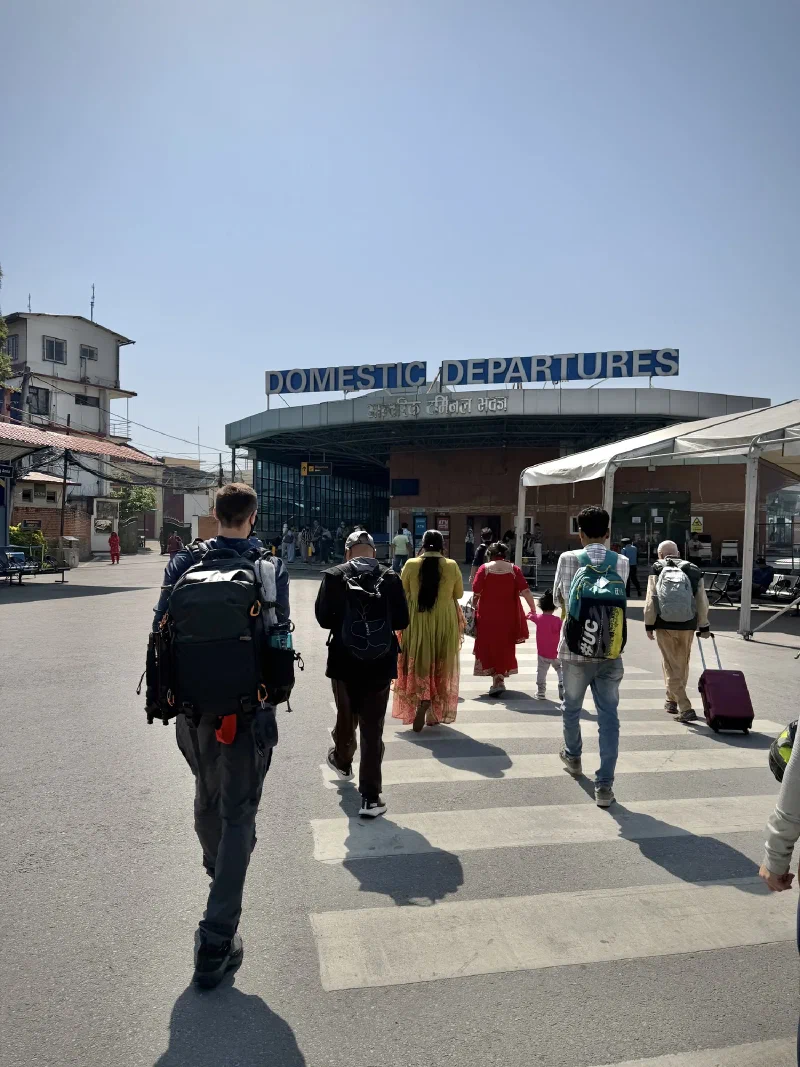
Kathmandu domestic airport is not like other airports. It is loud, crowded, and operates on a system of logic that I have not yet decoded.
The Fishtail Incident#
This is where it gets fun.
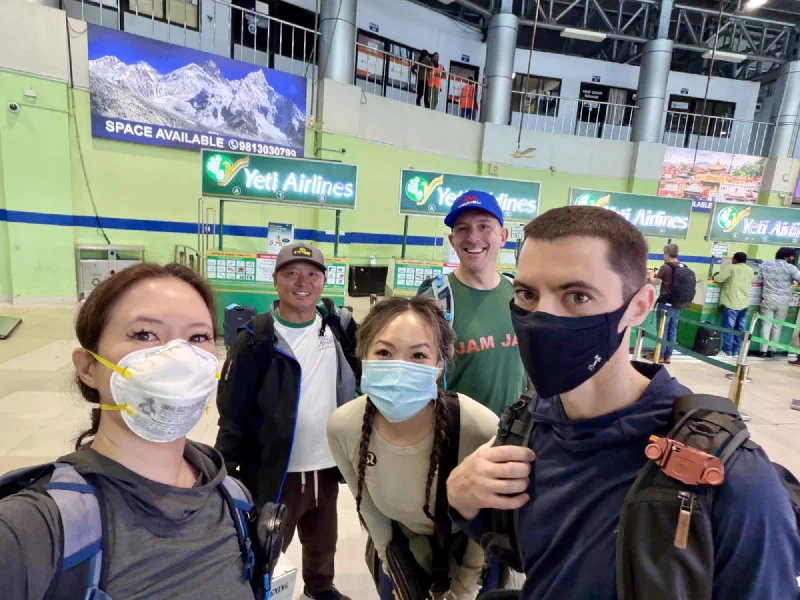
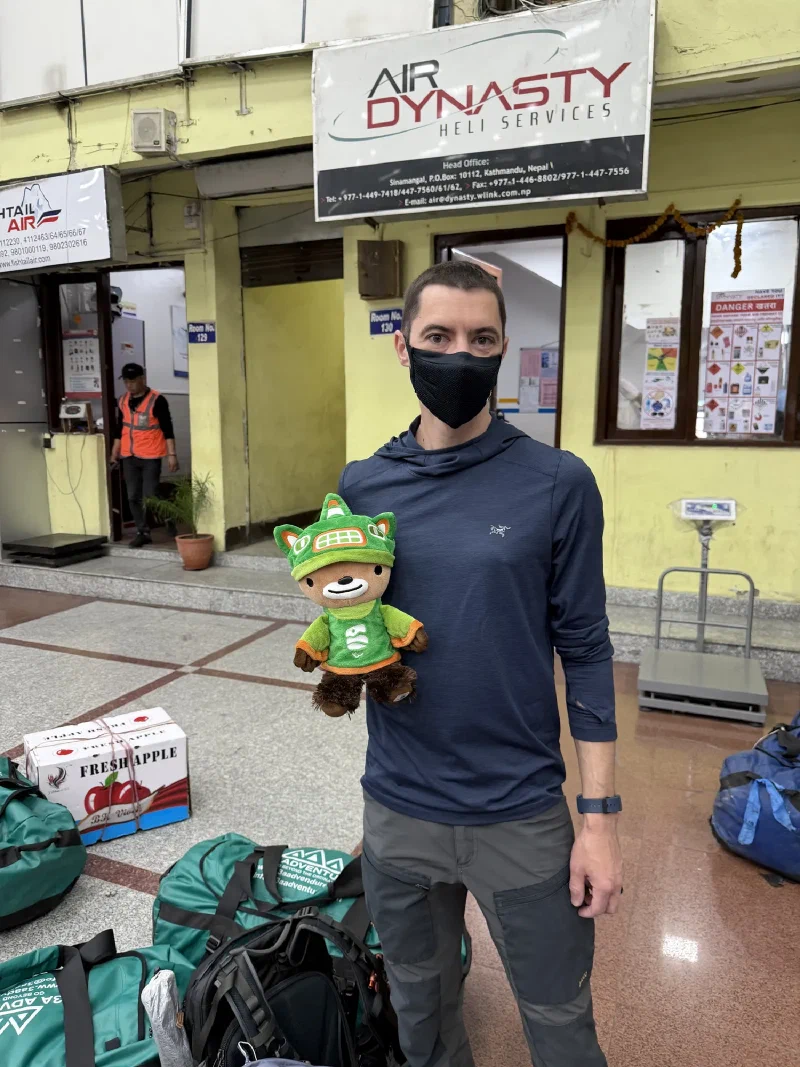
We checked in. We were told our 10 AM flight was Kalish. Great. Except our bags were suspiciously being weighed at the Fishtail Air office. Nicholas noticed this but figured maybe they shared facilities.
Then we got our boarding passes. Fishtail.
Nicholas asked the guy: “Hey, we’re supposed to be flying Kalish.”
The guy, without missing a beat: “Oh, Kalish wasn’t available until later, so I put you on the Fishtail flight.”
No. Absolutely not. We did not spend weeks researching helicopter safety records to get quietly swapped onto a different airline at the counter. Nicholas made a stink about it. The guy seemed surprised that anyone would care which helicopter company they flew with, which is maybe the most alarming part of all of this.
“Oh, okay, hold on.” He disappeared. Came back. Ran us over to the Kalish office. Magically produced Kalish boarding passes for the same terminal, same time.
Nicholas, not remotely convinced: “Is this just Kalish boarding passes, but you’re going to put us on the Fishtail helicopter anyway?”
“No, no. I wouldn’t lie to you.”
The man who had just lied to us said he wouldn’t lie to us. Nicholas raised an eyebrow so high it nearly left his face.
The Wait#
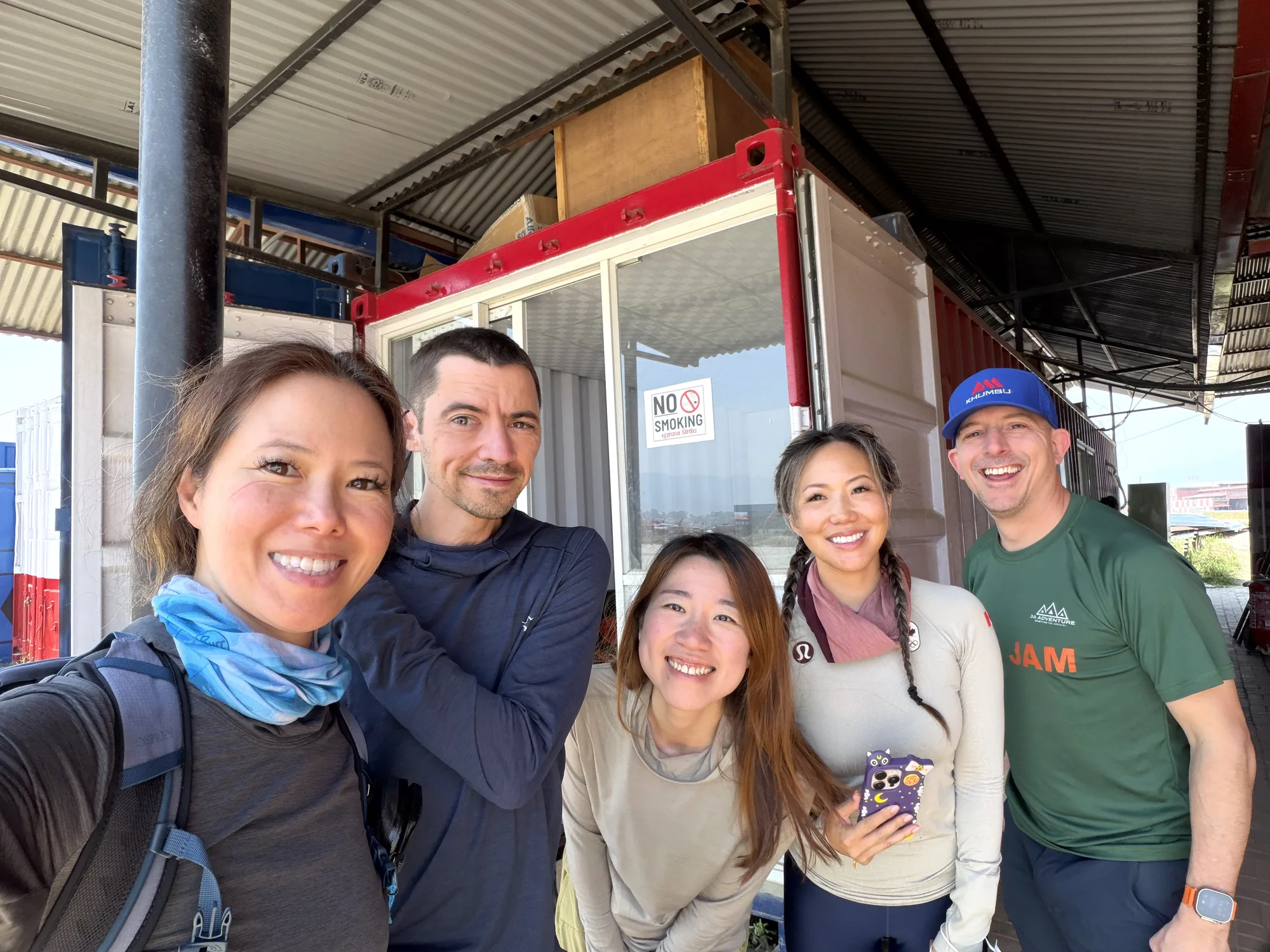
With Kalish boarding passes in hand and trust levels at an all-time low, we were led outside to a waiting area near the helipad. And then we waited. For over an hour. On the tarmac. In the sun. While sick.
So much for “take it easy today.”
The plan had been: 6 AM flight, gentle start, rest in Lukla. Instead: 6 AM wakeup, fevers, airline drama, an hour baking outside on the tarmac, and it was now past noon. The 10 AM flight was looking more like a 1 PM flight. Which meant afternoon weather. Which meant exactly the conditions we’d been trying to avoid.
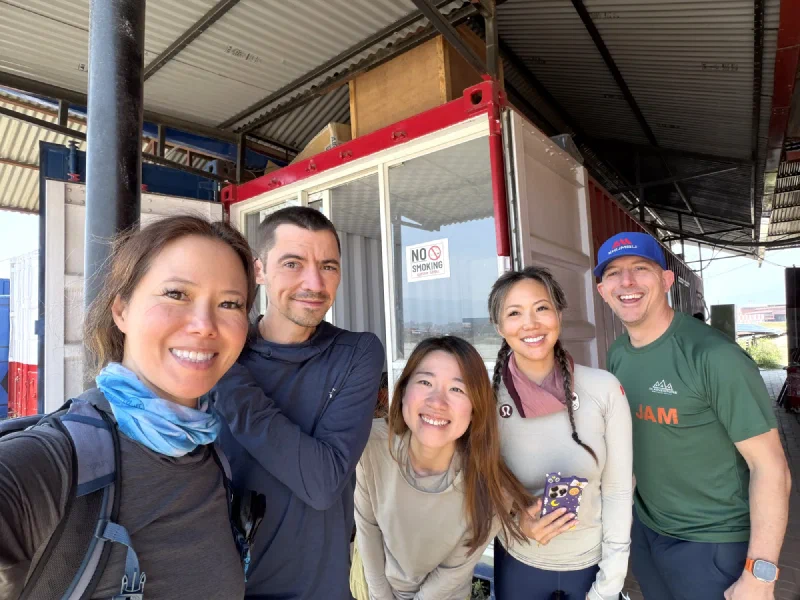
But when they finally walked us to the helicopter, it was a Kalish helicopter. The real thing. The guy hadn’t lied the second time.
It wasn’t until about 1 PM that we actually lifted off. Seven hours after we were supposed to. Two sick trekkers, three overweight duffels, one airline bait-and-switch, and an hour on the tarmac.
And we still had to fly through afternoon mountain weather to reach the most dangerous airport in the world.
Onwards, I guess.