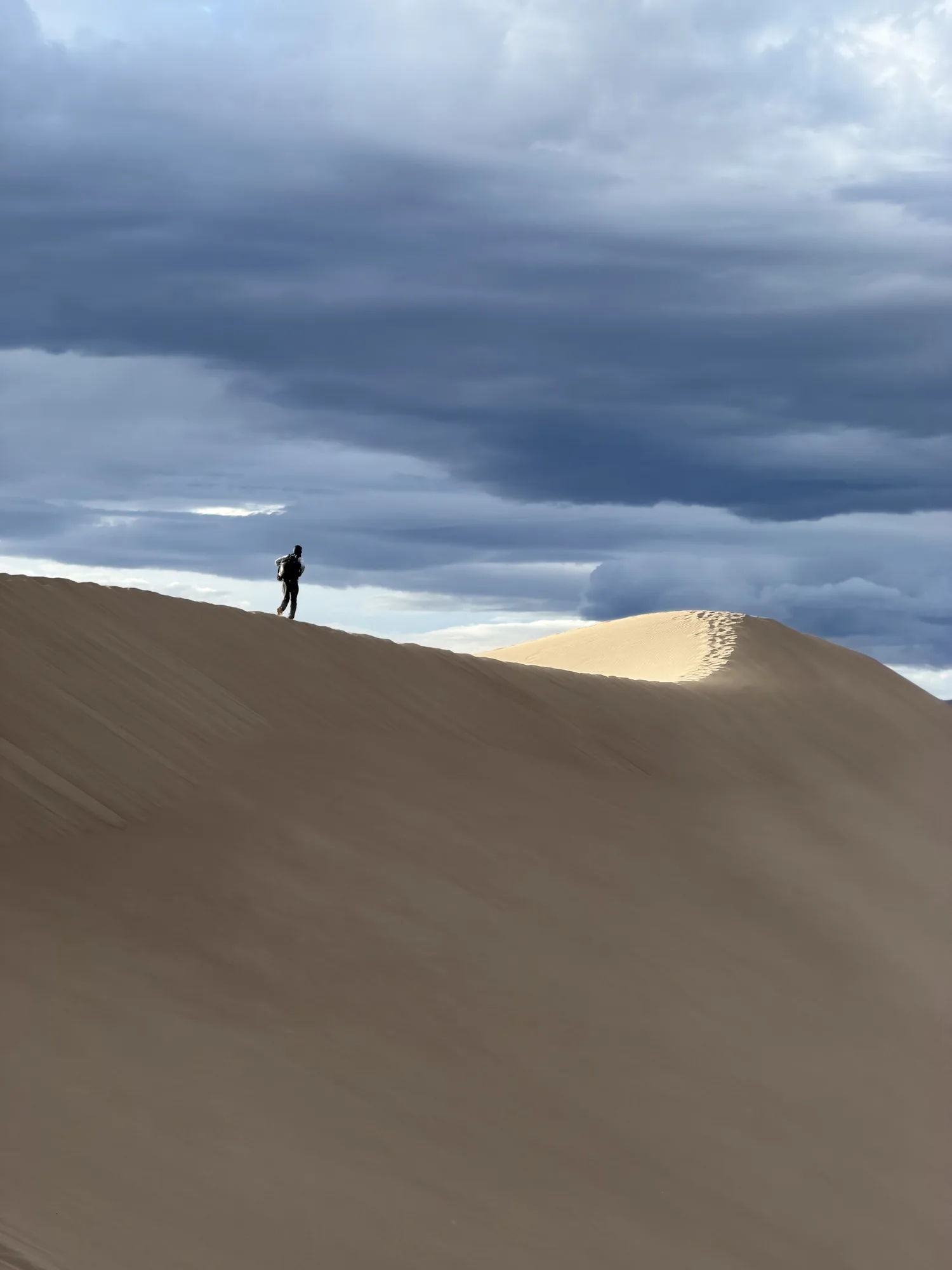

Great Sand Dunes was never really a decision.
Once you have gone to Black Canyon, the dunes are just the next thing east. The map makes the choice and you go along with it.
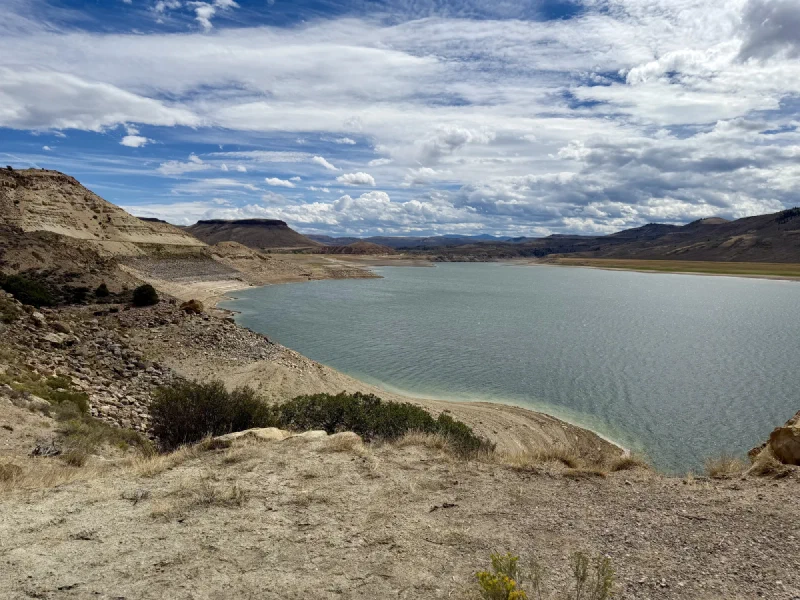
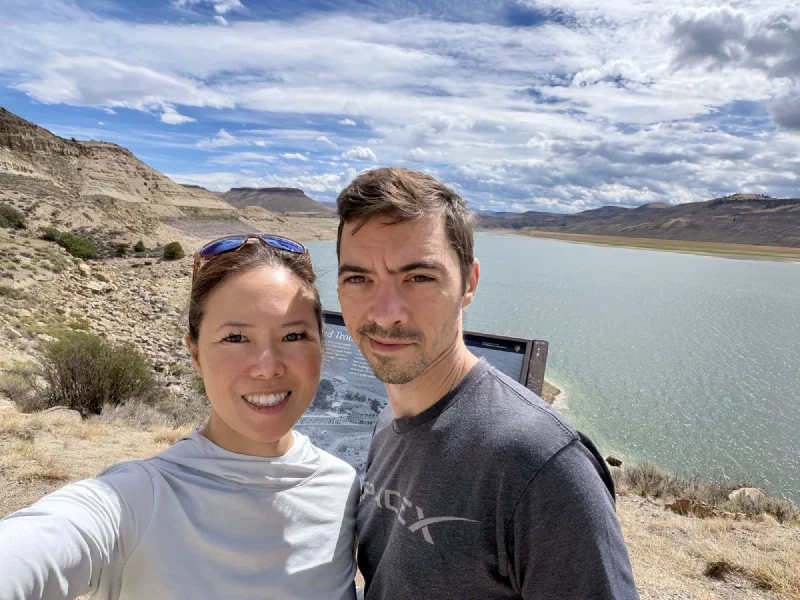
We got into Alamosa late, and the weather was bad, and the forecast said it would be worse the next day. So the plan shrank down to its essentials.
Go in. Get the mug. Leave.
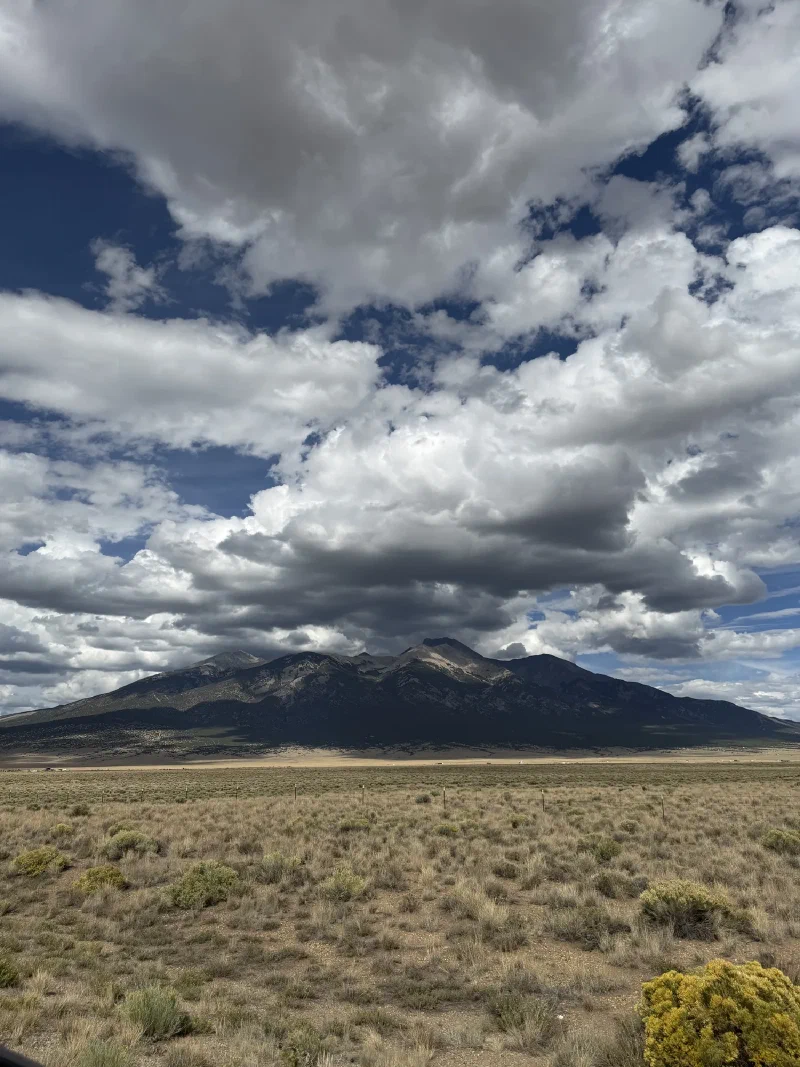
The Rangers Would Not Say#
Then we got there, and my bud had second thoughts, which is his specialty.
Maybe the sky would break. Maybe there was an astro night in it after all. We could ask the rangers.
The rangers declined to have an opinion. They told us to download a weather app. They told us to get one that shows where the lightning is. They told us to make our own decisions.
I have since looked it up, and that is almost word for word what the park’s own safety page says. Use a lightning app to track the proximity of each strike. The rangers were not being cagey. They were quoting the manual.
It is just that the manual, read out loud by a calm person in a hat, sounds an awful lot like permission if you have already decided what you want to hear.
Nicholas heard yes.
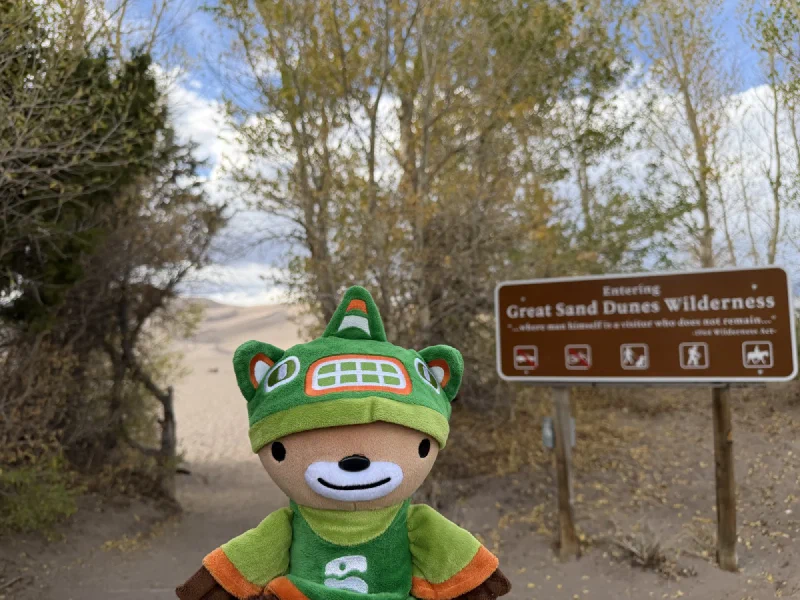
Why It Is Worse Here#
Bad weather is bad everywhere. It is worse on a dunefield, and it is worth knowing why before you walk out onto one.
The dunes cover about thirty square miles. There are no trees. There are no buildings. There is no rock to get under. The tallest of them stand around 750 feet (230 m) above a valley floor that is already sitting at 8,200 feet (2,499 m), and the official advice when lightning starts is to shelter in a building or a vehicle, both of which are back at the car park, which is a very long way behind you.
And you cannot hurry. That is the part nobody tells you properly. Sand takes about twice the effort of ground, so “get down quickly” is not a thing that is available to you. You get down at exactly the speed sand allows, which is the speed of a man wading.
The other listed hazard is wind-blown sand, which the park describes as painful and prone to getting in your eyes. Remember that one. It becomes the whole second half of this post.
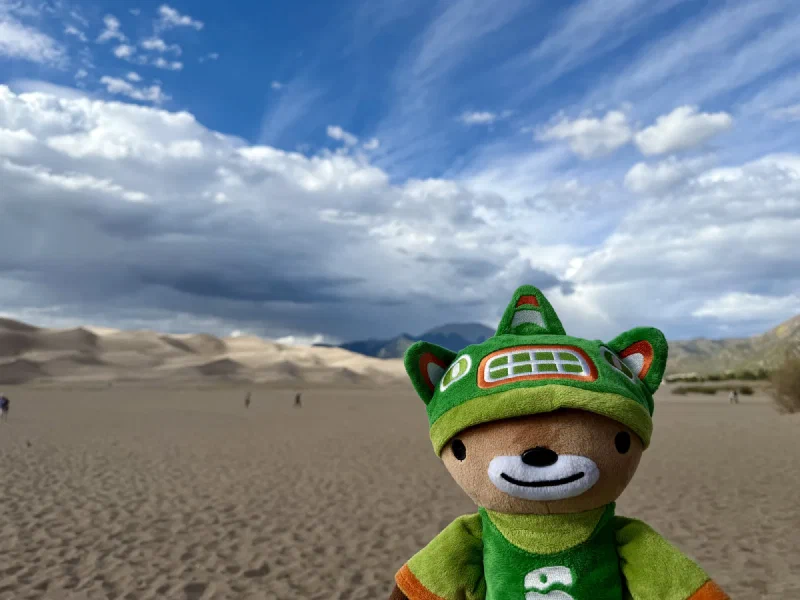
Walking on Sand#
We were warned the dunes were not far but the walking would be hard.
The dunes were not far. The walking was hard.
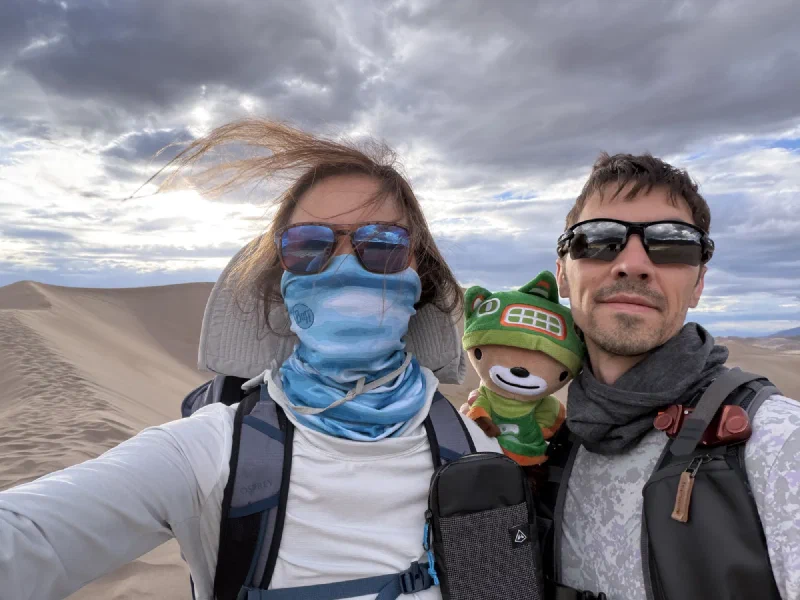
I rode in the bag, which I want on record was offered to me and not requested. Pokin was breathing like a person who had recently been at sea level. Nicholas was fine, because Nicholas is always fine, and has never once acknowledged that this is annoying.
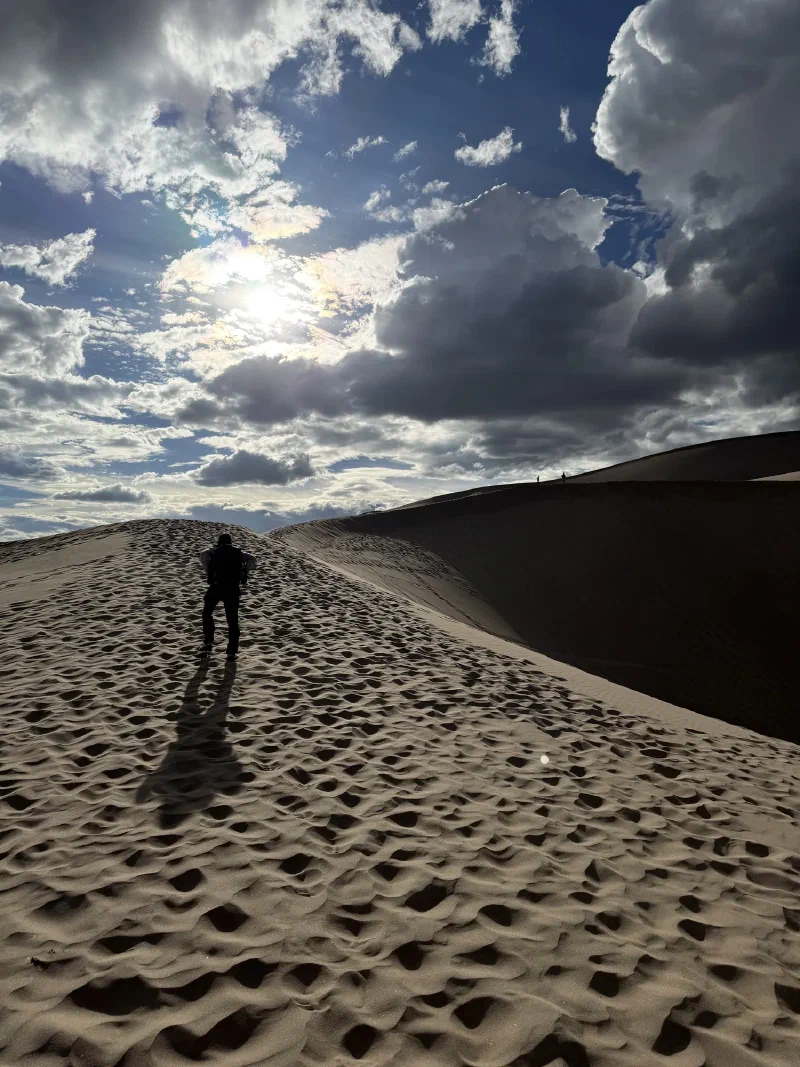
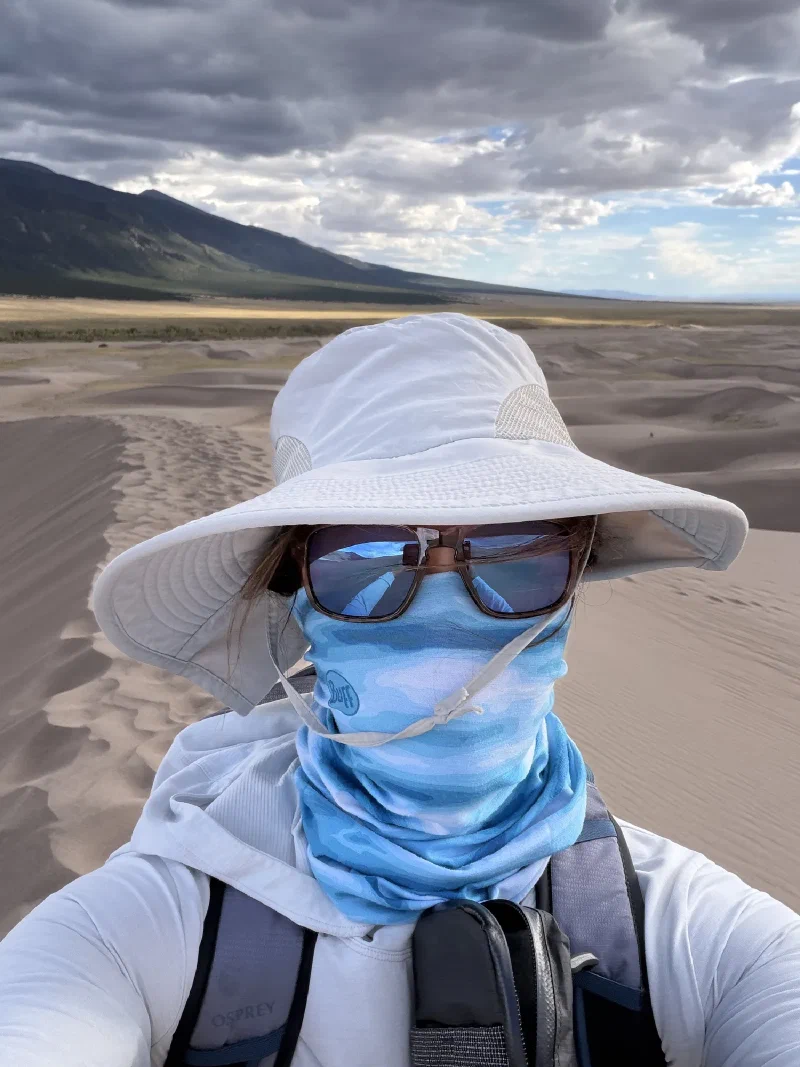
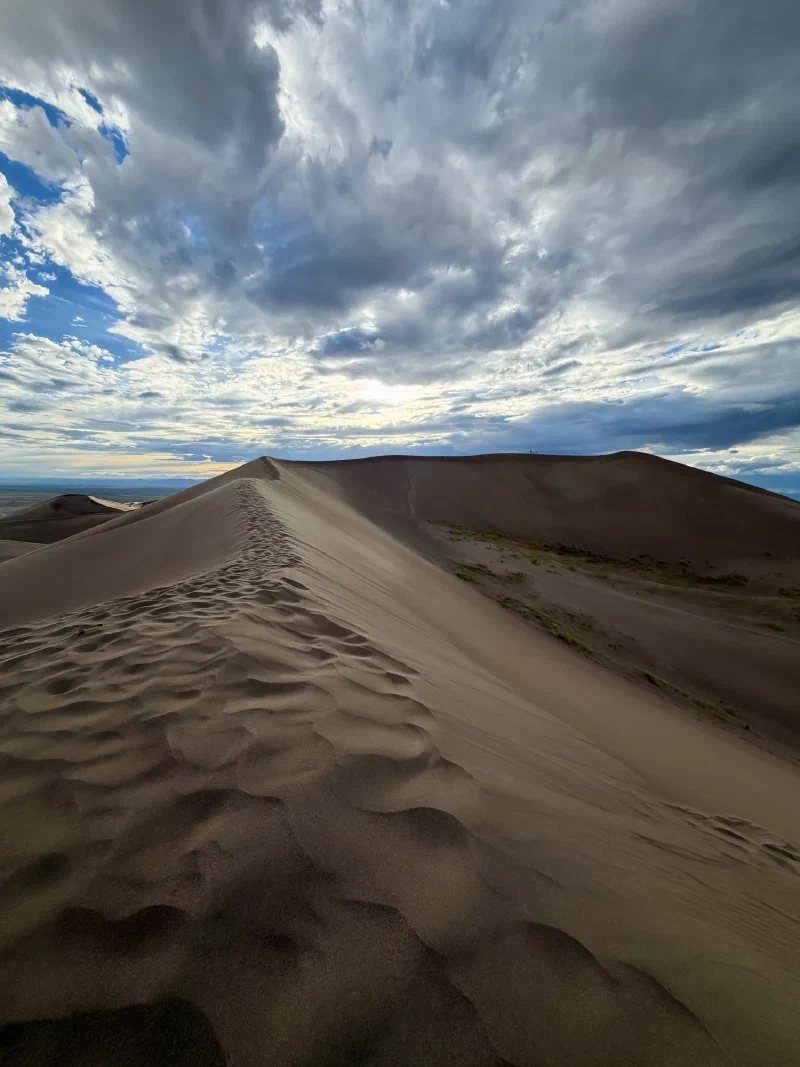
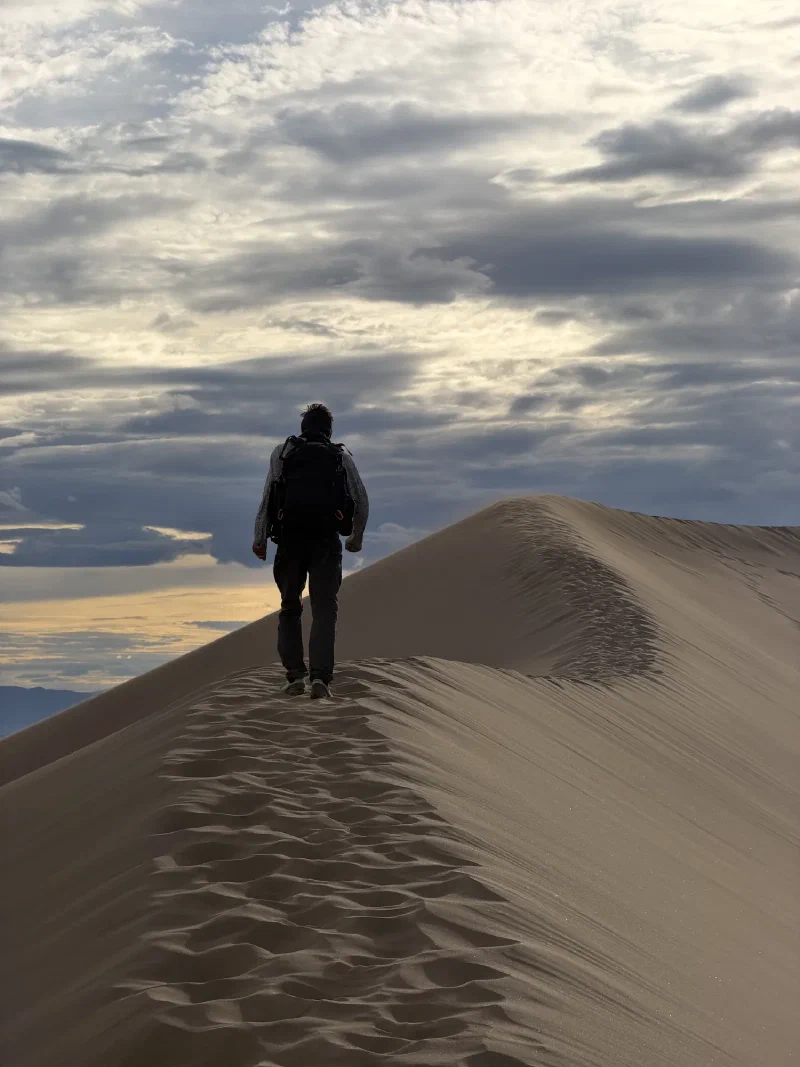
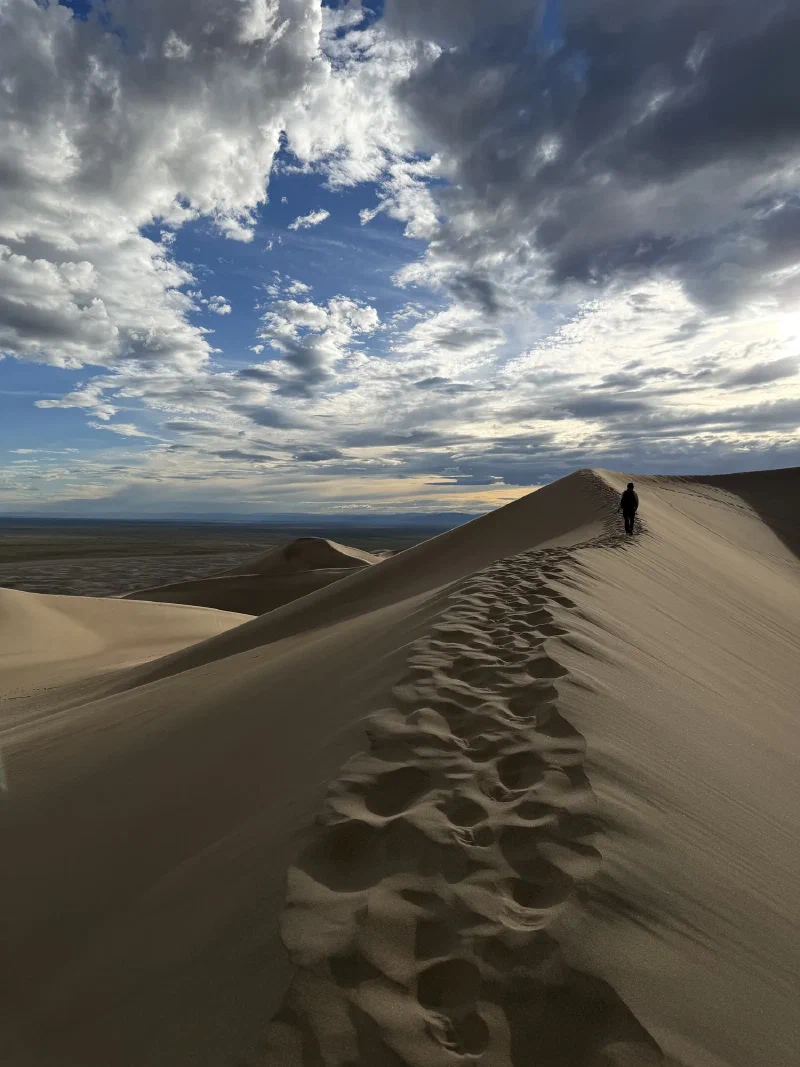
We hiked up along the ridge with the evening coming on and dark cloud moving in behind us. This could look really cool, said Nicholas, looking at the cloud.
Pokin also looked at the cloud, and said something quieter about there being no reception out here and therefore no alerts.
Several times we got to the top and discovered the top was somewhere else.
Moonwalking#
Then we reached a top that really was the top, and Nicholas pointed at a completely different dune some distance away and said that would be a great place to take photos.
Pokin looked at it and did the maths that he had skipped, which is that getting to that dune involves going all the way down this one and all the way up that one.
She was not thrilled.
Come on, he said. You can run down. It’s fun. It’s like moonwalking.
Pokin sat down on her backside and slid, which was slow, and dignified in absolutely no way, and I respected it enormously.
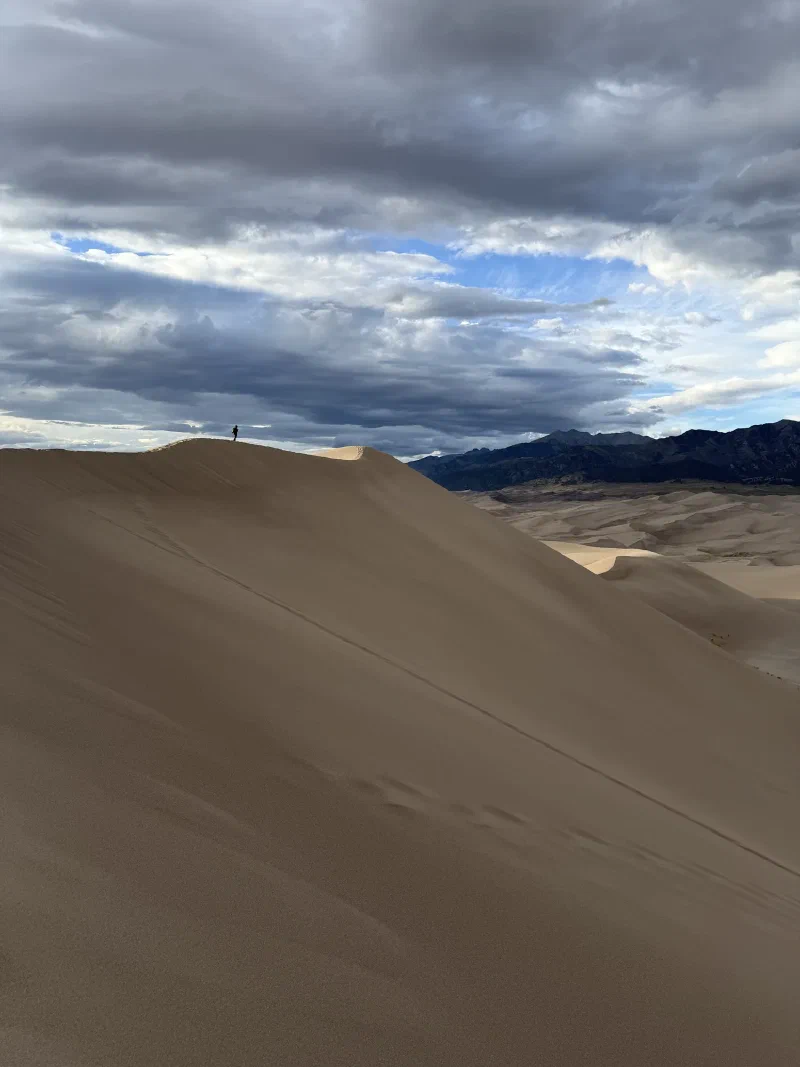
Down, Then Up Again#
And then there was lightning over the near hill.
We were the tallest things on an exposed ridge, which is precisely the situation the manual had been describing, so we went down.
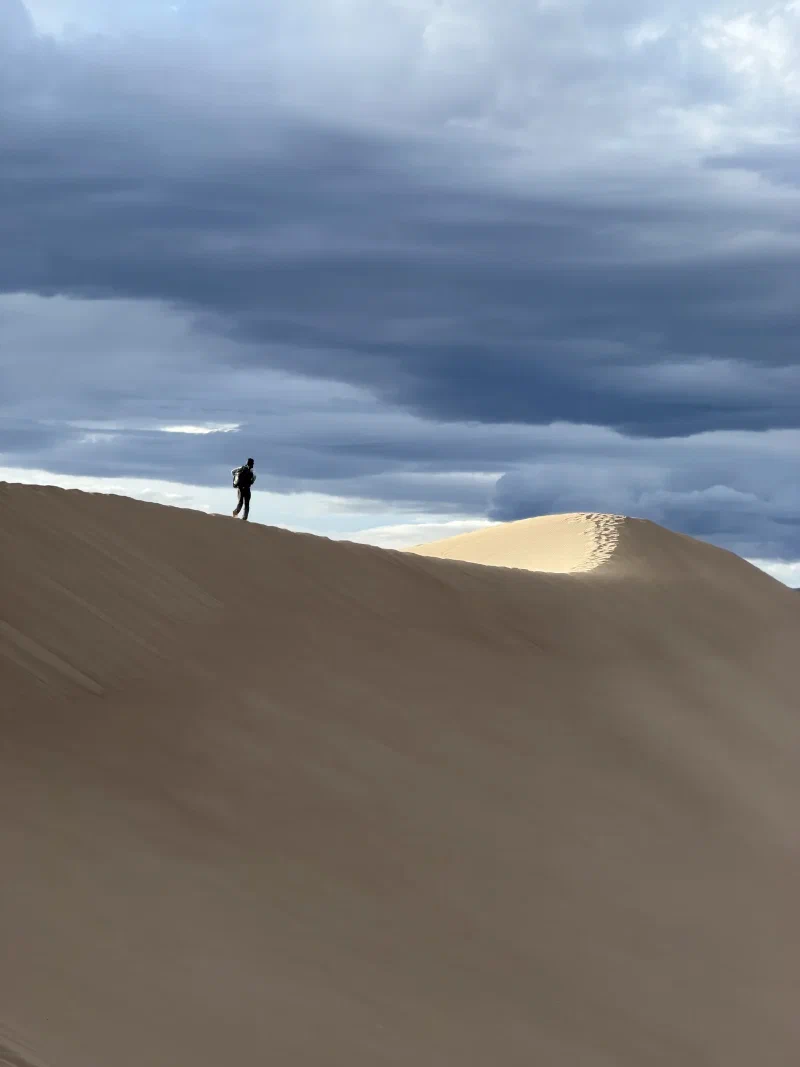
We got down. We were, briefly, sensible people standing on flat ground.
Then my bud worked out how good the shots would look from up there.
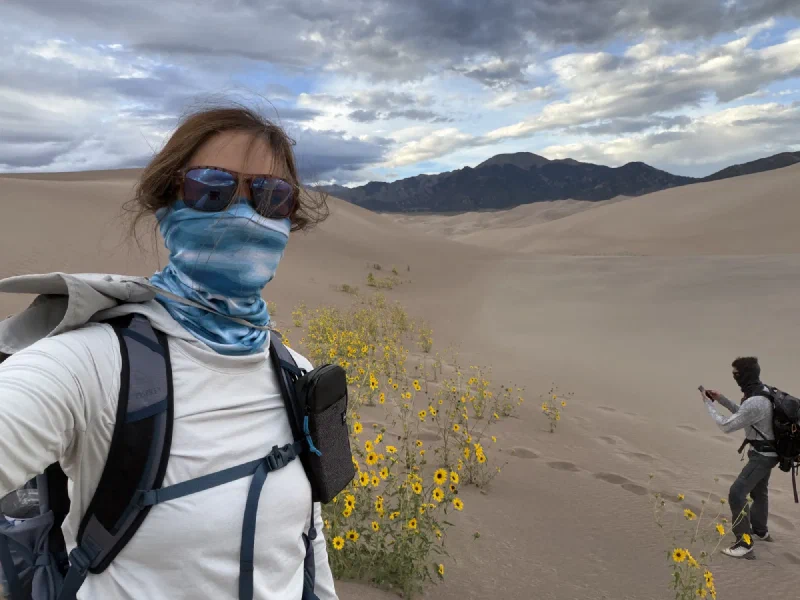
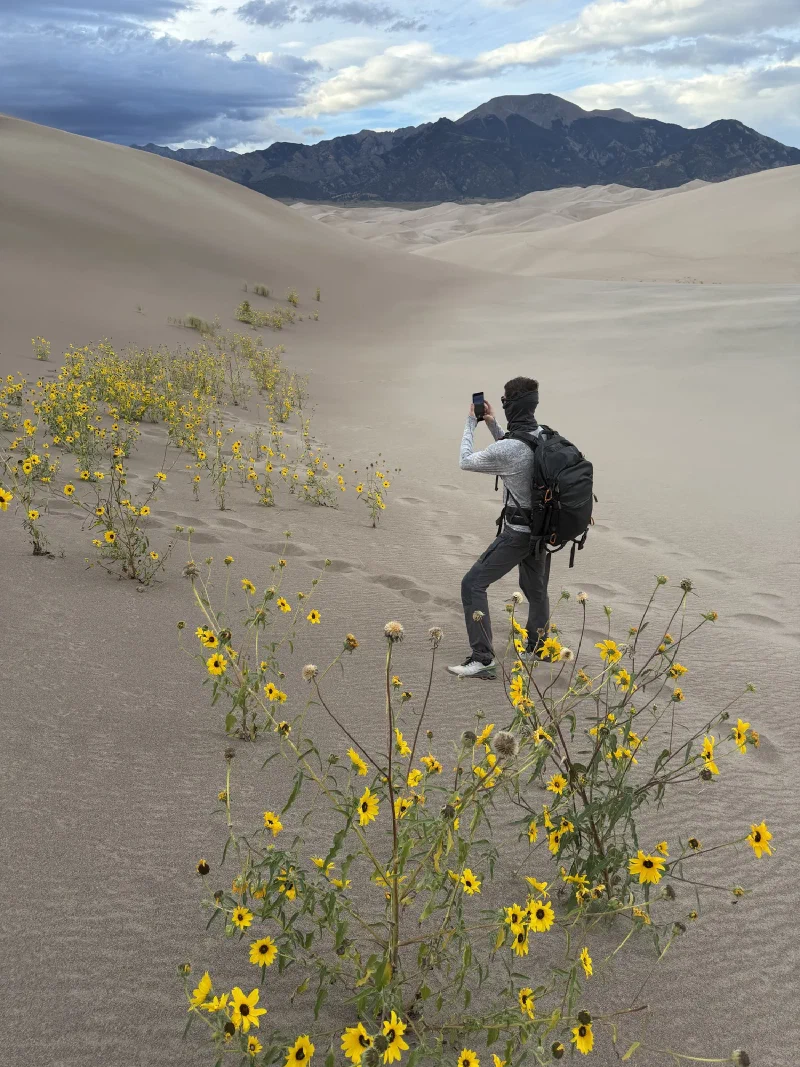
So we went back up a different dune. Just to get a few shots.
How Dunes Are Made#
The wind arrived properly then, and started throwing the dunefield at us.
Here is the thing Pokin learned the hard way. These are the tallest dunes in North America, and the reason they are tall is that the sand has nowhere to go. The prevailing winds come from the southwest and push sand across the valley floor until it piles against the Sangre de Cristos. Then storm winds come back down through the mountain passes and push it the other way. Sand that gets shoved from both directions does not travel. It stacks.
So the dunes look the way they do because of wind, and specifically because of the wind that was at that moment going directly into Pokin’s face at speed.
She received the lesson. I would say she received all of it.
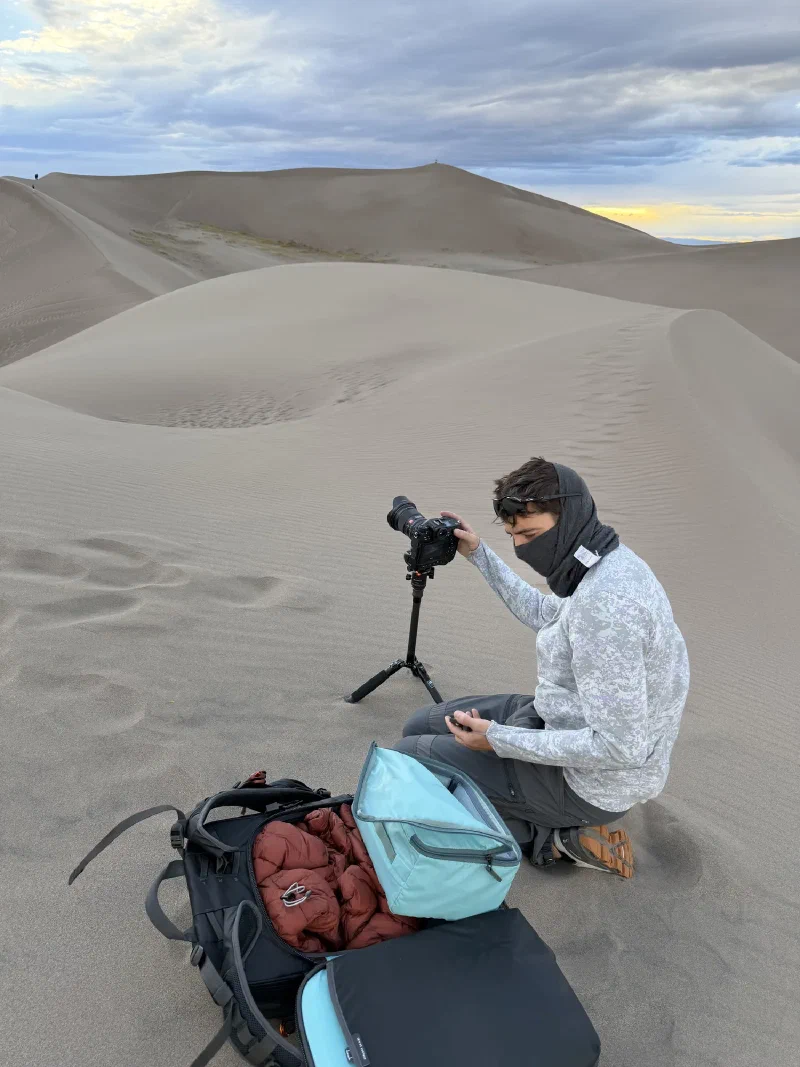
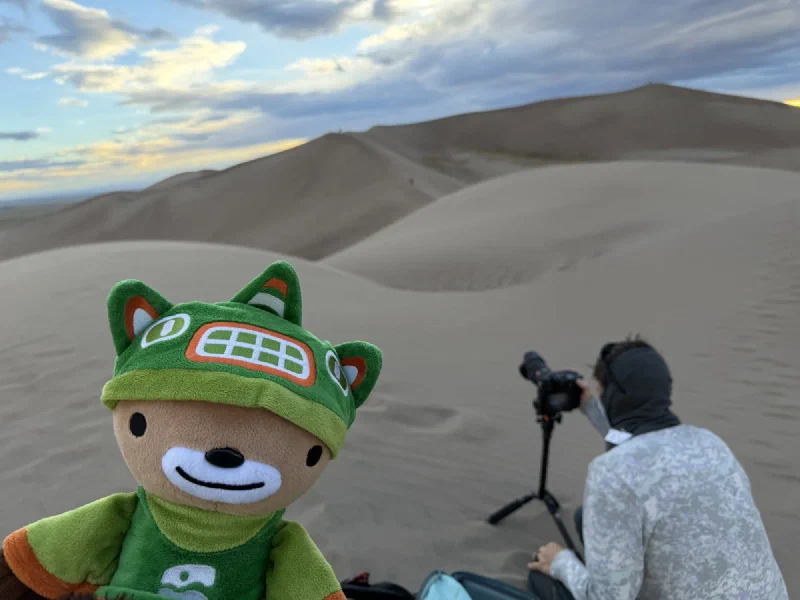
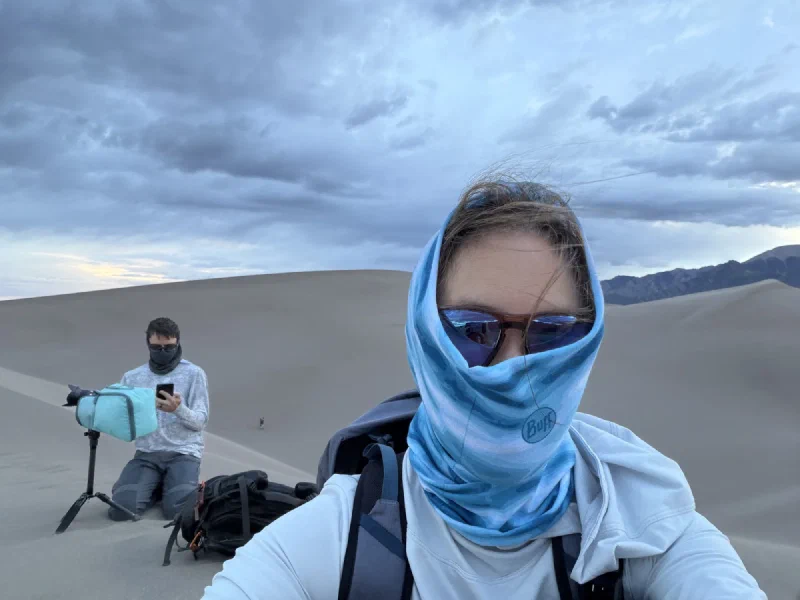
For the next while we simply sat there. Nicholas took photographs and appeared not to notice the weather in any way. Pokin huddled behind a patch of dune grass roughly the size of a dinner plate. I stayed low and out of it.
And then, in the middle of a sandstorm, on top of a dune, in a national park, my bud took a work video call.
He put the buff up, angled the phone, shouted into the microphone over the wind, and conducted the entire thing as though he were sitting at a desk, all while the camera kept clicking away beside him.
We Left Anyway#
Eventually the storm risk moved off and the forecast started improving, hour by hour, in exactly the direction he wanted.
But by then Pokin had had enough, and she was not enthusiastic about walking back down a dunefield in the dark, which is a fair position to hold. So we packed up not long after.
My bud came quietly. He did not come happily.
The Sand#
Back at the hotel, Pokin found sand in her eyes, in her ears, and up her nose, all of which had happened through a buff.
Also her pockets. Also her shoes. Also the backpack. Also the car.
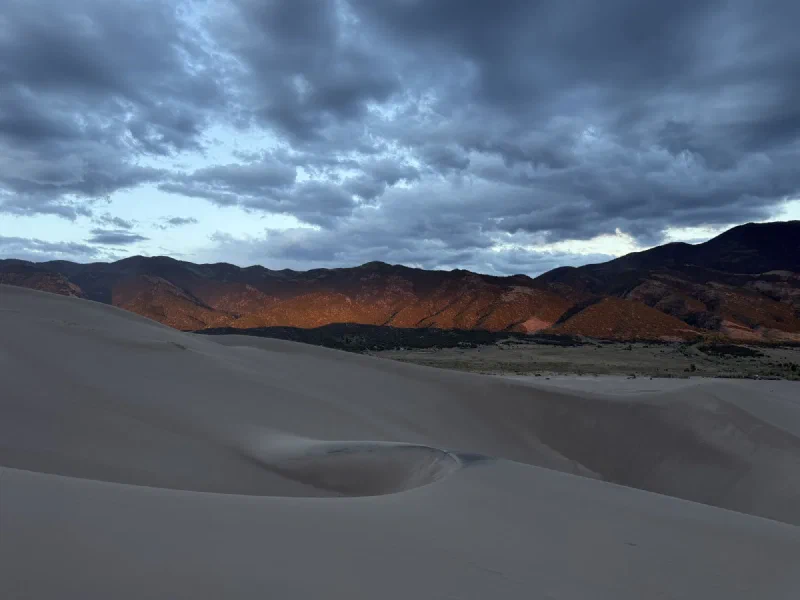
Every photo you have just looked at was taken on a phone.
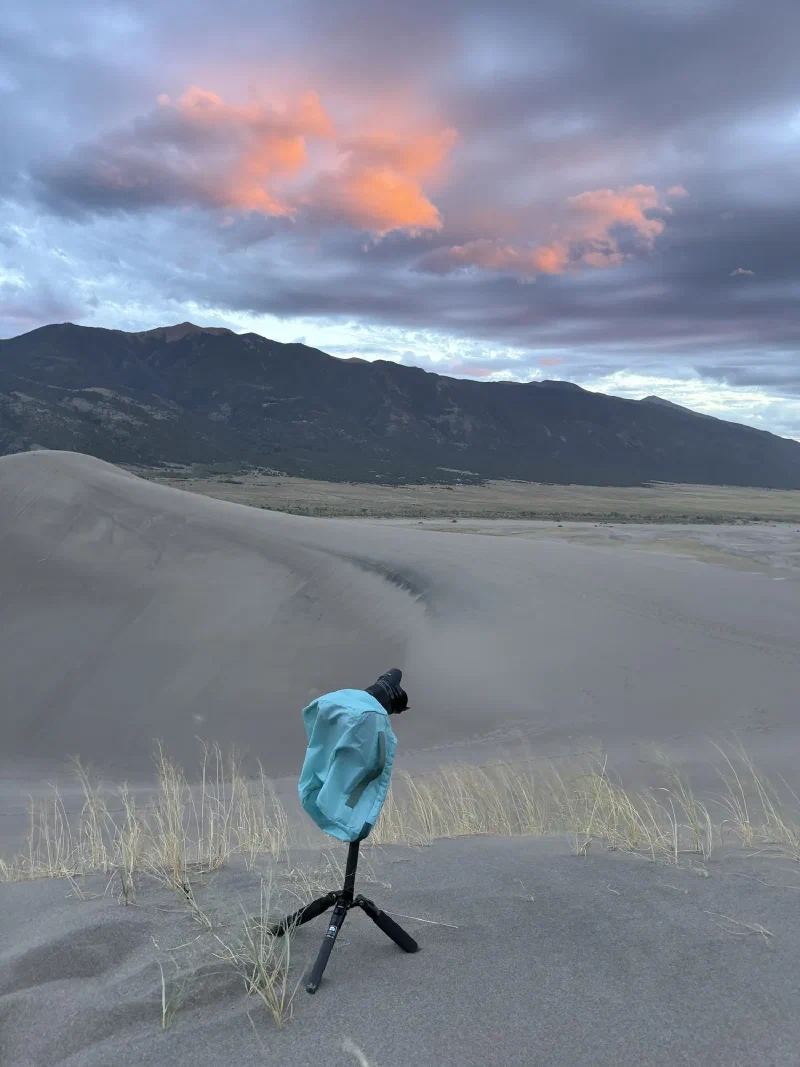
The camera, the tripod, the two bags of gear, the rain cover and the hour of sitting inside a sandstorm to use them produced a set of images that my bud has personally assessed as not even worth posting.
We are still washing sand out of the socks.