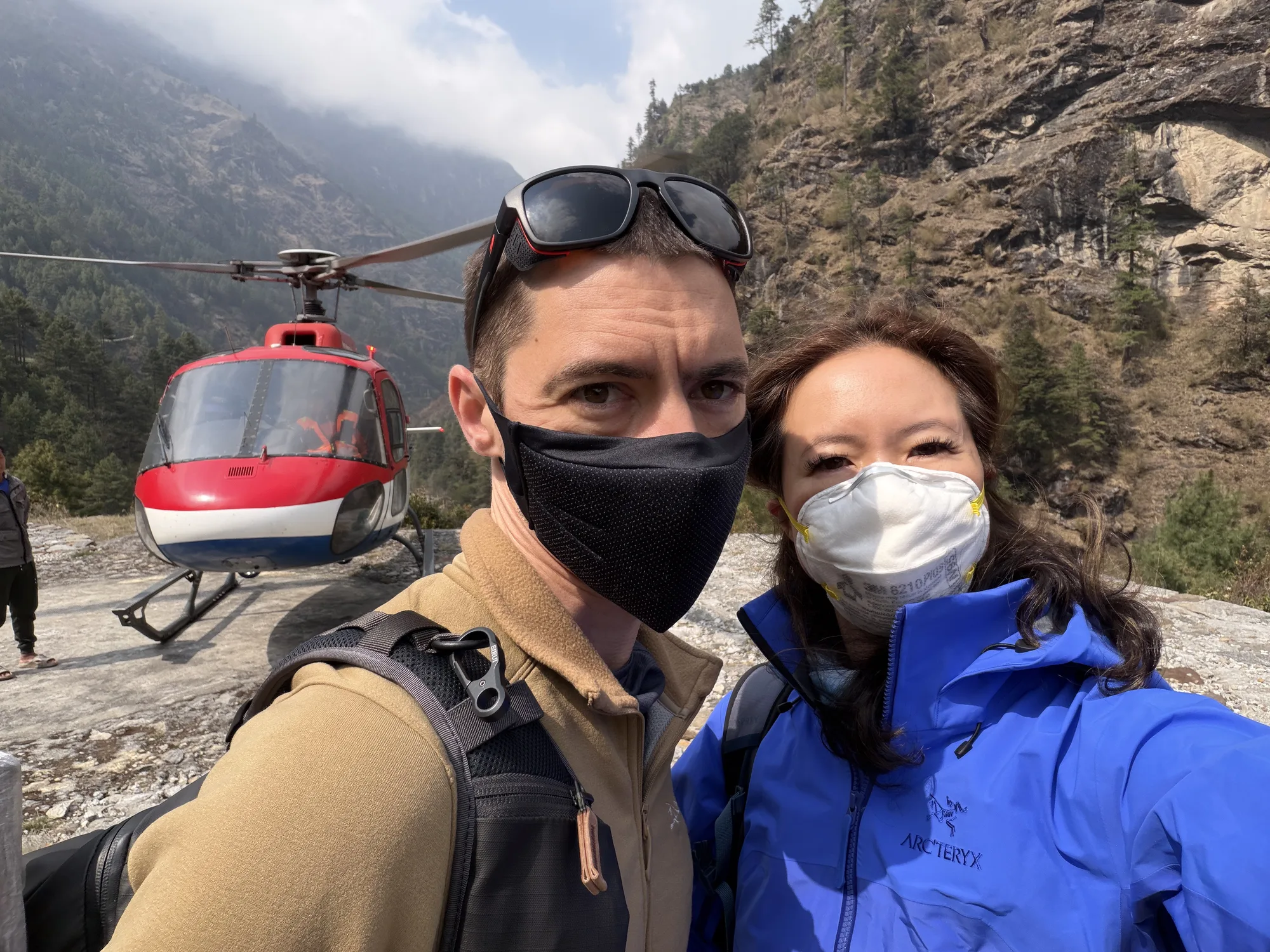

The mechanics finished. The door closed. The rotors spun up. And we lifted off from Lukla with no guide, no group, and a maintenance guy riding along to make sure nothing went wrong.
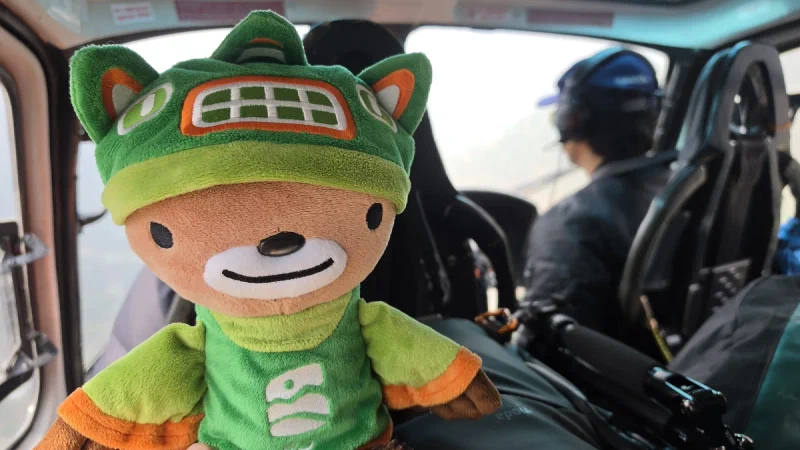
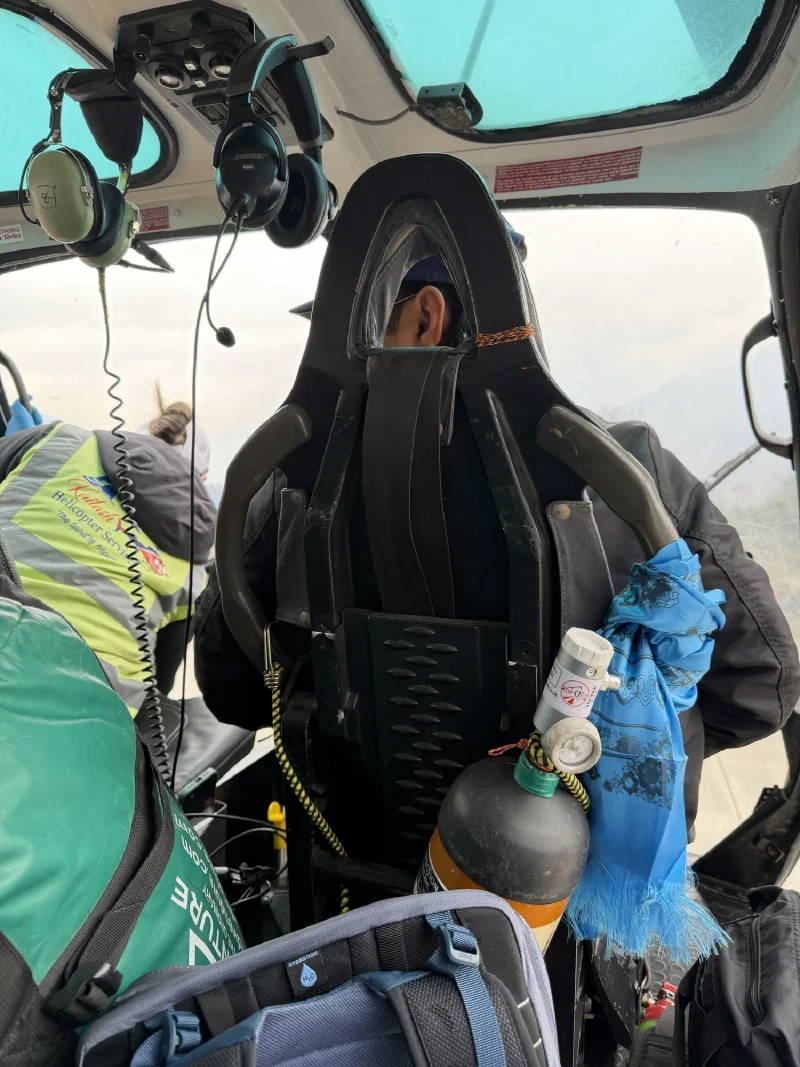
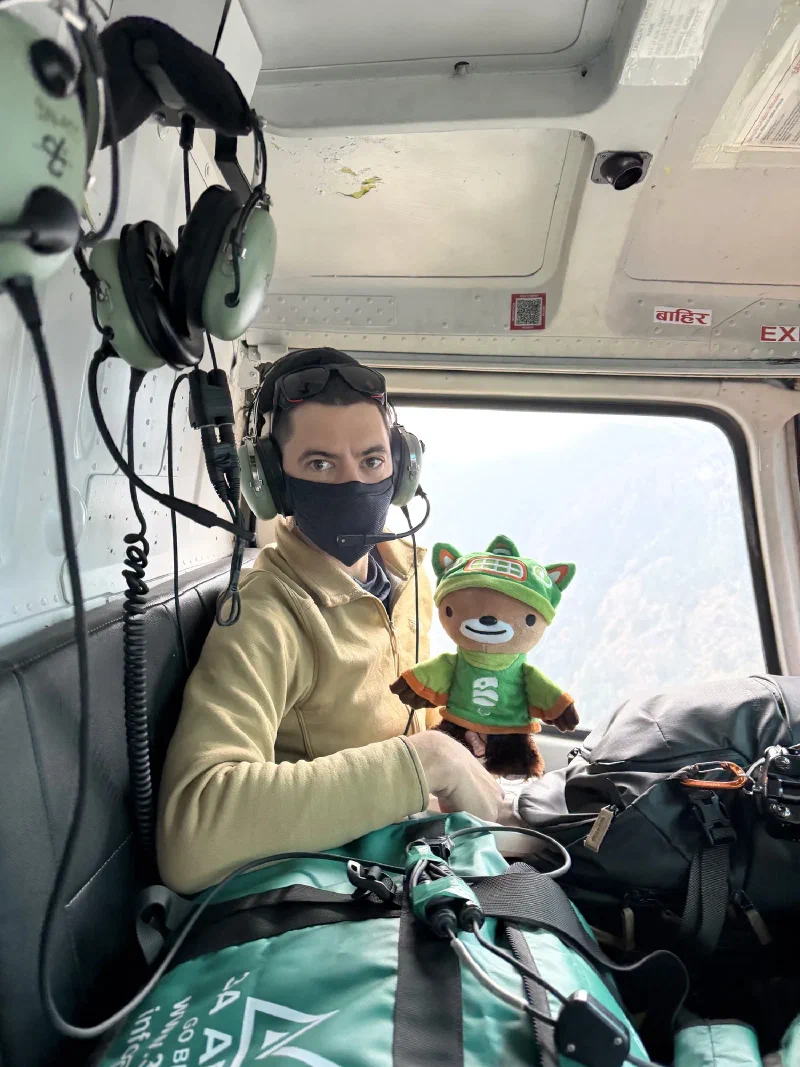
The flight to Phakding was short. A few minutes over the valley, dodging the same clouds we’d been fighting all day. The pilot found a landing spot behind a building and dropped toward it.
I use the term “landing spot” generously.
The Landing#
It was a circle of stones. Not a helipad. Not a paved surface. Not even cemented cobblestone. Just loose rocks arranged in a rough circle behind the Himalayan Sherpa Hospital. Not where I would choose to land a helicopter, but nobody asked me.
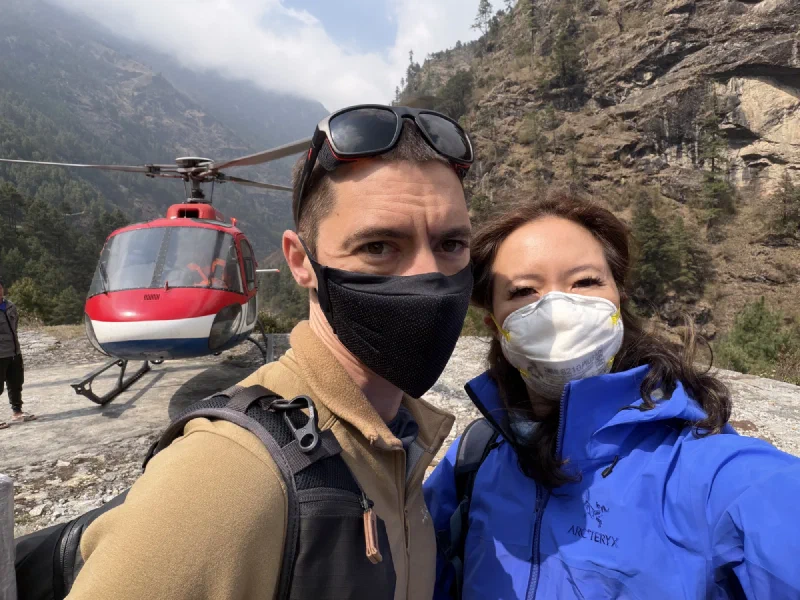
The mechanic swung the door open with the rotors still running. He had us jump out, then dragged our duffel bags onto the rocks. Then a 20-kilogram box of apples and pomegranates that D.B. had sent along for the trek. Then he slammed the door, gave a thumbs up, and took off. Not a single word spoken the entire time.
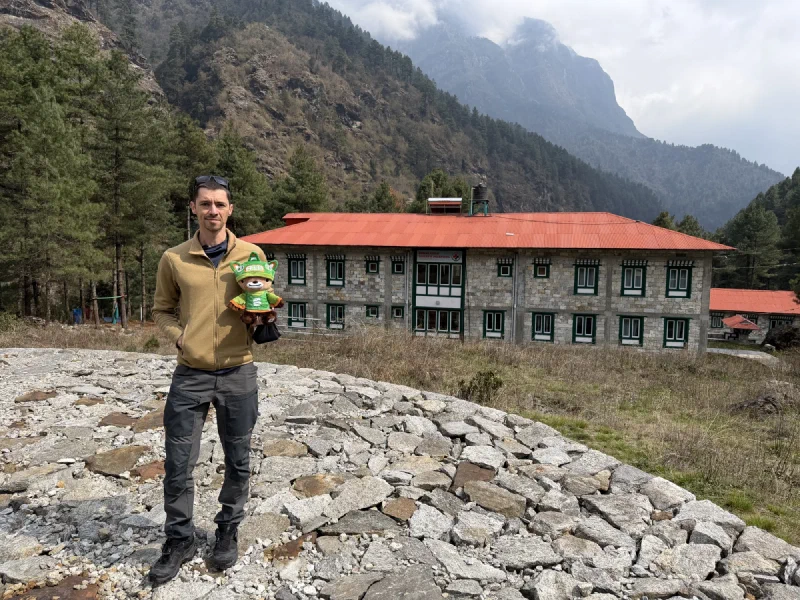
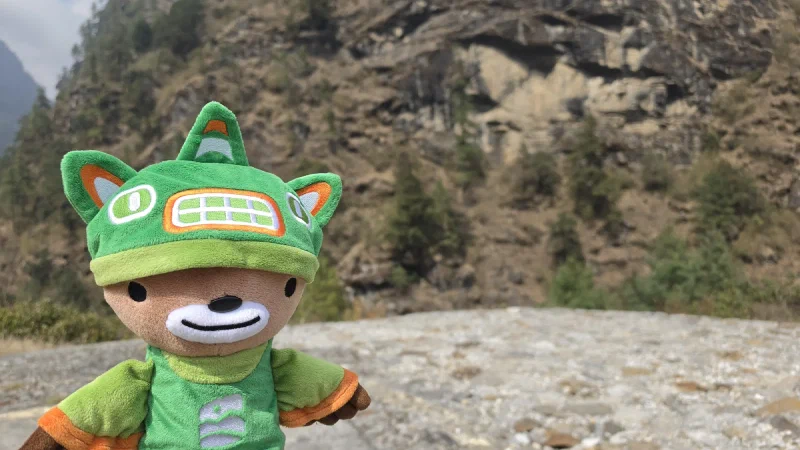
So there we were. Two sick trekkers and a bear, standing on a stone circle behind a hospital in a Himalayan valley, surrounded by duffel bags and a giant box of fruit, with absolutely no idea where our hotel was.
No guide. No group. No cell reception.
Finding the Hotel#
We started hauling our 20-kilogram duffels (plus the fruit box) down a cobblestone path toward what looked like it might be a town. It was not a dignified entrance.
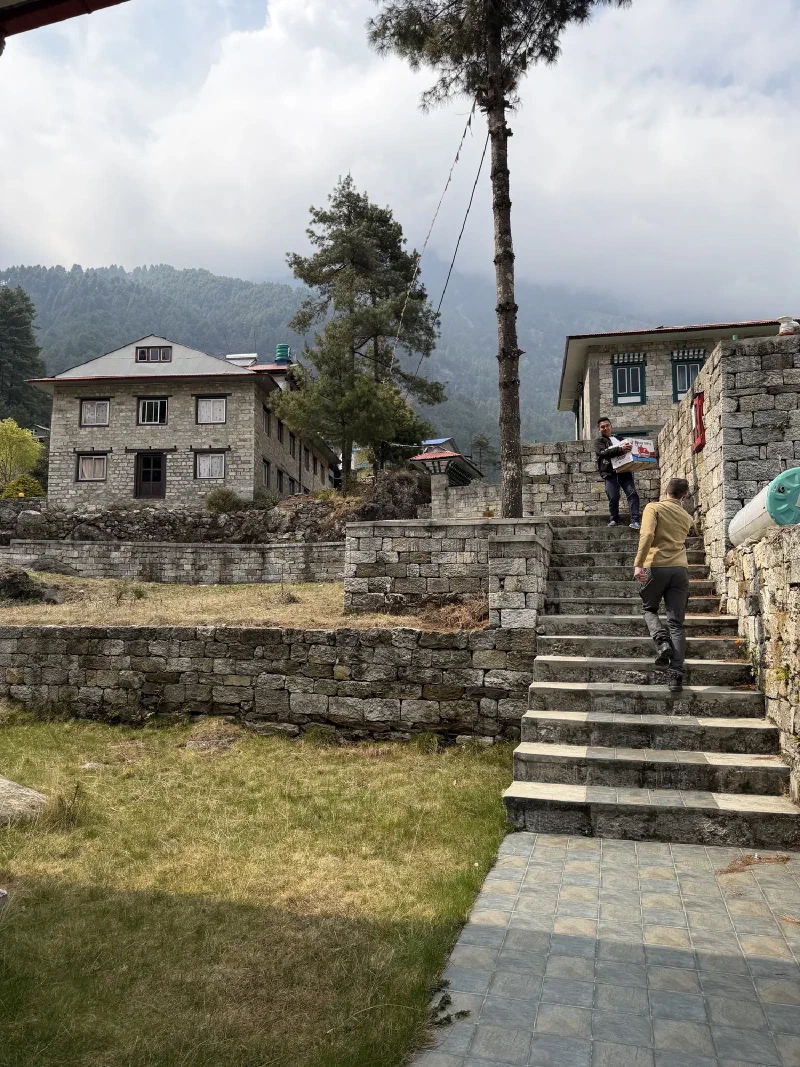
Luckily, someone found us before we wandered too far. The owner of the Sherpa Shangri-La had gotten a call from D.B. and came out to collect us. Turns out our hotel was literally the next building over. We’d been dragging bags in the right direction by pure accident.
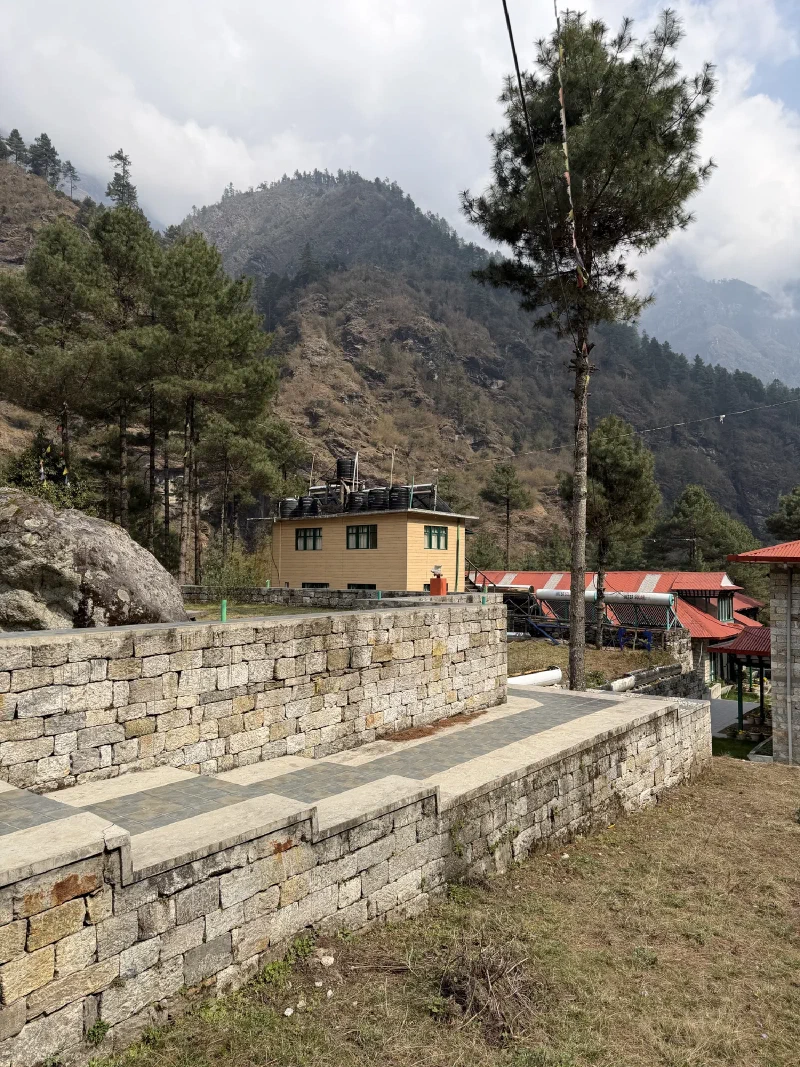
Sherpa Shangri-La#
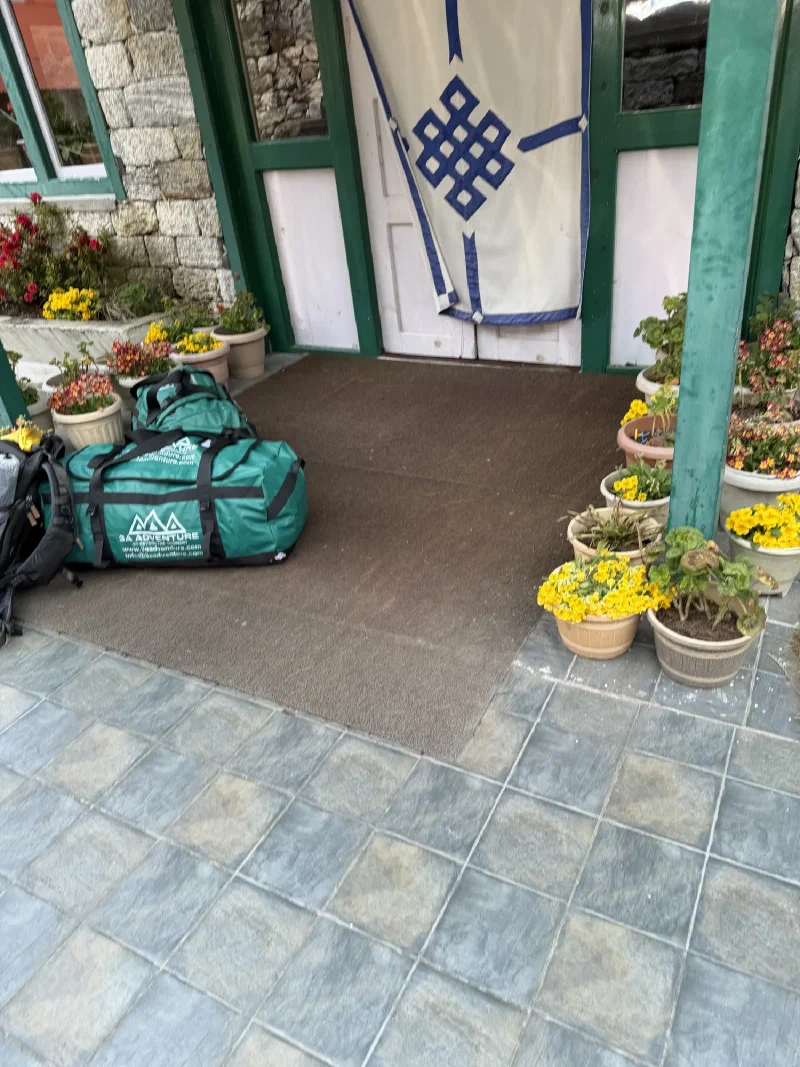
The lodge was genuinely nice. Not “nice for a remote mountain village” nice. Just nice. A cozy lounge with Himalayan panorama photos on the walls, a painted Tibetan cabinet, cushioned chairs, and that particular kind of quiet that only happens when you’re the only guests.
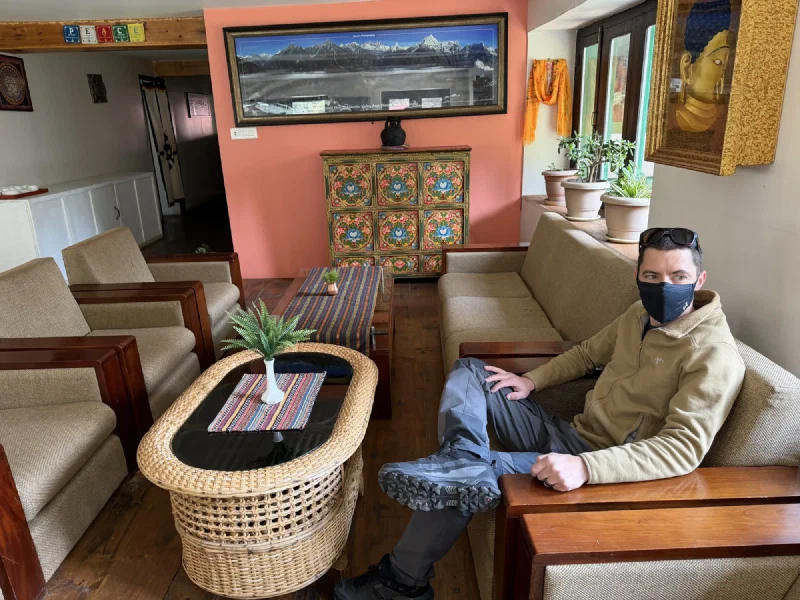
Most flights to Lukla had been canceled that day because of the afternoon weather. Which meant most trekkers who were supposed to start their trek that day were still stuck in Kathmandu. Which meant Phakding was practically empty. We had the Sherpa Shangri-La almost entirely to ourselves.
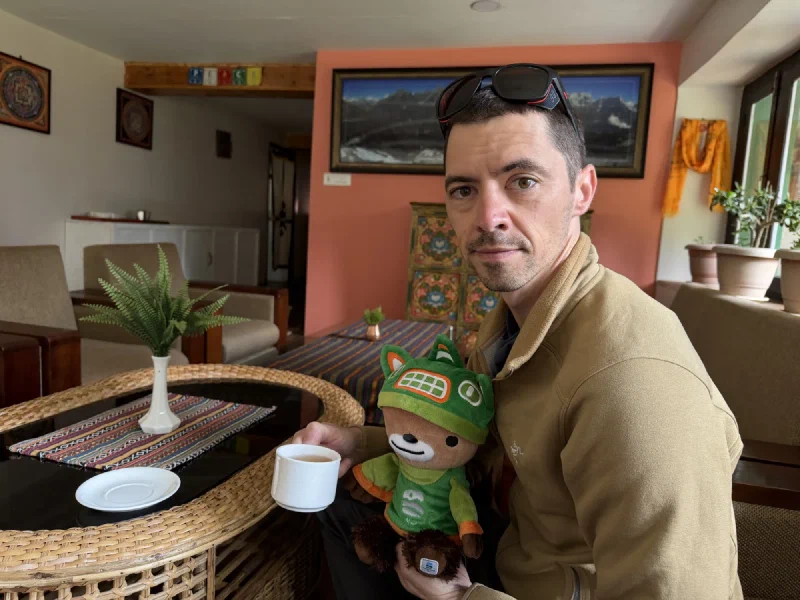
Nicholas liked Phakding. It sat at 2,610 meters in the Dudh Koshi river valley, actually lower than Lukla, tucked between steep forested mountainsides. Quiet. Green. The kind of place where you could hear the river and not much else.
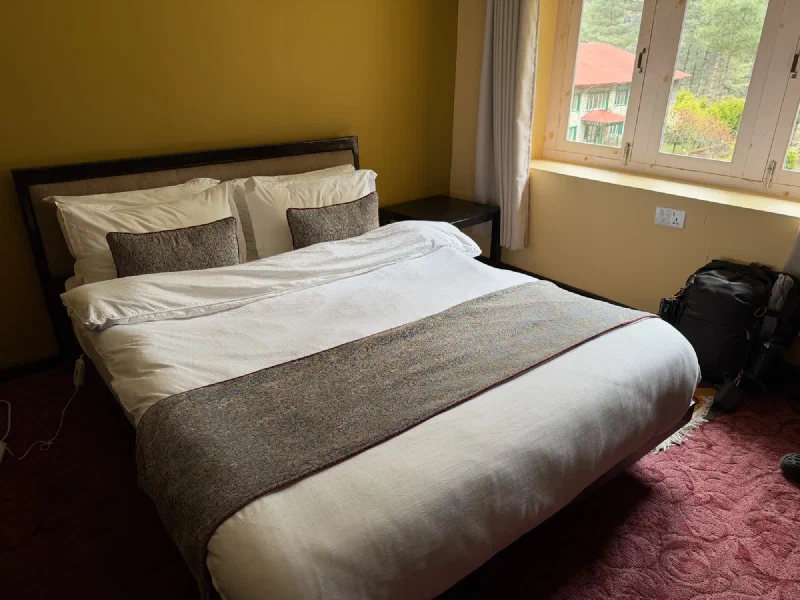
They napped. Hard. The kind of nap where you close your eyes at 3 PM and wake up to darkness and the sound of people arriving.
After Dark#
The rest of the group made it in after nightfall. Because our helicopter had been so late leaving Kathmandu, the hikers had started late too, and the three-hour hike from Lukla to Phakding stretched into the evening. Steve, Alice, and Po On arrived tired but healthy, which was more than Nicholas and Pokin could say.
Everyone had dinner together. First real group meal on the trek. First chance to compare notes on how the day had gone, which was mostly just everyone agreeing that today had been completely ridiculous.
The Problem#
Phakding was peaceful. The lodge was comfortable. The fevers were still there.
Tomorrow was the hike to Namche Bazaar. It’s the first real climb of the trek, a steep, relentless ascent that most guides describe as the toughest day of the first week. Not exactly what you want to tackle on day one of being sick.
Nicholas and Pokin talked about staying an extra night. More rest. More time to recover. But the plan had two nights built into Namche specifically for acclimatization, and those two days of rest would be there whether they arrived sick or healthy. Better to push through tomorrow and collapse in Namche than to fall behind the schedule and miss the rest days entirely.
So the plan held. Wake up early. Hike to Namche. Hope the fevers break somewhere between here and there.
Phakding was the kind of place you’d want to stay longer. But the mountain doesn’t wait, and neither did the itinerary.