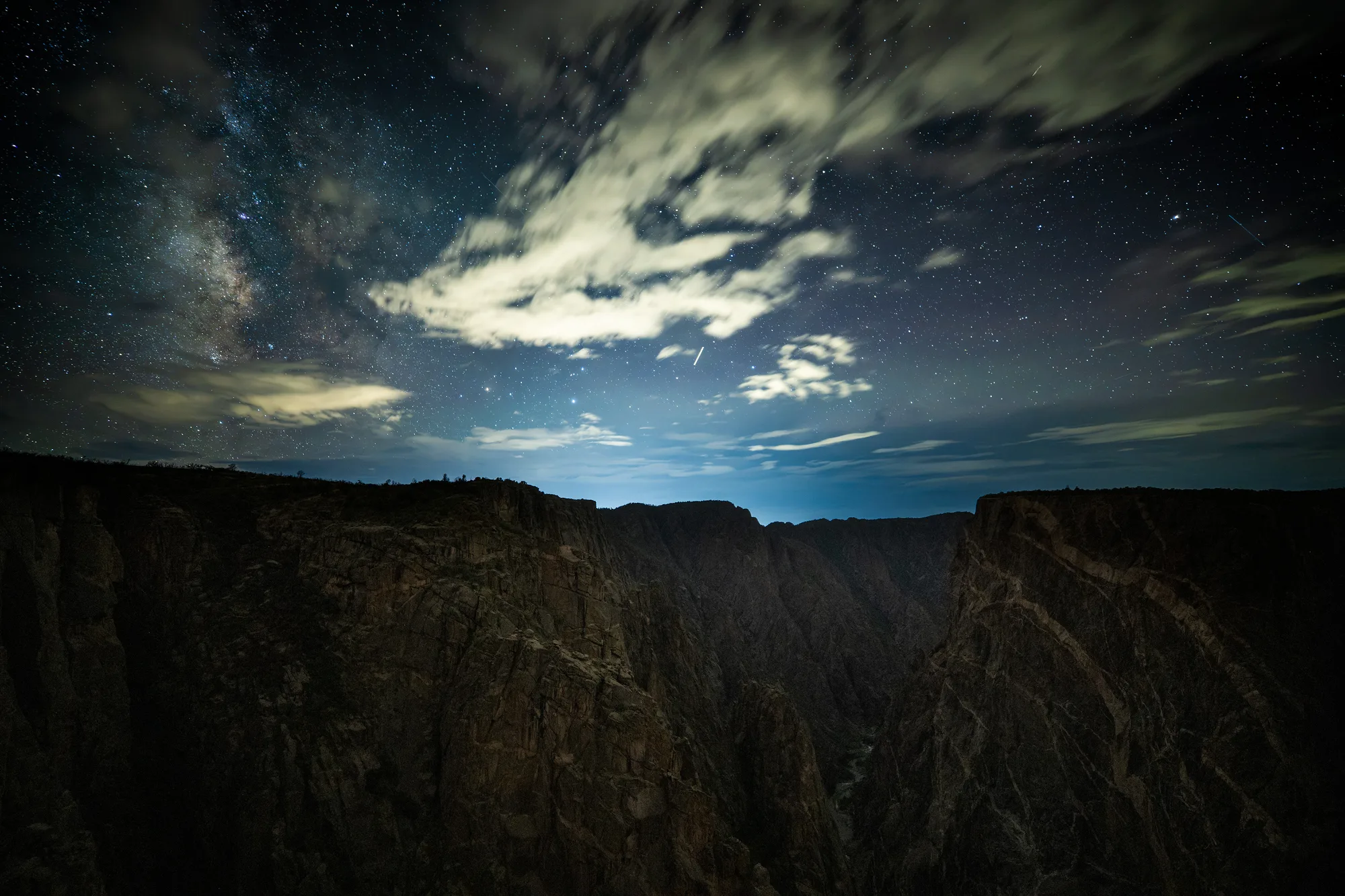

Day four had the same question as every other day. Where do we point a camera at the galaxy next?
Black Canyon of the Gunnison was the sensible answer. Two thousand feet of vertical foreground with dark skies sitting on top of it.
Then the weather said cloud, and Montrose said no. Long weekend plus a festival, and every room for miles belonged to people who plan ahead. We are not those people.
North into what my bud keeps calling “real” Colorado, where the fourteen thousand foot mountains live, was three more days of committing, and there were rumours he might get called back early for work. So: a cloudy canyon, or mountains we might never reach.
Then somebody mentioned mugs.
The Mug Doctrine#
The intelligence was that Black Canyon had mugs. Not confirmed. Rumoured.
It was still a firmer rumour than the forecast.
Mugs were certain. Weather was not. We booked the overpriced hotel.
I would like it noted, formally, that a national park was chosen on the basis of ceramics.
A Very Impatient River#
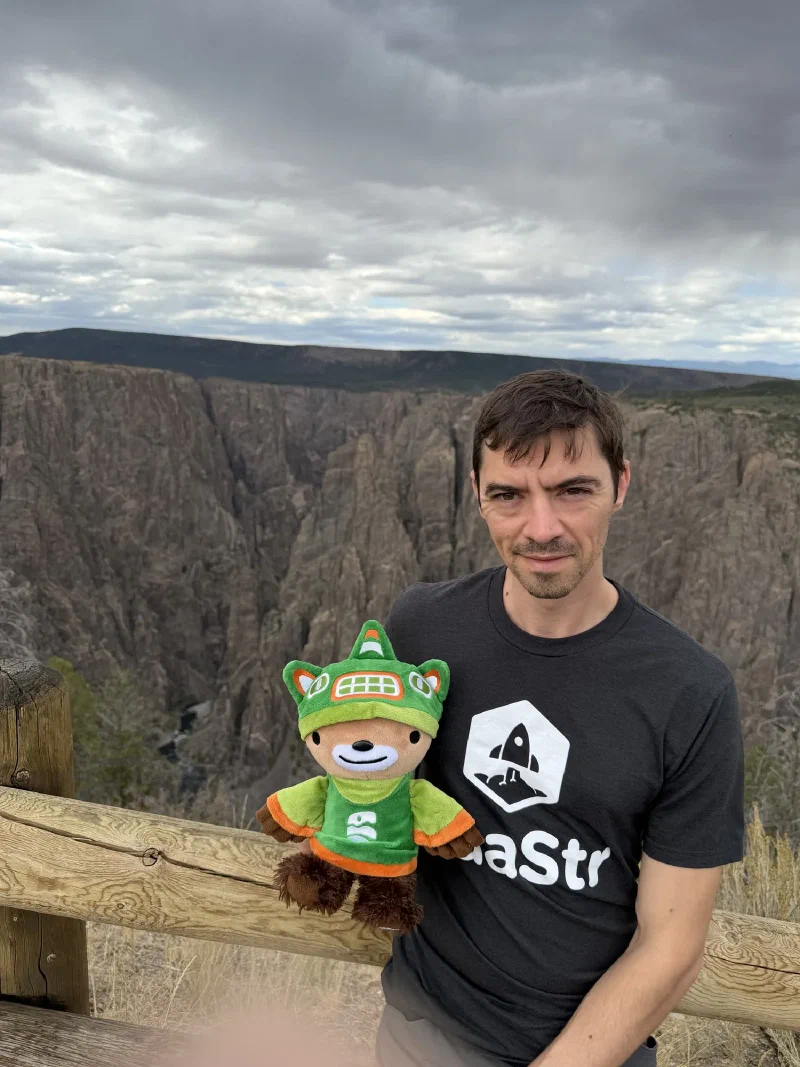
The Black Canyon is not the deepest canyon in North America. Not the narrowest, not the steepest. It is all three at once, and nothing else on the continent manages that.
2,722 feet (829 m) at its deepest. Forty feet (12 m) across at the river’s narrowest. The Painted Wall runs 2,250 feet (686 m) from water to rim, the tallest cliff in Colorado. Put the Empire State Building at the bottom of it and you would still have a thousand feet of rock above the roof.
The river did that, and the river is in a hurry.
The rock down there is 1.8 billion years old. Colorado lifted, volcanoes buried the lot in ash, and the Gunnison cut down through the soft stuff until about two million years ago, when it reached the ancient rock underneath and got stuck. Not stopped. Stuck in its own channel, with a gradient.
The gradient is the whole story. The Gunnison drops 43 feet per mile through here, up to 95 in places. The Colorado, doing its famous work over in the Grand Canyon, drops seven. Seven.
The Grand Canyon is wide because it had soft rock and time to sprawl. The Black Canyon went straight down like it had something to prove. I respect that enormously.
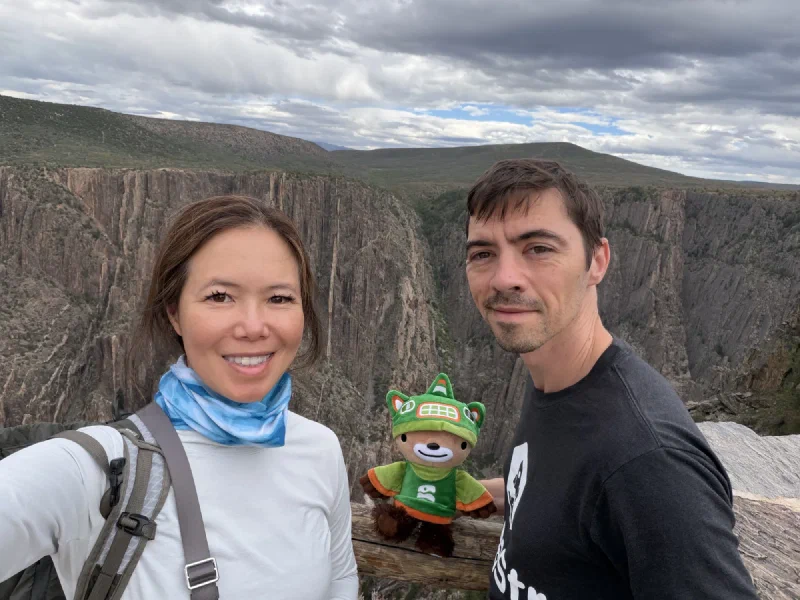
The walls are so tall and so close together that parts of the gorge get about thirty three minutes of direct sunlight a day. The rest is shadow. Hence Black.
Pokin’s Question#
Pokin had worked out that the visitor centre is always on the south side. Not just here. Every canyon. So she asked, and the man at the visitor centre had the answer ready, which tells you she is not the first.
The sun in the northern hemisphere always comes from the south. So the north wall of a canyon faces it and gets cooked, all day, for a couple of million years, and erodes into something stark and bare and worth driving to. The south wall sits in its own shade, keeps its water, and grows things.
So they build the visitor centre on the dull side and point it at the good one. The northern side gets to stay rugged.
Which is also why this rim has the paved road, the campground and the gift shop, and the north rim has seven miles of dirt and a ranger station that opens when it feels like it.
I have no way to check any of this and I have decided it is true.
The Flat Part Was A Lie#
One of the stated goals of this trip was to do some actual hiking. It kept not happening. We arrived too late, or it was too hot, or both, and walking kept getting quietly downgraded to standing near things and looking at them.
Then Pokin found a short loop that would, in her words, let us “experience the canyon better.” It is called the Oak Flat Loop.
The flat part is a lie. Pokin knew that. Pokin reads the elevation profile.
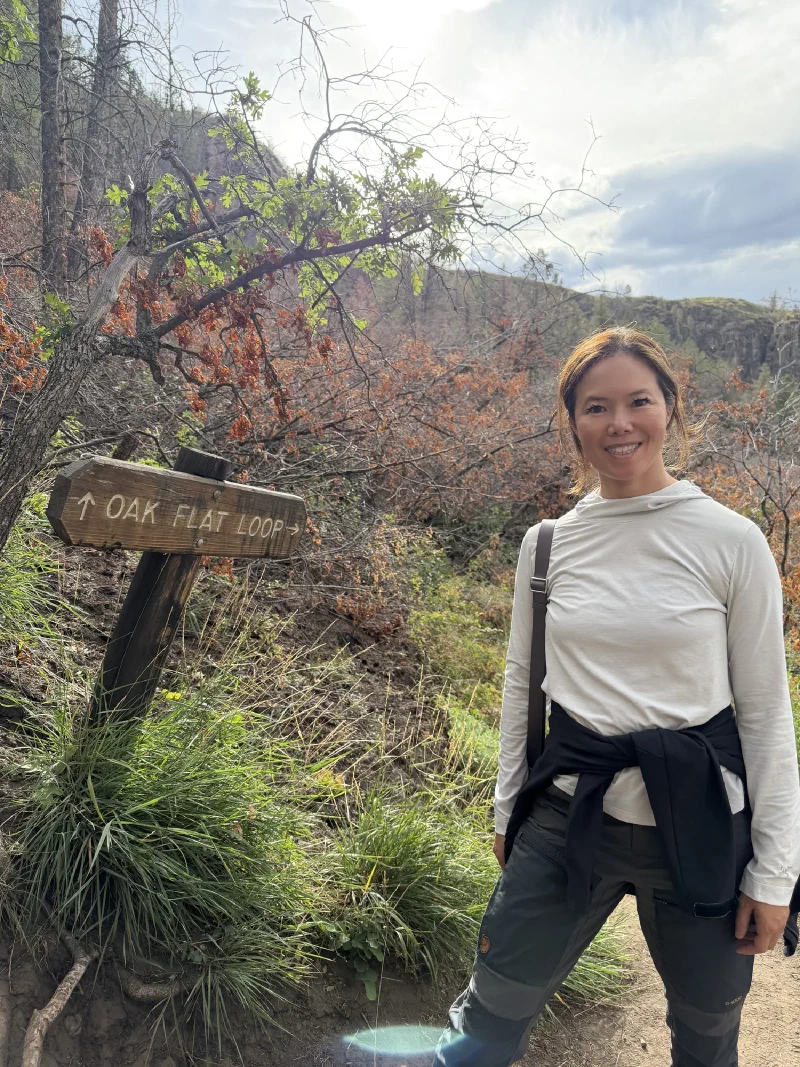
What it actually is: the only maintained trail on this rim that takes you below the edge without committing you to the river. Straight down into designated wilderness, 1.6 miles (2.6 km), rated “moderately strenuous,” which is park service for “you will notice it on the way back up.”
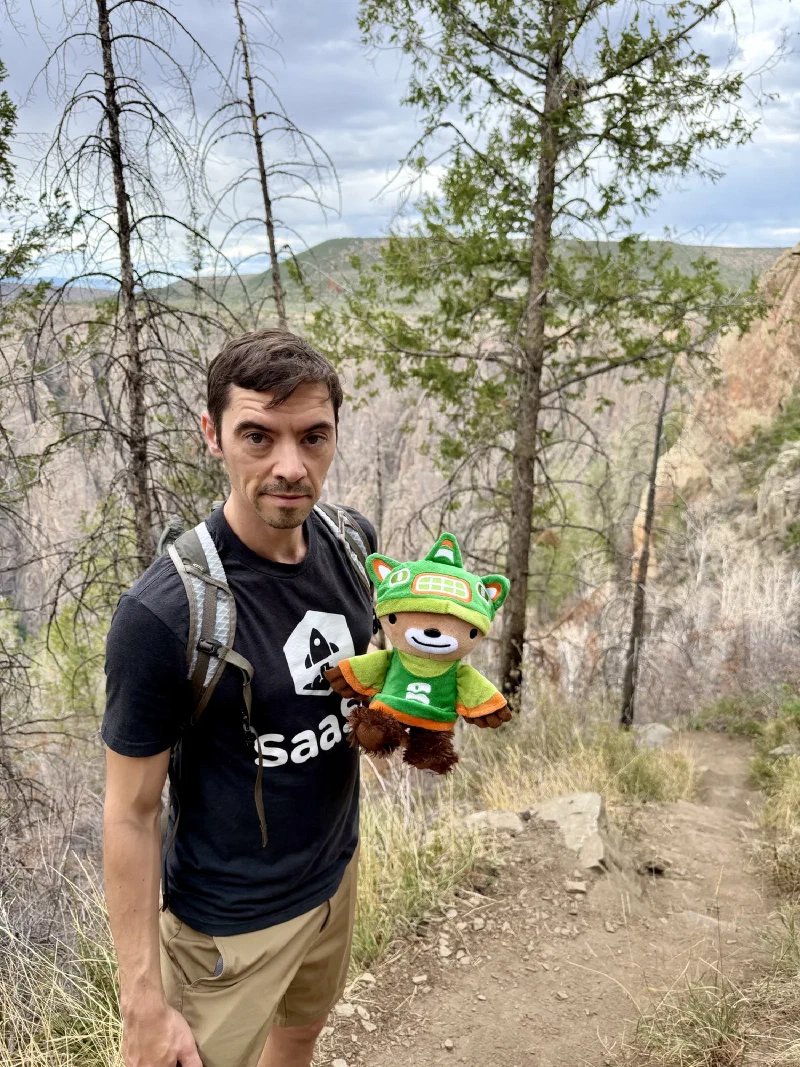
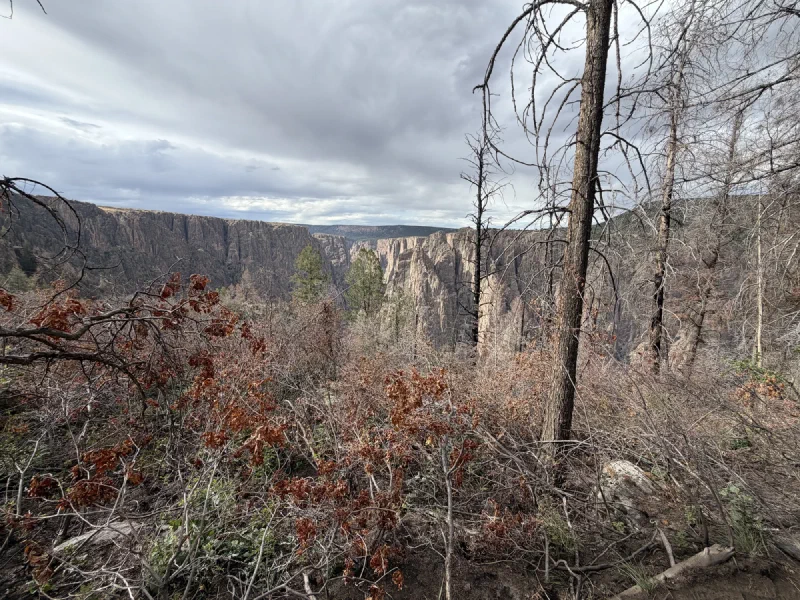
It is a different canyon down there. From the overlooks you get the postcard, the whole gorge laid out, impressive, slightly unreal. Thirty seconds below the lip you are in trees, the view arrives in pieces through branches, and the canyon stops being a view and starts being a drop.
We went 280 feet (85 m) below the rim. Then we climbed 280 feet back up, which is the half of a loop nobody puts on the sign.
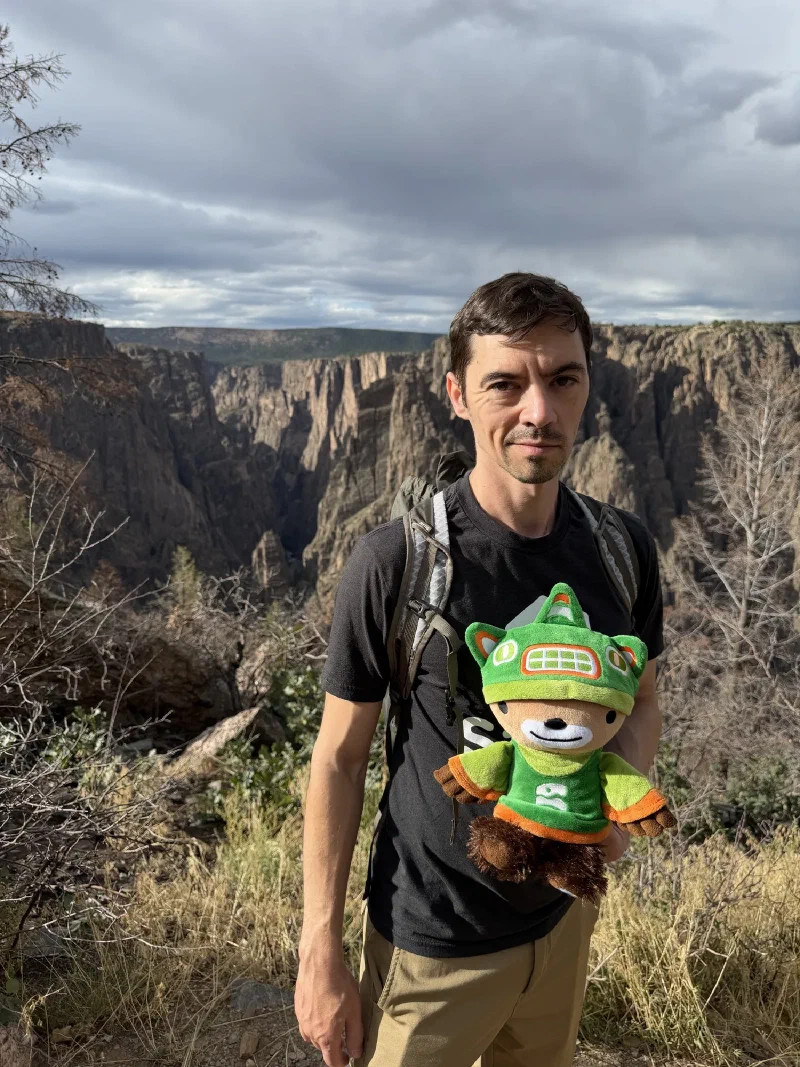
Where My Bud Chose To Put The Camera#
The sky was still overcast and the evening was, by any sensible reading, a write off. We went anyway, because the alternative was sitting in the overpriced hotel knowing we had not tried. So we drove the rim road slowly, scanning, until Nicholas found a spot he liked.
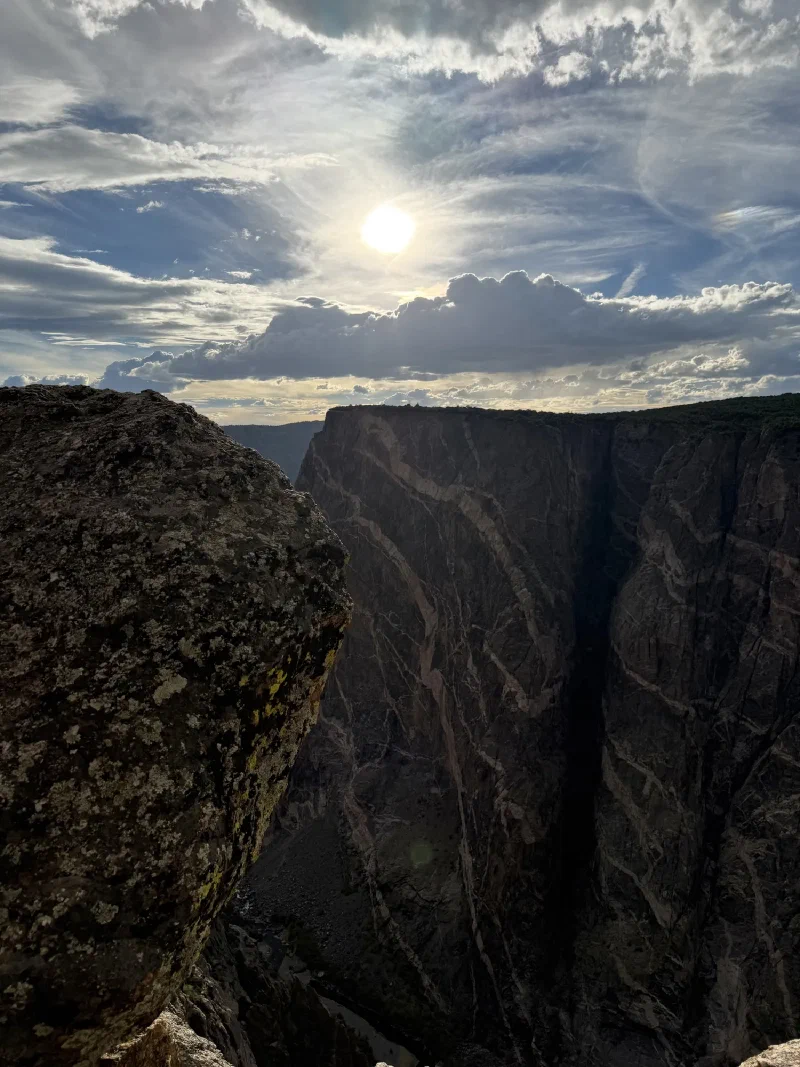
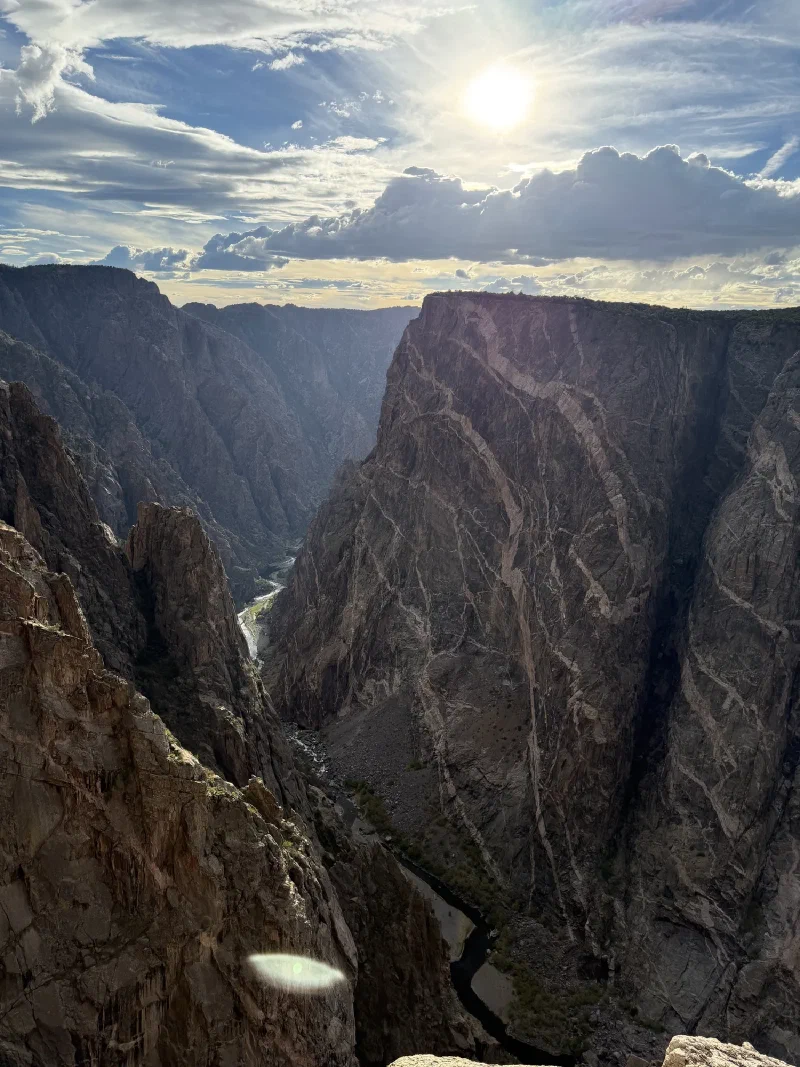
Those pale zigzags are molten rock that squeezed up through cracks in the older stone somewhere between 1.4 and 1.7 billion years ago, cooled, and set. It has been in there ever since, waiting for the river to expose it. That is what the Painted Wall is named for.
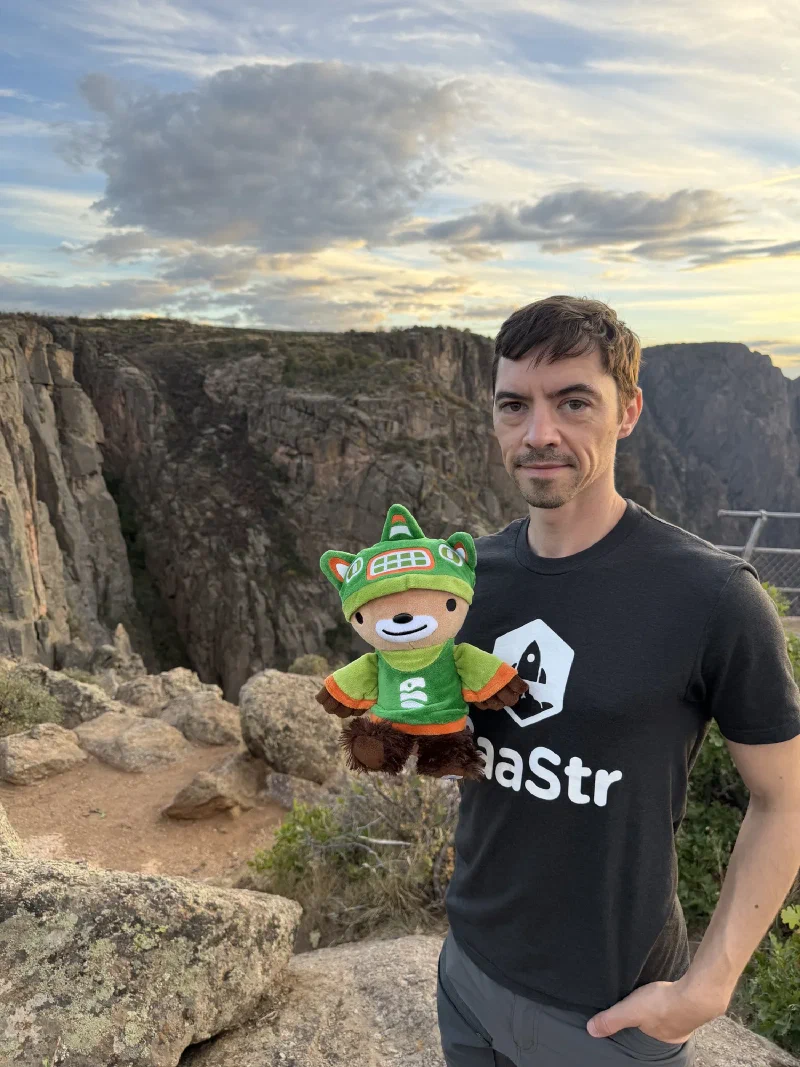
Pokin was not a fan of where he chose to put the camera.
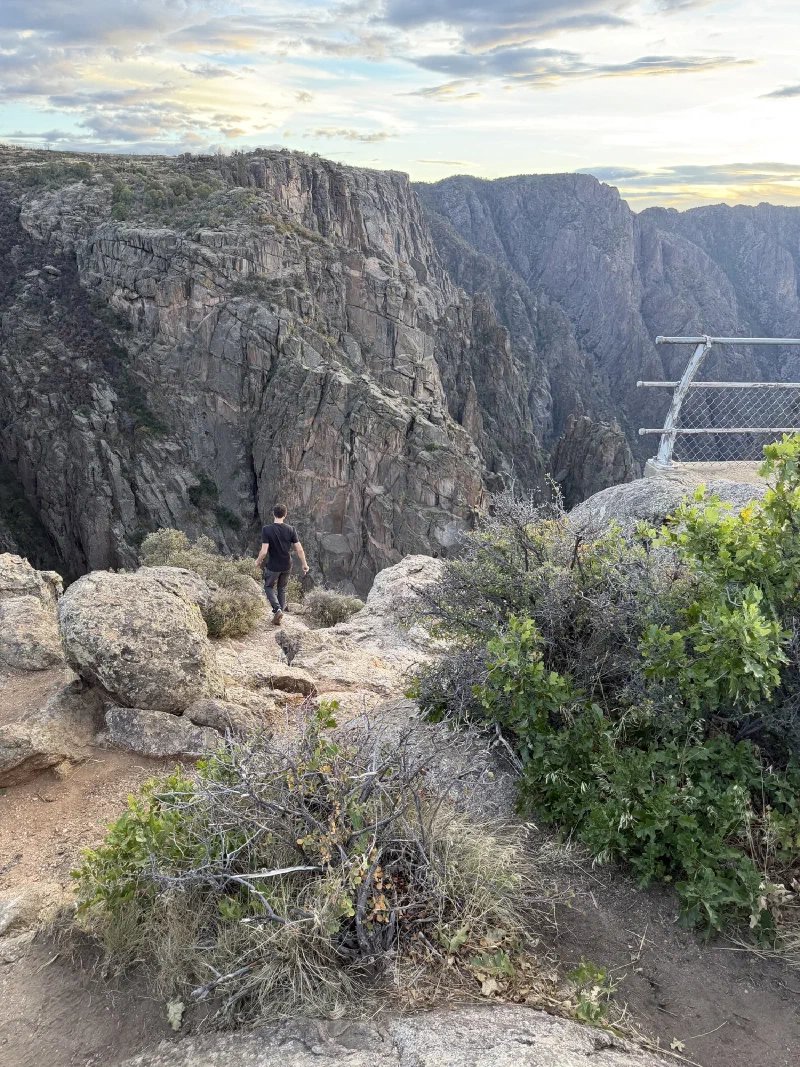
He had tucked it down the rock face, over the edge, on a ledge he was clearly not supposed to be on, with a couple of thousand feet of nothing underneath it and his own footing in charge of the whole arrangement.
She asked him to walk down carefully.
He channelled Peep and hopped.
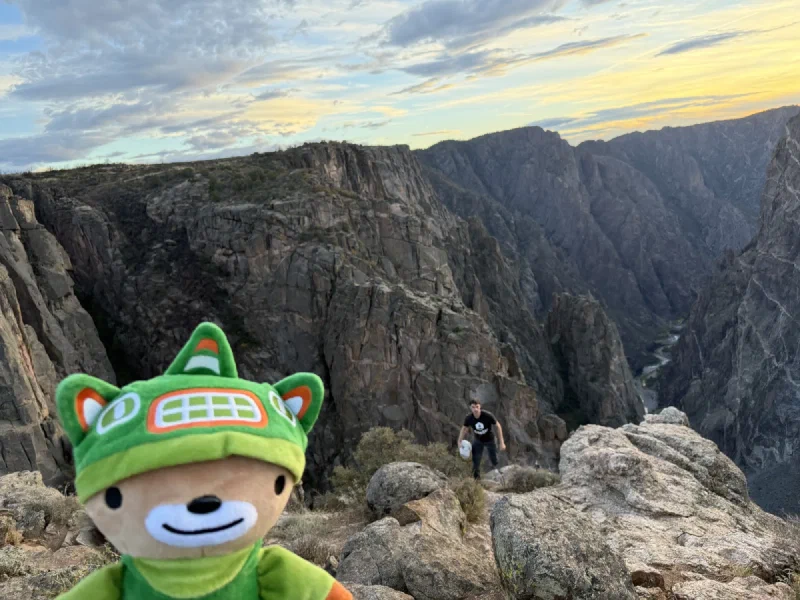
Then he made friends. There are always other photographers at a spot like this, and within four minutes he had his phone out and was showing them the Everest timelapses.
Twice in four days. Those Everest photos are putting on more mileage than the car is, and he only had to walk up the thing once.
We Called It Too Early#
The sky never opened. Cloud from one rim to the other, no core, nothing worth burning a night on. We gave it a while, agreed it was not happening, packed up and drove back to the hotel we were overpaying for.
Then we looked at the files.
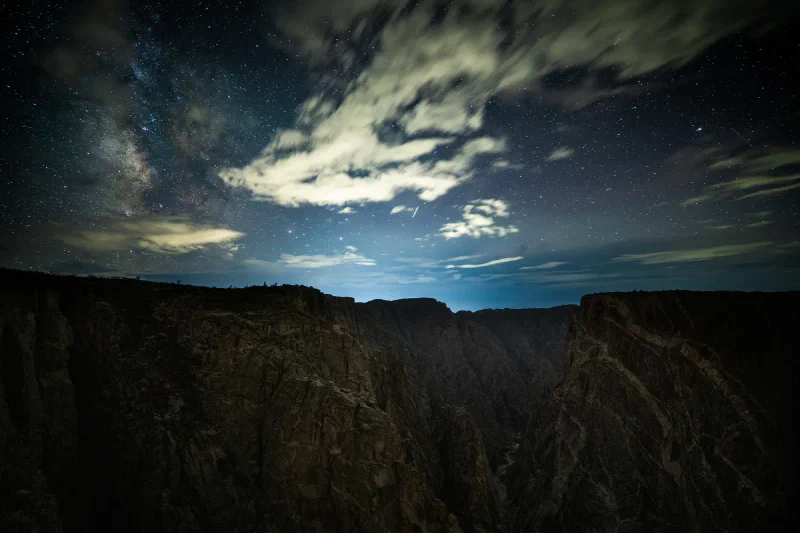
The clouds were the shot. Long lit streaks running across, the Milky Way coming through the gaps behind them, doing considerably more work than a clear sky would have.
We left early. The clouds did not.
The mug intelligence, meanwhile, was good. The mug was obtained.
Out of everything uncertain about that day, the ceramics were the only part that went exactly to plan.