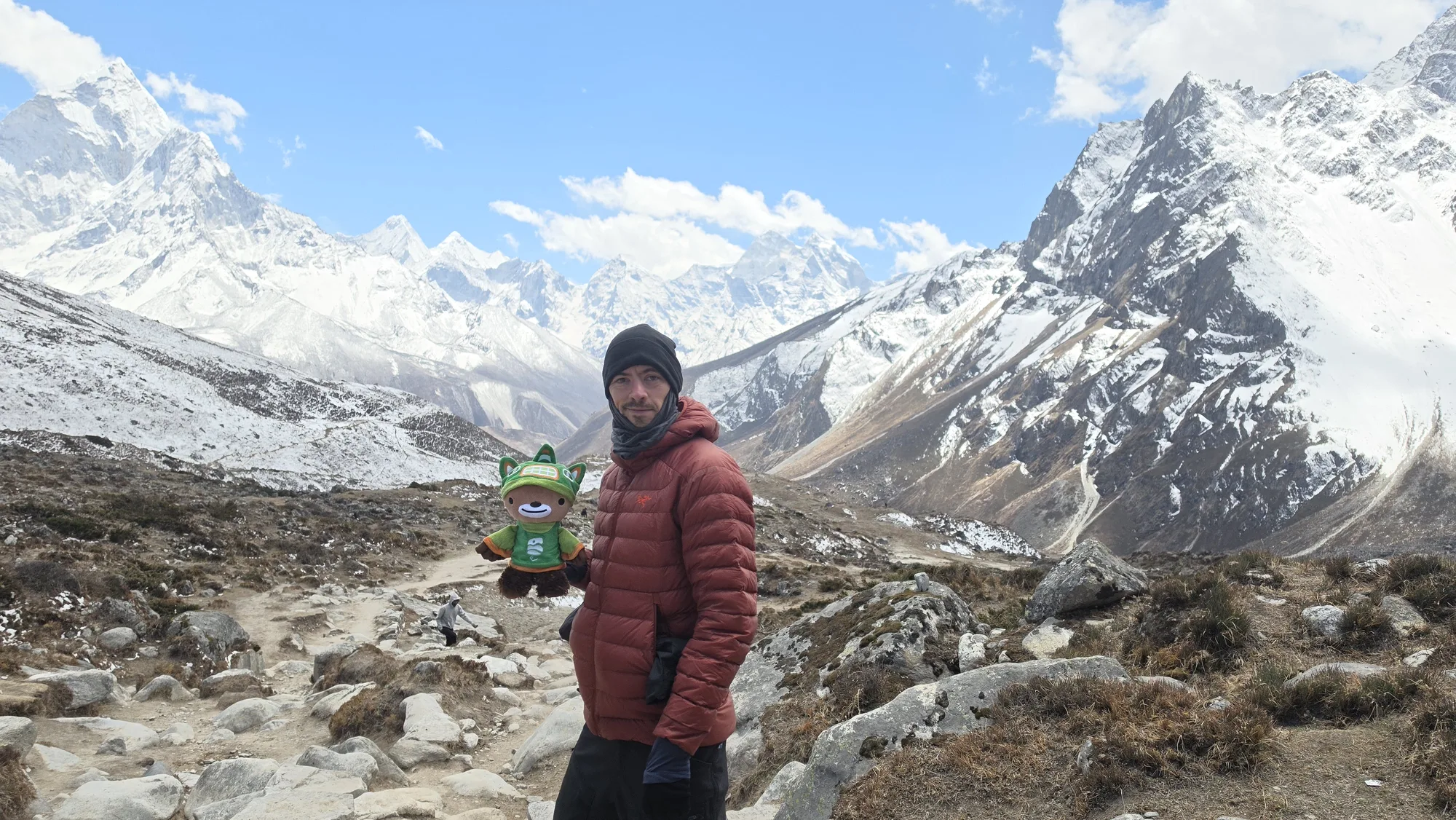

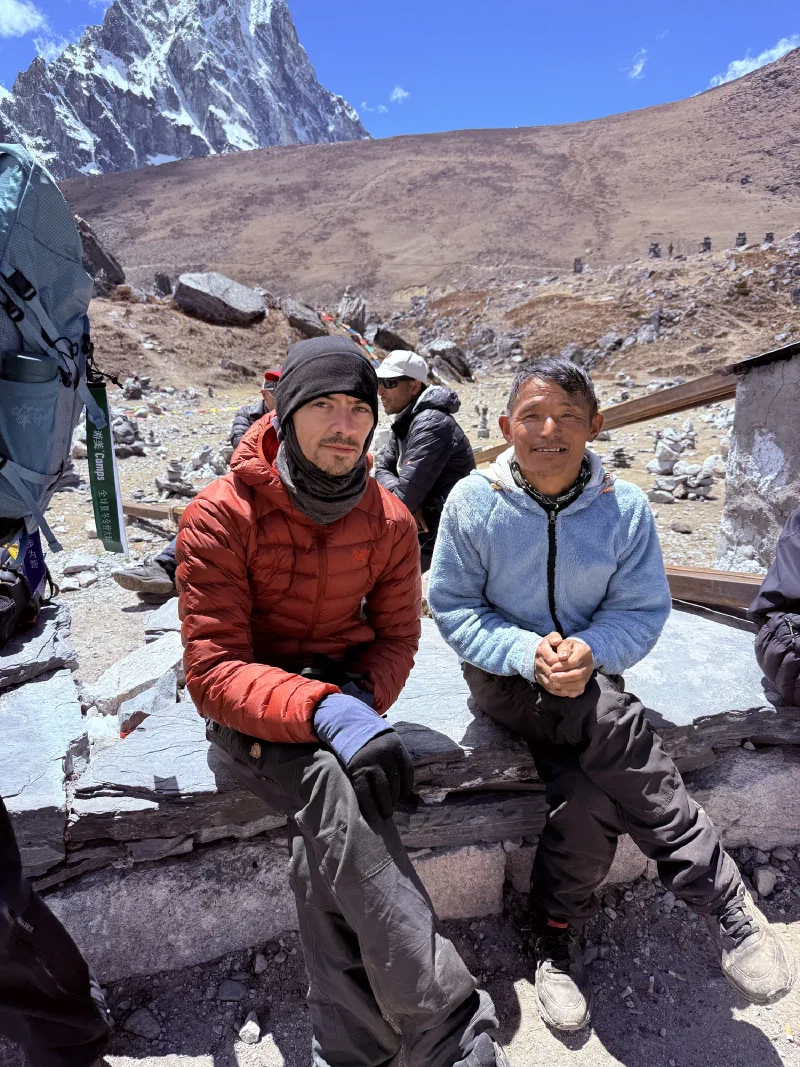
While Pokin headed down to Tengboche, we headed up. Nicholas, Po On, Kerman, and me. Destination: Lobuche, about 4,940 meters (16,207 feet). Higher than anything we’d done so far, and Nicholas was doing it on zero sleep.
The plan, if you could call it that, was insane. Today: Dingboche to Lobuche. Tomorrow: all the way up to Everest Base Camp and back to Gorak Shep. That night or the next: Kala Patthar. Then sprint back down to Tengboche to meet Pokin. Three days to do what most people take a week to do, with astrophotography attempts every clear night. The original three high passes they came here for? Scrapped entirely.
Nicholas wasn’t in much of a mood. He’d just watched Pokin walk the other direction with fluid in her lungs. He hadn’t decided if he’d made the right call. He was running on nothing, emotionally and physically, and the camera stayed mostly in his pocket. The photos in this post are sparse because the day felt sparse.
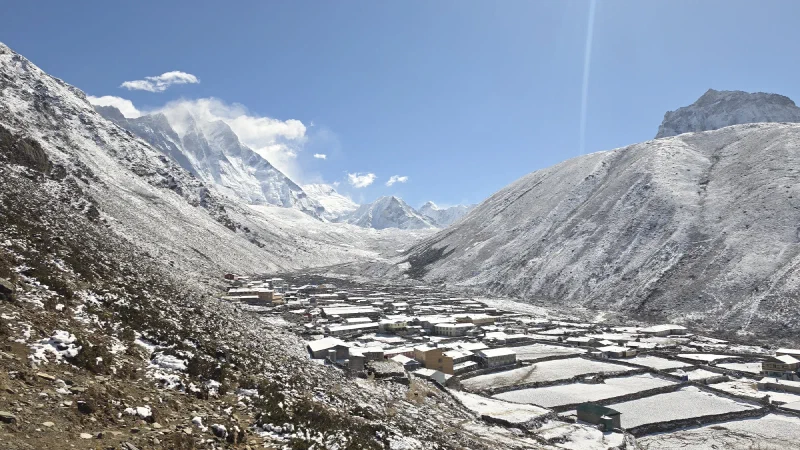
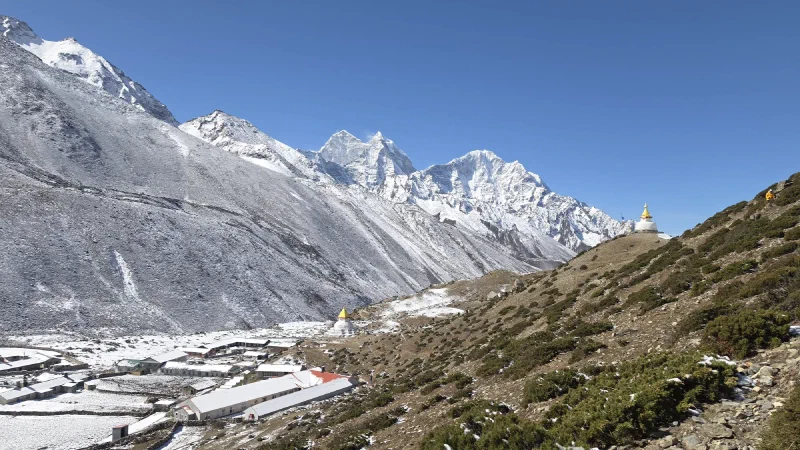
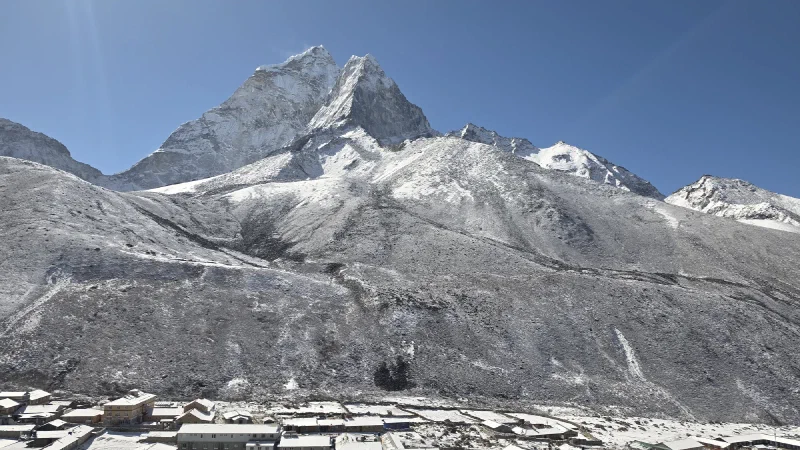
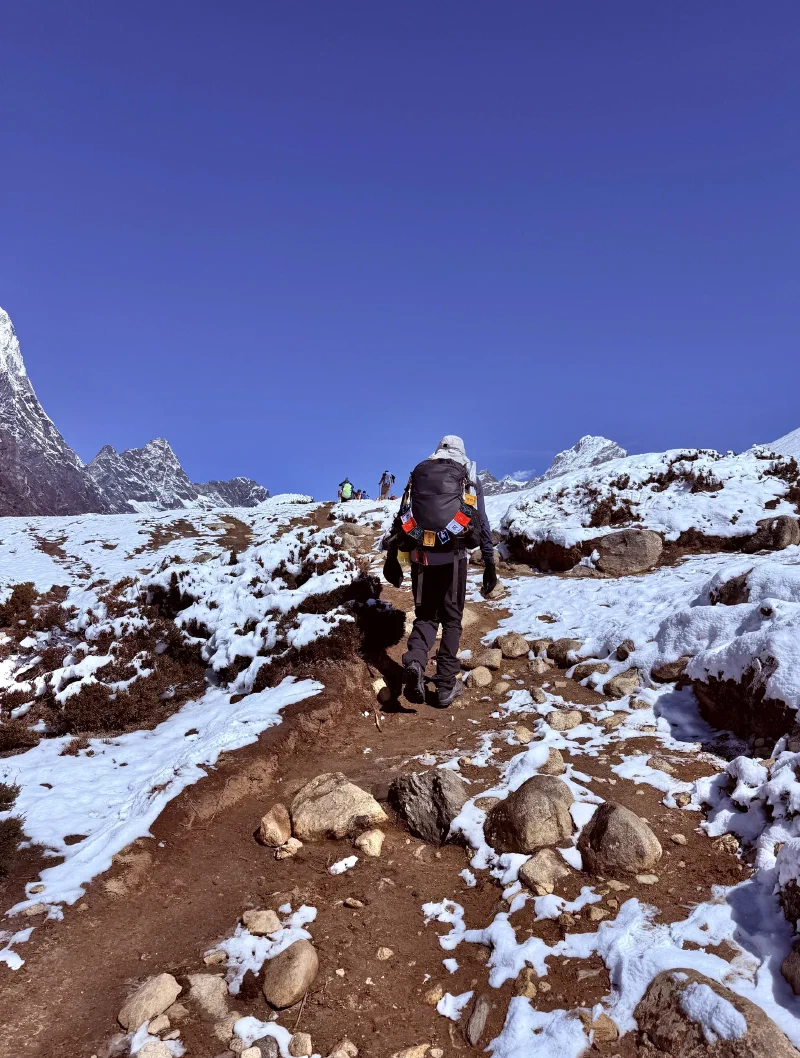
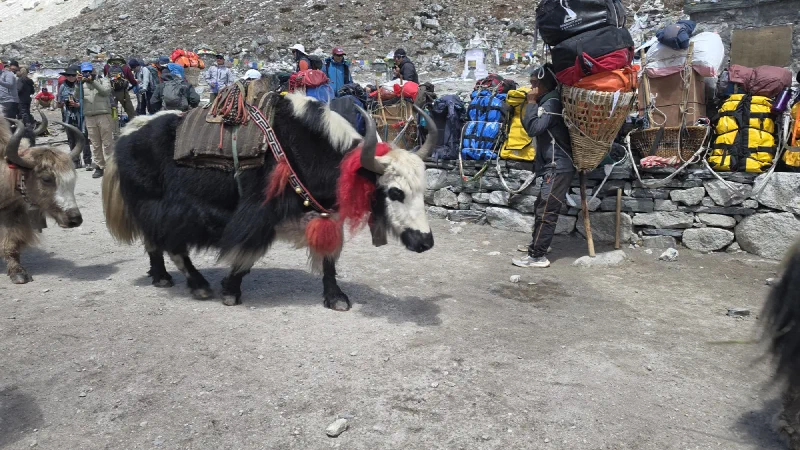
The hike from Dingboche climbs steadily through increasingly barren terrain. The last scraps of alpine shrub give way to rock and dust. Trees are a distant memory. Even the yaks start looking like they’d rather be somewhere else.
Thukla#
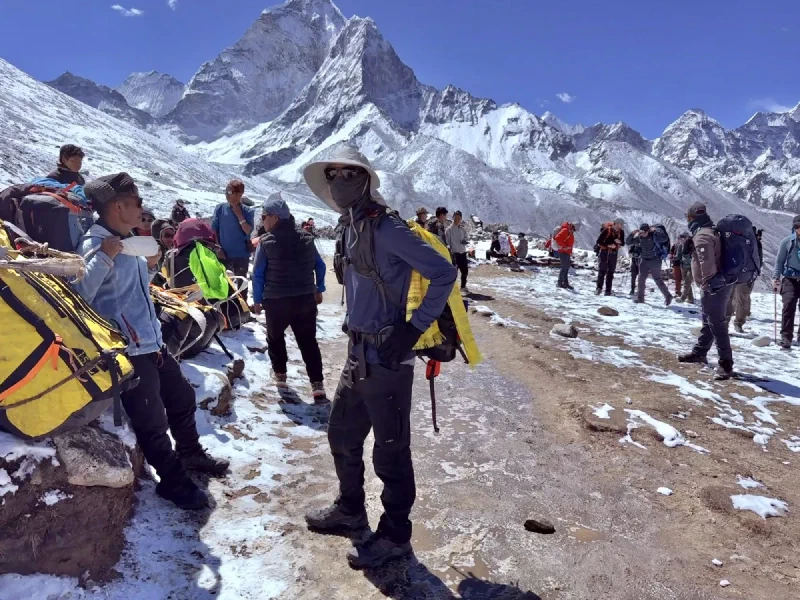
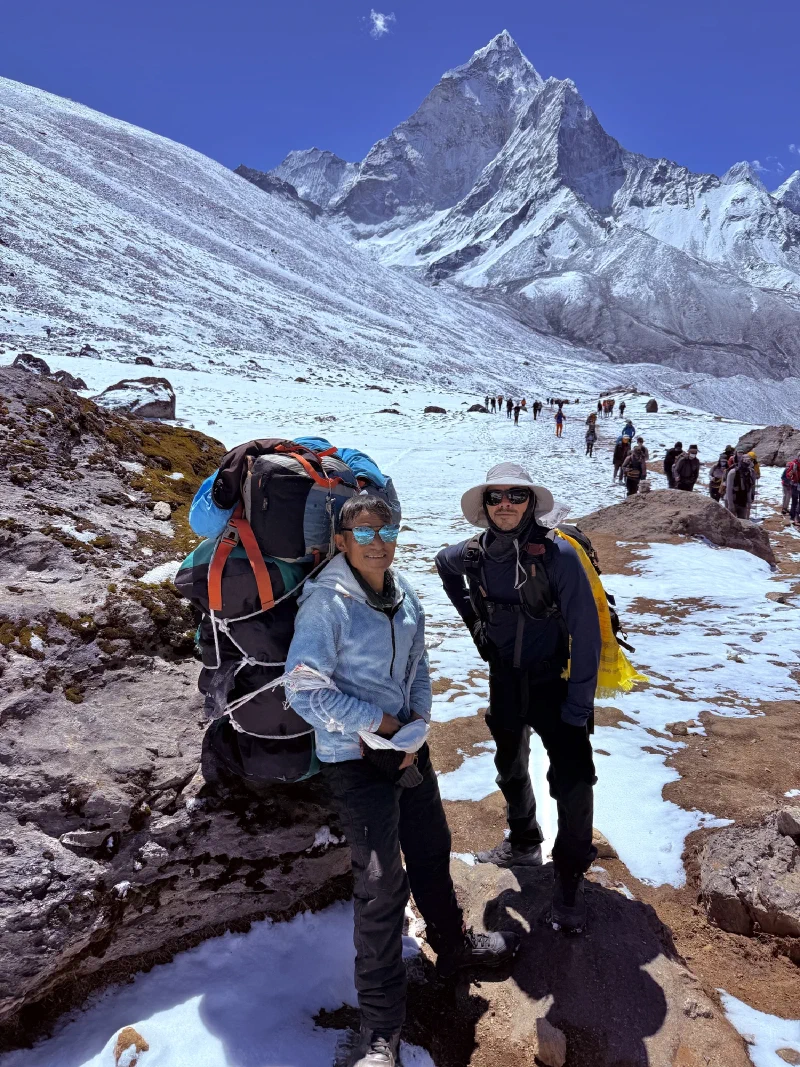
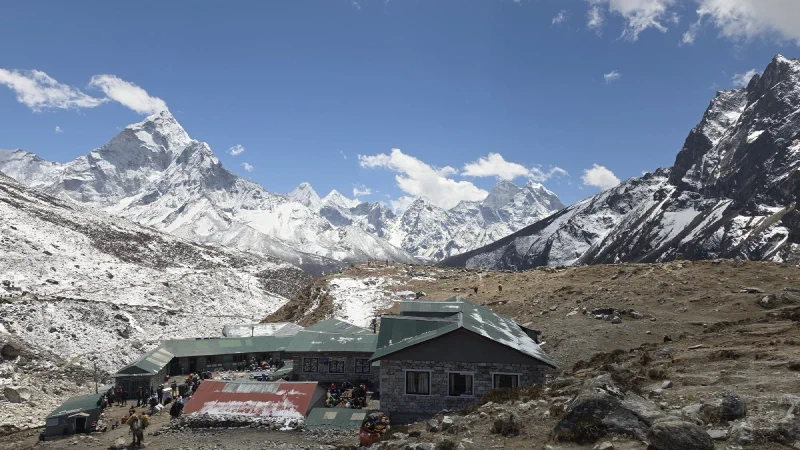
Partway through the day, the trail drops into the small settlement of Thukla, a cluster of tea houses wedged into the valley before the steep push up Thukla Pass. A place to eat, warm up, and stare at the hill you’re about to climb.
The Sherpa Memorial#
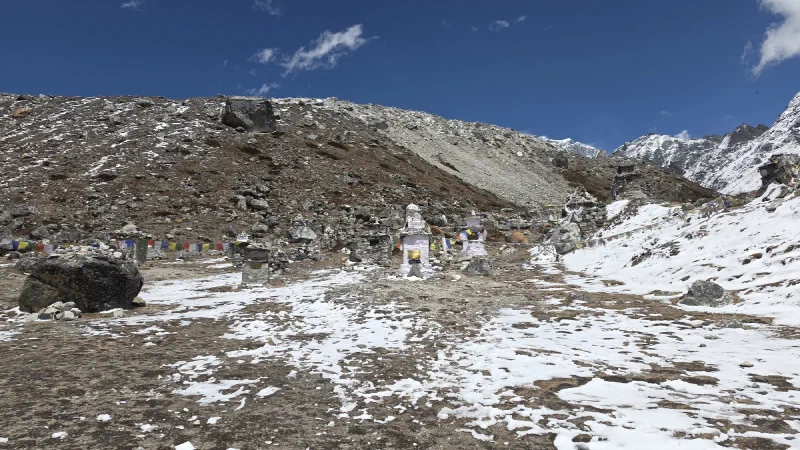
At the top of Thukla Pass sits one of the most sobering places on the entire trek. The Sherpa Memorial at Chukpi Lhara is a collection of stone monuments, chortens, and plaques dedicated to the Sherpas and climbers who have died on Everest and the surrounding peaks. Prayer flags stretch between the cairns, and white khata scarves drape over the stones.
It’s quiet up there. Not the kind of quiet where nobody’s talking. The kind where nobody needs to.
But Nicholas noticed something else up here. Looking back down the valley from the memorial, the view was wide open to the south. Mountains framed perfectly on both sides, the valley stretching out below. Exactly the kind of composition that would look spectacular with the Milky Way arching over it.
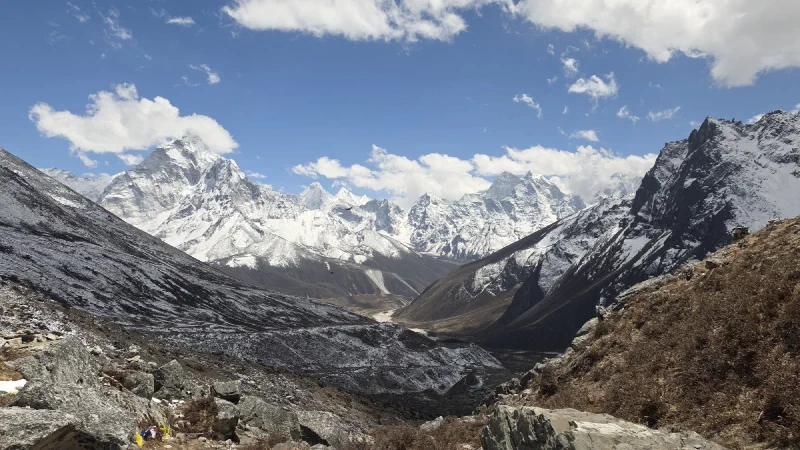
He filed that away. The memorial was about 45 minutes from Lobuche. Not close, but not impossible for a middle-of-the-night astrophotography run.
The Ridge to Lobuche#
Past the memorial, the trail follows a high ridge before dropping steeply into a valley. And that’s where things got interesting. Down below, tucked into a rocky basin at the base of Lobuche East, sat the Lobuche Base Camp. Not the village of Lobuche where we’d be sleeping, but the actual mountaineering base camp where climbers stage their attempts on the peak.
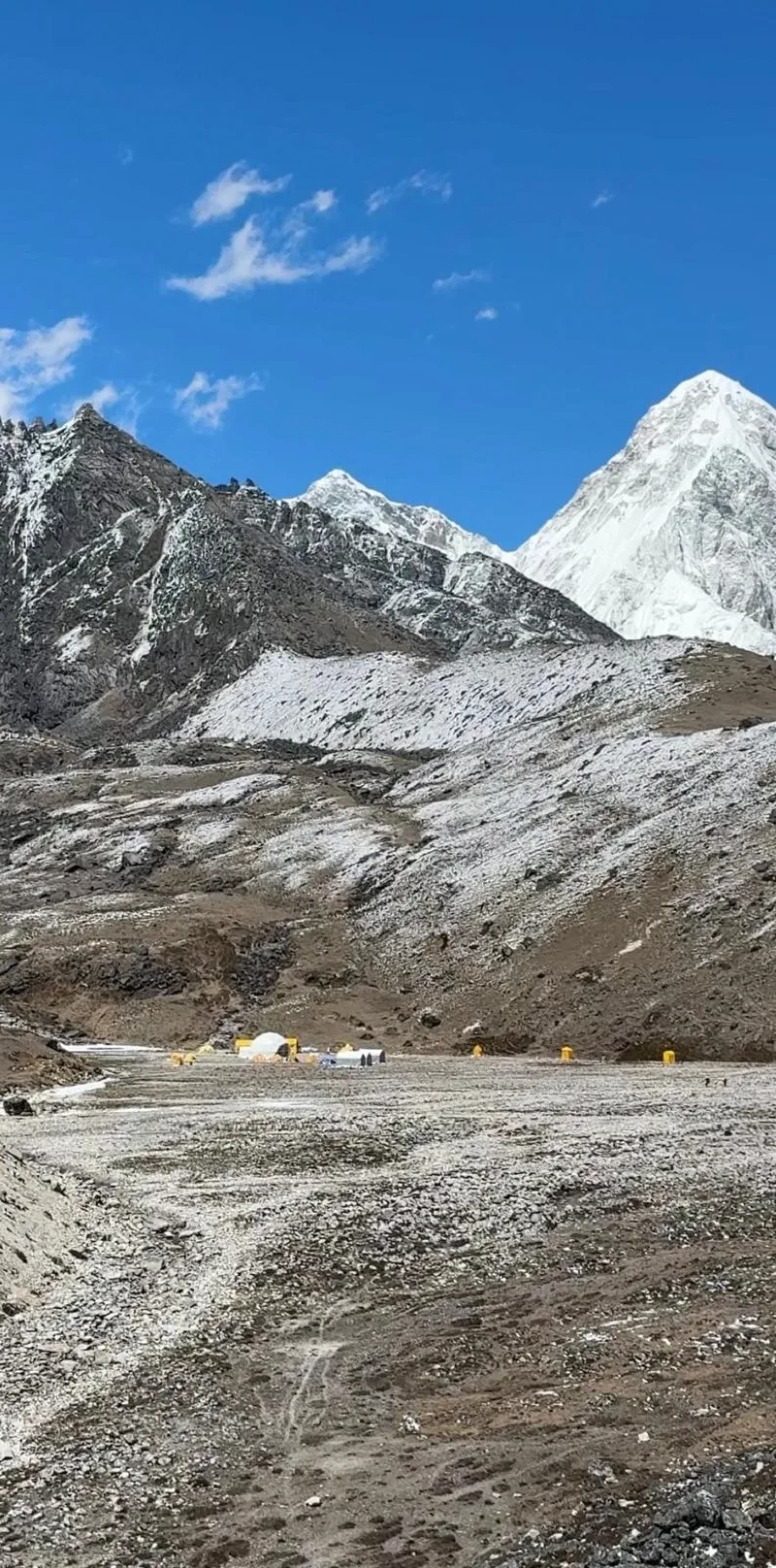
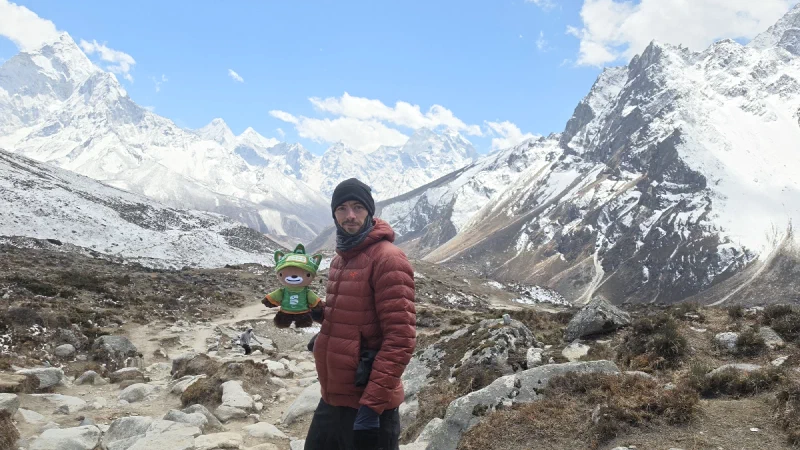
We made it to Lobuche by early afternoon. Higher than we’d ever been, thinner air than we’d ever breathed, and Nicholas still hadn’t slept.
But he wasn’t done thinking about the Sherpa Memorial. That valley view, wide open to the south, mountains framed on both sides. If the weather cooperated tonight, he could hike back out there and try for the astrophotography shot. Redemption for the Astrosaster. Forty-five minutes each way, in the dark, at nearly 5,000 meters, on zero sleep.
He skipped dinner, went straight to bed, and set his alarm for 11:30 PM. Just to check the sky.