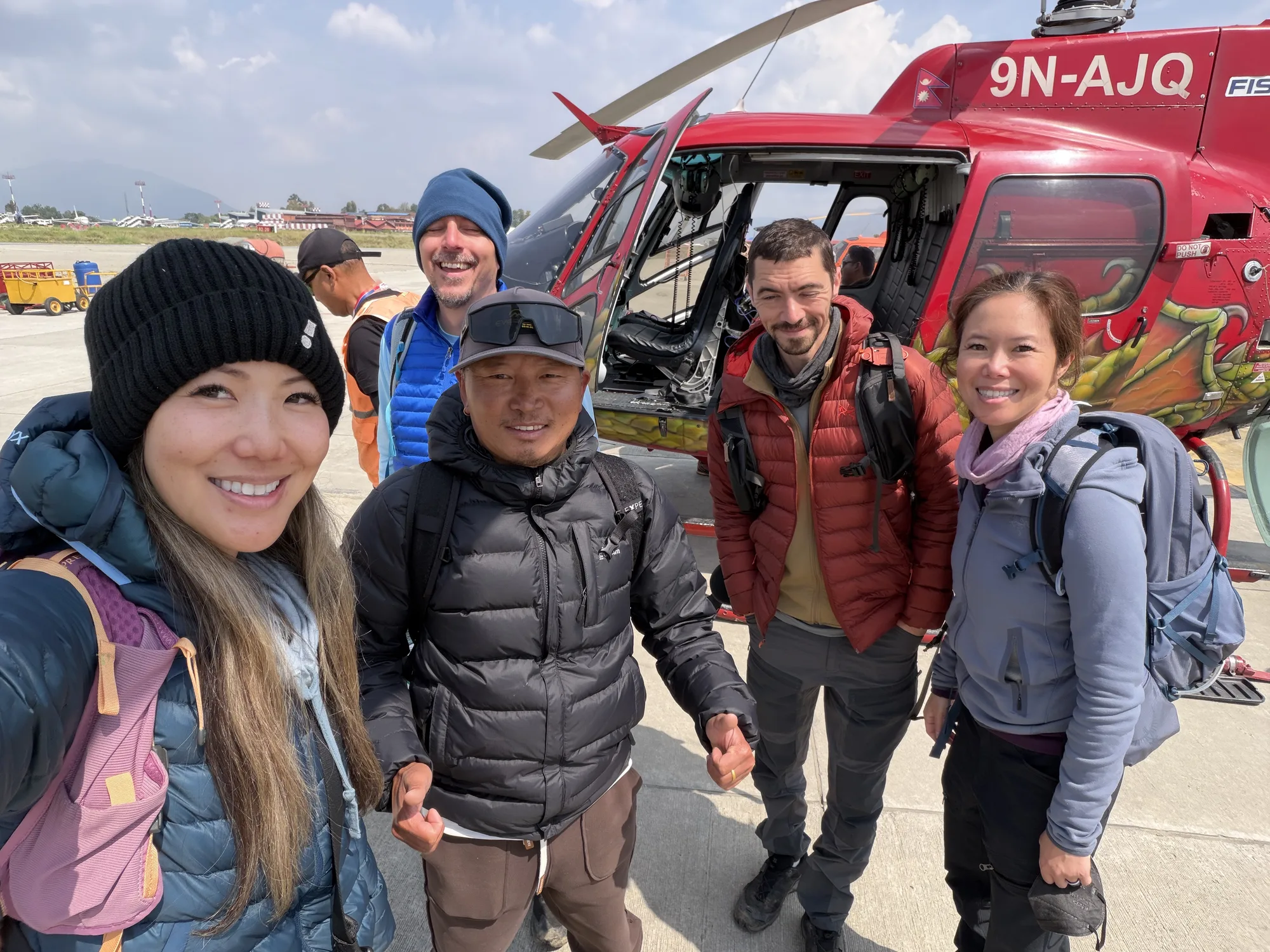

We woke up very early at Surke and braced for the worst, because the weather report had promised the worst. Then we looked outside. It was not the worst. There were still clouds everywhere, but you could see things. Mountains. Sky. The general concept of “up.” After the fog wall that had stranded us the day before, this counted as optimism.
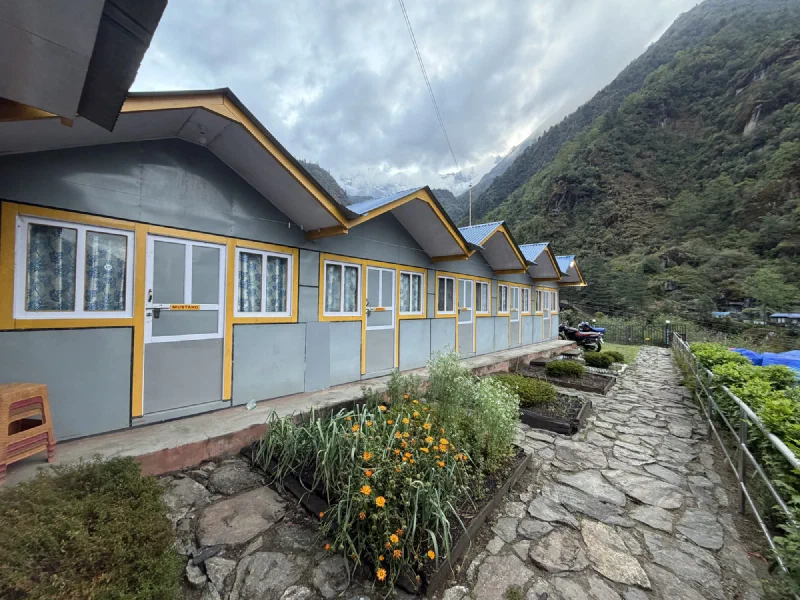
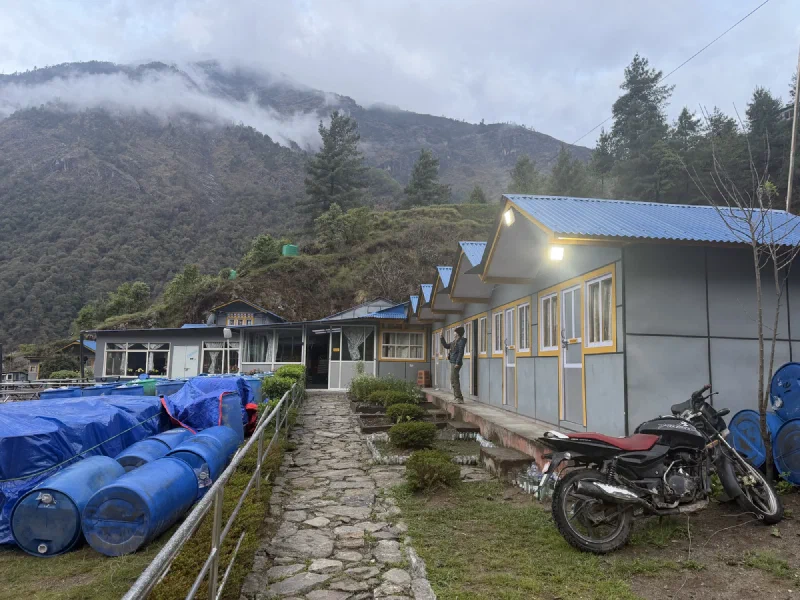
A reminder of where we’d spent the night. The “rooms” at the Surke airport were not exactly the soft-bed-and-hot-shower situation we’d been promised back in Lukla.
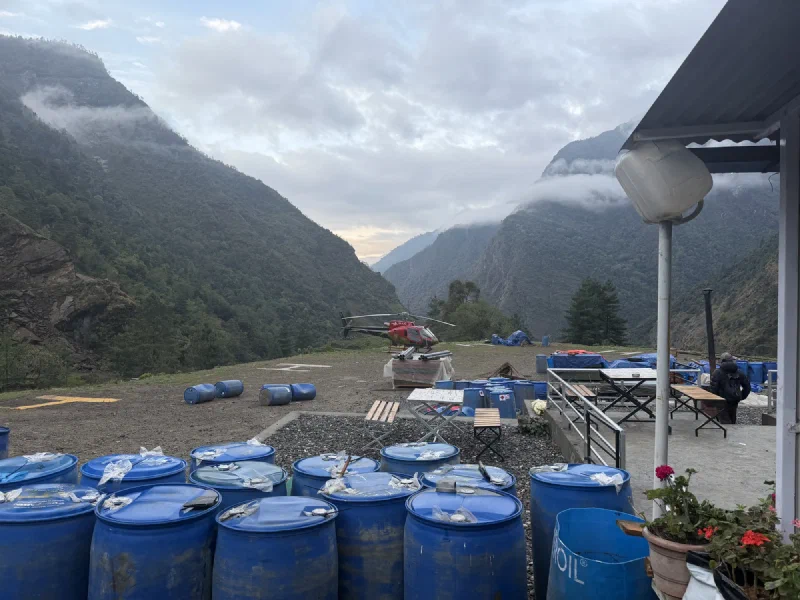
So we packed up fast, because mornings are when the clouds are highest and your odds are best. And then we spotted him. Our pilot. Already out at the helicopter, prepping it to fly. The same Fishtail Air machine, parked among the same casual barrels of gasoline strewn around the field, because nothing says aviation safety like jet fuel lying loose in the grass next to the helipad. This was it. Our ride home was warming up.
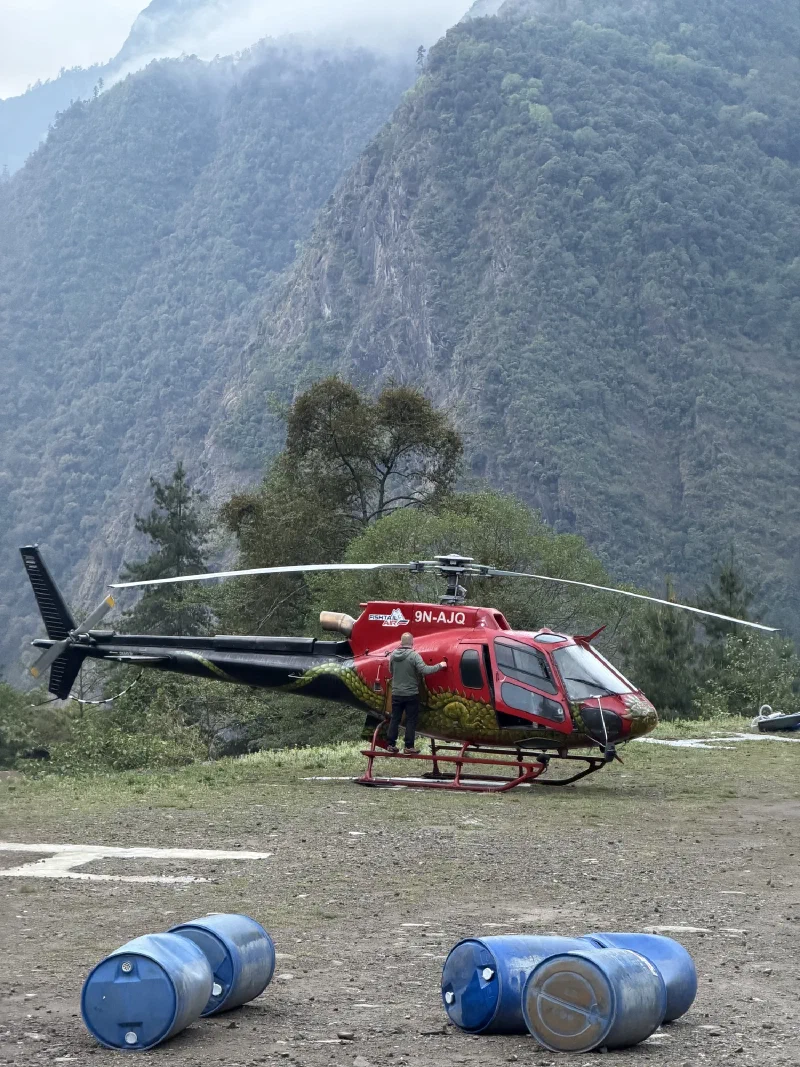
He climbed in. He started it up. And then he took off.
Without us. Without a single word. We watched our ride lift off the pad and disappear into the clouds while we stood there holding our bags like a group of people who had just been very thoroughly stood up.
Oh. Well then. Back to the lounge.
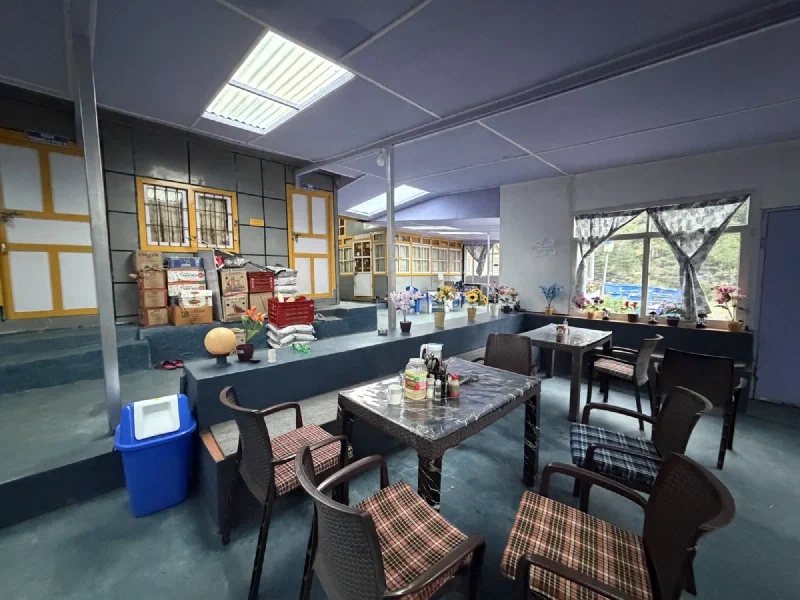
That is when the Sherpa explained how the morning after bad weather actually works. The clouds had been bad the day before, which meant a lot of people higher up the mountain never got their flights. So the morning after, every helicopter commits its schedule to rescues. They start at the top, where the clouds clear first, and they work their way down as the fog lifts, grabbing the stranded people in order of altitude. We were not up high. We were at the bottom of the list. Our pilot hadn’t abandoned us out of spite. He’d just gone to collect people with a better claim on him than us.
So the plan became: wait, and hope somebody, anybody, swings low enough to scoop us up before the clouds came back down and closed the whole valley for the day.
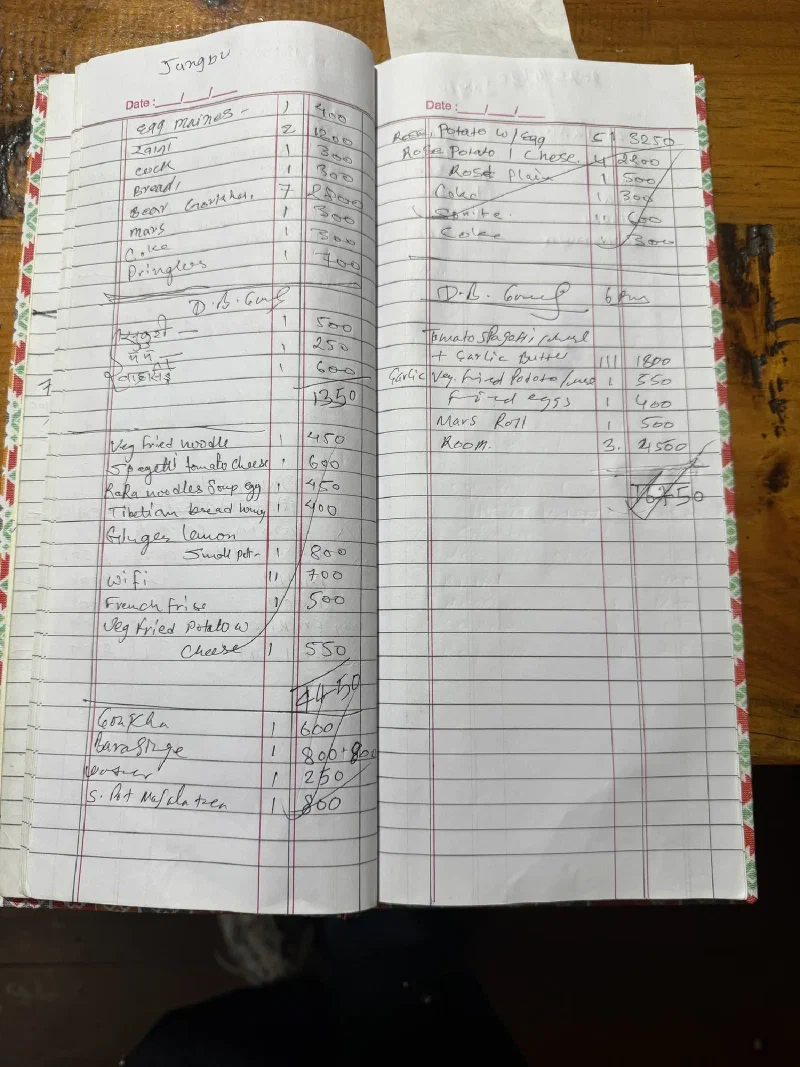
We settled the bill for our luxury accommodations.
Nicholas hauled the bags back outside.
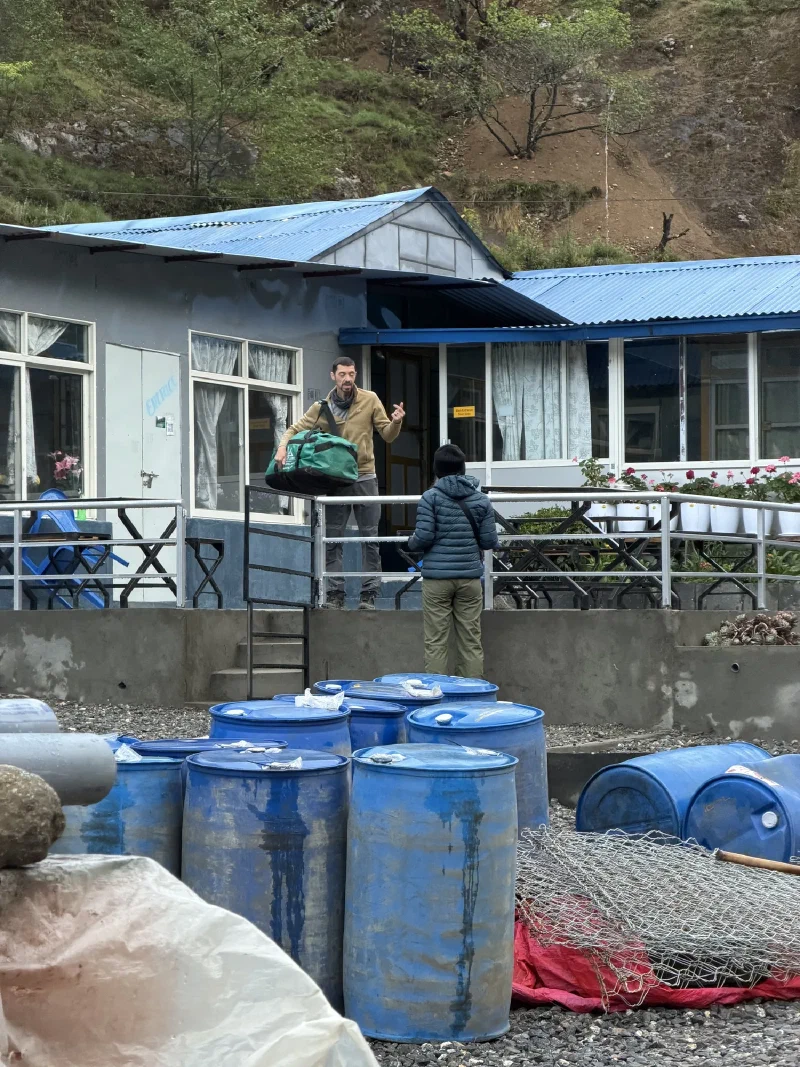
And then we did the thing trekkers do best by this point in the trip. We stood around outside and waited for the sky to make a decision.
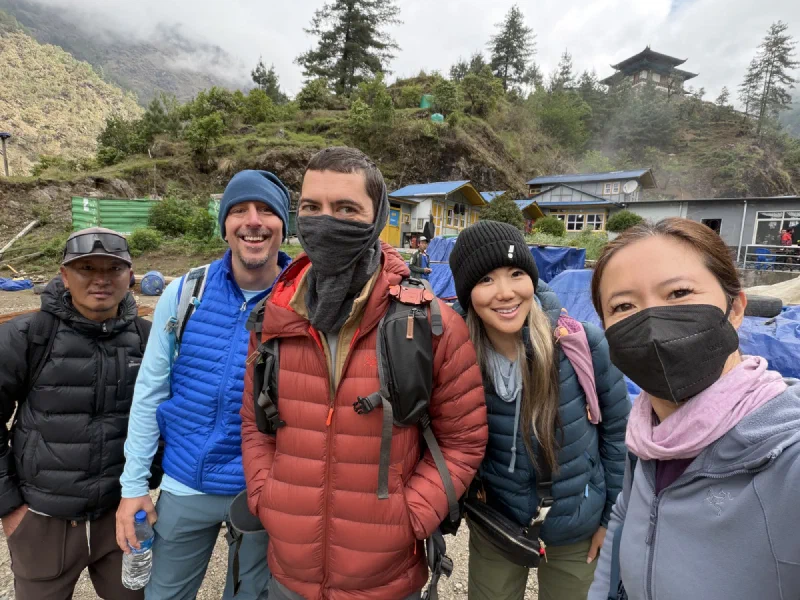
The fog got thicker. Nicholas started doing the grim math and landed on “we are staying another night.” A reasonable conclusion. The valley was closing up.
And then the same pilot came back. The one who’d ditched us at dawn. He set the helicopter down, leaned out, and said, “Okay, we’re going back to Kathmandu before it gets any worse.”
It was not the helicopter we were supposed to take. At this point I did not care which helicopter it was. We piled in.
The flight is about 45 minutes, and we spent most of it dodging clouds, the pilot trying very hard to stay VFR all the way. Then the clouds thinned, the valley opened up, and there it was. Kathmandu. Pavement. Buildings. The end of the mountain.
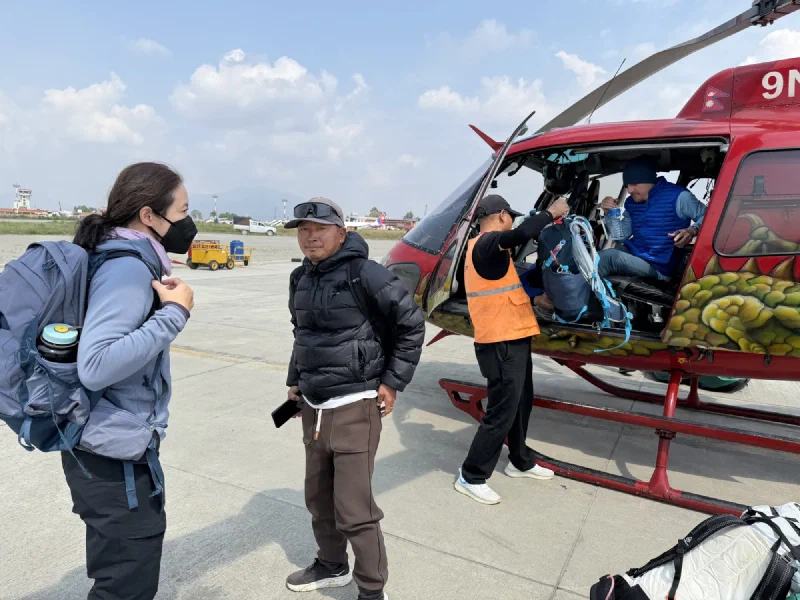
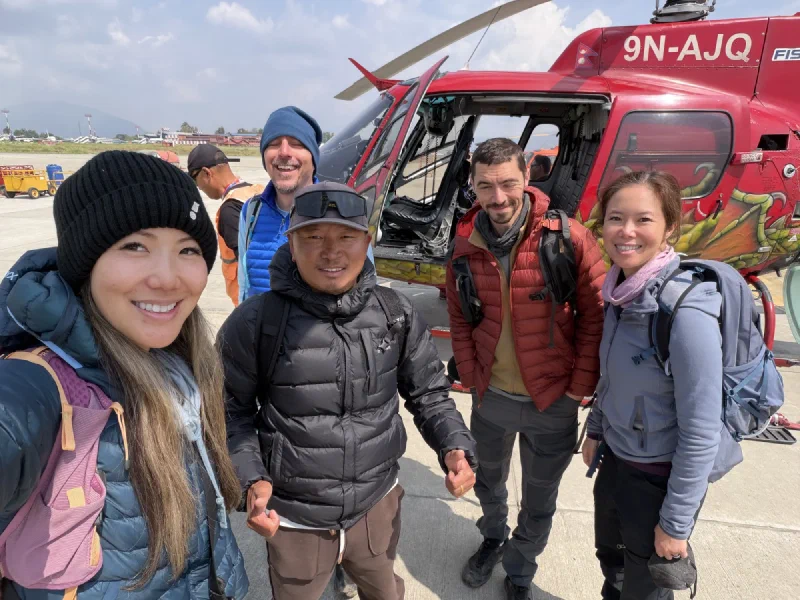
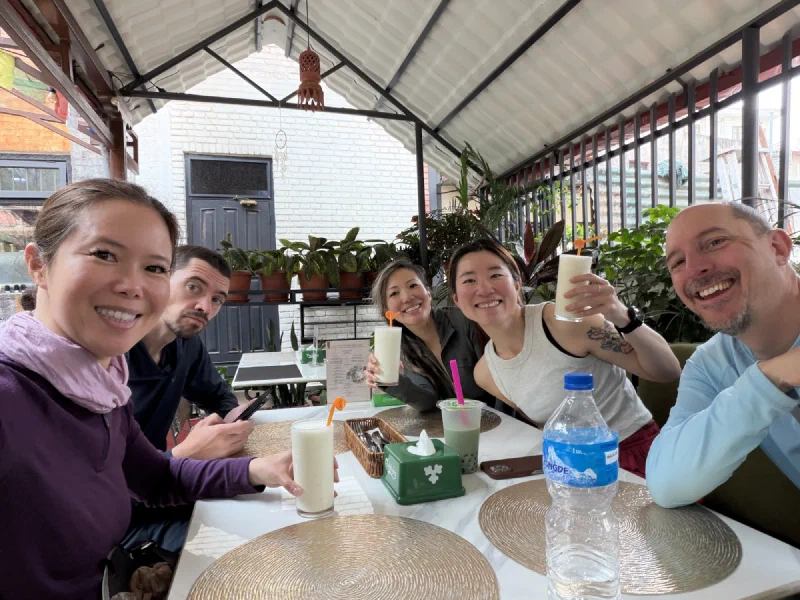
First order of business in Kathmandu: food. We reunited with Alice, who had escaped Surke a day ahead of us on that one sketchy seat and was, reassuringly, also alive. Then we found a place with a giant momo platter.
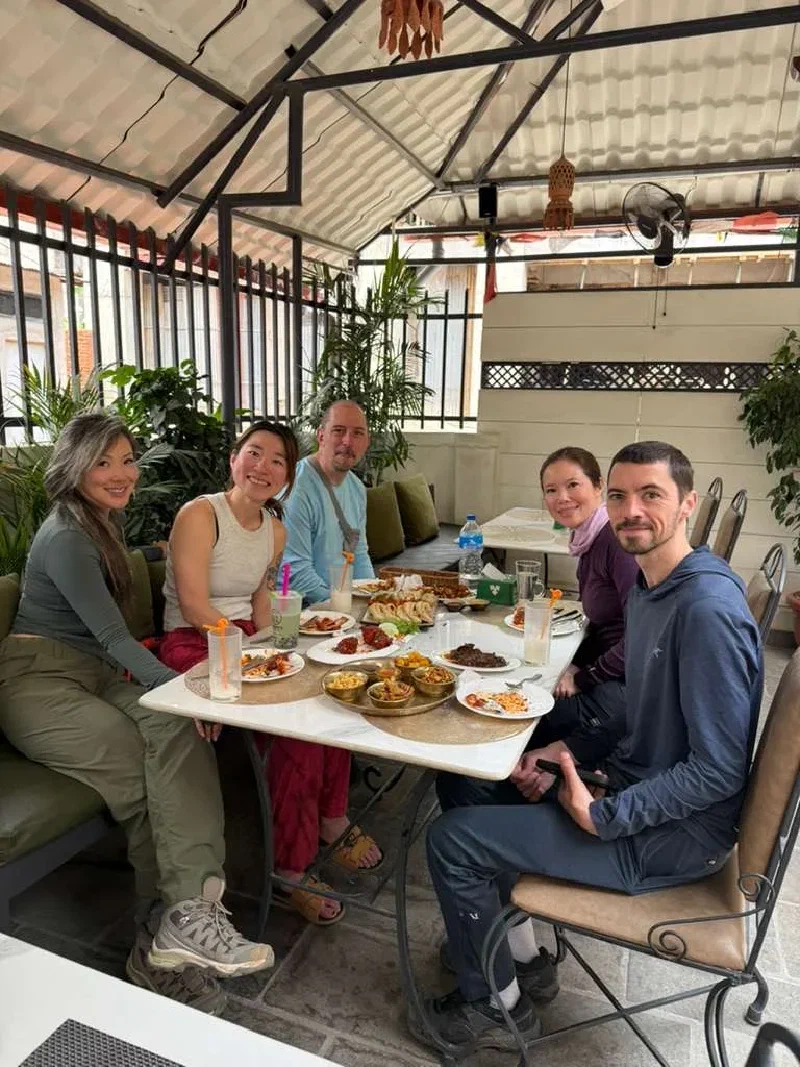
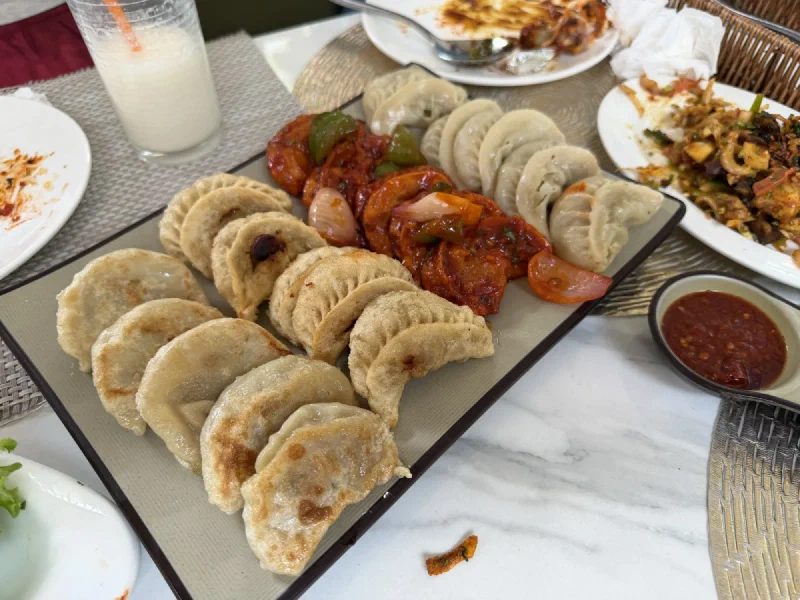
You already know how everyone feels about momos. Pokin had been ordering them at every single stop on this trip, and now there was a nice plate of them waiting in Kathmandu. Do they make chocolate momos? No? Then I’ll wait.
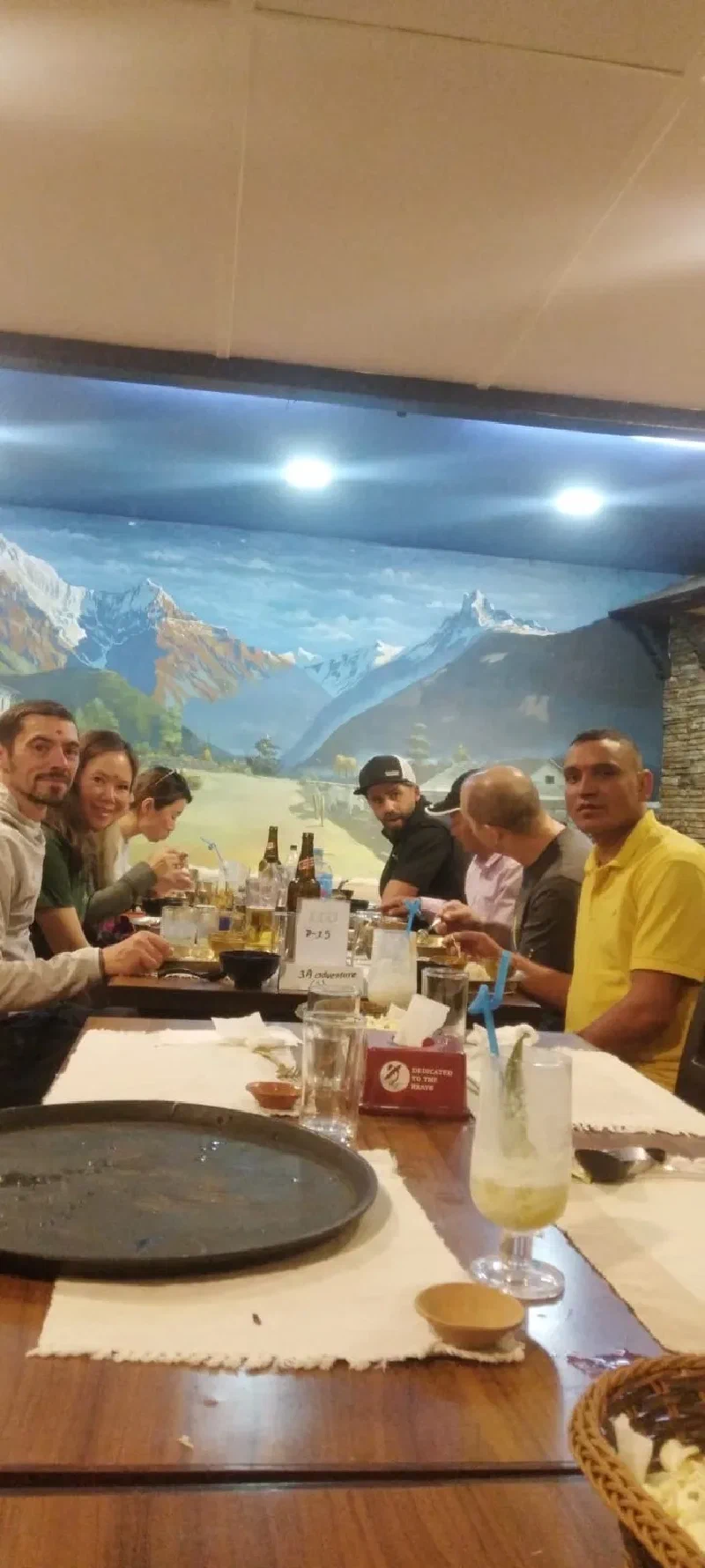
That night, D.B. and Manoj took us out for a proper sendoff. A dinner with a cultural show, Nepali dances and music performed on a stage in front of a painted mountain backdrop. The kind of “cultural experience” you have to brace yourself for.
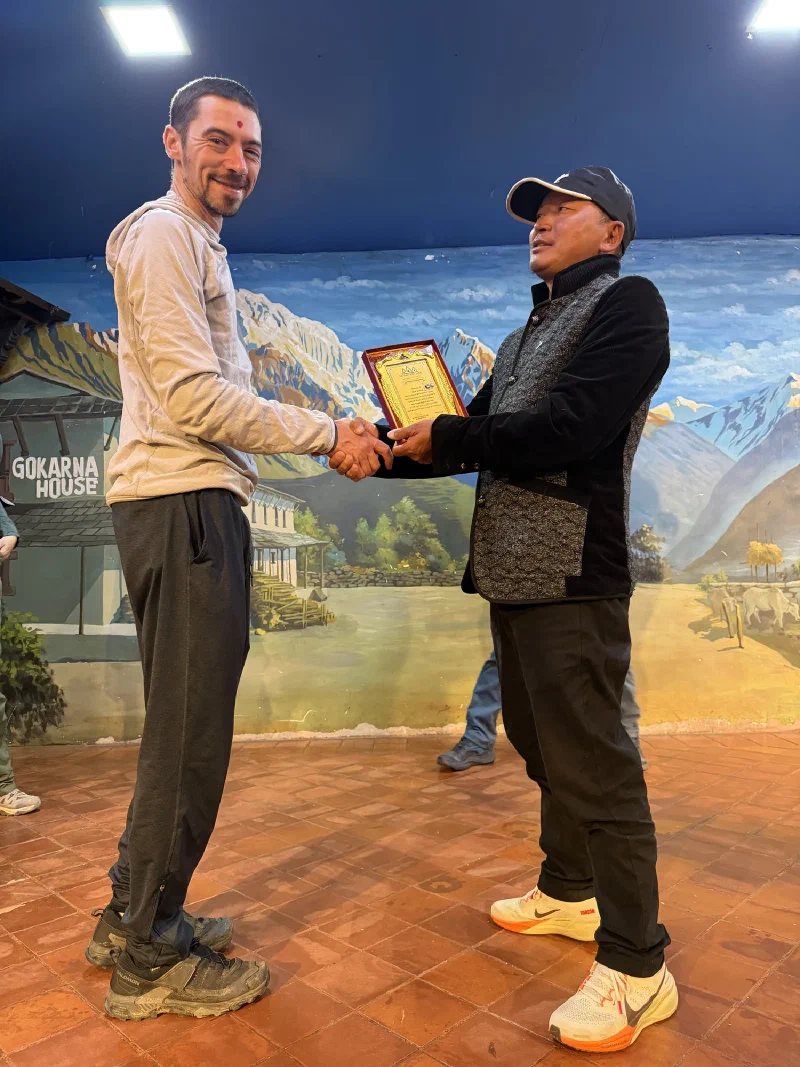
After dinner, D.B. handed out awards. Actual framed plaques, for completing the trek. Or, in some of our cases, for attempting the trek, which I think is the more honest wording given how many horses, helicopters, and hospitals were involved in our particular “completion.”
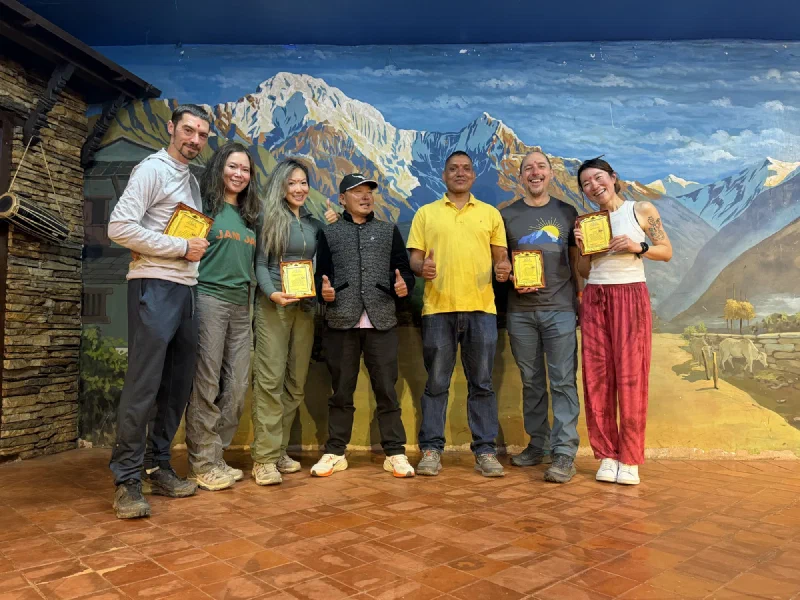
D.B. was leaving the next morning for another trek, with another group of people who had no idea what they were in for. We had one final day in Kathmandu before we headed to the airport ourselves.
We’d made it off the mountain. Barely, and not on the helicopter we planned, but off.