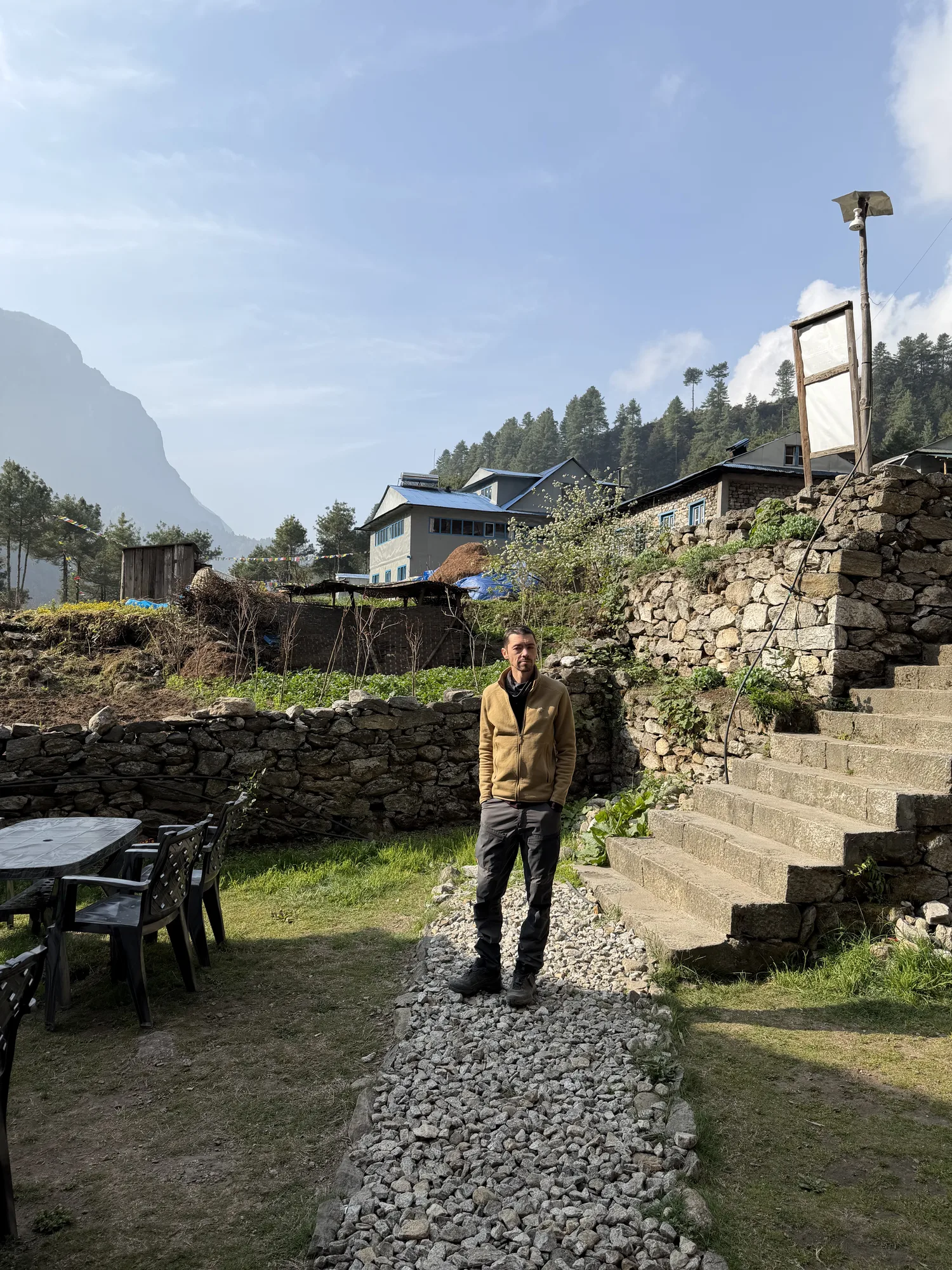

A few more nights in Phakding. The plan: let Pokin and Po On finish recovering before we head down to Lukla, meet back up with Steve and Alice, and catch the helicopter out to Kathmandu.
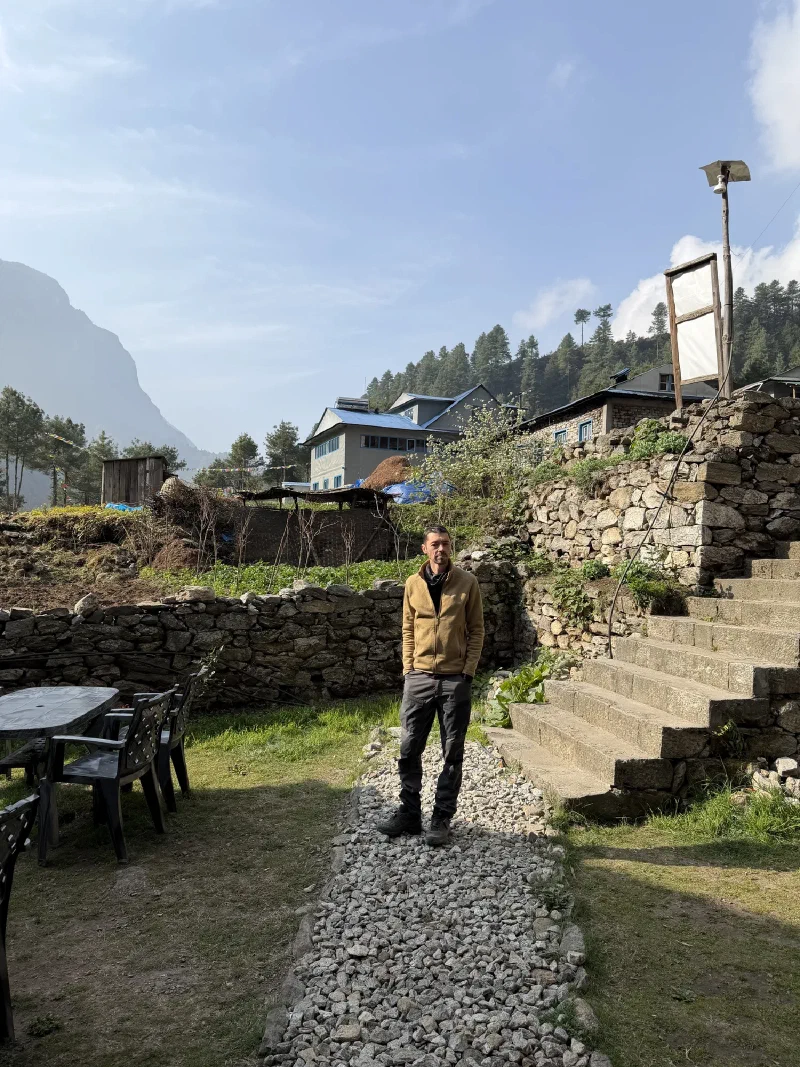
DB picked us a place run by a friend of his, a Sherpa family who own the Gurkha Inn. Big vegetable garden, cozy courtyard, and a mom named Nima Sherpa who cooks every single thing herself. Nicholas declared it the best food of the entire trip, and he said it with the specific reverence of a man who’d been eating dal bhat at altitude for two weeks.
Specialty Dunked Salad#
We’ll start with the salad, because it was the most dramatic thing that happened to a vegetable all week.
The whole trip, everyone was careful about food. The rule on a trek like this is you don’t eat fresh washed vegetables raw, because the water they’re rinsed in can wreck you. And wrecking your stomach when half the group is already sick is not the move.
So Nima, rightfully proud of her garden, brought out a beautiful salad. Big fresh lettuce leaves. Still wet from washing.
Pokin, Nicholas, and Po On all made eye contact. The silent “uh oh.” You can’t refuse it, that’s rude, and she grew it herself. But eating it raw was a real gamble.
Pokin’s solution was quietly tactical: she ordered a pot of hot water for “tea.” Then, every time Nima turned her back, the three of them dunked their lettuce into the boiling water in their glasses, fished it out, and ate it as fast as possible. Praying it killed whatever needed killing.
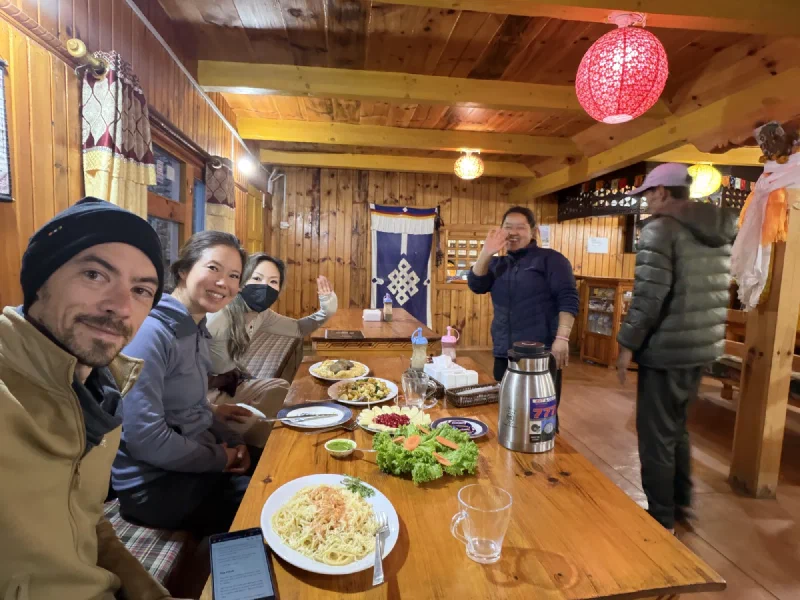
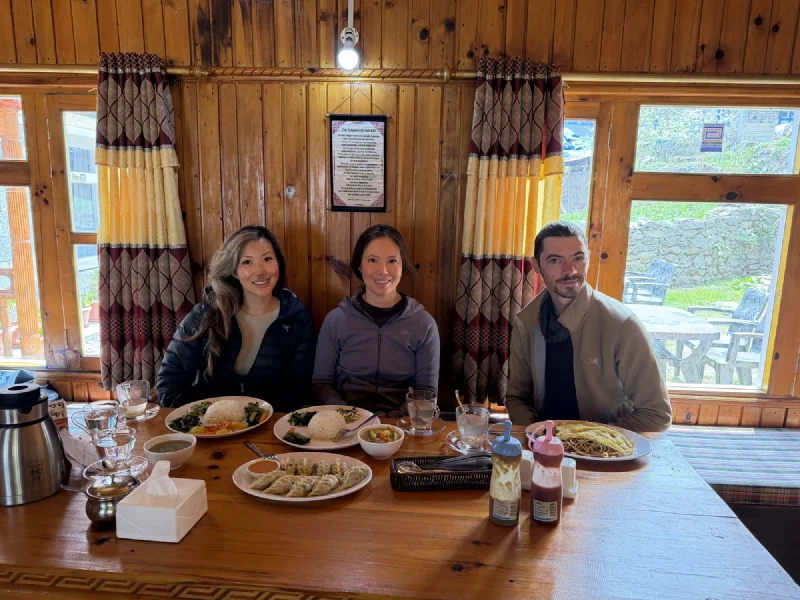
Nobody got sick. The specialty dunked salad was a success, and I’m only telling you about it now because we’re safely off the mountain.
The Rest of the Food#
Here’s the thing about the upper mountain: there are basically no vegetables. Everything is hauled up by porter or yak, so the higher you go, the more your diet narrows to rice, potatoes, and whatever survives the trip. Coming back down to a place with an actual garden meant Nima was pulling things out of the ground and putting them on the table the same day.
Momos with vegetables, obviously. Pasta with veggies, potatoes done several ways, even homemade fries. The veg fried pasta was the clear winner. We ordered it enough times that Nima probably thought we couldn’t read the rest of the menu.
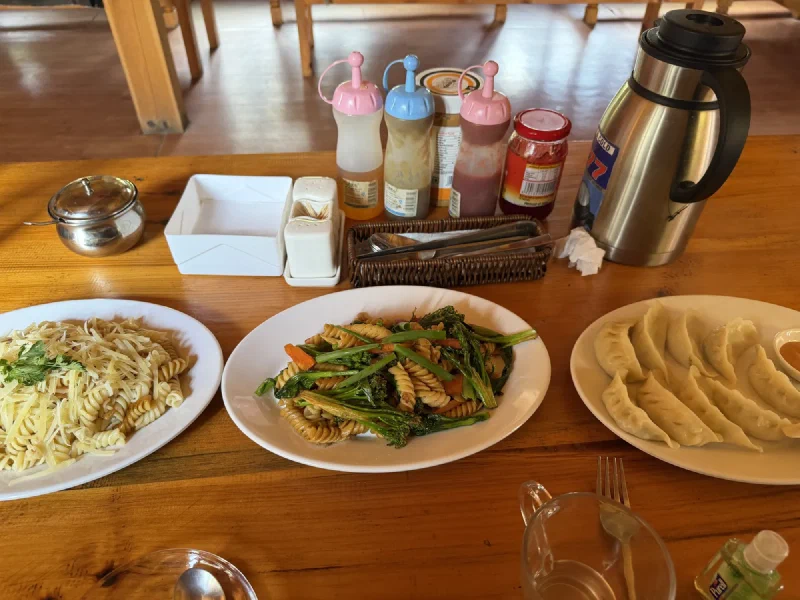
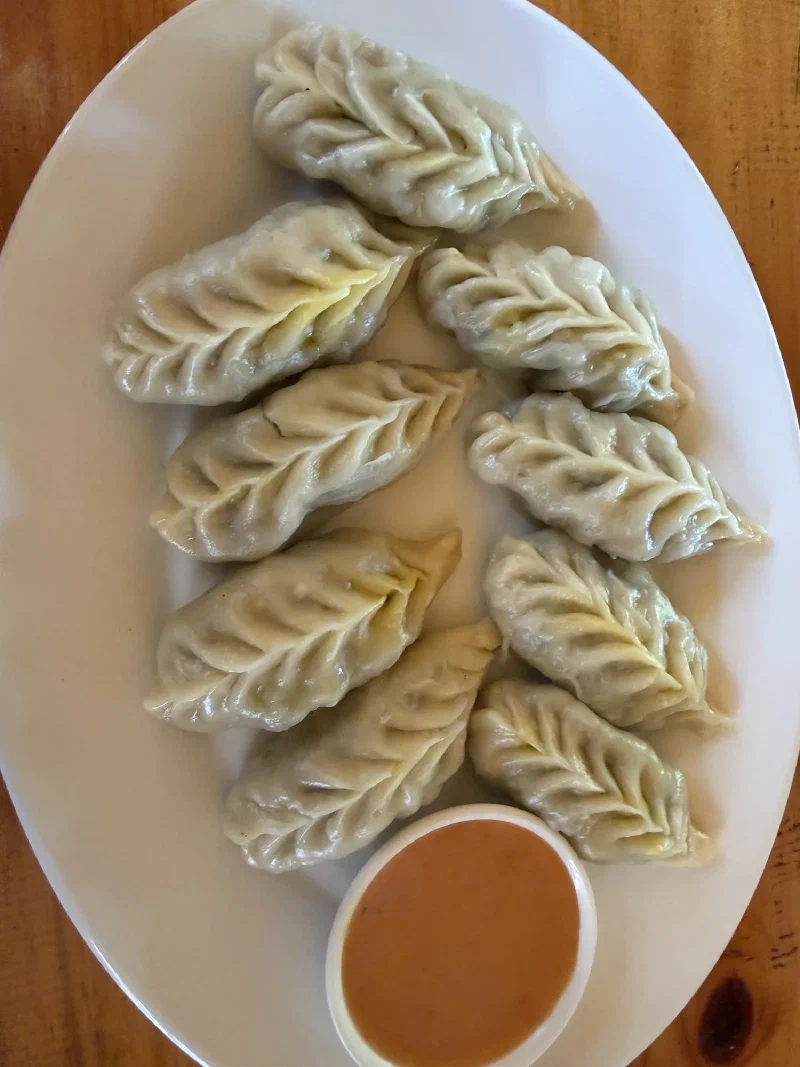
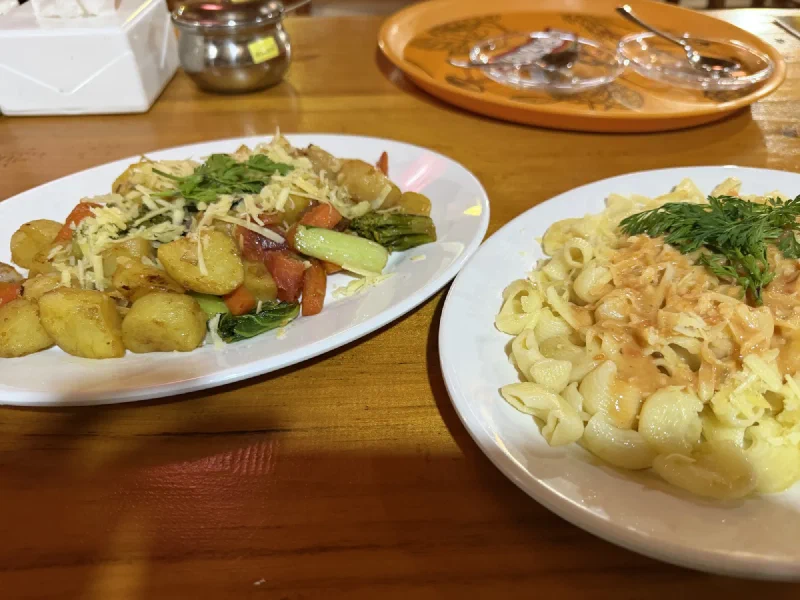
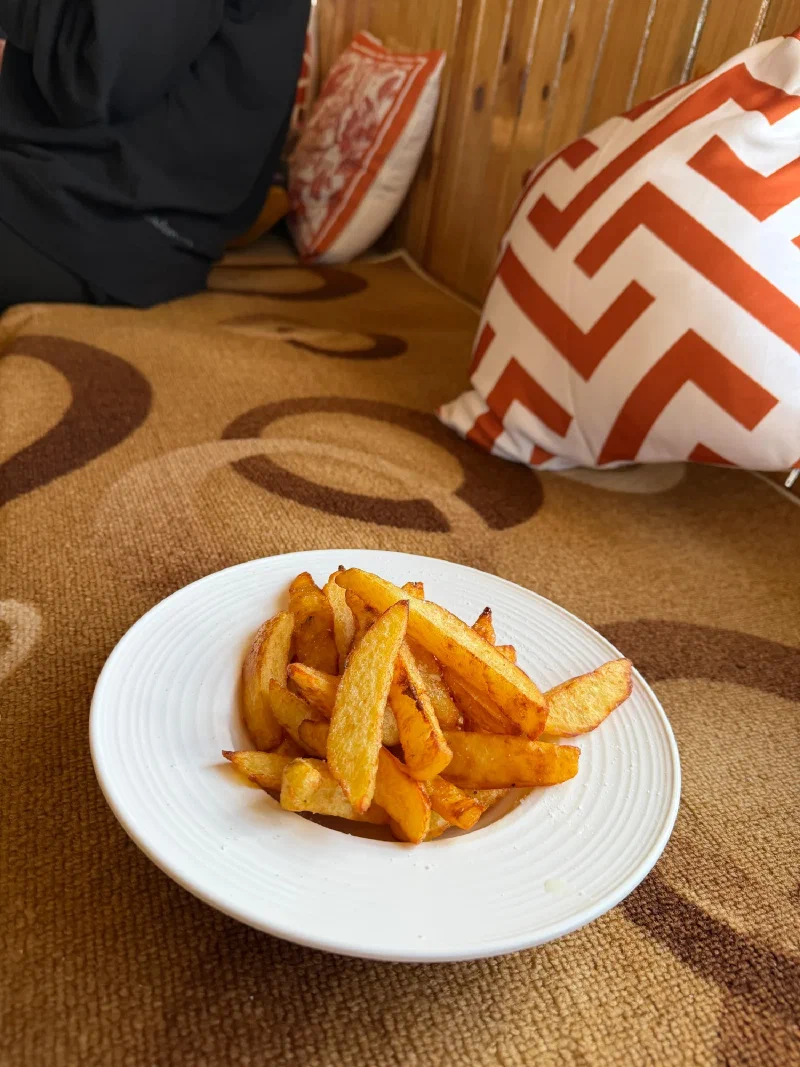
The fries were homemade from the garden potatoes. Po On declared them life-changing and proceeded to order them at every single meal for the rest of our stay. Between her fries and the veg fried pasta, Nima had two standing orders she could set her watch by.
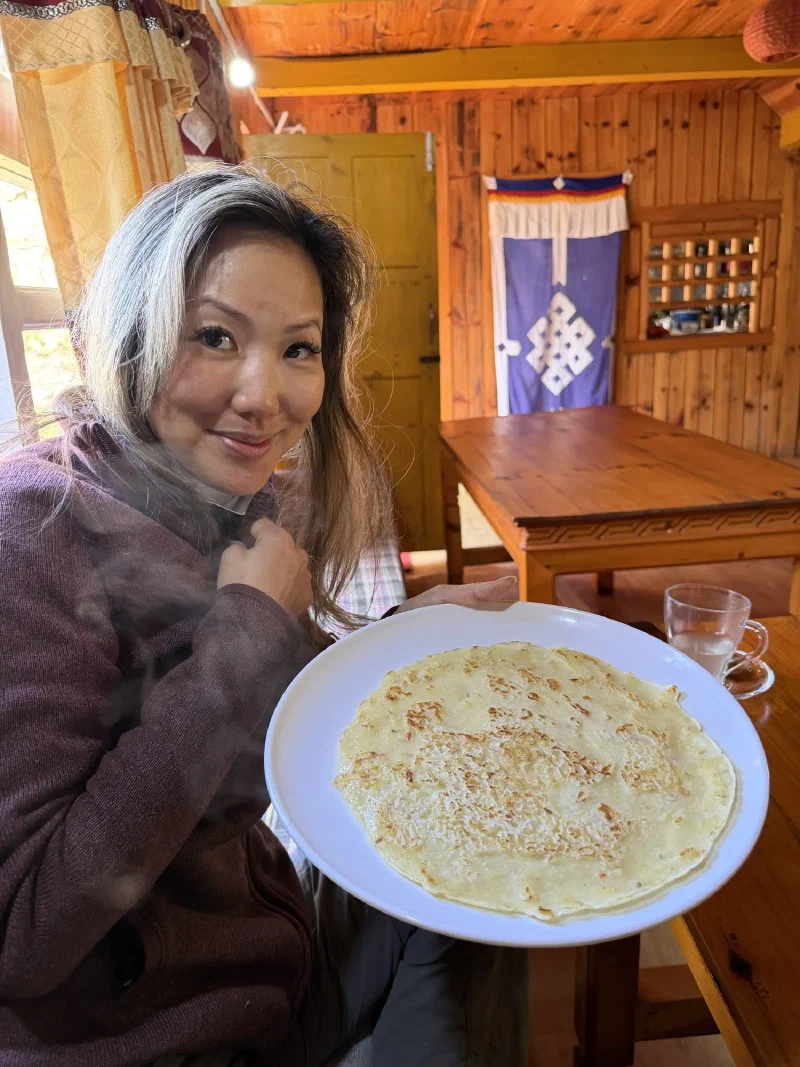
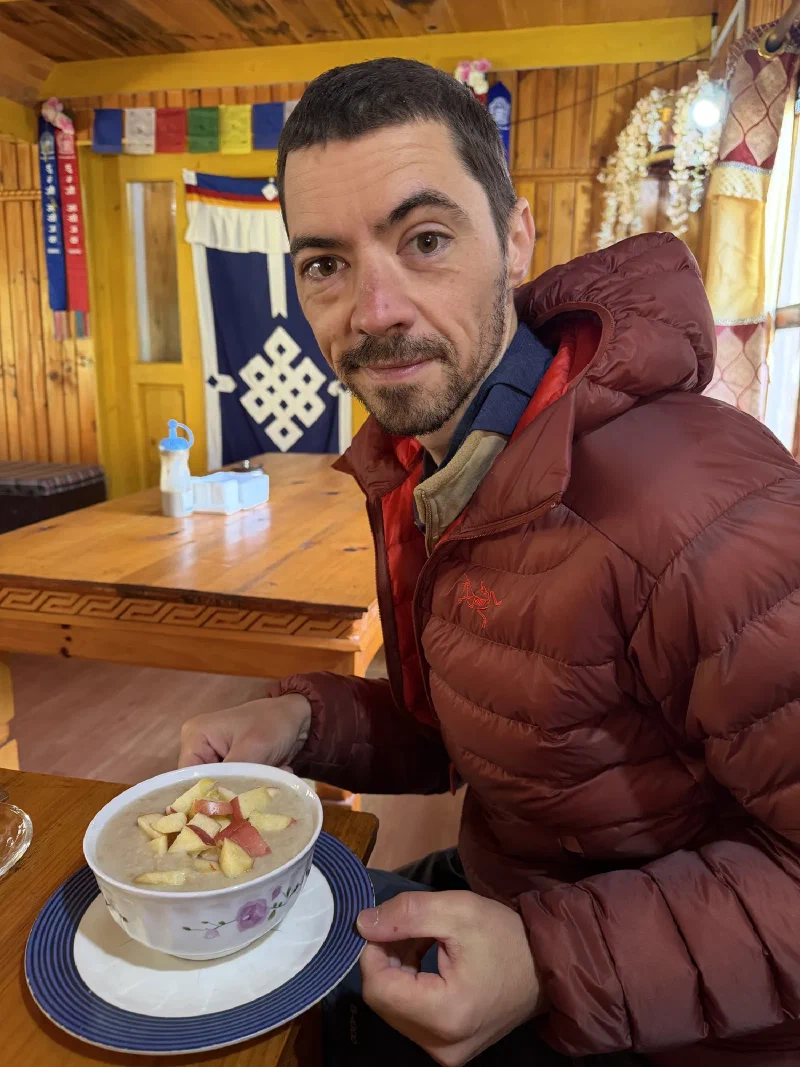
Po On got a crepe. Nicholas had apples in his oatmeal, which is really just Chestnut’s order. Chestnut is a horse. Apples are basically his version of pillow chocolates, and he gets very invested in making sure they show up.
Kerman Makes a Namlo#
During the downtime, Kerman decided Nicholas needed proper initiation into being a real porter. You may remember Nicholas already borrowed a namlo on the way up to Thukla and carried his own bag for four hours, which apparently earned him an apprenticeship he didn’t ask for.
So Kerman found an old rice bag, cut it into strips, and then produced a sewing needle and thread out of thin air, the way porters seem to produce any tool they need from nowhere, and sewed Nicholas a real, custom namlo by hand.
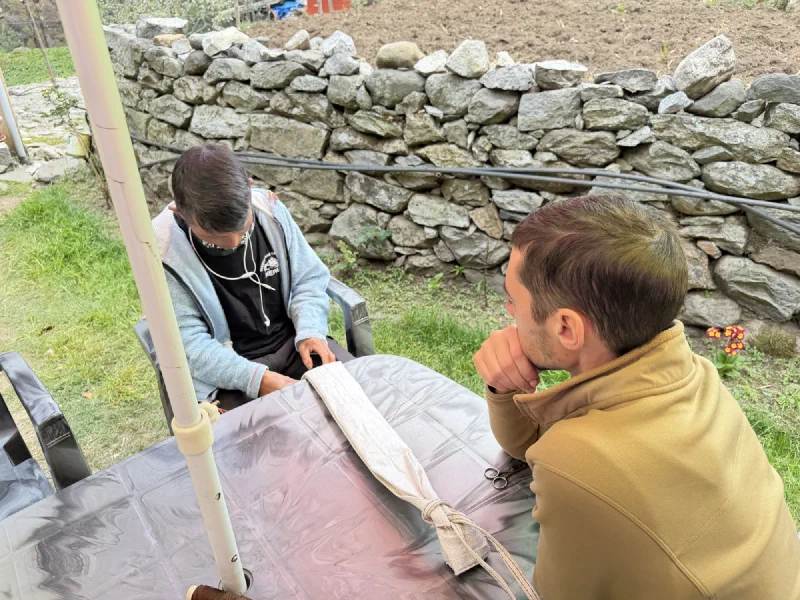
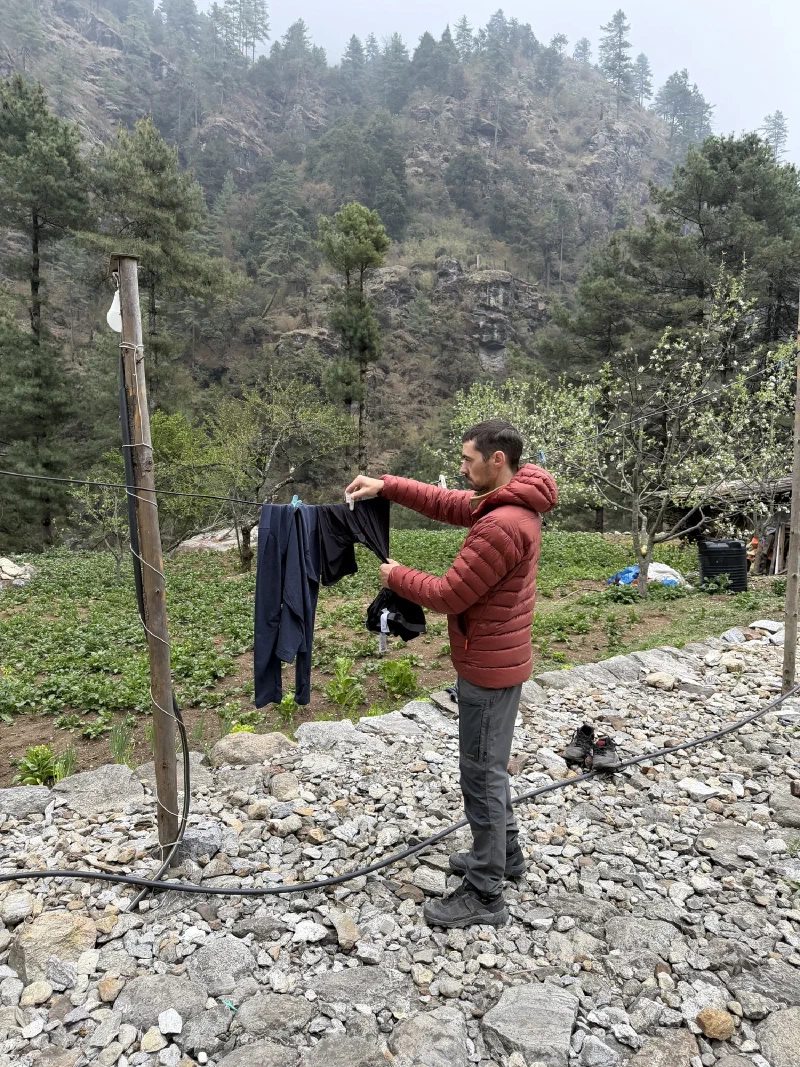
Meanwhile, Nicholas handled the other half of porter life: laundry, by hand, strung up on a line with a whole valley behind him.
The Sixty-Pound Pine Branch Heist#
This one was ridiculous, and I mean that as the highest compliment a story can earn.
One morning we woke up and Kerman and Nilman were gone. Nima said they were “out doing work.” Fine. Porters often help around the farm on off days to earn their keep, so we figured they were doing chores somewhere.
They were gone a long time.
When they finally came back, they were each hauling a MASSIVE white sack. Easily sixty pounds. Bulging. We assumed they’d done a supply run, hauled up food and goods for the inn.
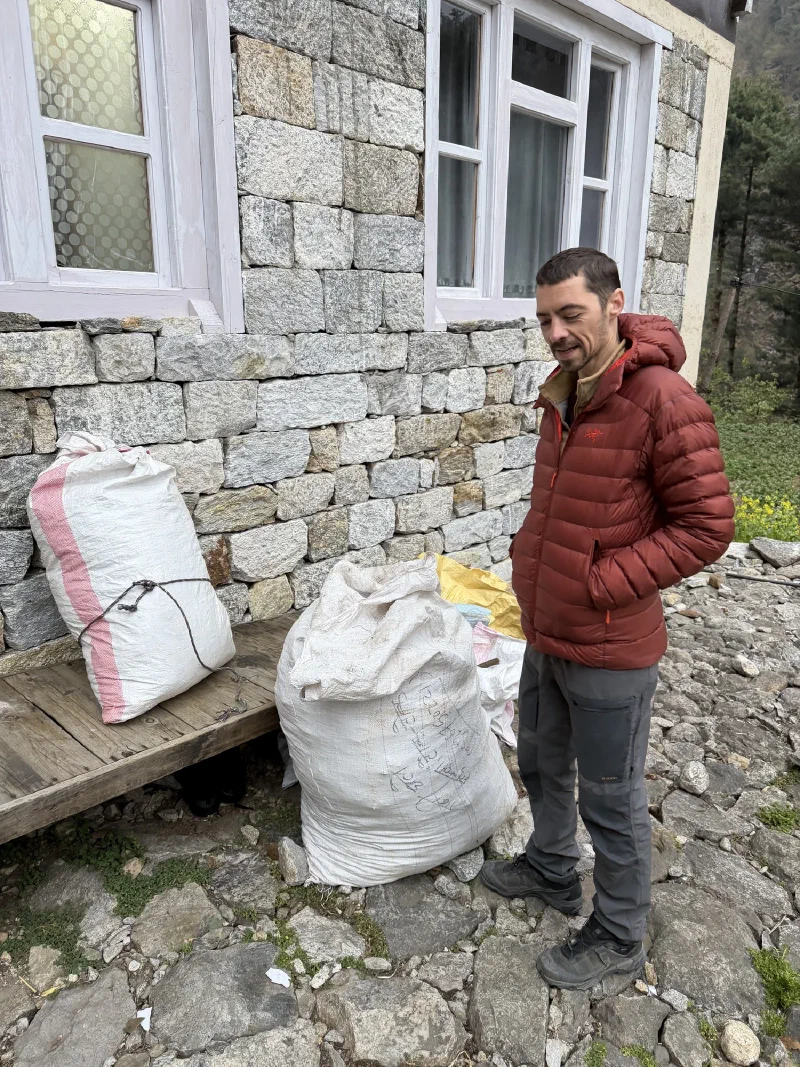
Then Nicholas looked inside.
Branches. Just… branches. What looked like plain old pine branches.
“Did you guys go out and pick pine branches?”
“Yes. Way up in the mountains.”
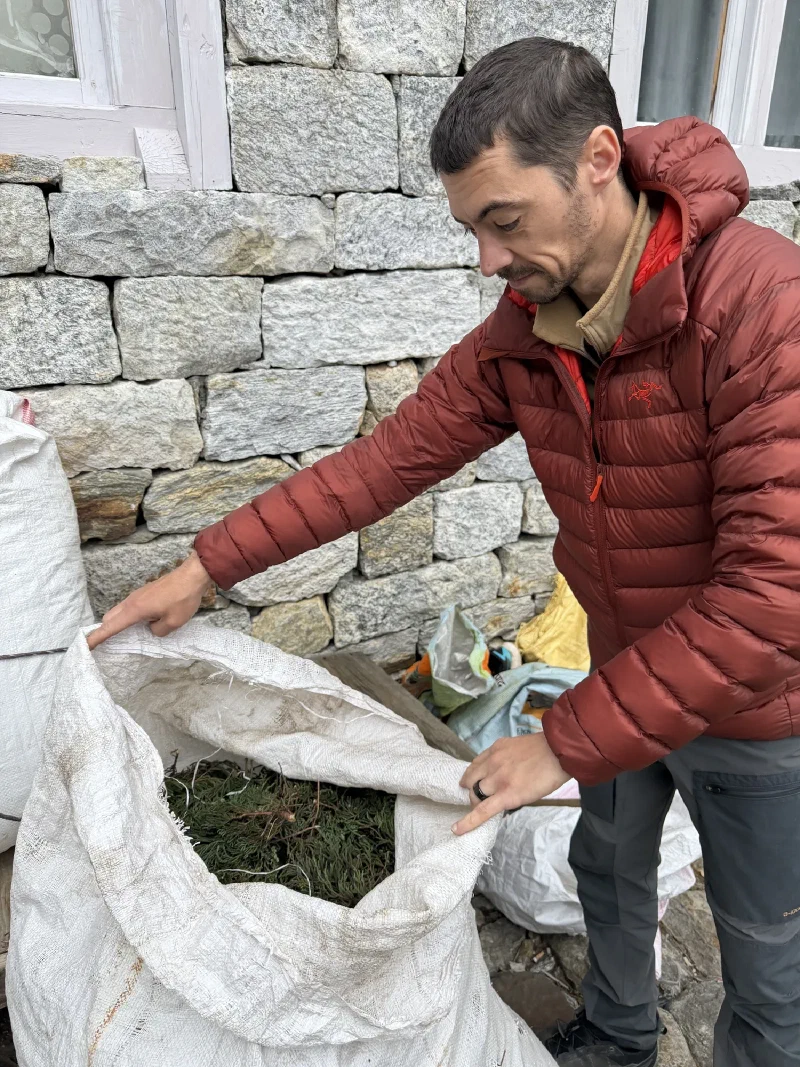
Turns out DB had called them and sent them on an epic hike straight uphill toward Kongde, a trail steep enough that parts of it need a chain and rope to get up and down. Six hours of climbing just to get to the top. They were gone all day. To pick branches.
For context, Kongde sits up around 4,000 meters on the ridge across the valley, well over a kilometer of vertical above Phakding. That’s not a stroll to the corner store. People take entire acclimatization days just to go up and look at it. The porters did the climb, harvested a small forest, and then came back down the same chains and ropes with sixty pounds strapped to their foreheads. On a day off.
And the branches weren’t pine. They were sage. Specifically the pure high-altitude mountain sage that the monks burn every morning for prayer, and that families burn too. Apparently this stuff is ceremonial grade, the “good stuff,” and it doesn’t grow down where you can just buy it cheap.
Later, while Nicholas was on the phone with DB sorting out logistics, he asked: “Did you make the guys bring back a hundred pounds of branches?”
“Haha, yes,” DB said. “I’ll bring it back to my family and friends to burn for the year. We can truck it back, otherwise it’s very expensive.”
So either DB is running a quiet artisanal sage-harvesting operation, or he just really likes good sage. I cannot tell which. Either way, two men hiked six hours up a chain-and-rope mountain trail to bring back a tree, and that is the most Himalayan thing I witnessed all week.