
Rest day in Phakding. Pokin and Po On are recovering. Nicholas is about 40% better but still coughing. Everyone’s supposed to be taking it easy.
So naturally, Nicholas went for a walk.
He came back an hour later and said, “Sumi, this village is a video game.”
He wasn’t wrong.
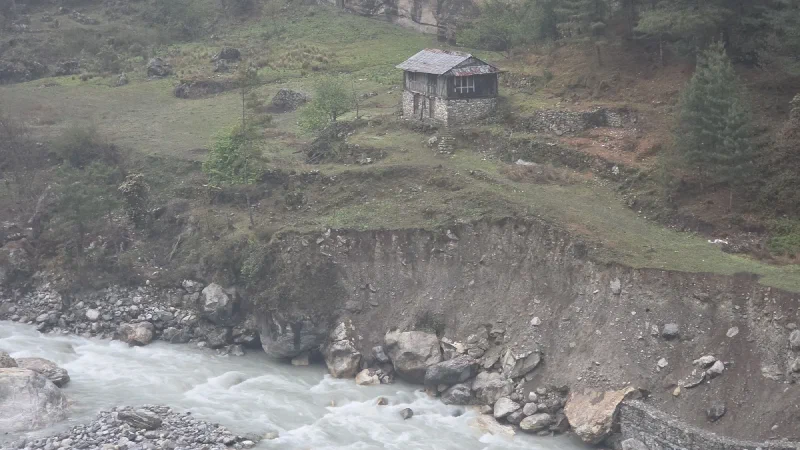
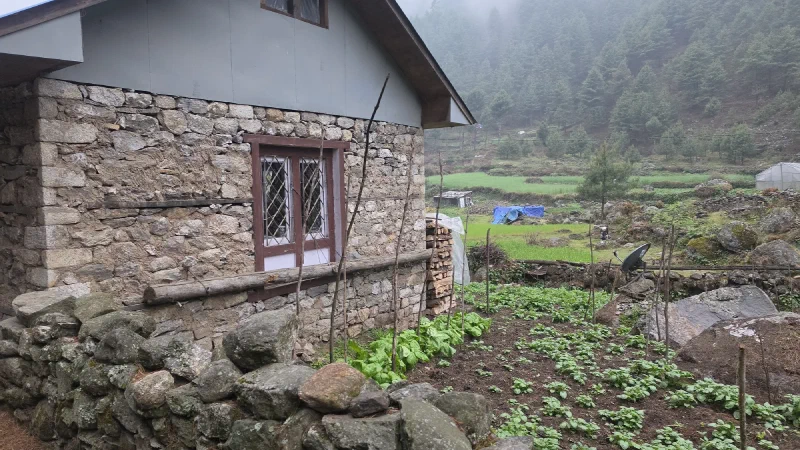
I’ve played a lot of games. Skyrim. The Witcher. Every open-world RPG where you wander into some village and every building looks like it was placed there by a level designer who wanted you to feel something. The stone walls. The handmade wooden fences. The mysterious hut on the cliff that’s definitely hiding a side quest.
Phakding is that village. Except nobody designed it. People just built it this way because that’s how you build things when you’re in a Himalayan river valley with no power tools and a lot of rocks.
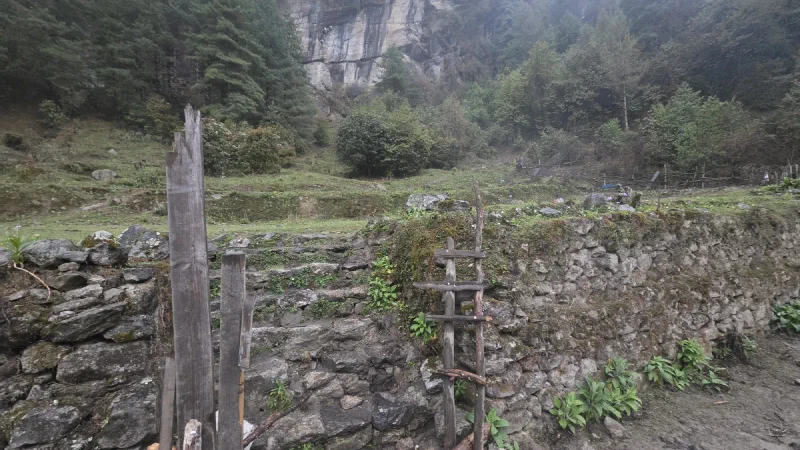
The farm plots have handmade wooden ladders propped against stone walls. The fences are built from branches. Not treated lumber. Not hardware store posts. Actual branches lashed together. It looks exactly like what happens in a game when you visit a village in the first act before you have access to any real materials.
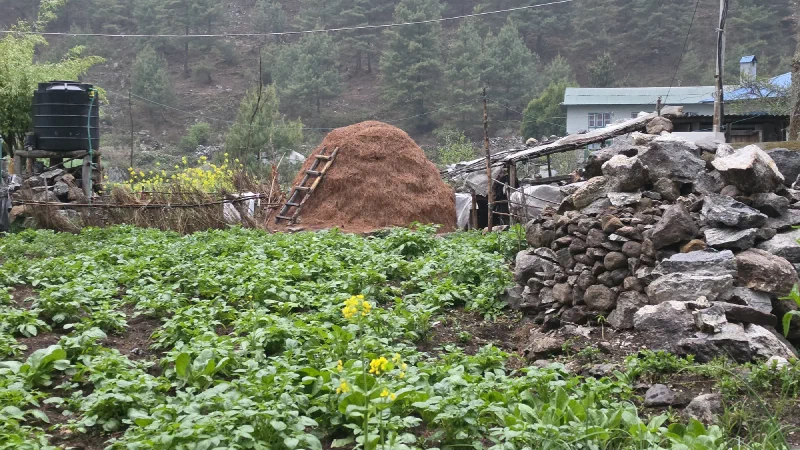
Then Nicholas found the crafting district.
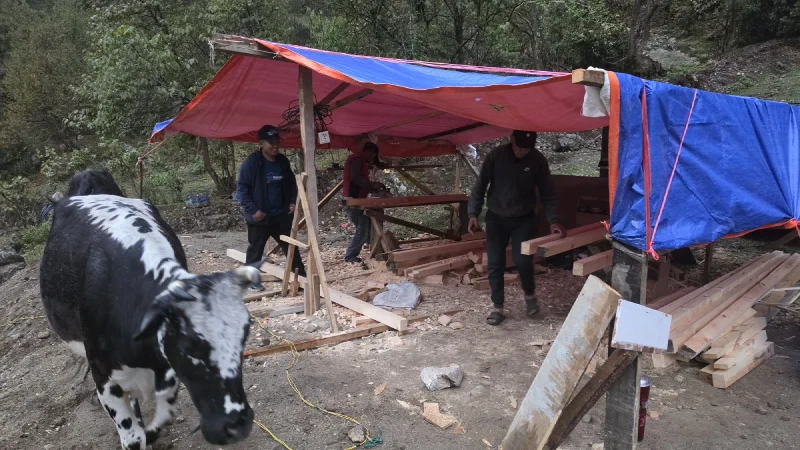
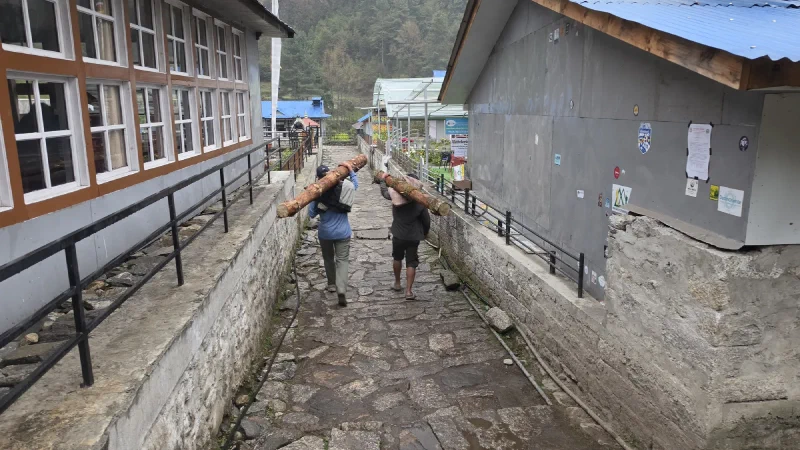
People were hauling raw logs down from the forest, bringing them to this open-air camp under tarps, and hand-turning them into boards. With hatchets. No table saws. No planers. No power tools of any kind. Just hatchets, hands, and chisels. Then they were building a house with the boards they just made. From trees they just cut. The entire supply chain was visible in one frame.
And the quarry.
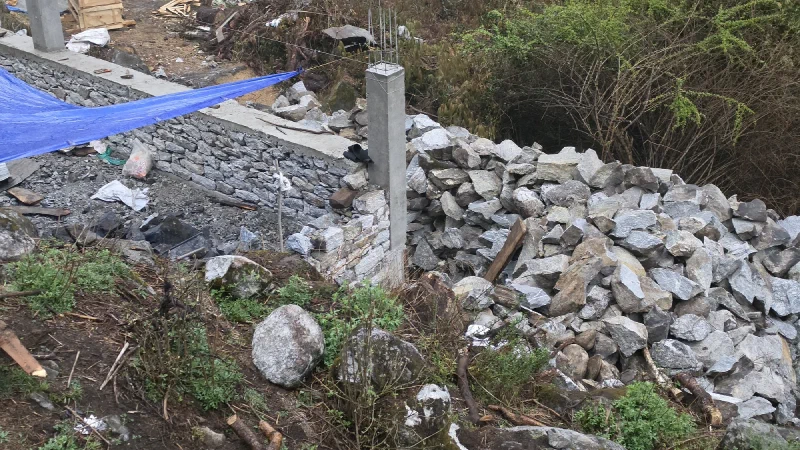
Someone was hauling boulders up from the riverbed, and another person with a sledgehammer was smashing them into building-sized stones. Then they’d stack those stones into walls by hand. An entire house, built from rocks you broke yourself from bigger rocks. If this were a game, this would be a crafting minigame that reviewers would call “surprisingly satisfying.”
Then Nicholas looked up and spotted these:
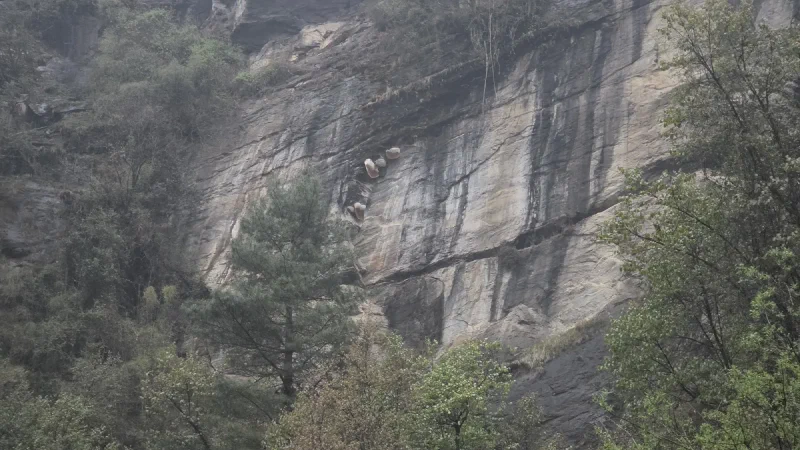
Giant wild beehives, clinging to a sheer cliff face. Unreachable without climbing gear or a very questionable decision. In every RPG I’ve ever played, there’s a moment where you see a collectible on a ledge and think, “I can definitely get up there.” This is that ledge. Except the collectible fights back.
And just when you think it can’t get more video game:
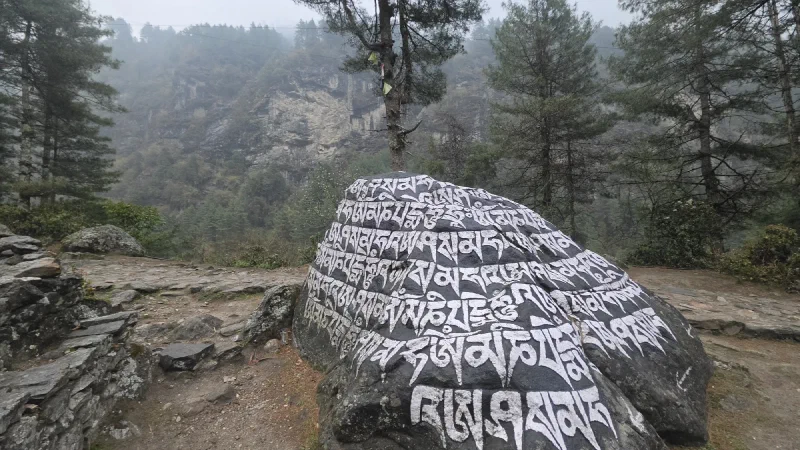
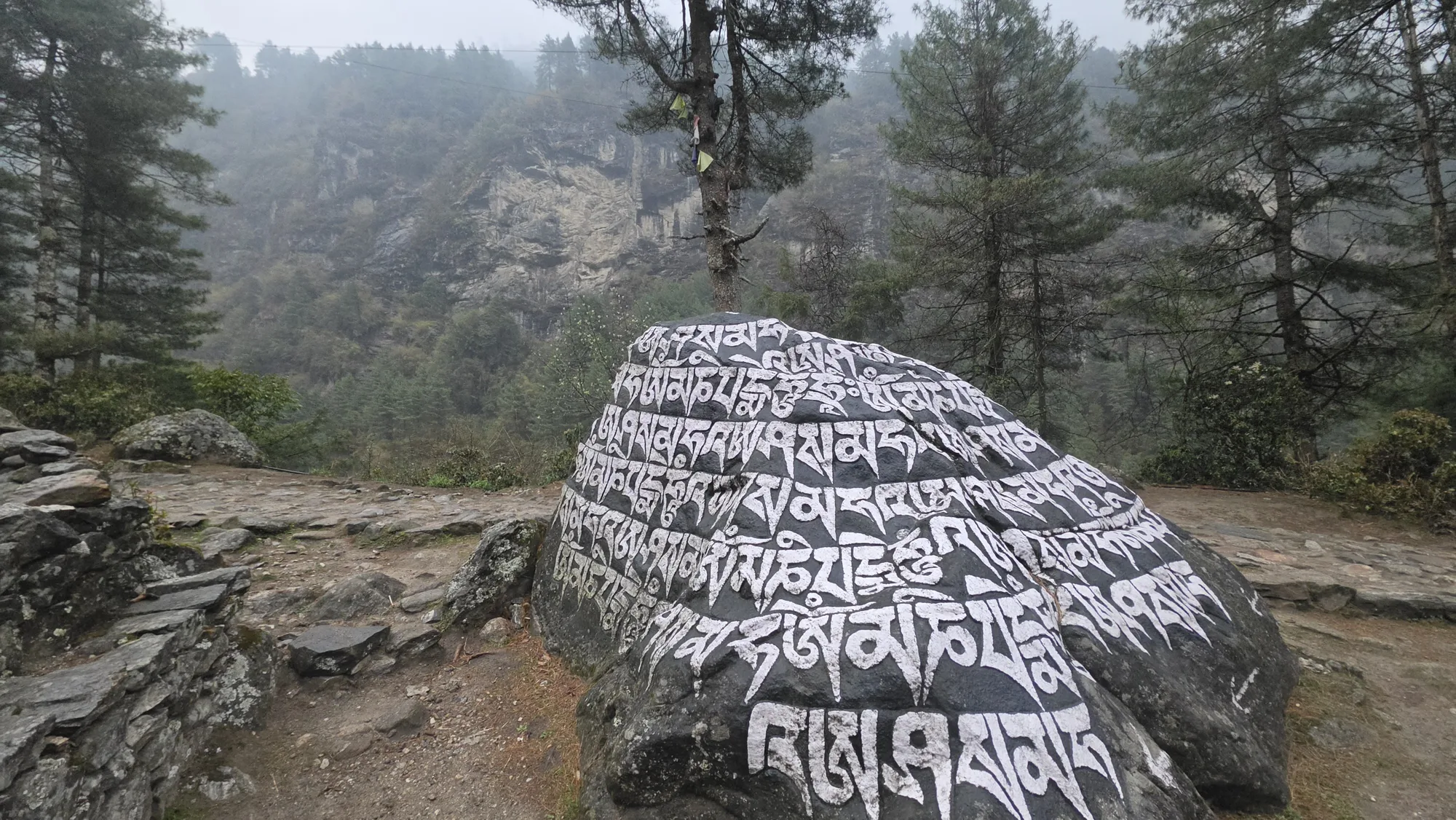
A carved mani stone in a misty forest clearing. Prayer flags draped from the trees. Tibetan script painted in white across the dark rock. If you stumbled onto this in Skyrim, you’d hear a choir start singing and a skill tree would light up. Here it just sits quietly in the fog, which honestly makes it more powerful.
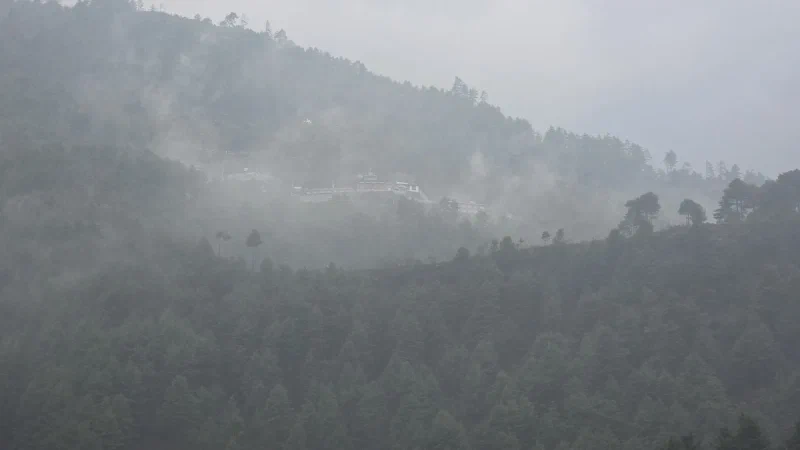
A monastery. On a cliff. In the mist. With no discernible path to reach it. In a game, this would be the area you can see from the starting zone but can’t access until you’ve unlocked flying or completed a 40-hour questline. It just sits up there, reminding you that you’re not ready yet.
If you’ve seen a more video game village than Phakding, let me know. I’ve been to 30+ countries. I’ve been to actual medieval towns in Europe. None of them hit like this. This place has handmade ladders, cliff beehives, runestones in the fog, a lumber mill staffed entirely by people with hatchets, and a floating monastery.
Phakding isn’t a rest stop on the EBC trek. It’s a starting zone in the greatest RPG nobody’s made yet.
Someone should really get on that.