
Nicholas’s work wanted him back.
That is how a road trip stops being a road trip. The car stops pointing away from home and starts pointing at it.
No more east. Kansas was the far edge, and we had already used it.
Somewhere That Is Not Hot#
New question. What is worth seeing on the way back, and can it please not be hot.
Pokin came back with a place called Bisti, which she had found because she thought Nicholas would want to photograph it at night. She was not looking for something she wanted. She found the thing he would want, then did the routing.
Bisti was too far for one day. So the line home ran through a town called Taos instead.
None of us had heard of it.
Taos#
Taos is what you would get if Santa Fe stopped trying quite so hard. Adobe everywhere, galleries, turquoise doors, and a general sense that the paint was applied a while ago and nobody has been nagged about it since.
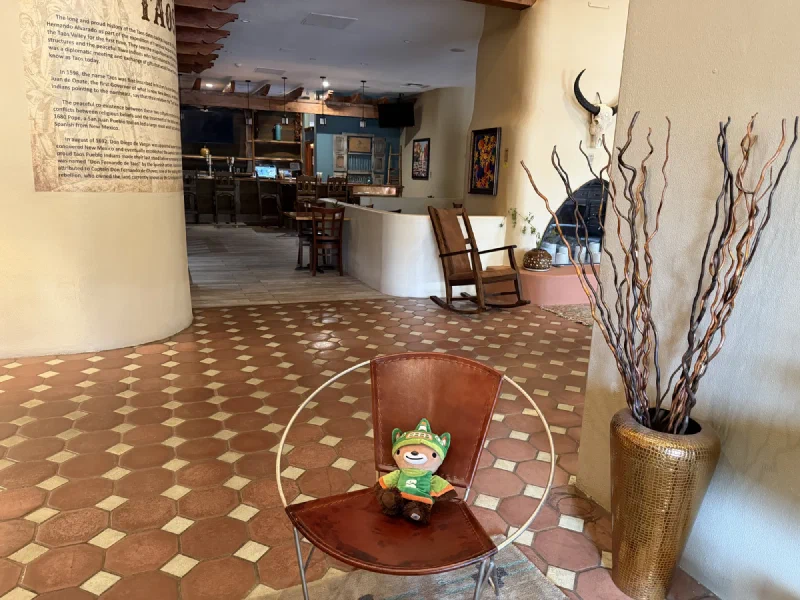
The hotel had a whole wall of Taos history printed on it, starting back in the fifteen hundreds, which I read in full because nobody else was going to.
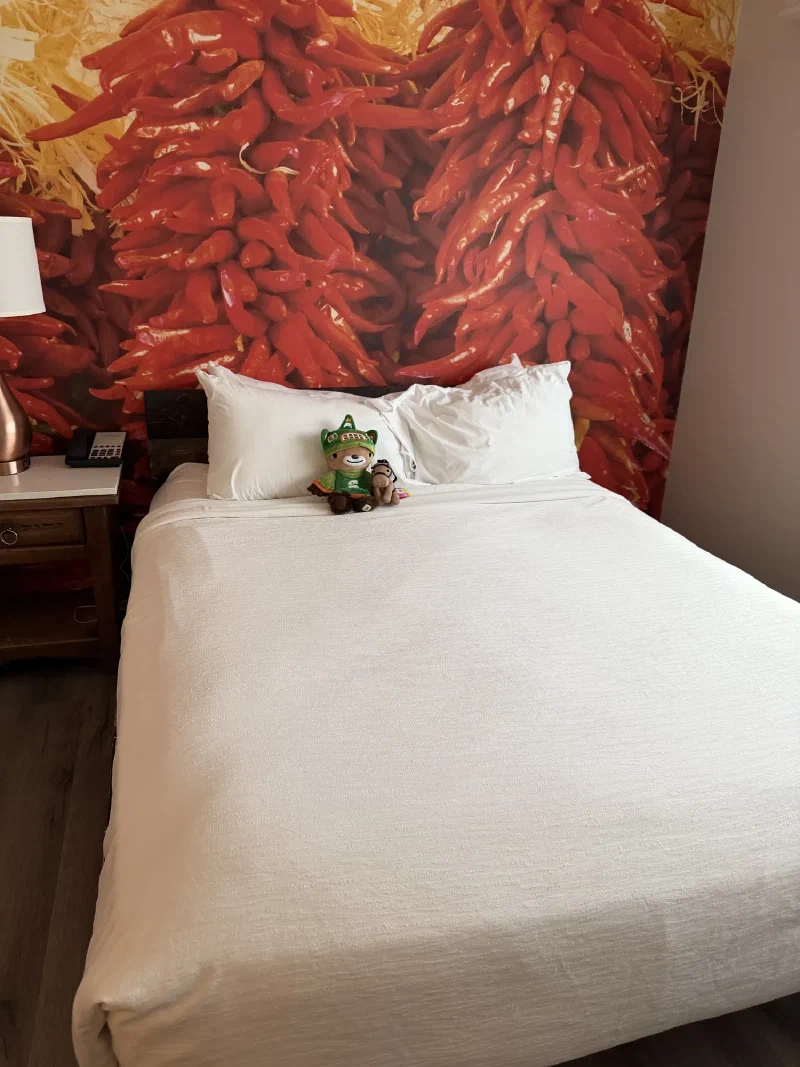
The condition about not being hot did not work out. Taos sits at about 7,000 feet, roughly 2,100 metres, which you would think buys you something. It did not. It was still really hot.
Nicholas had calls. He had a lot of calls. Being summoned back to work does not wait until you are actually back, so he took them from the hotel, and between them we walked around the town anyway.
You Cannot Walk There#
Taos is named after Taos Pueblo, which is a separate place a couple of miles north of the town, and we decided to walk to it.
This was Nicholas’s plan and it lasted about as long as it deserved to. You cannot walk there. The land in between belongs to the Pueblo and you do not get to stroll across it because you felt like some exercise.
So we walked back.
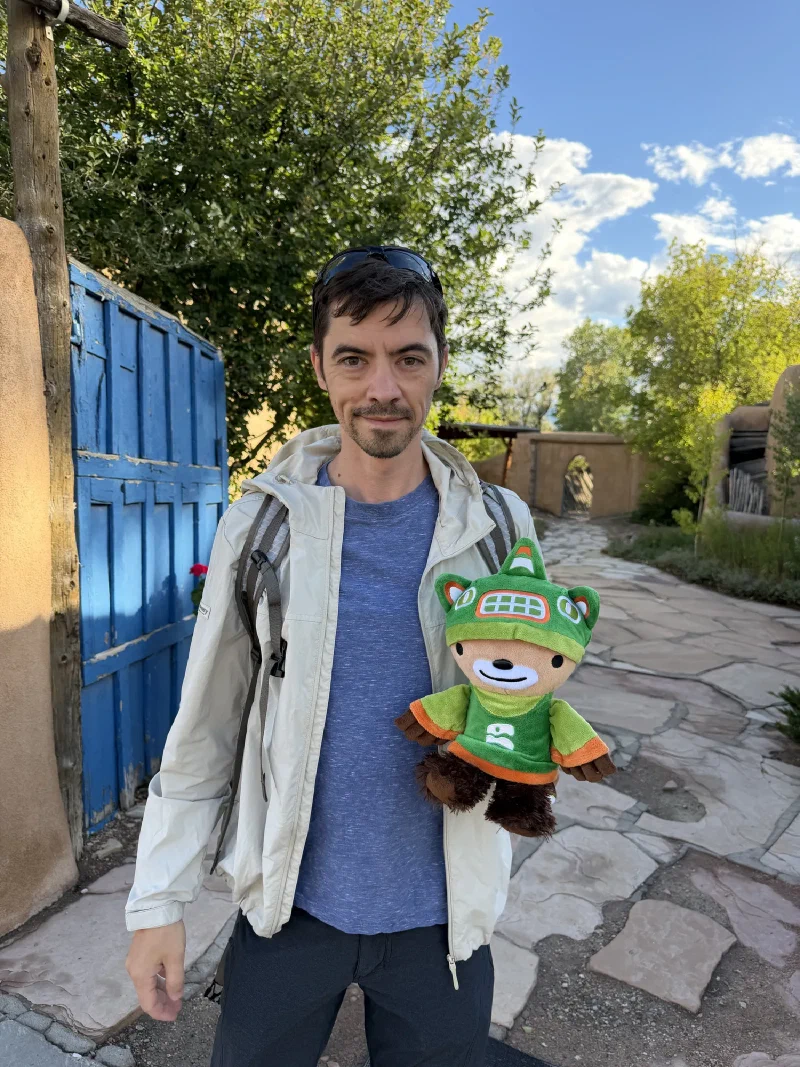
Dinner was New Mexican, in New Mexico, which should have been the easy win of the entire trip.
Pokin said it was just ok.
Not bad. Just ok. She had spent the previous evening telling us that a taco place in Liberal, Kansas was the best meal of the trip, and twenty four hours later, in the state that is supposed to own this cuisine, the verdict was a shrug.
I did not have an opinion on the food. I had an opinion on the ranking, which is that Kansas is now undefeated and nobody in New Mexico knows it happened.
Nicholas Had a Call#
The next morning we went to the Pueblo properly.
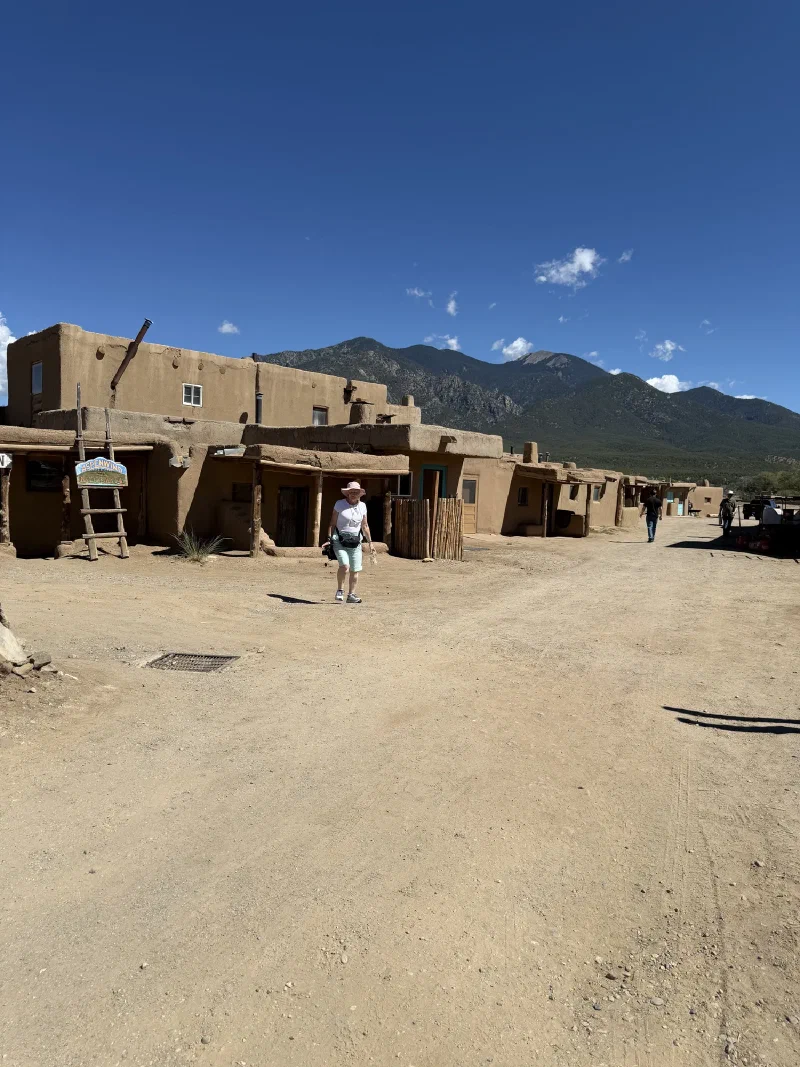
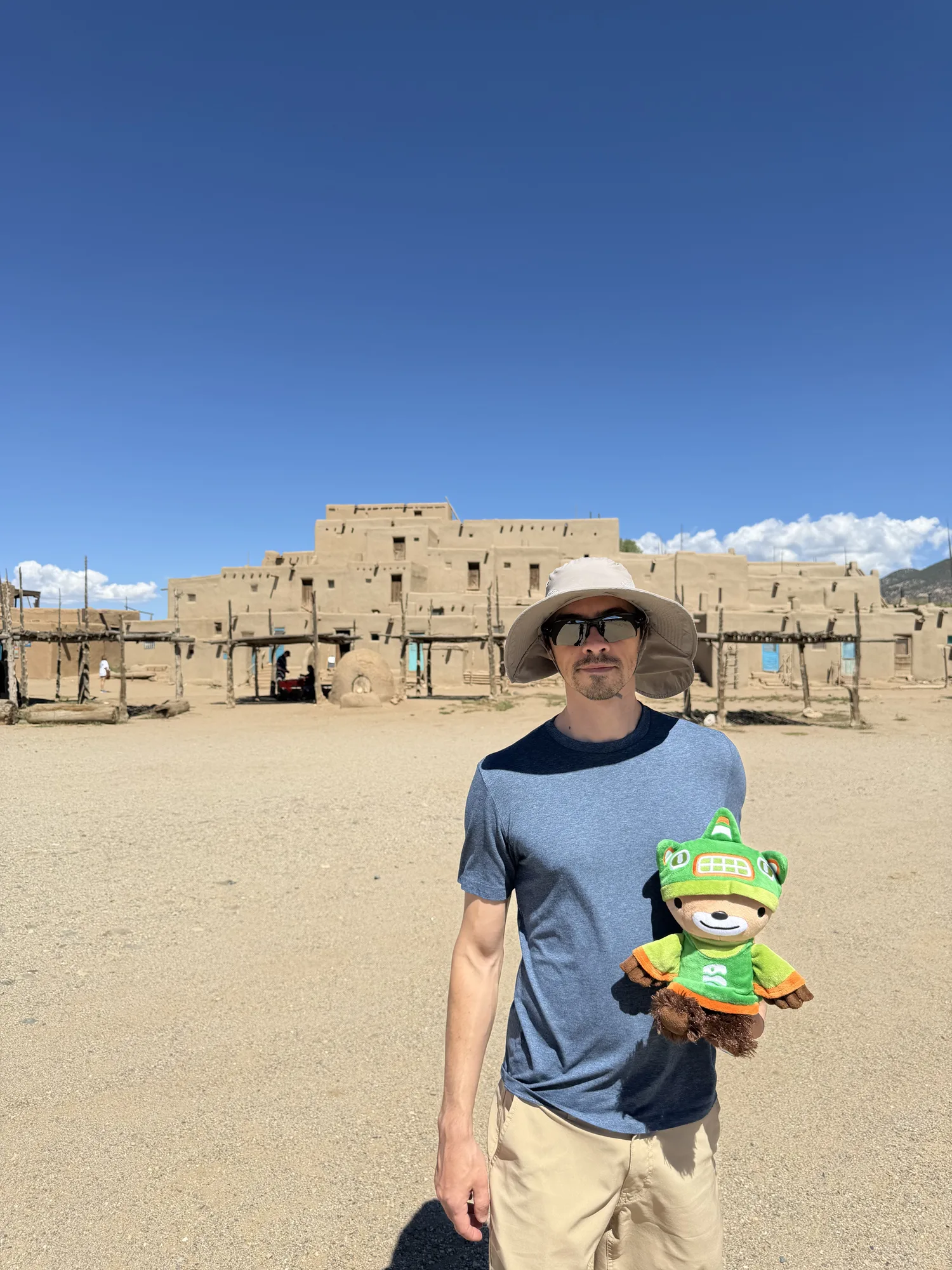
We got there early, walked the open part, and Nicholas carried me around for about ten minutes in front of the oldest building in the country.
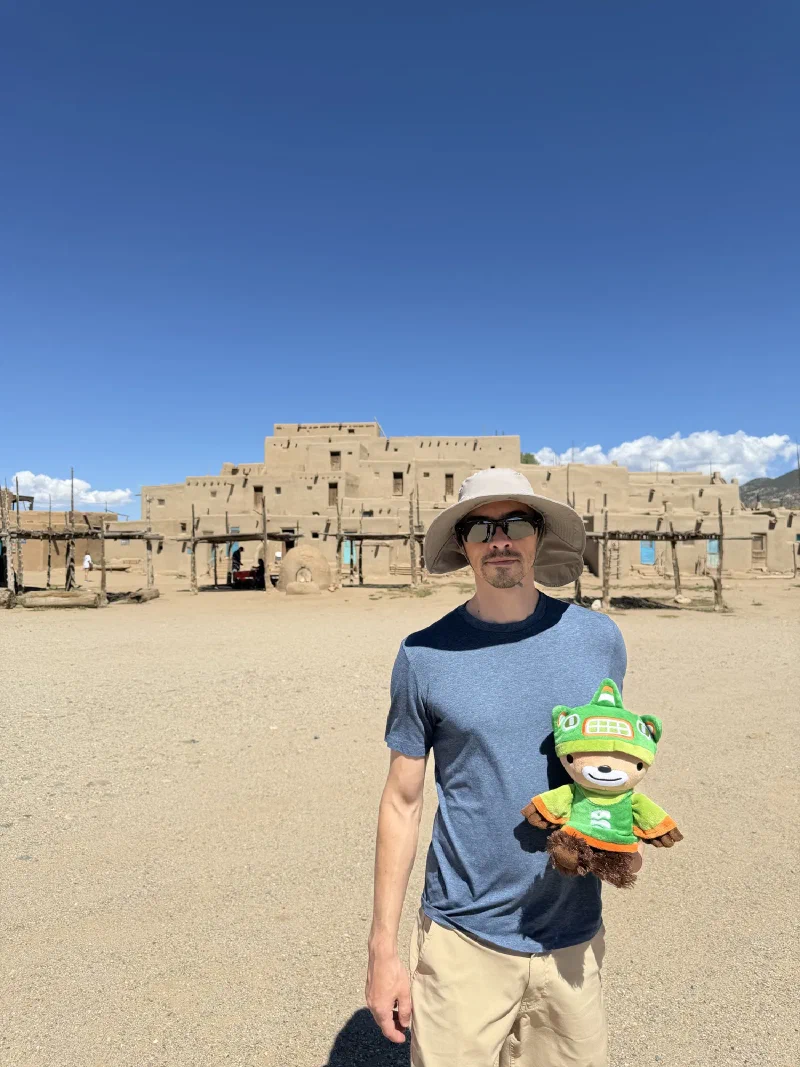
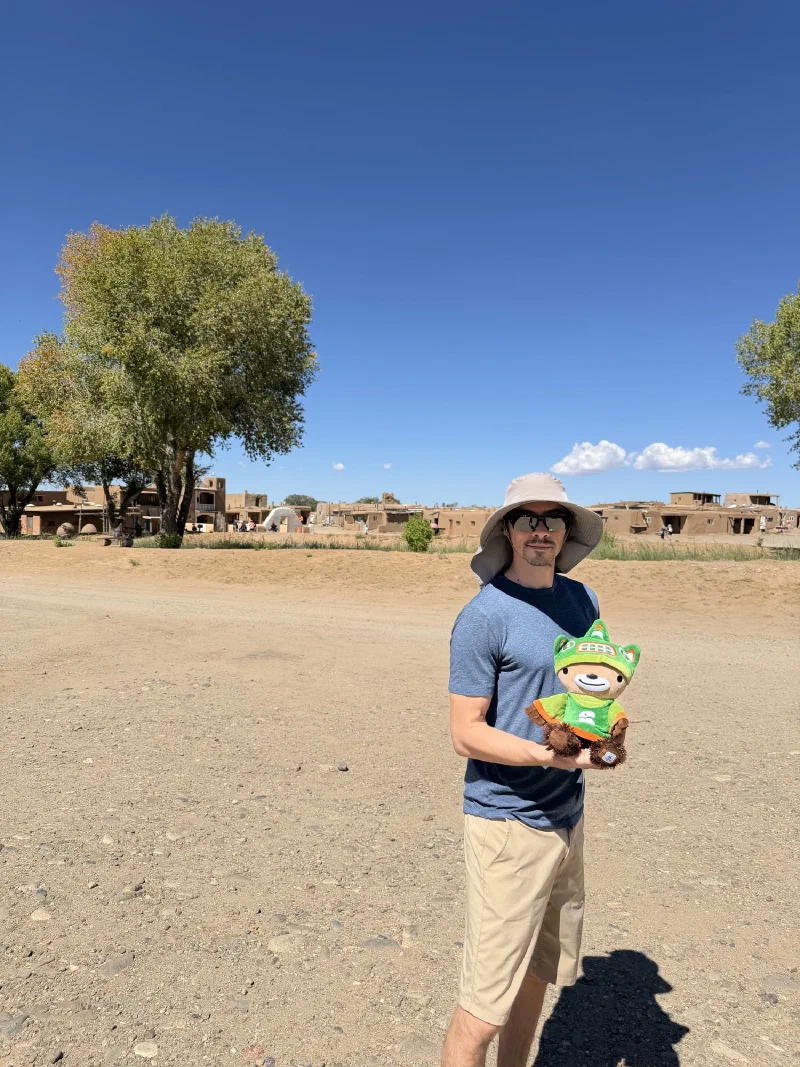
Then the guided tour started at noon.
And at noon, Nicholas went back to the car to take a work call.
He handed me to Pokin and went to sit in a vehicle and talk to people in another time zone, and the rest of us went to look at the thing we had driven to.
So Pokin took me on the tour. She has now done this twice on this trip, in the sense that when there is something actually worth seeing and Nicholas is occupied, she is the one holding the bear.
A Thousand Years of Not Moving#
The multi-storey adobe houses were built somewhere between 1000 and 1450 AD. People have been farming this valley since around 900. The two big structures have names, Hlauuma and Hlaukwima, the north house and the south house, and they are not ruins and they are not a reconstruction. They are houses. Roughly seventy five people live in the old village right now.
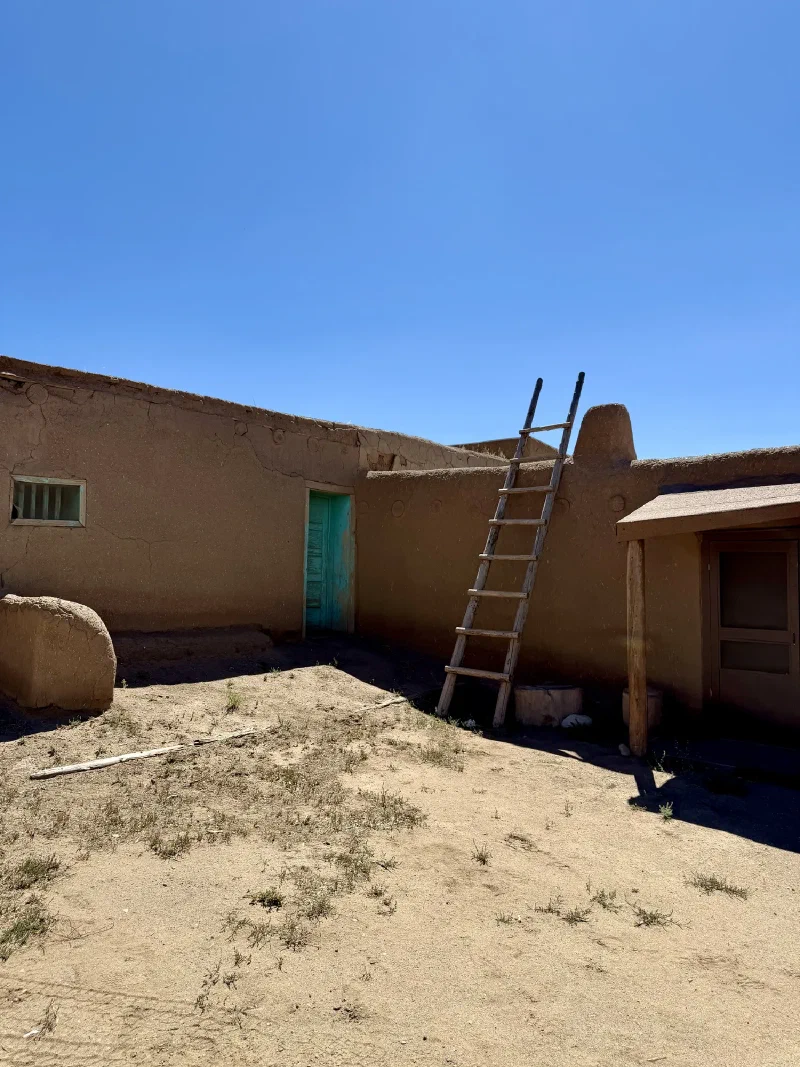
The traditional village has no electricity and no running water. That is not a quirk of the budget. It is a rule, kept on purpose, because the alternative is the village slowly turning into a picture of itself.
The whole place is earth mixed with water and straw. The roofs sit on big timbers called vigas hauled down out of the mountains, with smaller pine and aspen latillas laid across them. The outside has to be re-plastered with mud and straw over and over, forever, and each family does their own house.
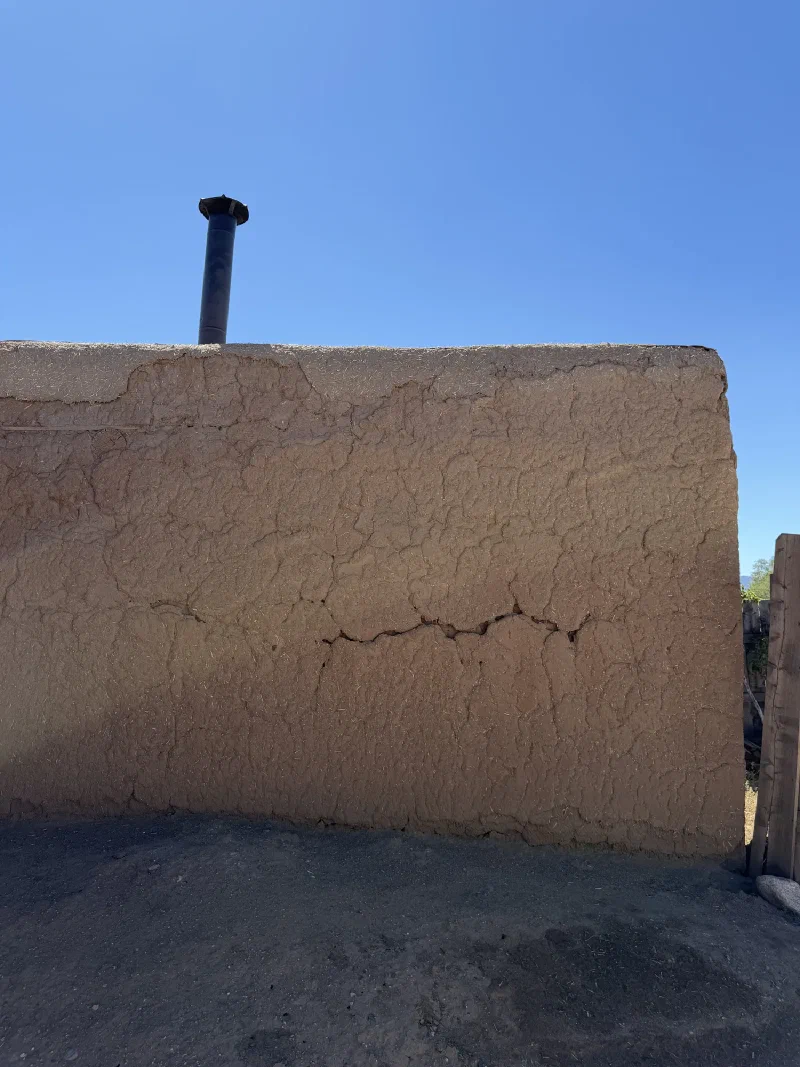
You can see the straw in it. Somebody has to re-mud that wall, and then somebody has to do it again, and that has been the arrangement since before England had a Parliament.
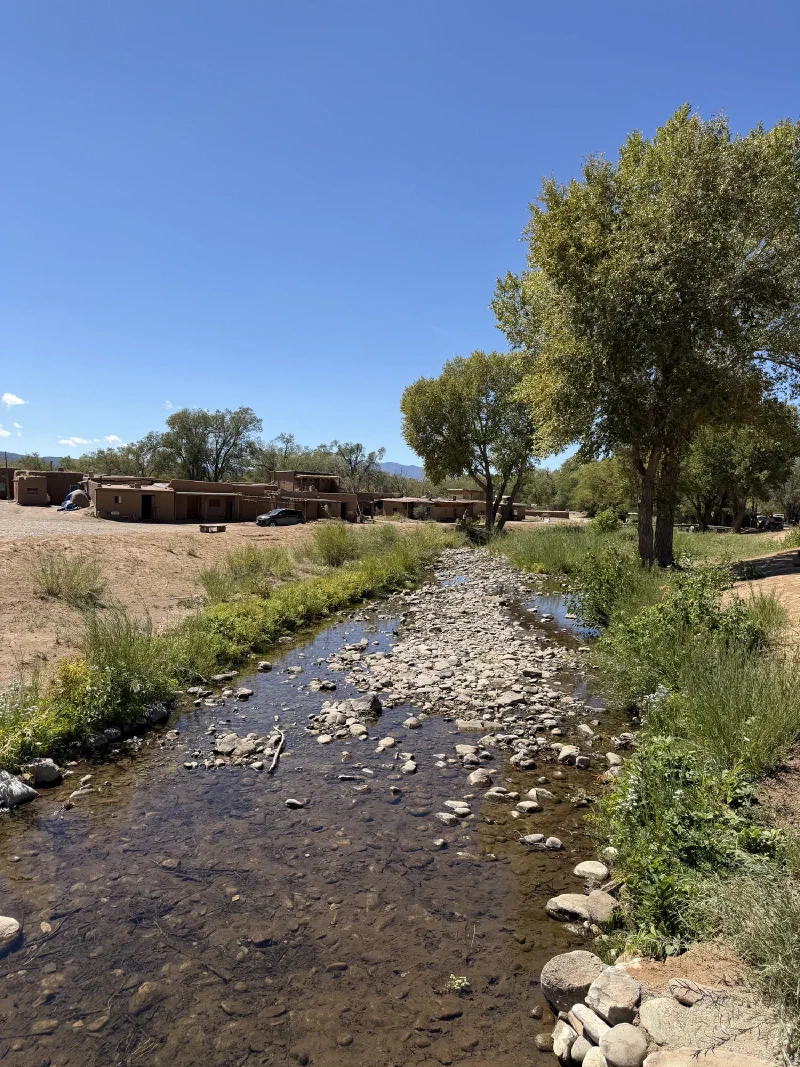
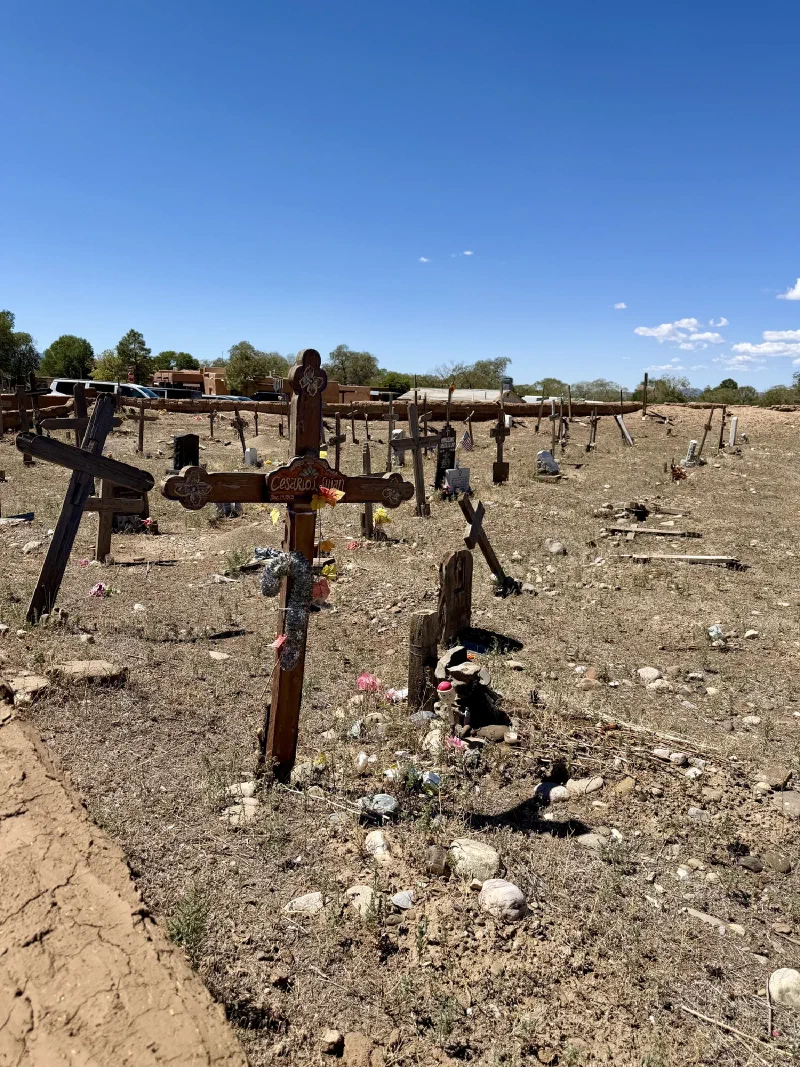
Onwards#
Tour over. Pokin walked me back to the car and handed me to Nicholas, whose call had finished and who had now been to Taos Pueblo without seeing Taos Pueblo.
Which meant we were leaving immediately, because Bisti is the whole reason we came this way and Bisti is most of the way across the state. Drive straight there and we get to the badlands with the sky still worth pointing a camera at. Stop for lunch and we get a long drive to look at nothing.
Nobody stopped for lunch.
Onwards to Bisti.