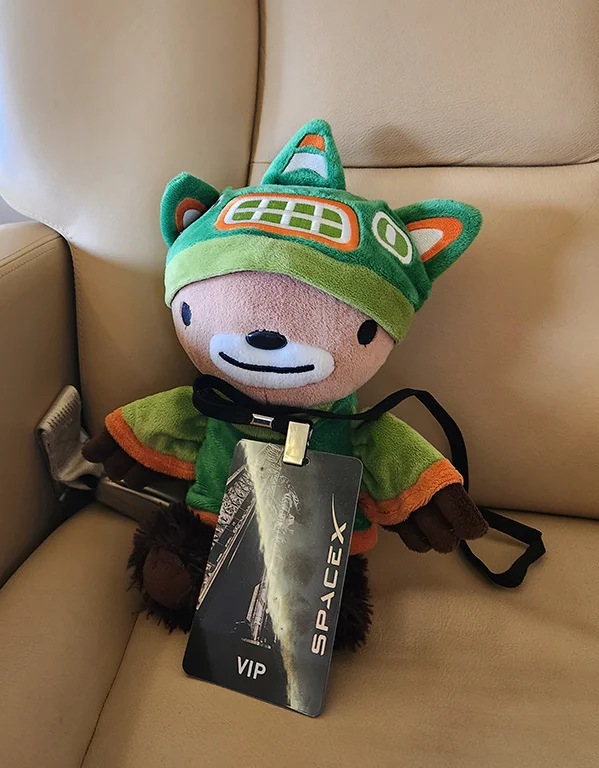
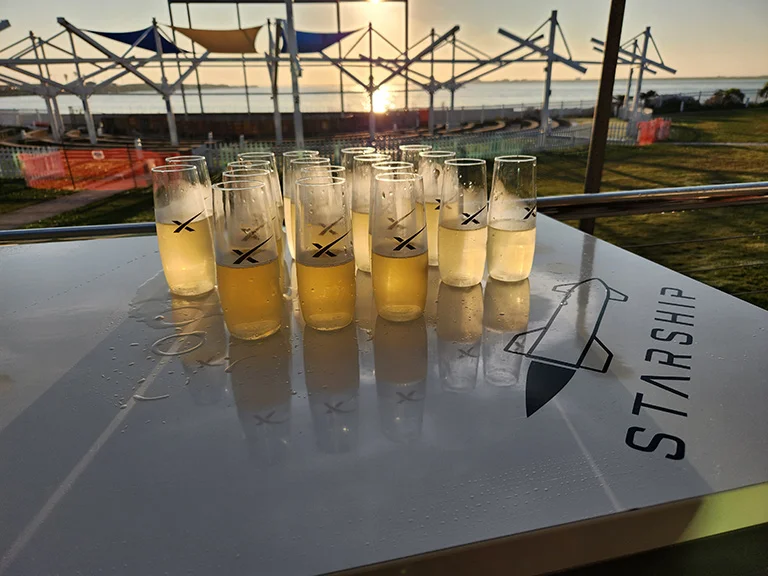
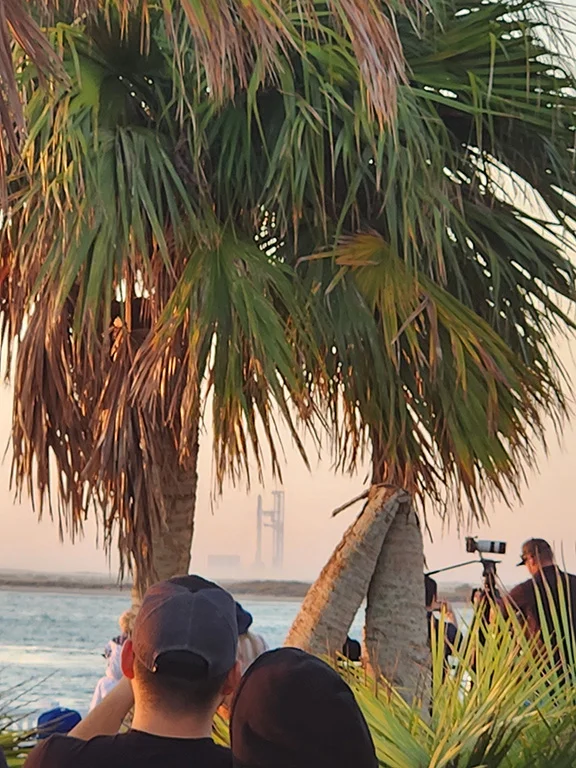
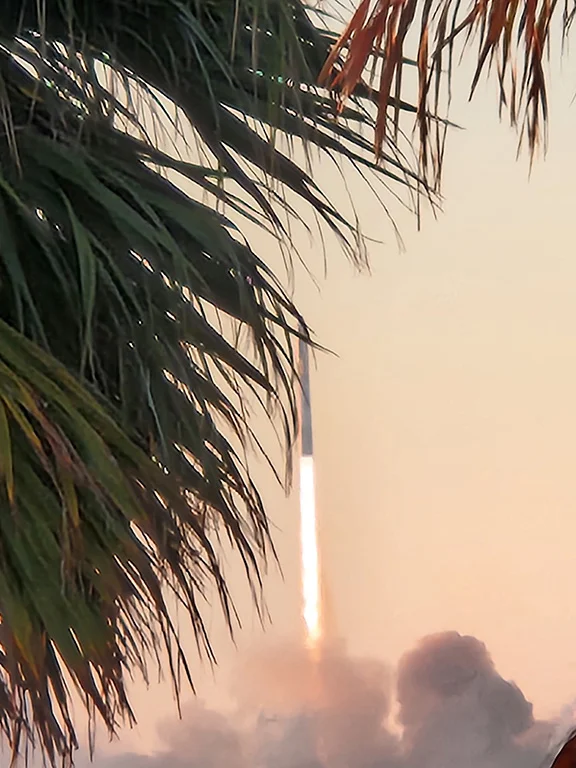
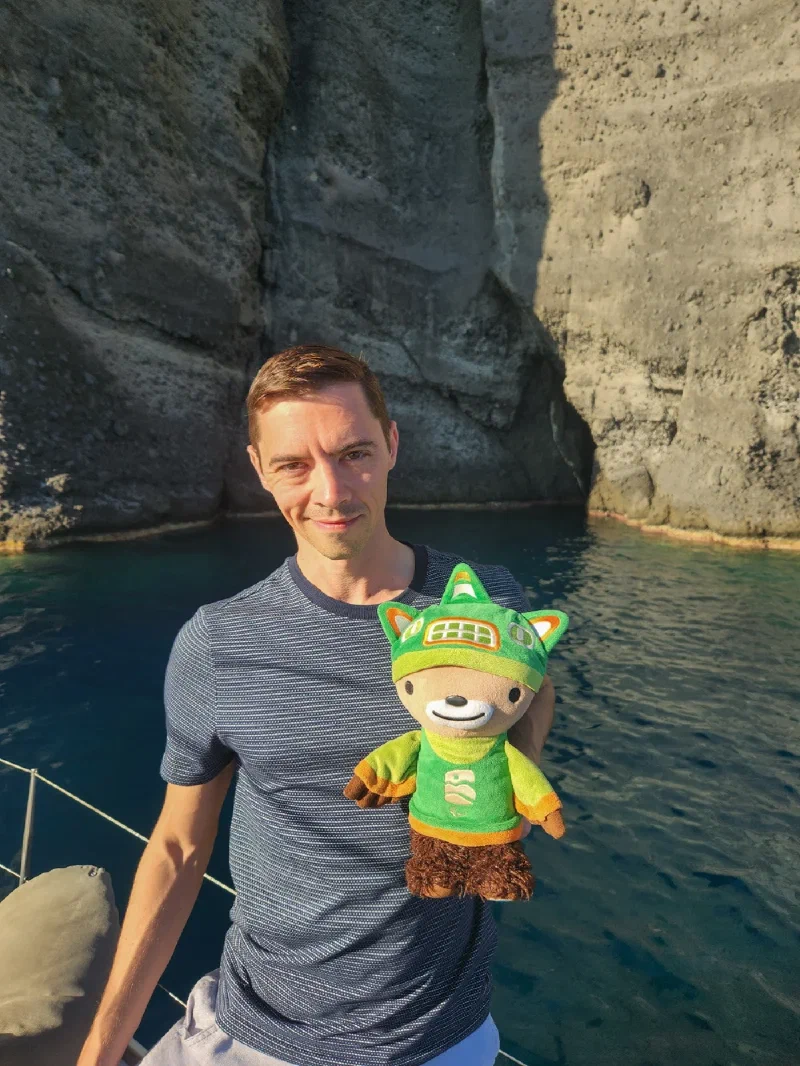
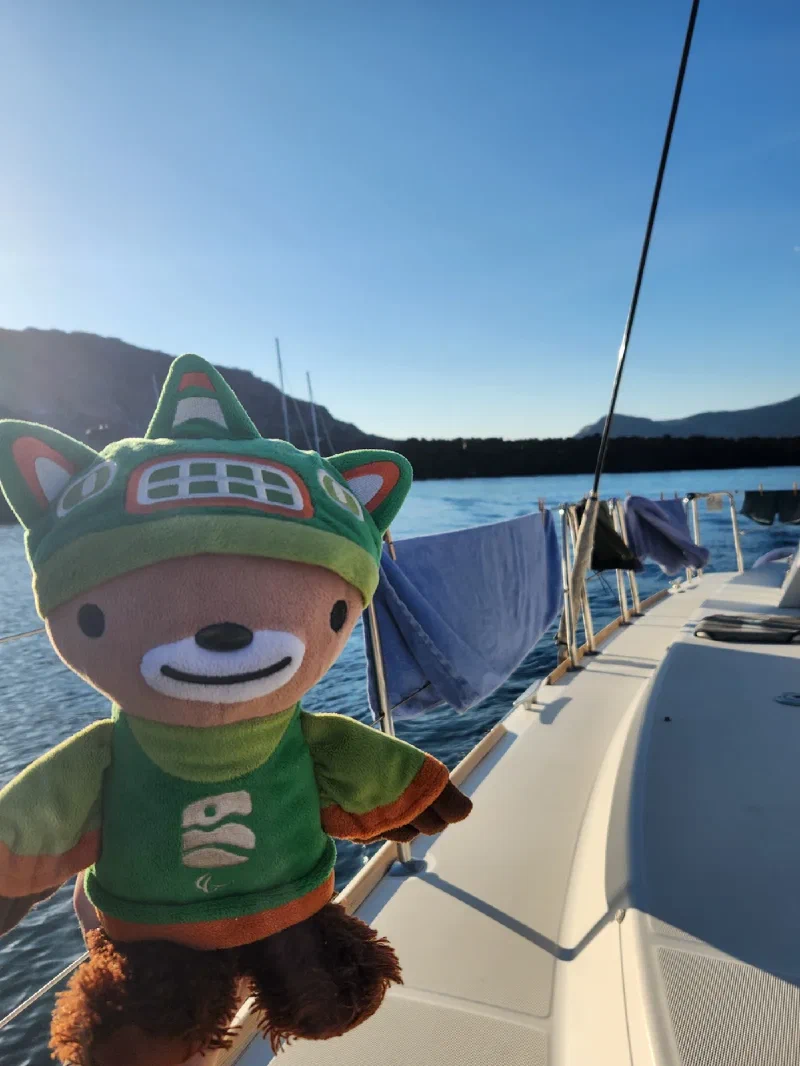
SpaceX Starship launch 2 is happening, and Nicholas was lucky enough to have a friend invite him along to see it from the beaches of Boca Chica, TX. Which means I’m invited along. I snagged a VIP tag (don’t ask how). The only thing I’m disappointed about is that they didn’t have dedicated VIB tags.
The launch was amazing, we got to hear and feel starship successfully take off from the pad, and then witness an exciting RUD (Rapid Unscheduled Disassembly) a few minutes later. Couldn’t have been better! I love space! Life is good.
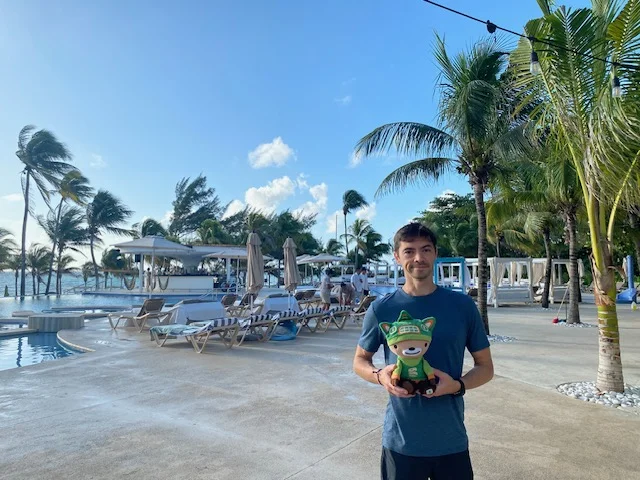
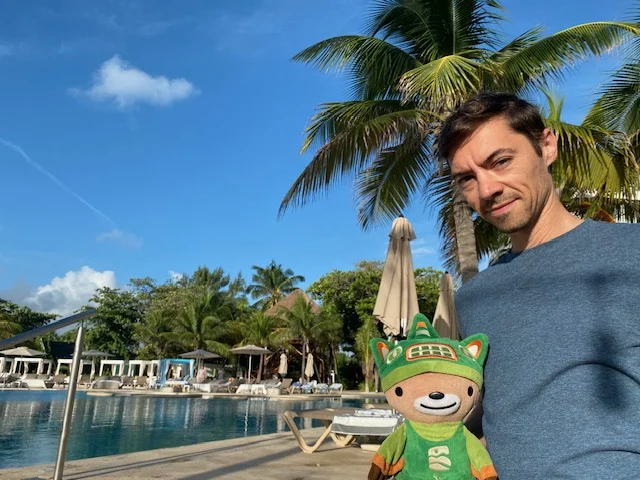
This whole week we stayed at an all-inclusive resort called Fives Beaches in Playa del Carmen, just south of Cancun. Pokin and Nick’s friends Cathey and Rob were getting married, so we all packed up and went there.
We arrived a day earlier than every else to settle in and work. For some crazy reason, Pokin booked a red eye. No one was impressed when they found out, especially because there were dinner plans hours before the red eye flight to the airport.
Well they got it all done, saw their friends, enjoyed some dinner, made it to the airport, and a bunch of hours and a transfer in Atlanta later, arrived in Cancun for a transfer to the resort.
Pokin did no research on the resort, and so she didn’t really know much of what to expect.
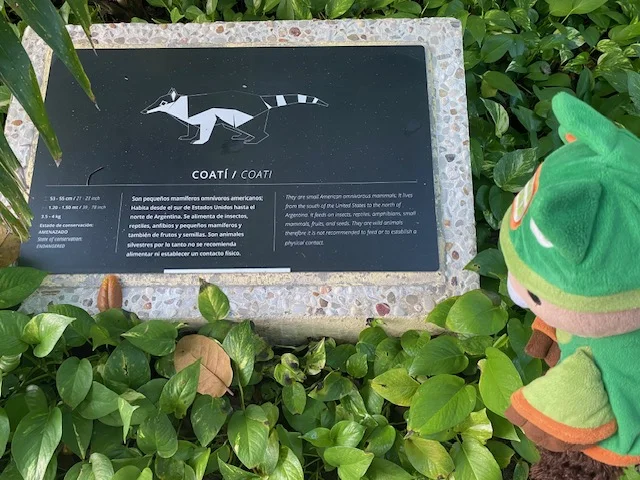
And one of the first things I discovered was that, this resort was infested with my archnemesis the Coatis. Remembering my time in Brazil, I figured it was time for a rematch. These paws are ready to smack. I glared at one as it walked by. I shook my paw at it. Get ready for payback!
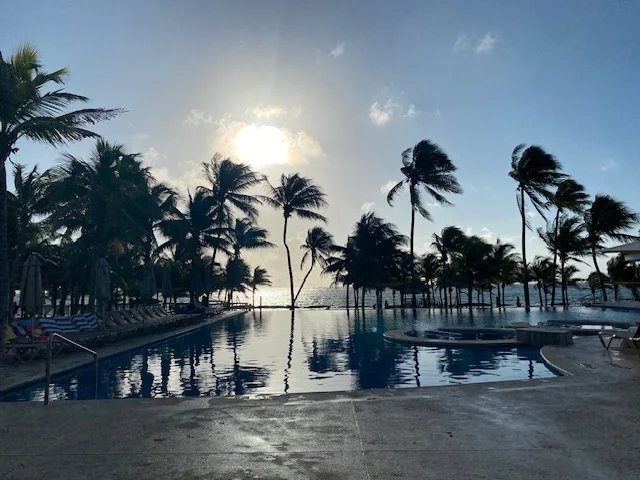
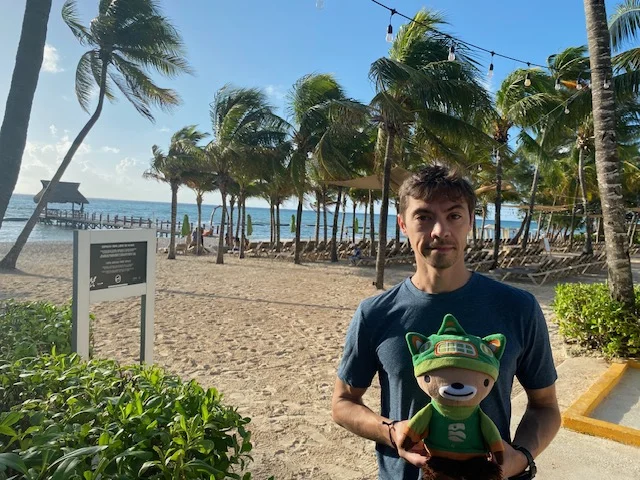
Our room wasn’t ready so we had time to trek around the resort. I saw the beach. I saw the pay-per-use beds. I saw the pools.
It was hot and sweaty. I was hot and sweaty. The hotel wasn’t ready even after the promised check in time. It’s ok, I’m here all week. I will freshen up and bide my time on those Coatis.
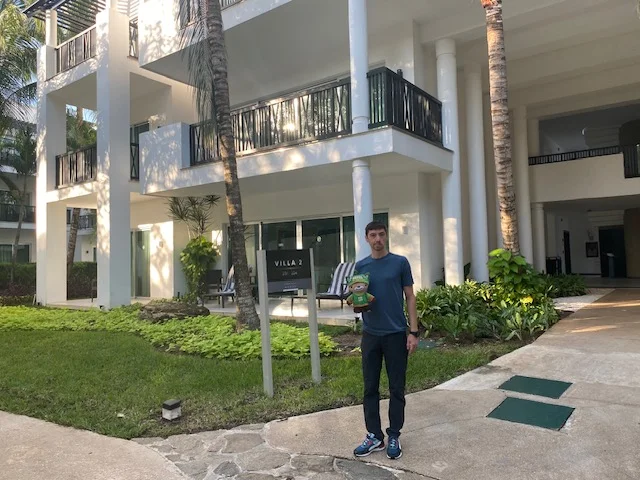
Eventually we were able to check in at about 3:50pm (50 minutes past check in time.) We were in Villa 2 where Andres was our ambassador. I got settled in to prepare for my rematch.
And then I saw them.
First I saw a pair of eyes. Then many pairs of eyes.
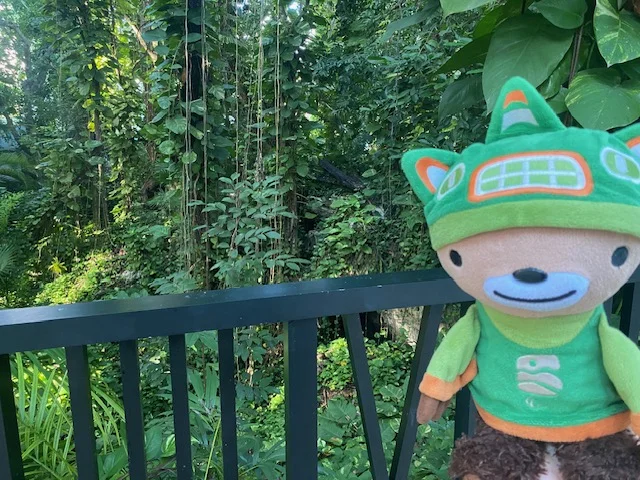
A whole family of coatis, watching me from below the balcony. Staring up at me. Taunting me. Where’s my one-on-one rematch? Those coatis don’t play fair! There I was, prisoner in a resort for the week because the coatis are bullies.
Meanwhile Pokin and Nick spent their time working outside around the resorts, because their hotel room really didn’t have a desk and the coatis didn’t dare attack them. I guess this place wasn’t meant for remote work because they said for the whole week they only saw one other person with a laptop to work.
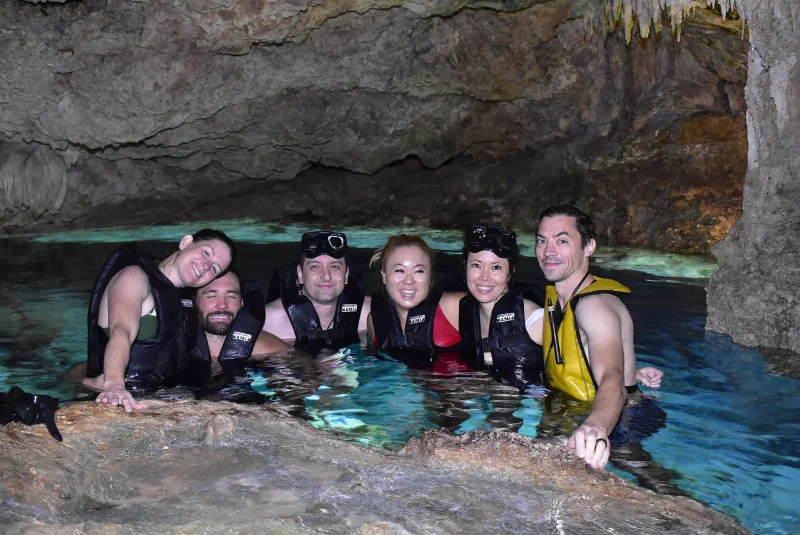
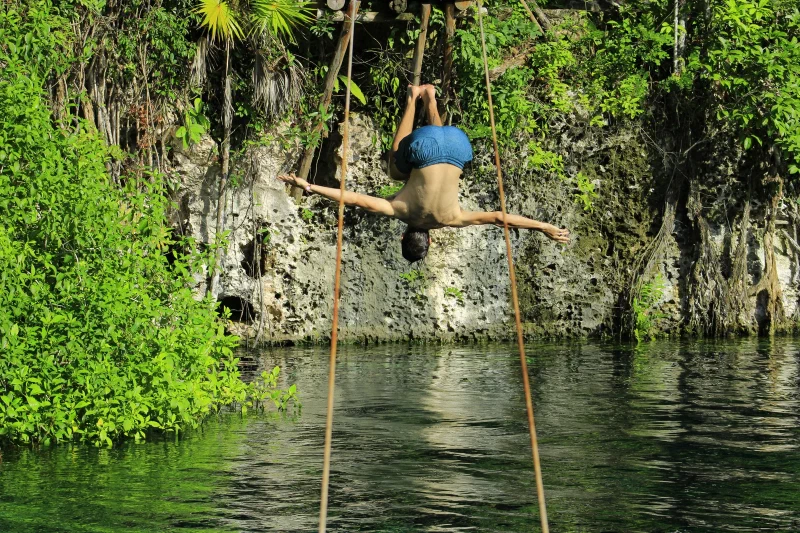
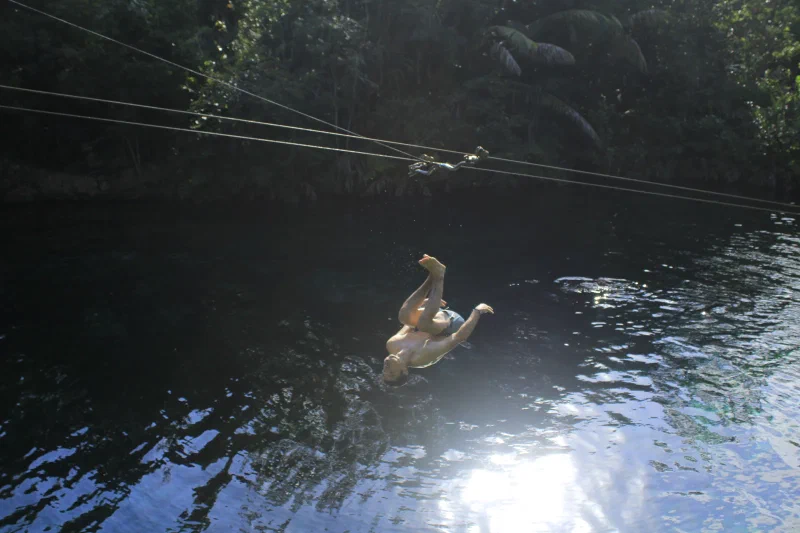
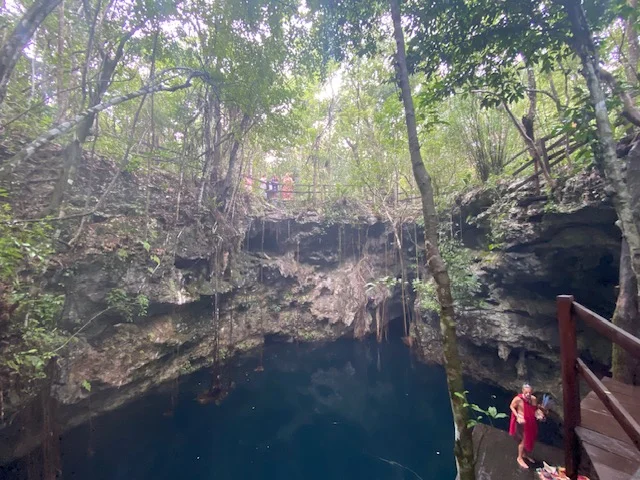
Towards the end of the week, they managed to get one excursion out, to see some Cenotes. I thought about sneaking out but then I learned what Cenotes were. Cenotes are a network underground chamber or cave which contains permanent water all throughout the Yucatan peninsula. There are numerous theories to how they formed, but geologically they are formed from limestone being eroded over time. Young cenotes start out as underground caves, and over time they become partially exposed, fully exposed, and some eventually run fully dry. Many of the cenotes are connected via water currents, making it possible to dive from one network to another. In fact, Yucatan is known to have some of the world’s longest underwater cave systems! My bud and some friends went to visit an open air cenote, and an underground cenote. They ziplined, my bud did backflips, they got nibbled on by fish. They’re weird.
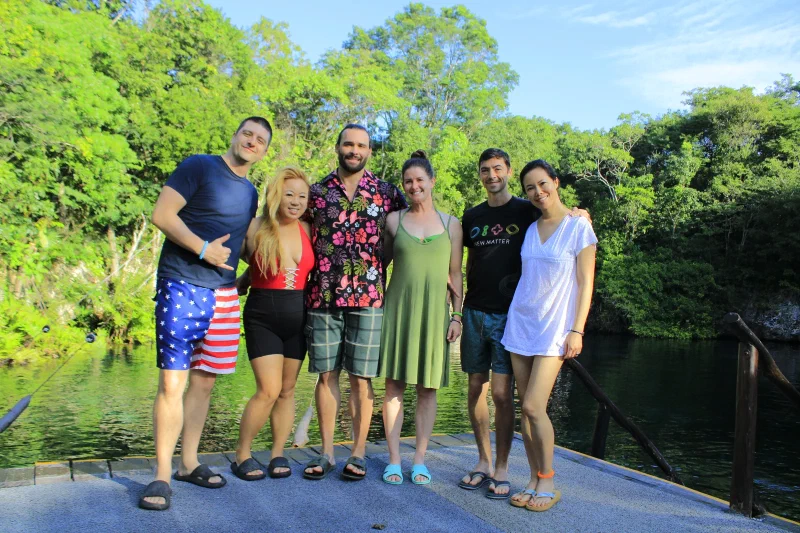
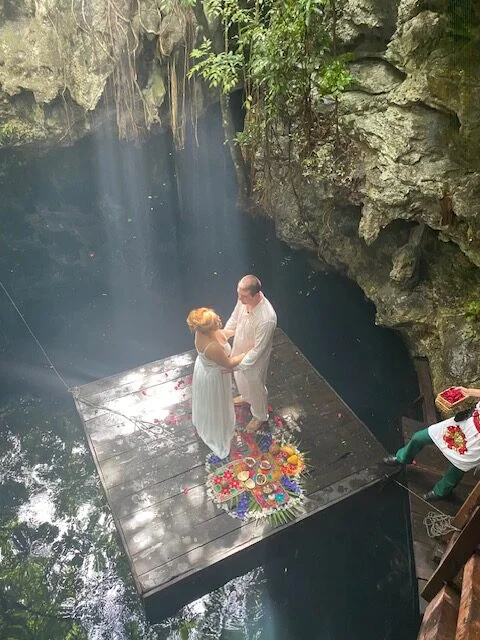
Finally saturday Nov 11 arrived. The day of Rob and Cathey’s wedding. My bud’s friends decided to get married in a Cenote via a Mayan ceremony, which was about a 30 minute drive and then another 20 minute trek through the jungle. It was a mosquito feeding frenzy so I was glad to miss it, but it sounded like a very cool ritual with an emphasis on being kind to the earth.
Pokin being Pokin, was unimpressed with the wedding photographers, and decided to take over photography duties after the ceremony by making Cathey and Rob do a photoshoot, including a trash the dress portion where my bud and her made them get right into the waves. Glad they were happy to get wet. All the while I stayed in the hotel.
Because of the coatis. It’s so unfair.
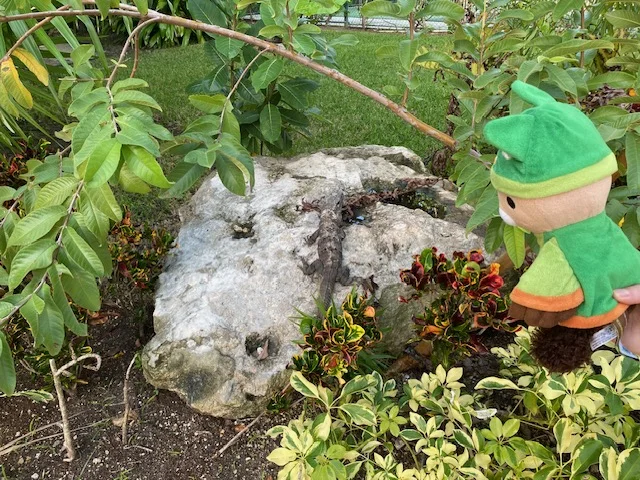
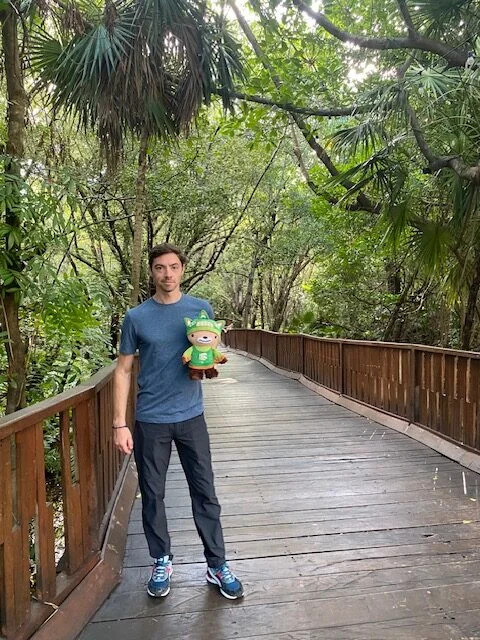
Eventually Sunday came. Time to head home. With my bud as an escort, I ventured out for a last glimpse of the property. I see a coati dart by in the distance, but the gang seems to have mostly dissipated. I spot some big lizards. I glance down the jungle walk path but I don’t go in.
Maybe it would have been fine to go out more this week. Who knows. Anyway it’s time to go back home. And anyway there are no coatis there.
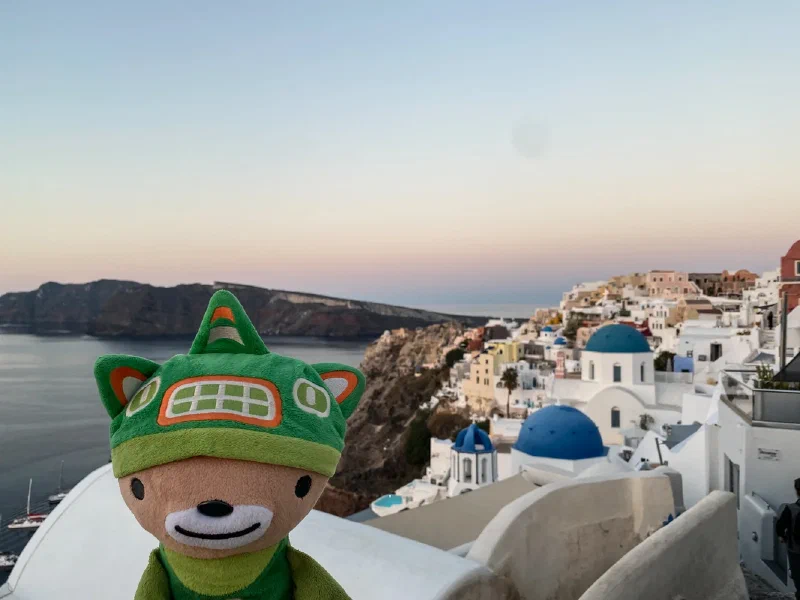
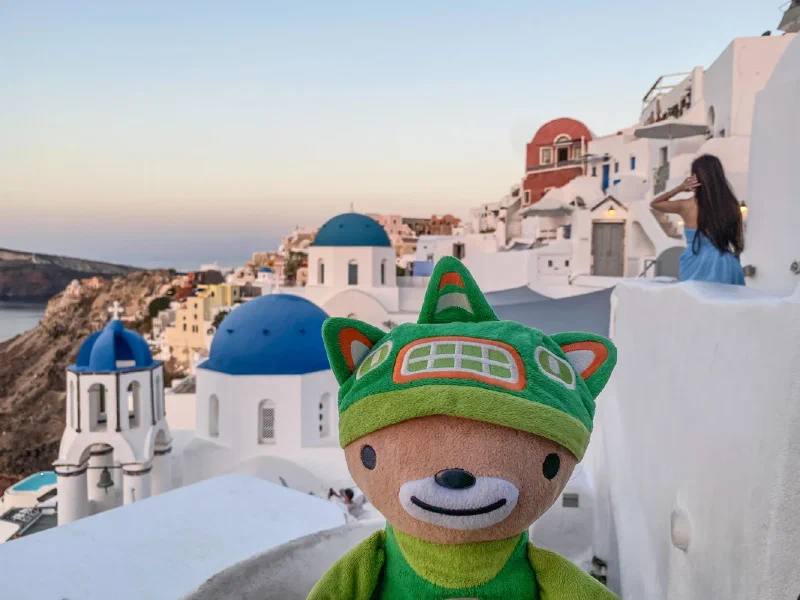
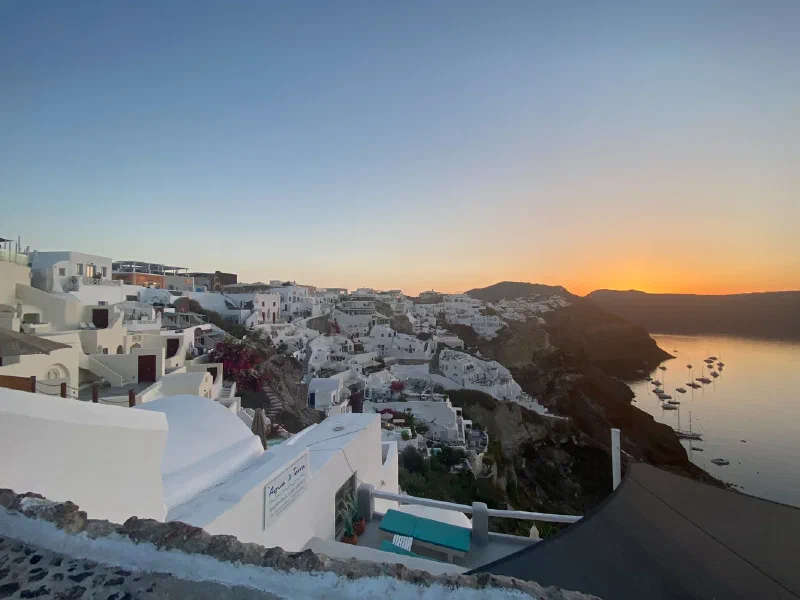
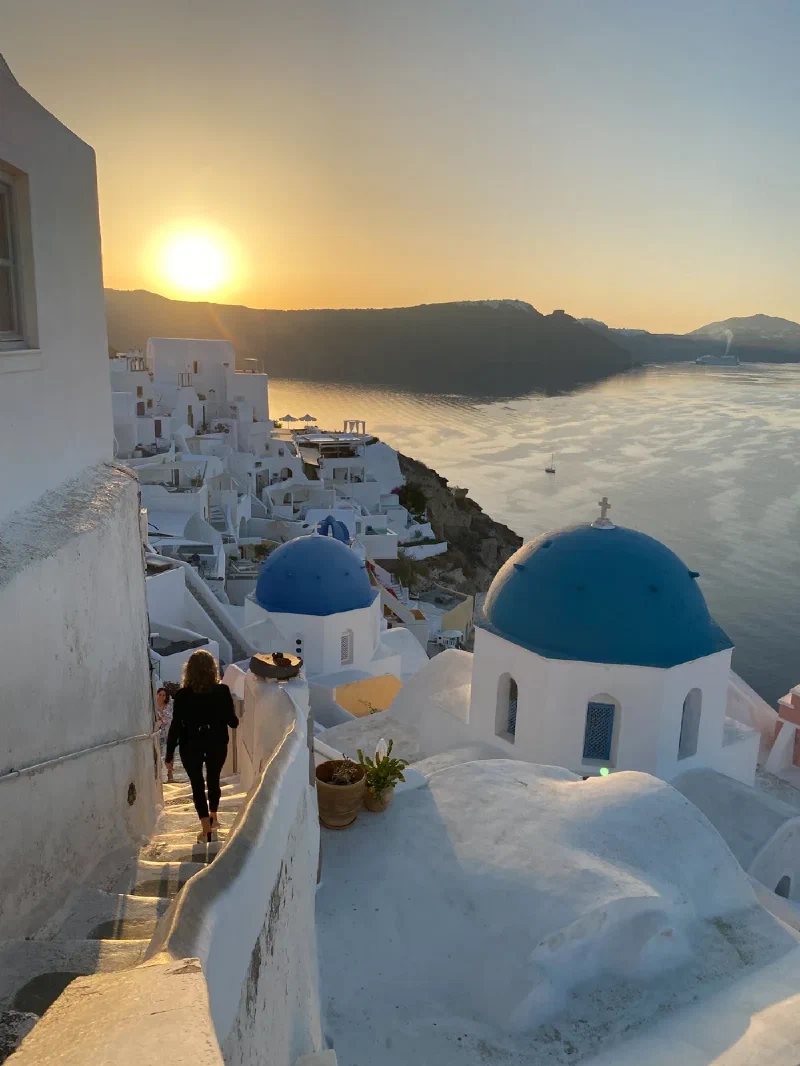
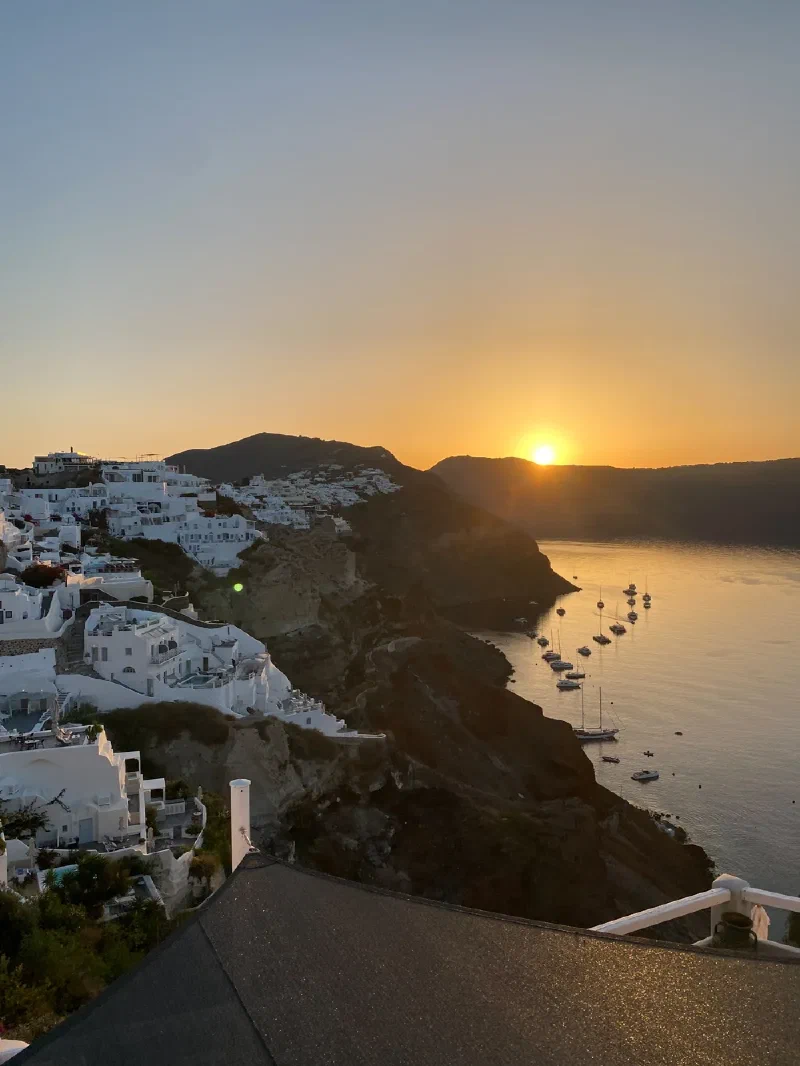
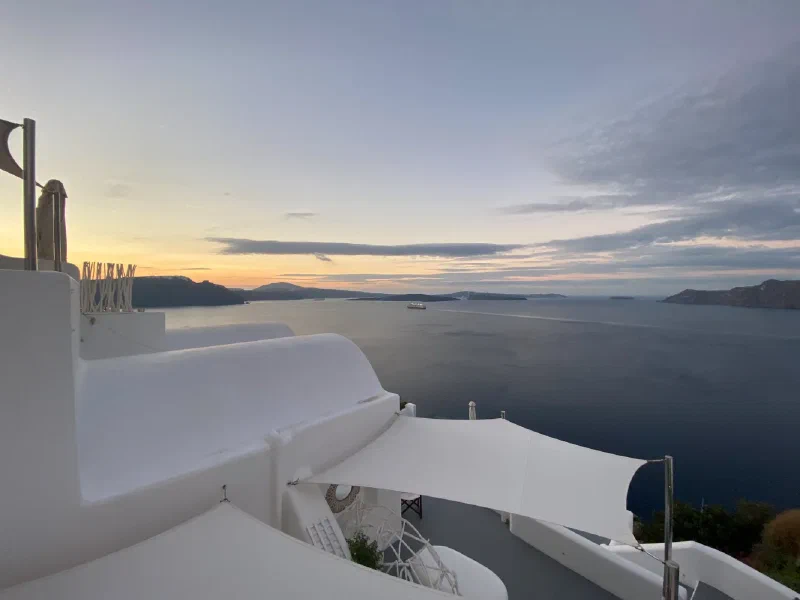
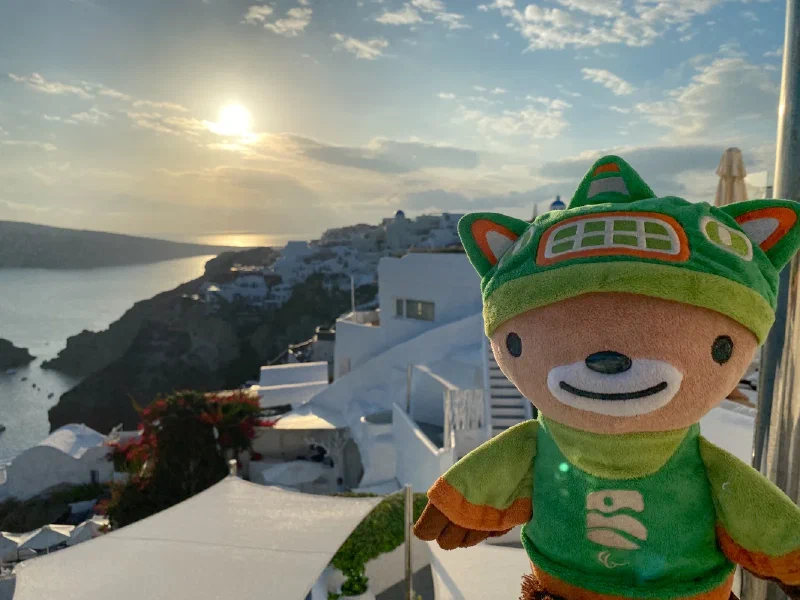
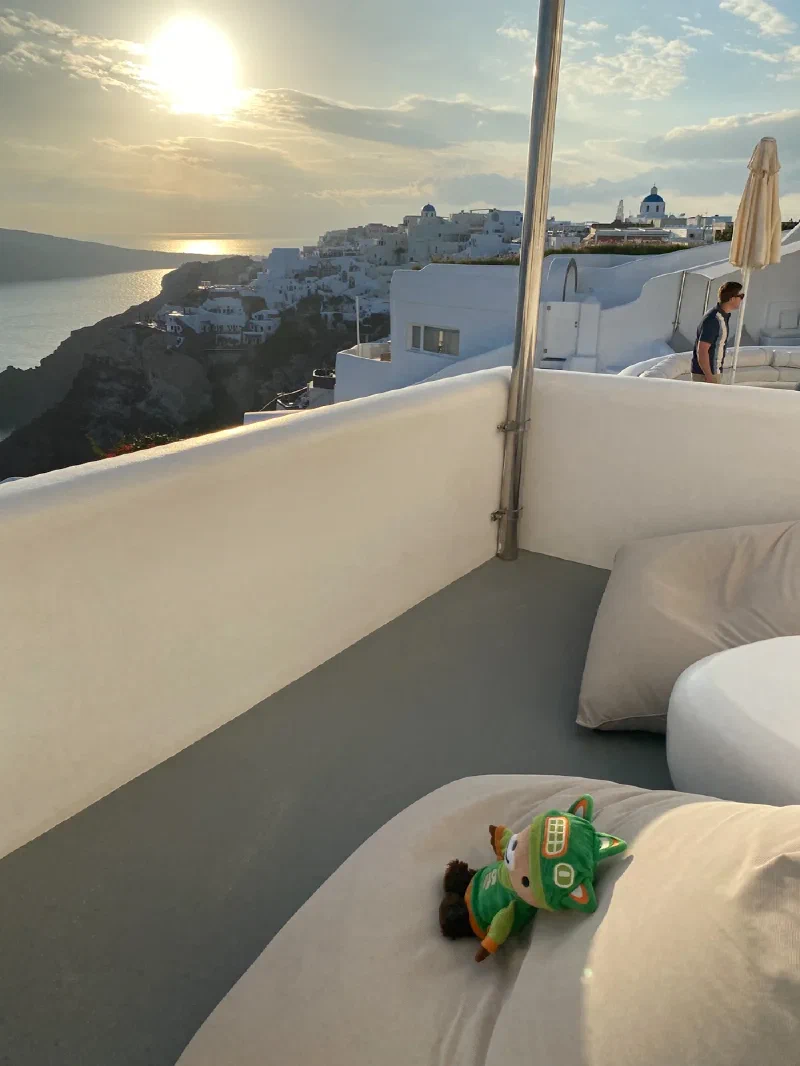
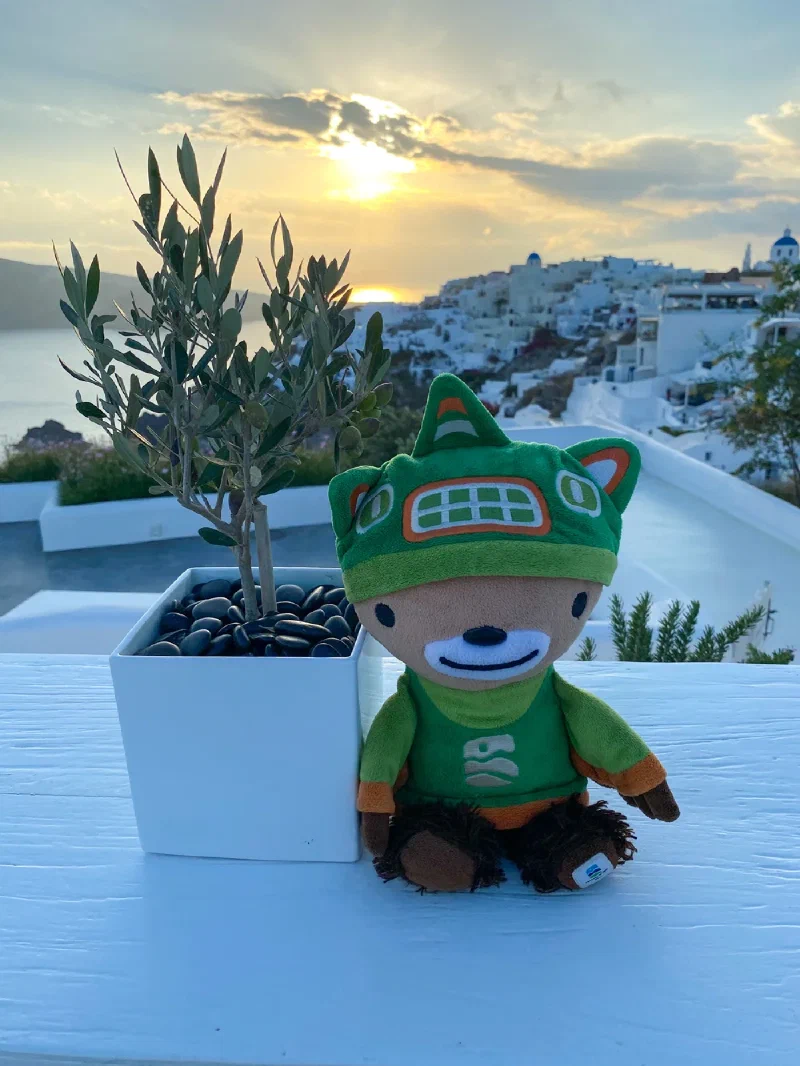
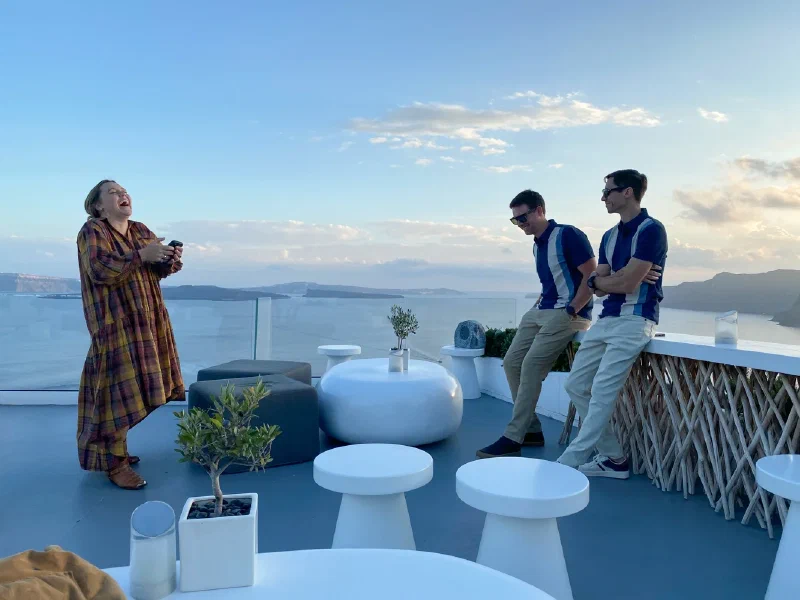
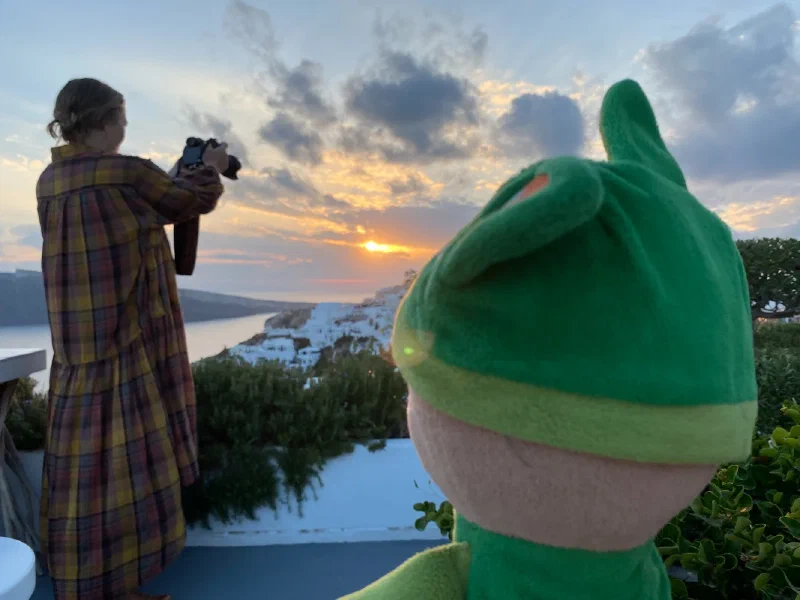
The sunrise in Santorini was so pretty, Pokin and Julia made everyone come back out for it. It was still scenic. While I grumbled at getting up I was happy to see the views.
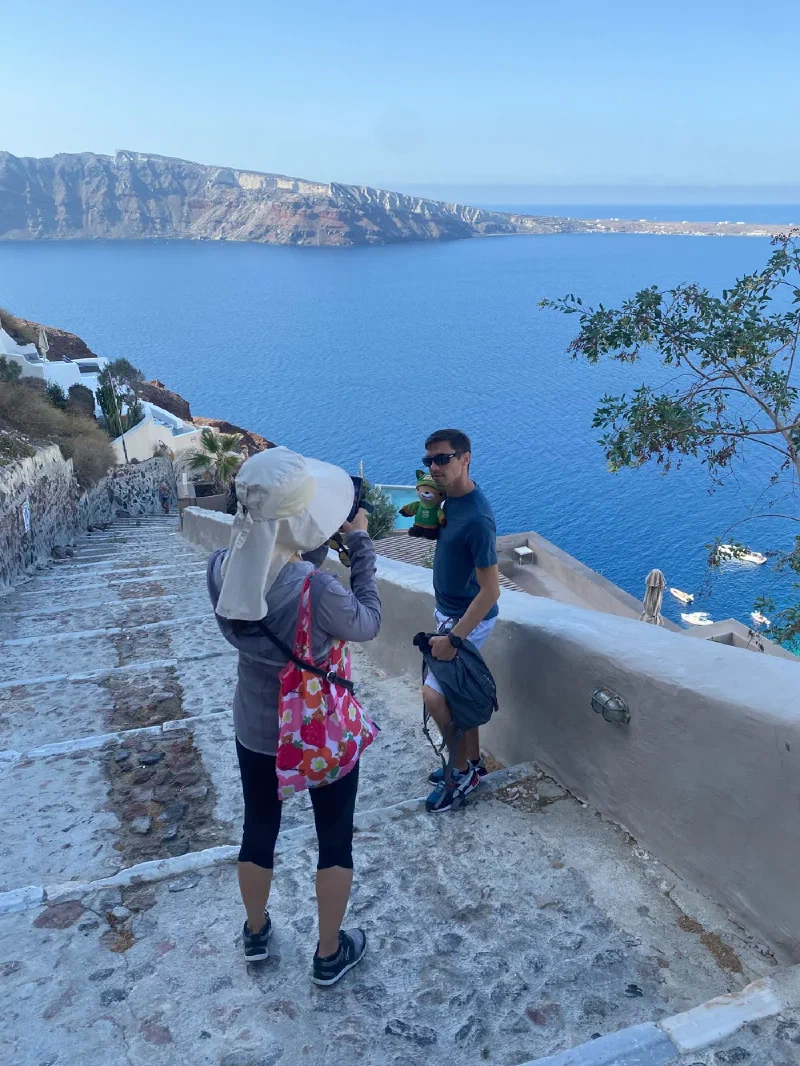
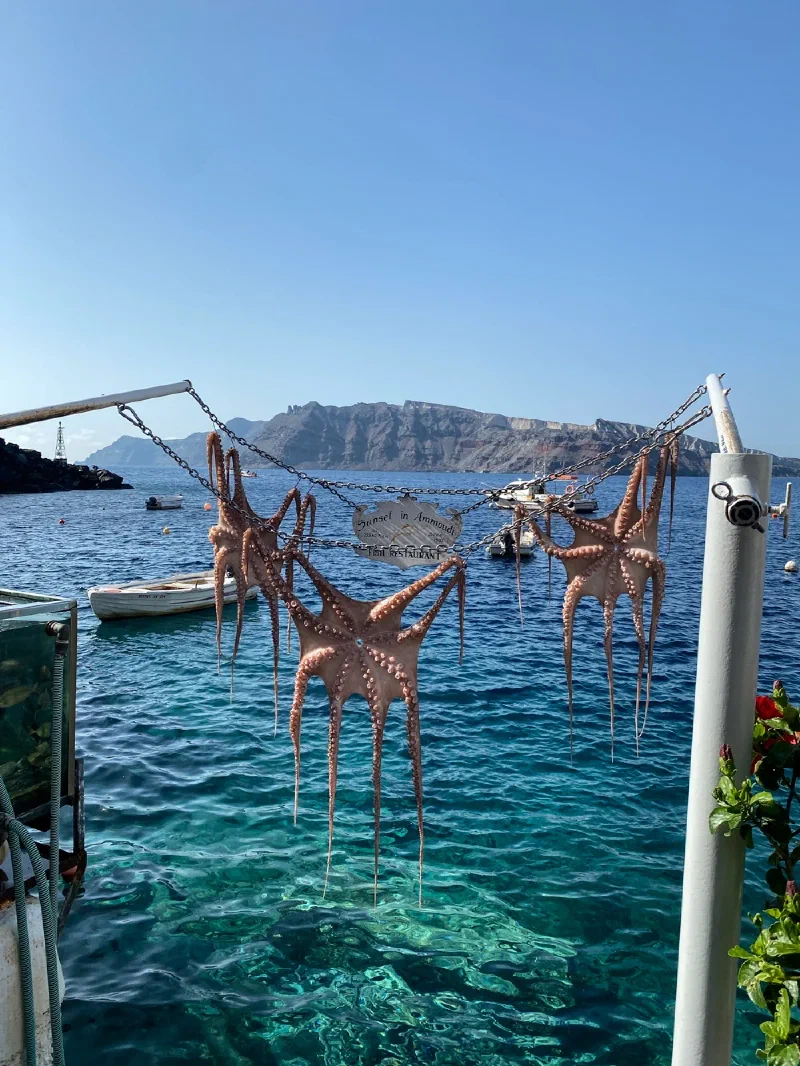
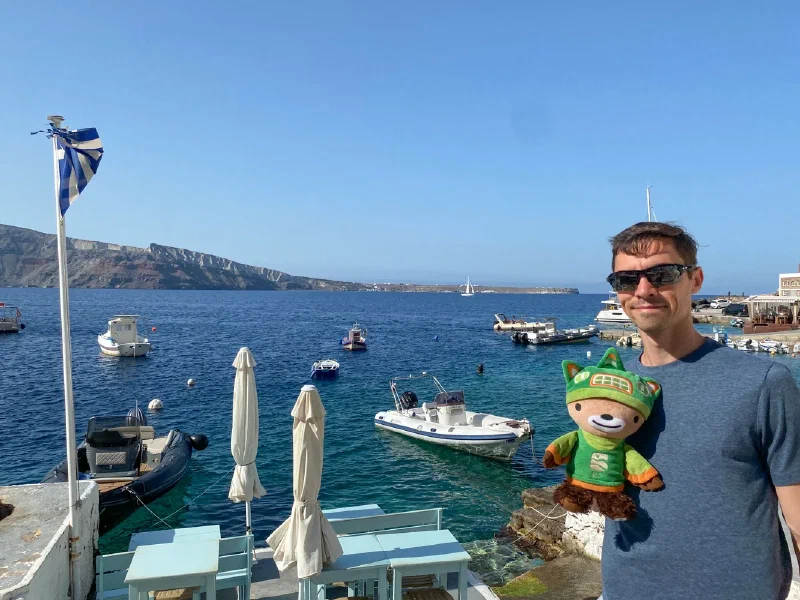
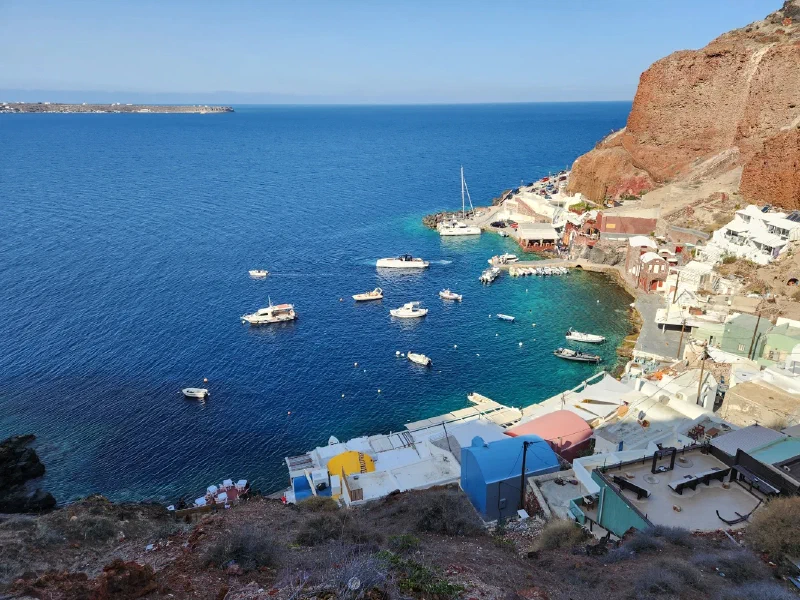
Our flight to Athens wasn’t until 3pm, so Pokin wanted to hit up one more spot, which was the fishing village of Amoudi. Nowadays it’s mostly seafood restaurants, but this used to be the dock where supplies and trade landed. There’s a steep uneven flight of stairs connecting the two and that’s what we explored. Little did Pokin realize this still an active mule route and she was incredibly grossed out going down it.
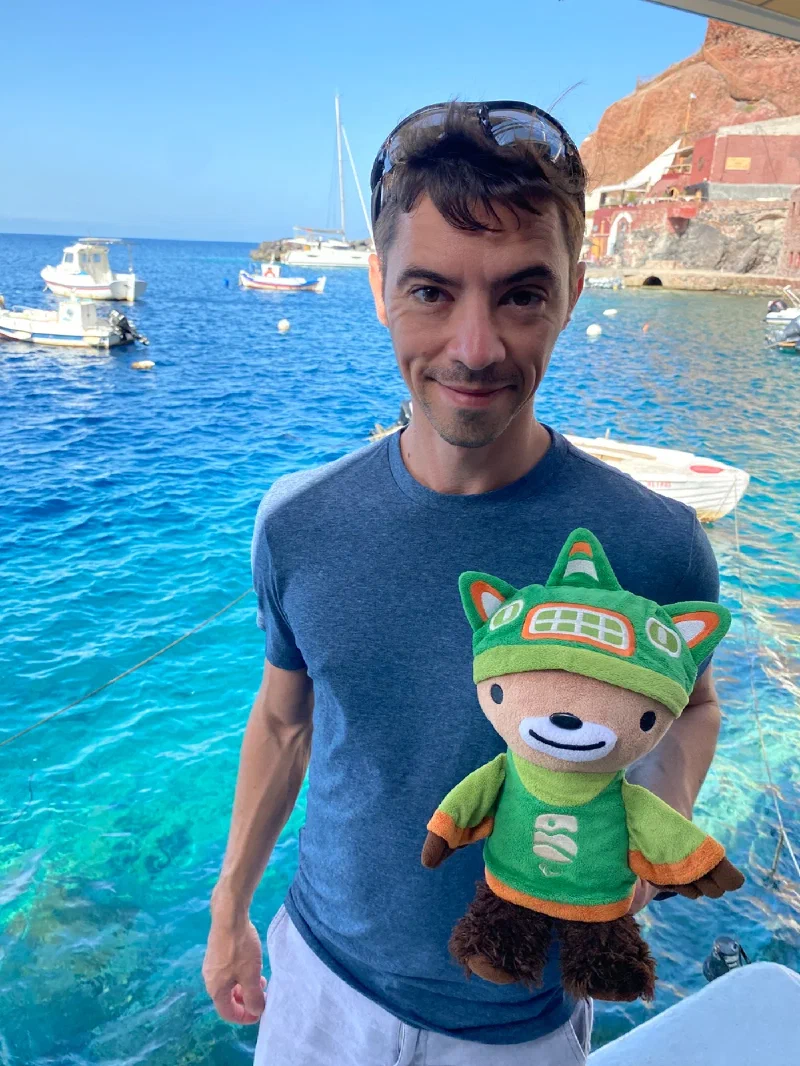
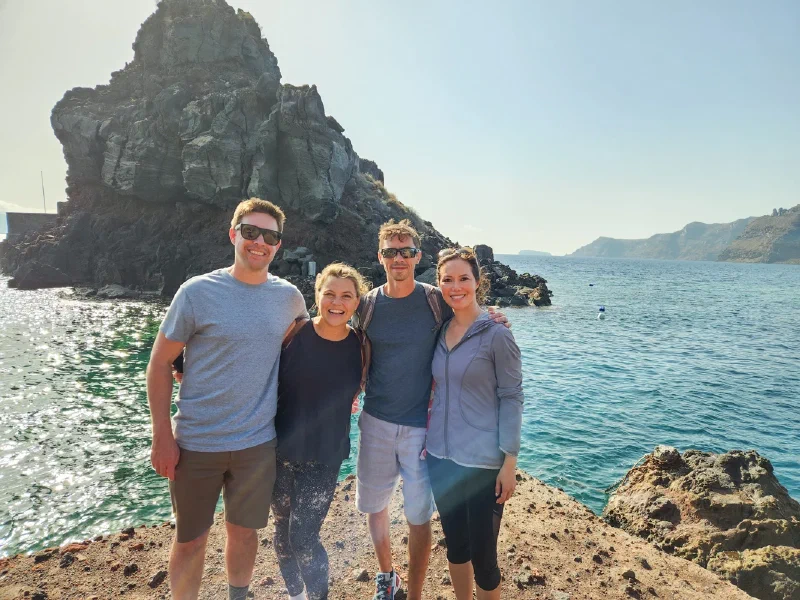
Down we went to the village, past the village to the jumping rock where, in the right times of the year my bud could have gone cliff diving. Today we were in a hurry though and it was too cold for it. So we took a look, turned around, booked up back up the 250 steps.
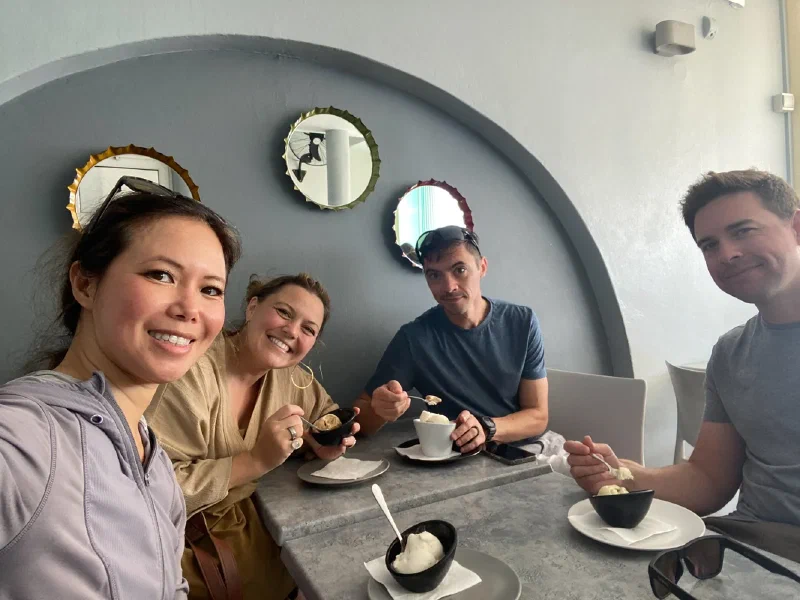
Time to get ready for our transfer to the airport. First some ice cream.
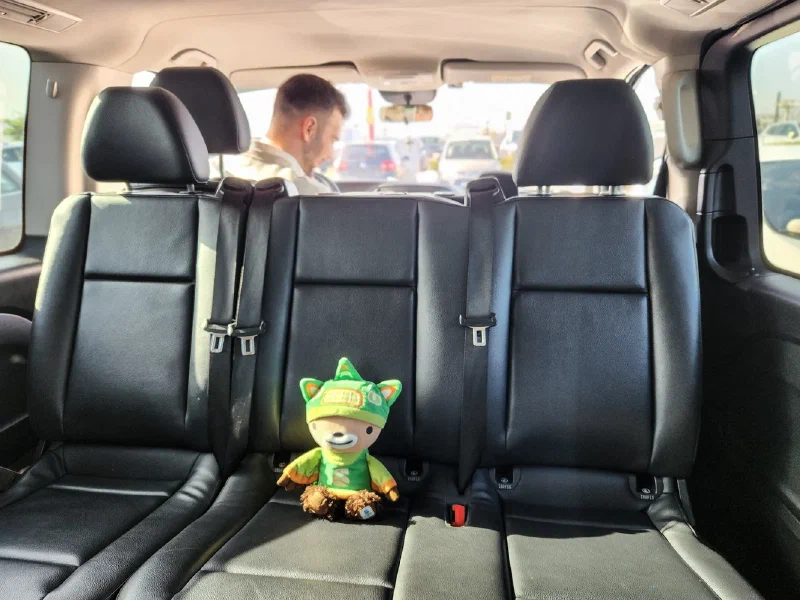
We’ve been reminded every step of the way that most people in Oia survive off two jobs, and our driver was no exception. Along the way he told us he used to race cars, and is now a transport driver during tourist season and a construction worker in the off season. We learned a bit more about Greek culture before heading to the airport and heading to Athens. It was interesting to have to cross customs in Santorini again despite staying in the country.
On arrival in Athens we were picked up by a driver, and transported to The Dolli. My own seat this time!
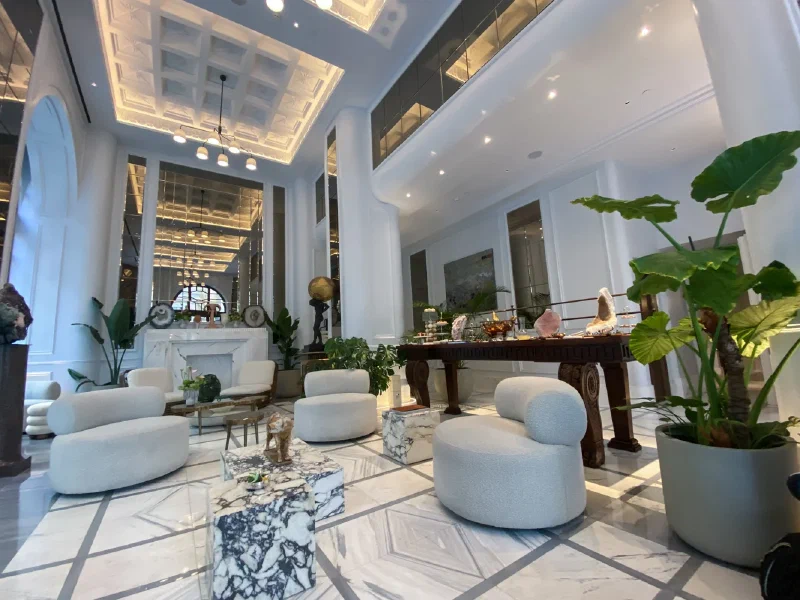
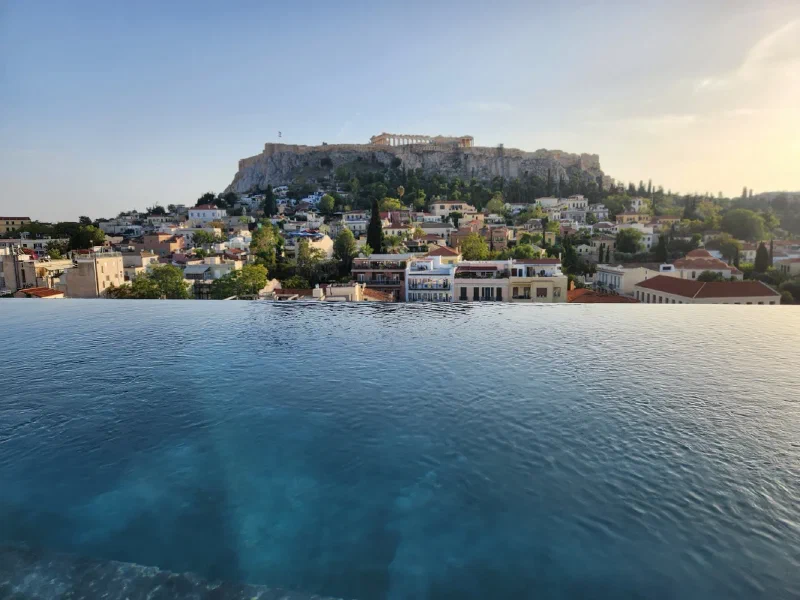
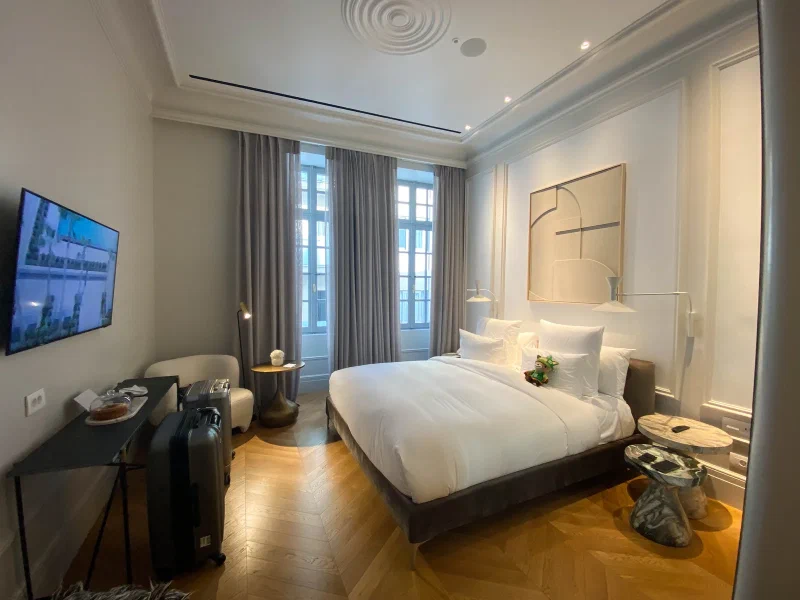
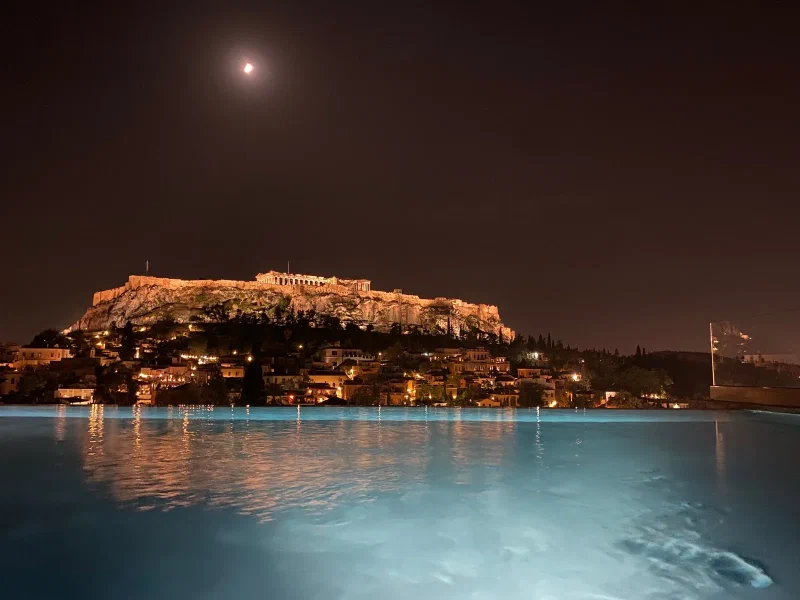
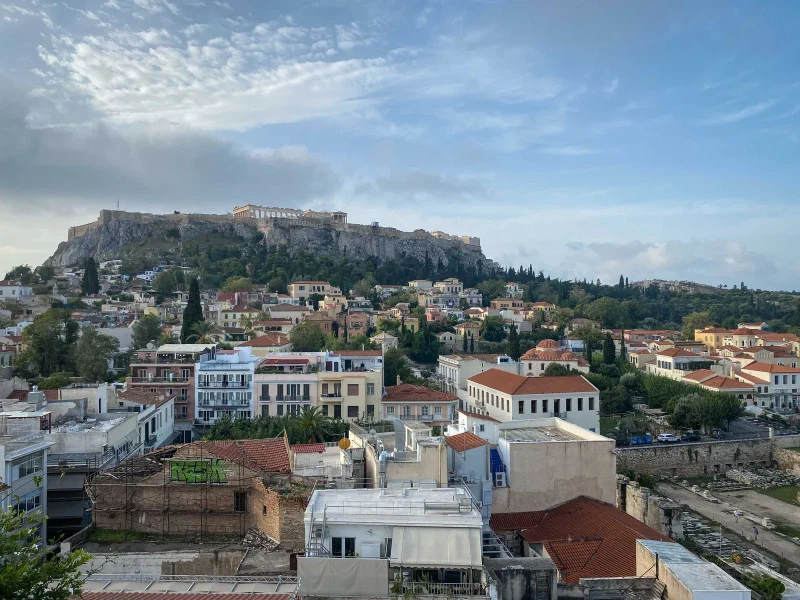
The Dolli is a newly renovated hotel that actually opened at the beginning of the year. It used to be a private mansion, before being converted into a department store before becoming its current incarnation. It’s a small boutique hotel with only 46 rooms and permanent apartments. The main claim to fame is the rooftop pool deck with a view of the Acropolis.
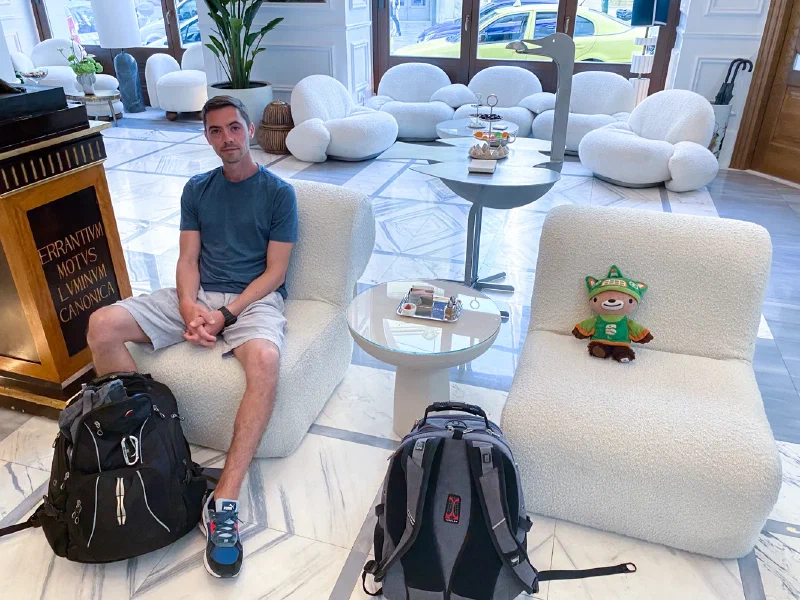
The check in process was actually pretty nice. Instead of waiting in line, we were seated at any of a number of couches, and we were brought a welcome tray with 3 varieties of drinks and a platter of treats. I was hungry so I ate most of them before we were escorted to our rooms.
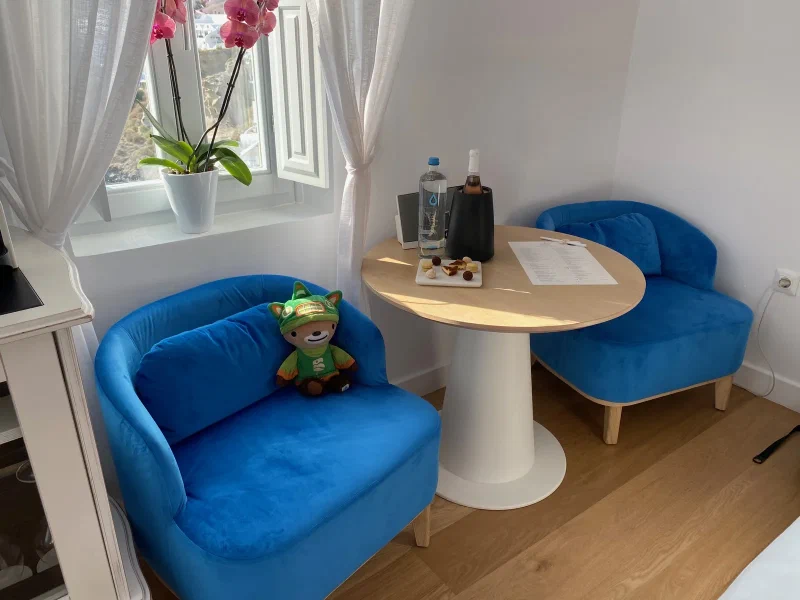
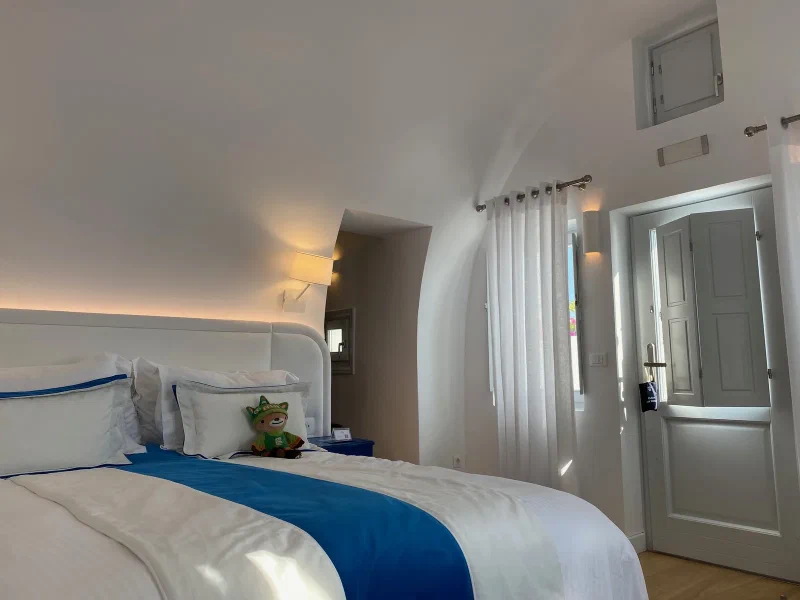
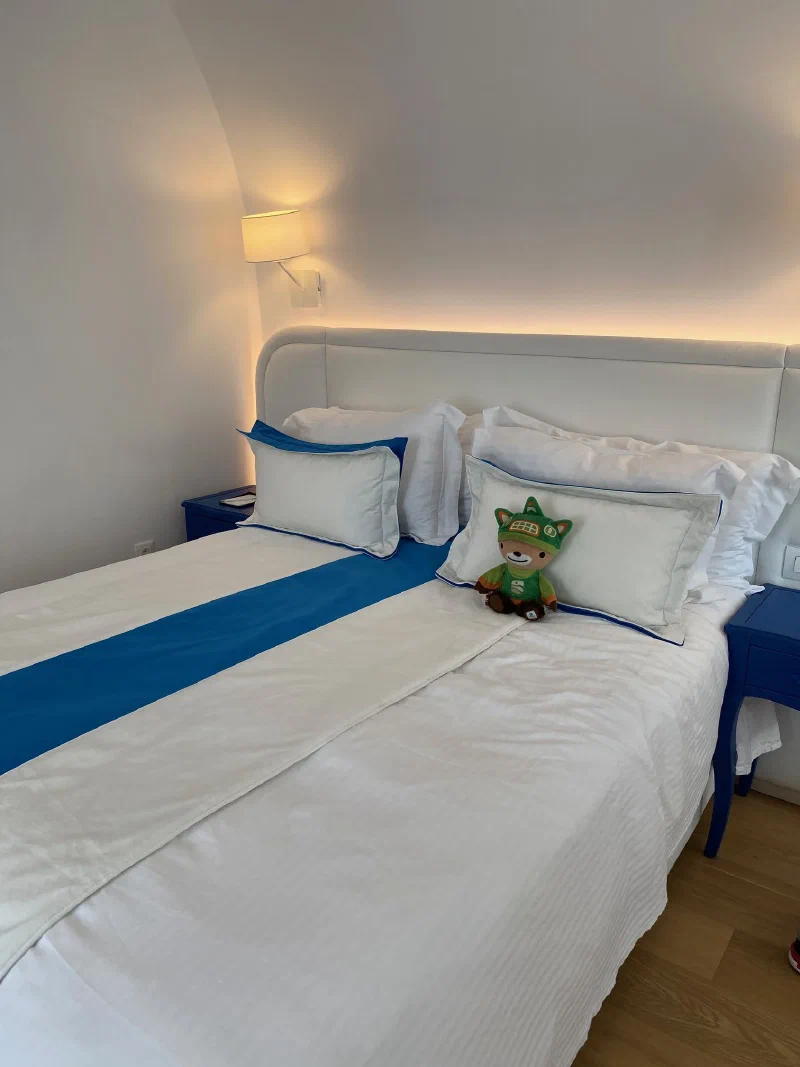
The rooms were opulent, though we weren’t baller enough to get a room with any great view, so we mostly kept the curtains shut as I was reminded the next building over is close.
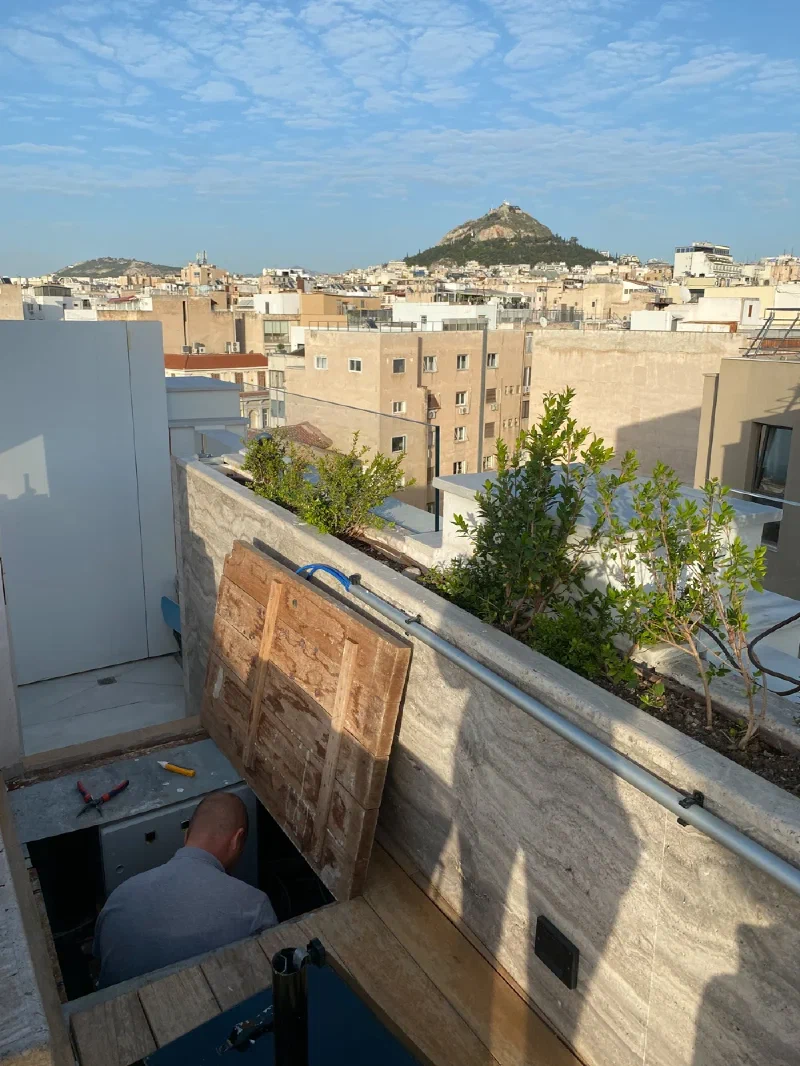
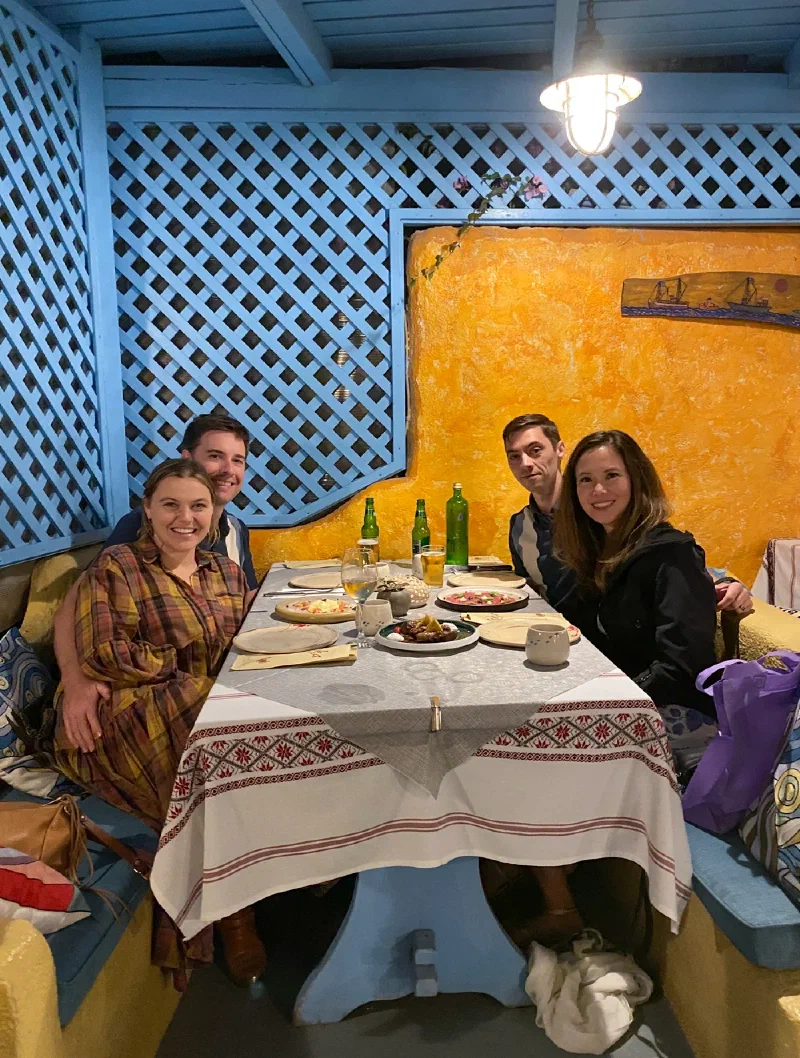
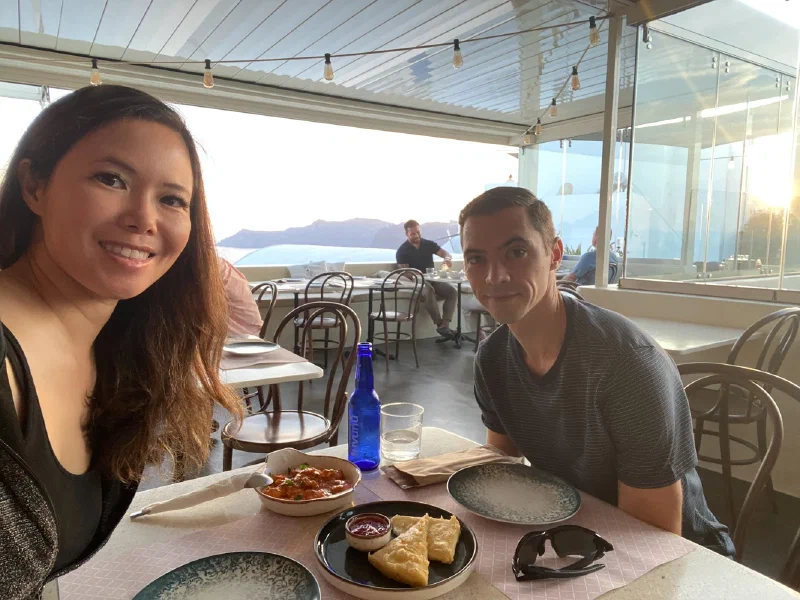
My bud was starting to get sick so we just took it easy for the rest of the night, though Pokin did want to try some greek food. Just like in Oia, concierge only had one recommendation. Dophios. Again, apparently a great recommendation because they ended up wtih some of my bud’s and Pokin’s favourite dishes. After dinner we went back up to check the views.
The next morning my bud was definitely sick. He barely enjoyed the breakfast or the view.
And so for the second time this trip we went to look for a doctor. We found Dr. Alex Christopoulos, sent him a Whatsapp, and within 10 minutes of Pokin messaging, we had an appointment for my bud scheduled for 1pm. We grabbed breakfast and shortly after, headed off to see Dr. Christopoulos.
Lucky for me, I’ve been a pretty health bear and haven’t needed to see a doctor, but what I’ve witnessed of the US medical system hasn’t been that ground. Sounds like my bud and Pokin thought their Greece experience was pretty great. Dr. Christopoulos saw them pretty quickly, took an hour of time with them, took the time to find a pharmacy open on a sunday, and the whole visit cost 70 euros.
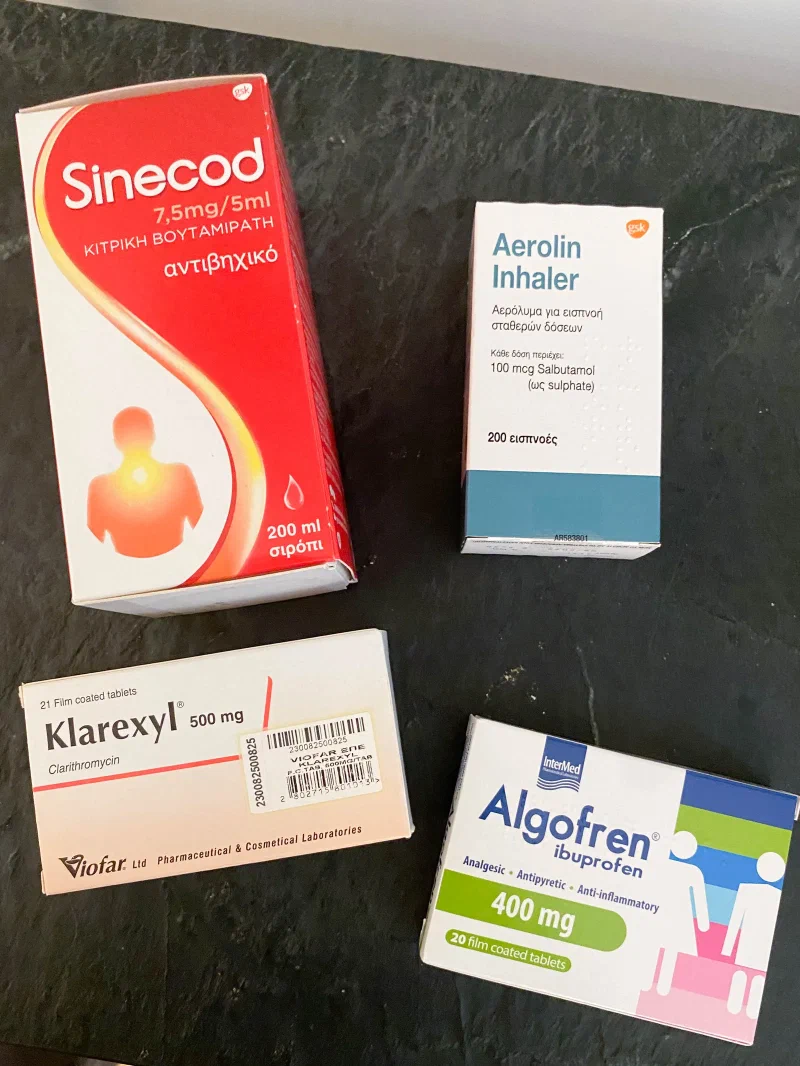
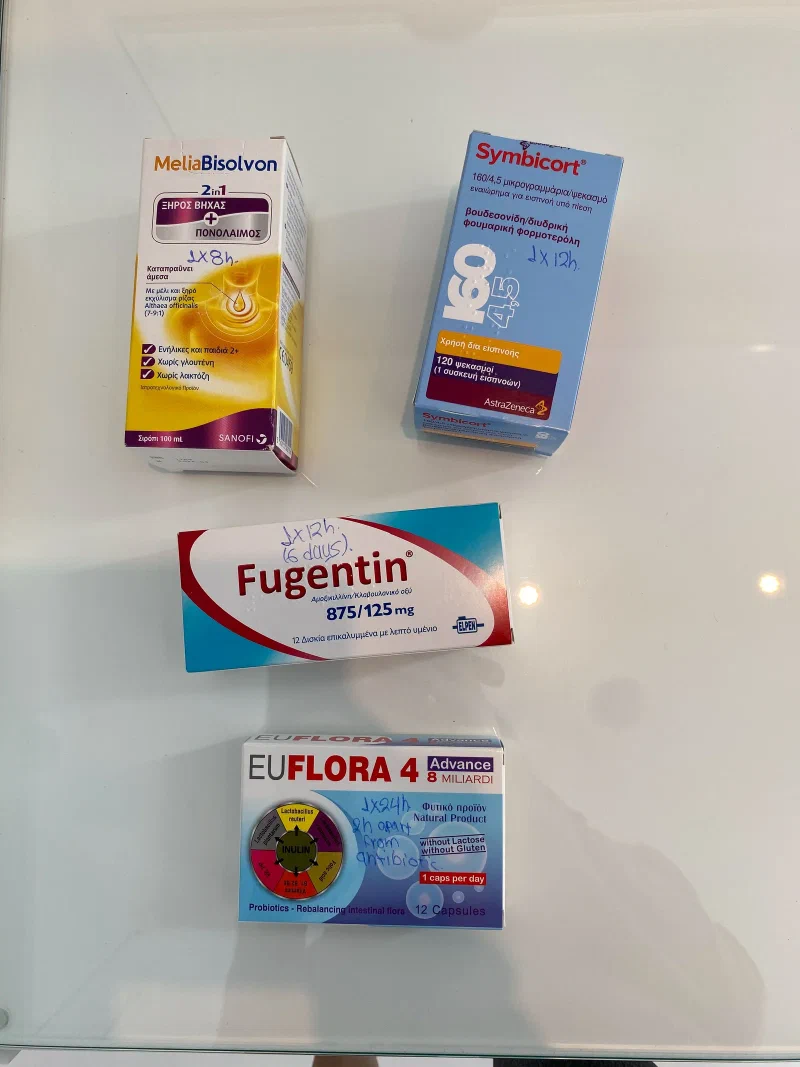
My bud got loaded up with drugs and it was back to the hotel.
At first my bud was just going to rest for the rest of the day, but Pokin had booked a private tour of the Acropolis and really wanted my bud to see at least a little of it.
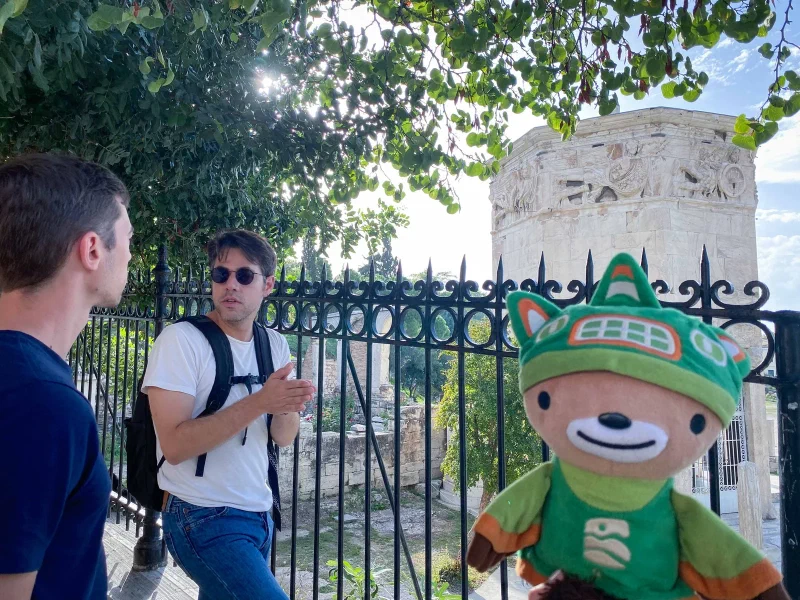
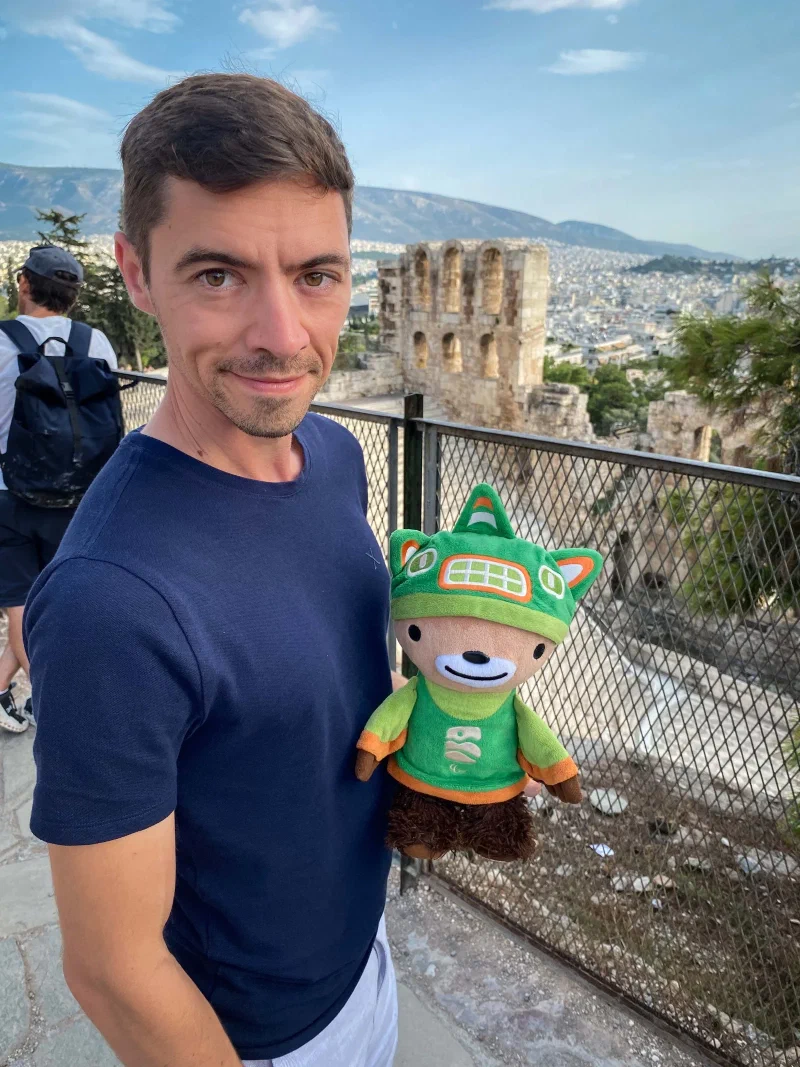
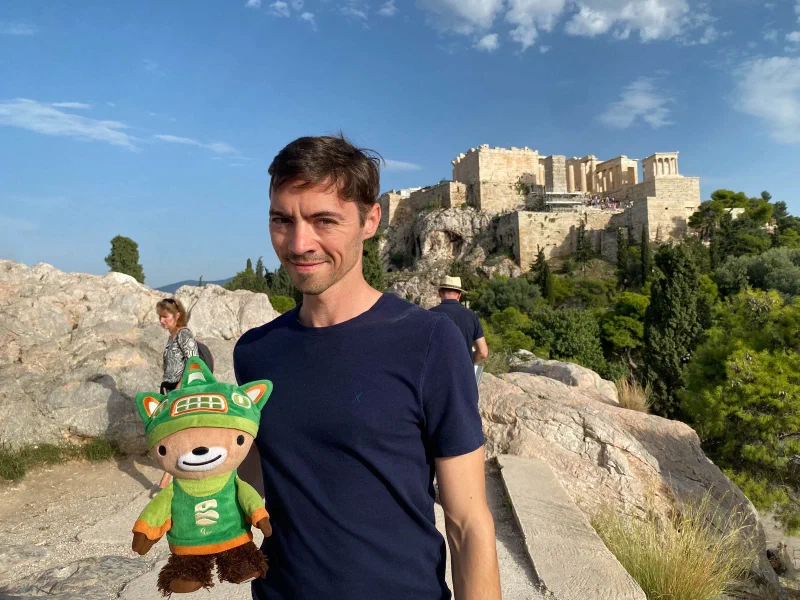
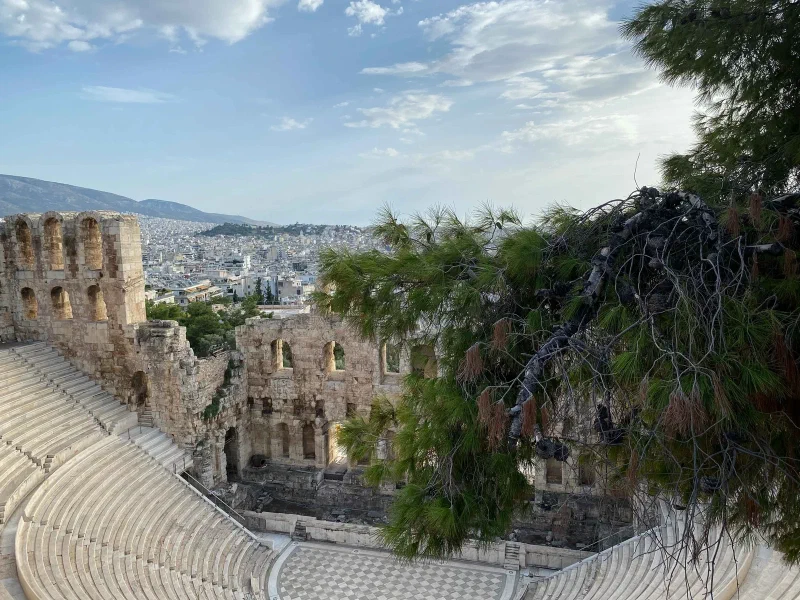
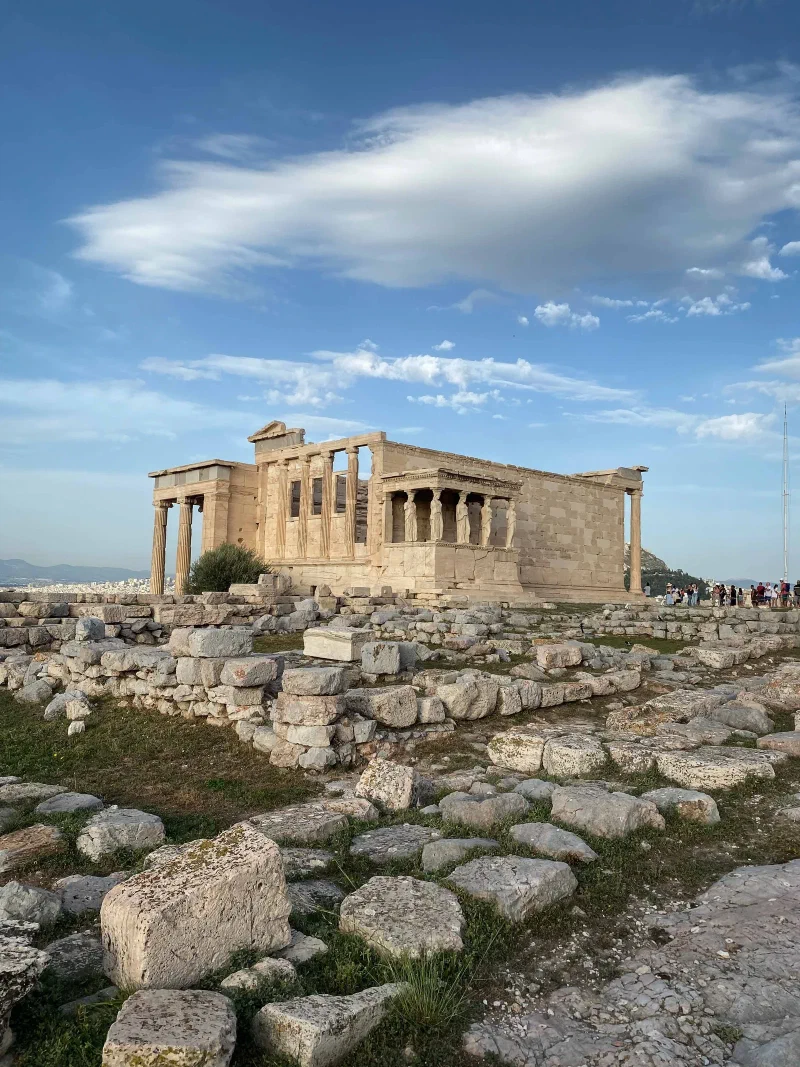
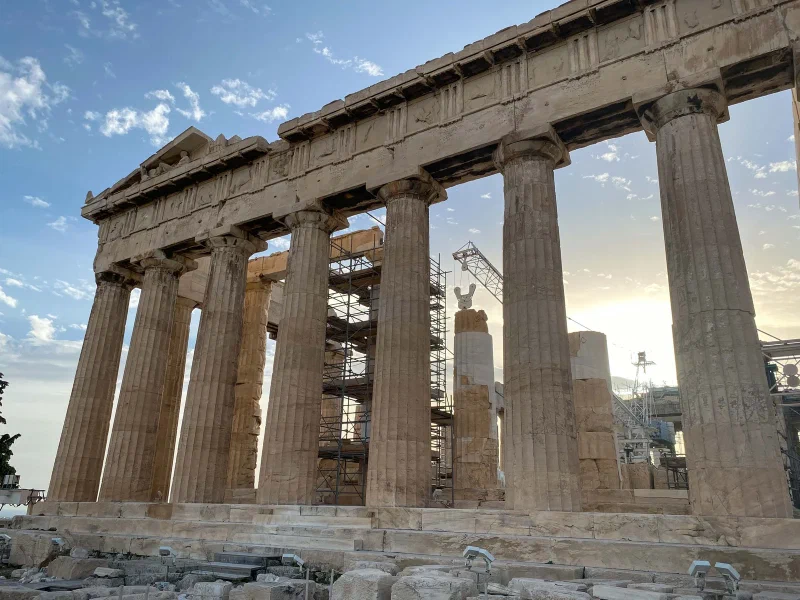
A little of it turned out to be all of it and we walked around with our guide, Sotirios, who gave us stories behind Acropolis and the Parthenon. Too bad my bud was sick. He couldn’t ask the questions he would normally. But we’re all glad we went.
And with that, we wrapped our Greece trip. I hope my bud makes it on the flight ok given how congested he is now!
After seeing all of the cool photo spots around town, Julia decided she wanted to get sunrise photos, and Pokin decided she wanted to suck it up and go as well.
My bud decided he wanted sleep and I was roped in as an unwilling participant.
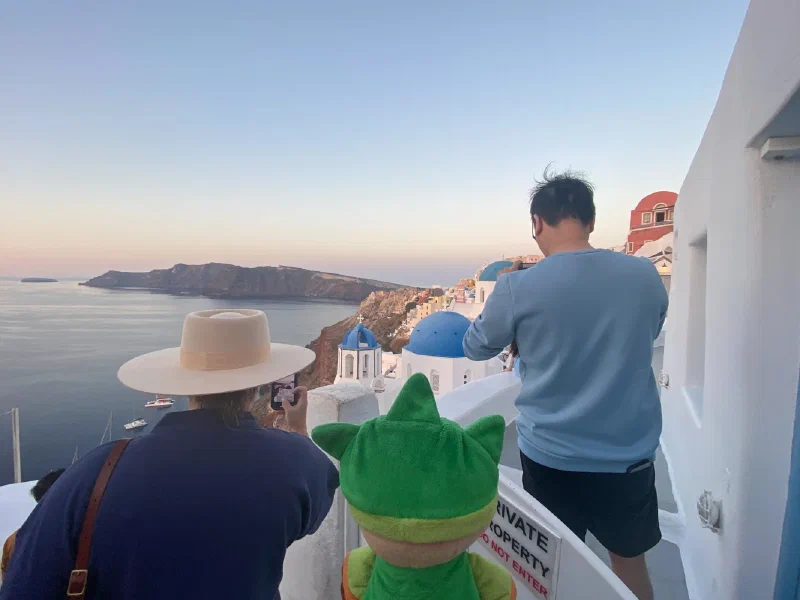
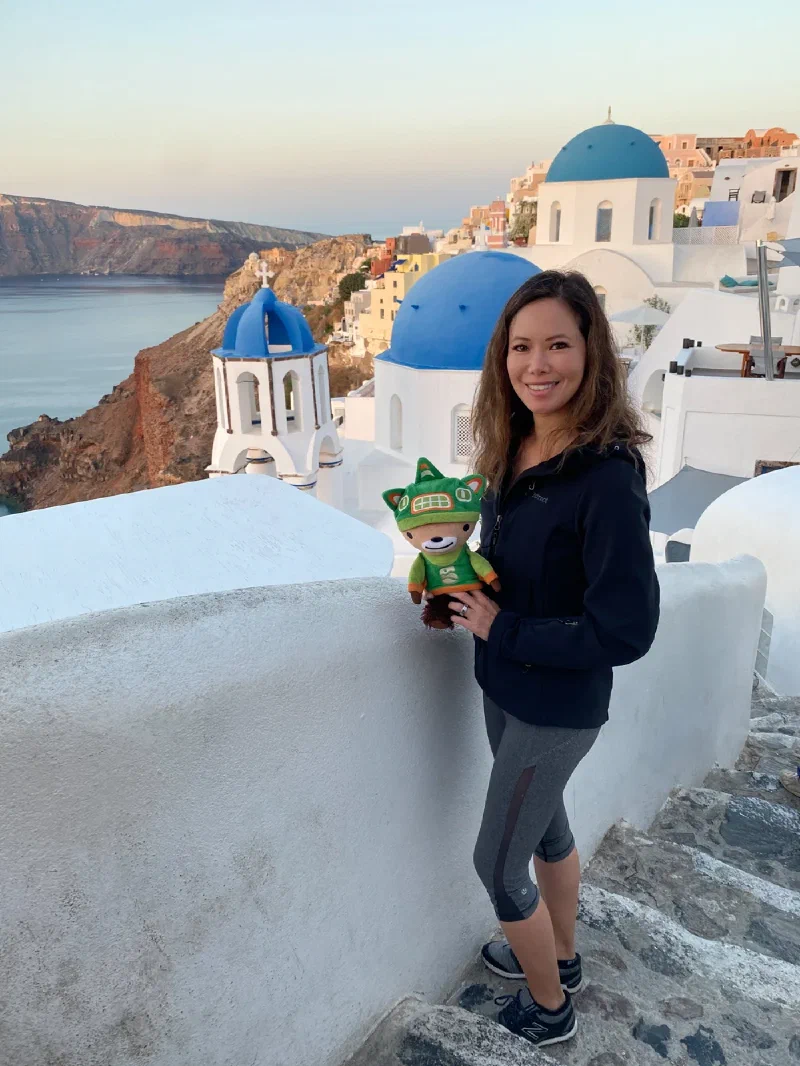
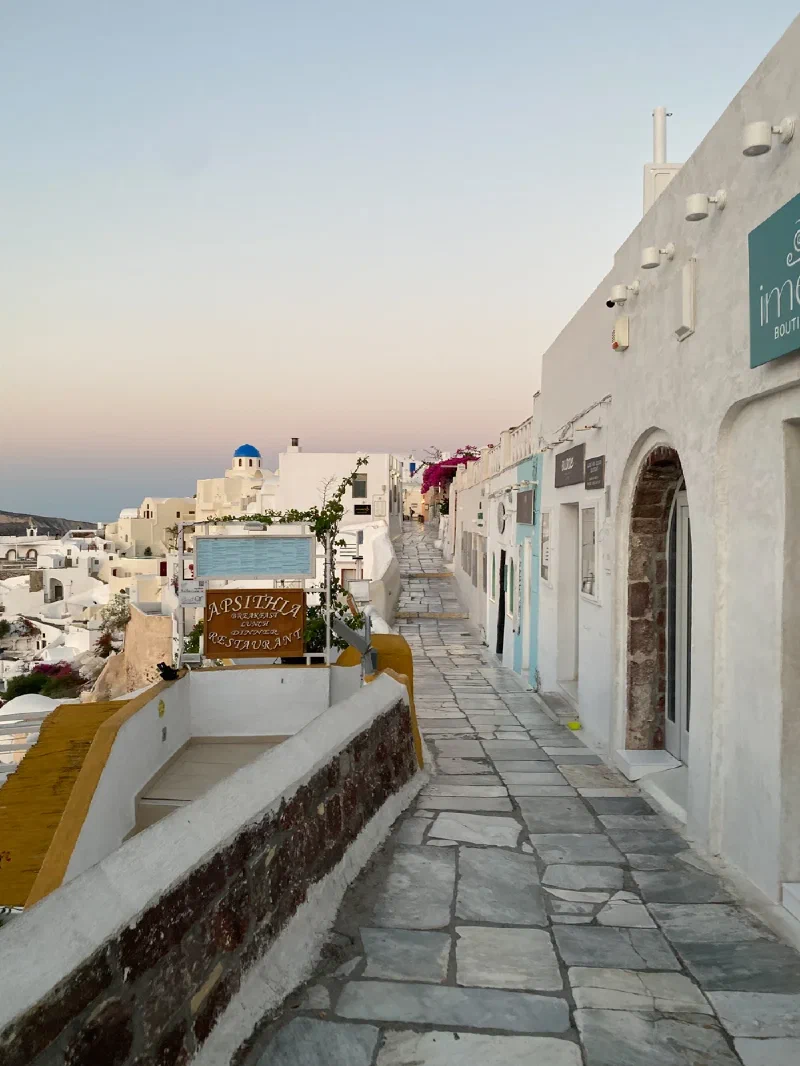
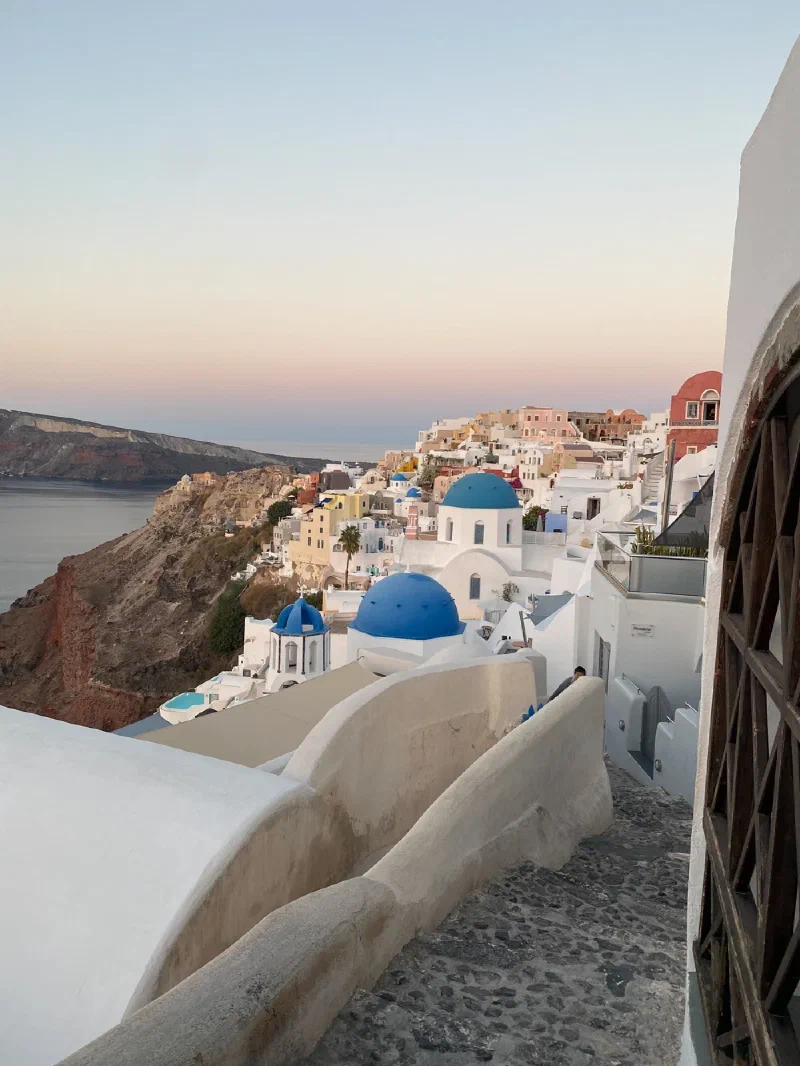
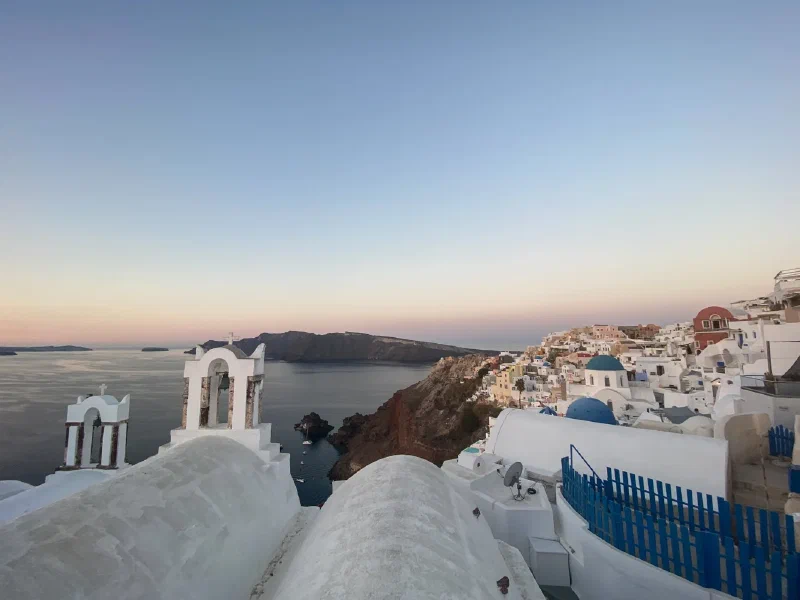
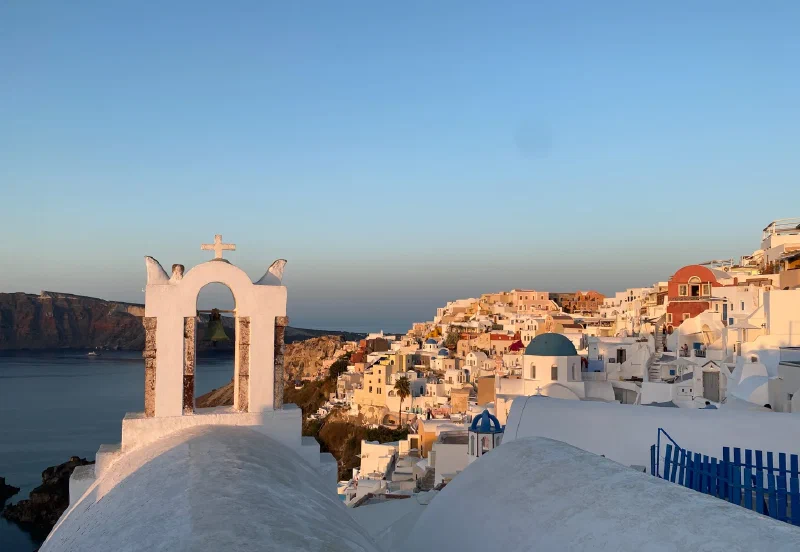
That said, once I was dragged out of bed and got to see the sun rise over Oia, I have to admit it was pretty worth it. The streets were waaay less crowded – mostly other crazy photographers and Instagram couples.
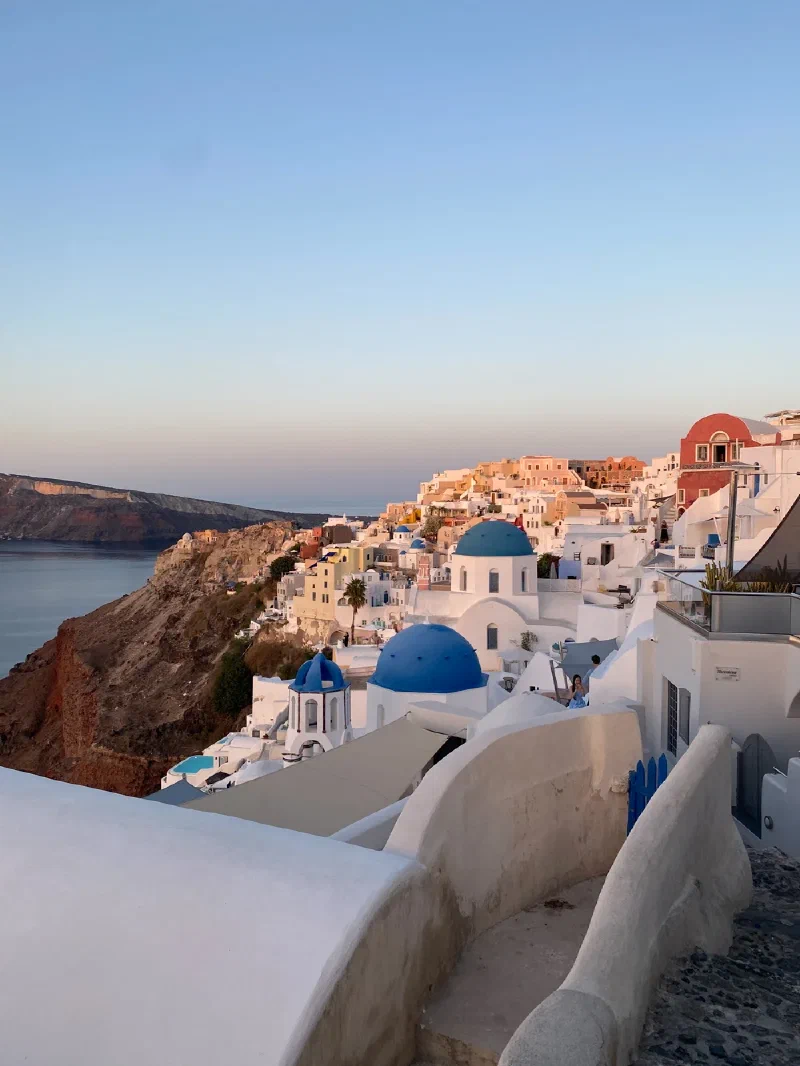
We got to all of the top photo spots and were able to grab some cool photos.
We couldn’t stay out too long though because Pokin had a food tour booked in Fira. It wasn’t originally supposed to be for today, but Pokin was way too sick to go on Tuesday, and the owner, Laura of Santorini Food tour was gracious enough to let her move it to Friday, but it meant we had to grab breakfast and get our way to Fira by 10:30AM. So a few more photos and it was time to dash back.
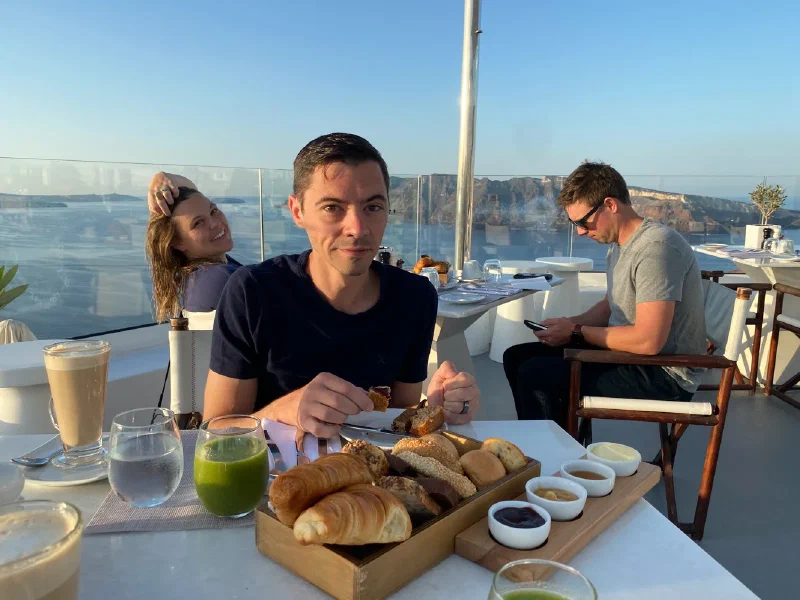
Breakfast!
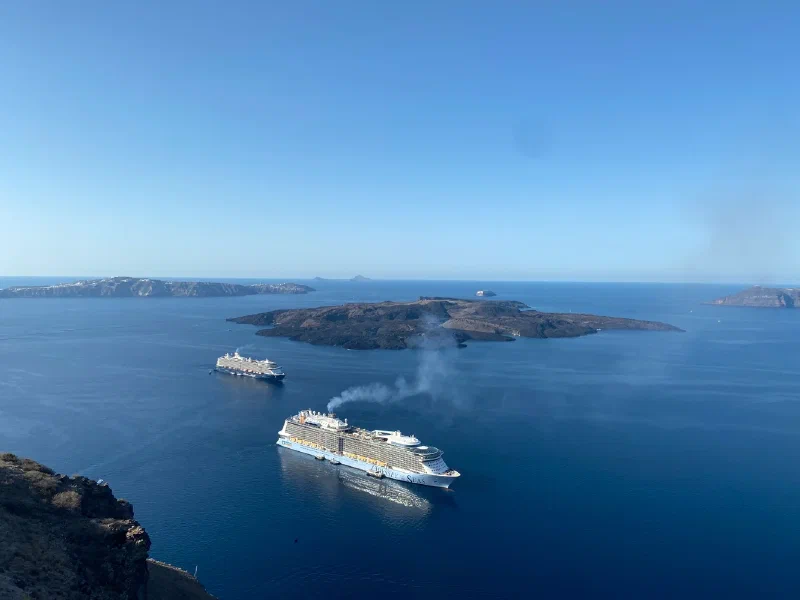
The distance isn’t that great, but there are only 30 taxi drivers in Santorini and not a lot of Uber drivers, and it turns out there are anywhere up to 2-6 cruise ships that can bring thousands of passengers that dock In Fira every day.
Today looked to be a busy day. By breakfast time there were already 2 cruise ships in dock. We had to beat the Cruise ship rush to get an uber.
“Wait time 15 minutes. But maybe up to 40 minutes, “says the Uber app.
So we err on the side of caution and leave a litte bit earlier.
Fira is the main town in Santorini. And on arrival it was definitely a lot busier than Oia, and less picturesque. Fira is connected continuously two two other cities – Firostefani – (crown of Fira), and Imeregovigli. The food tour started in St George Square.
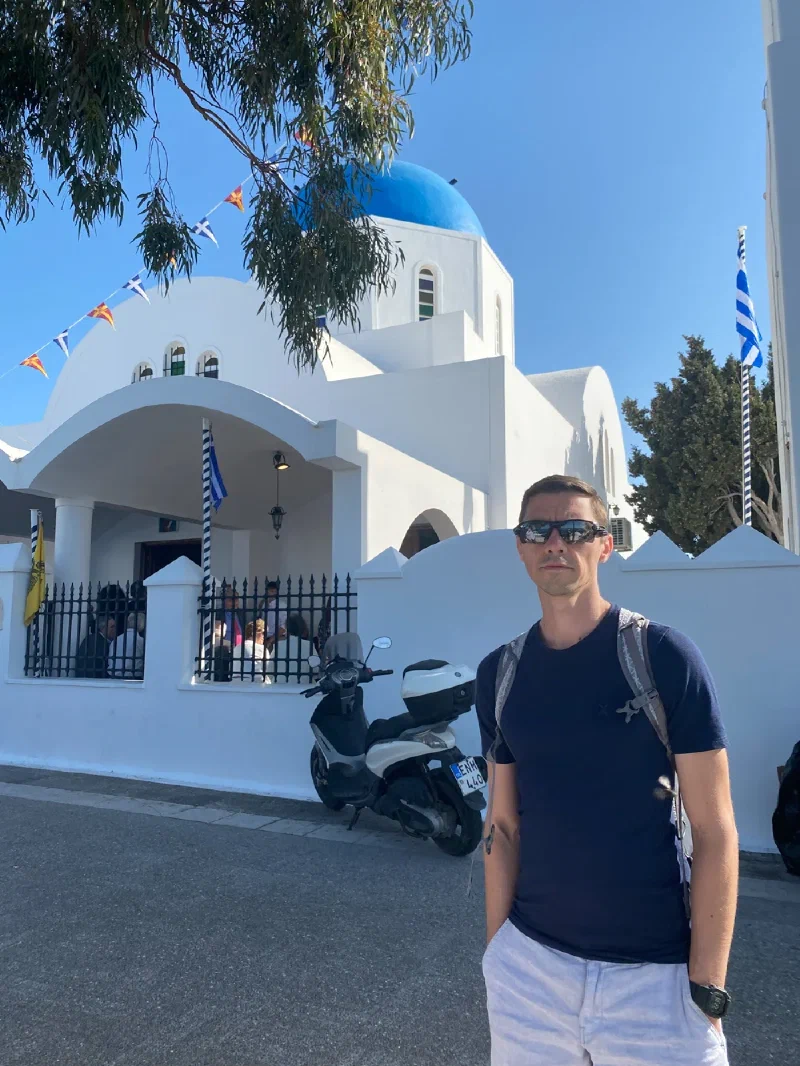
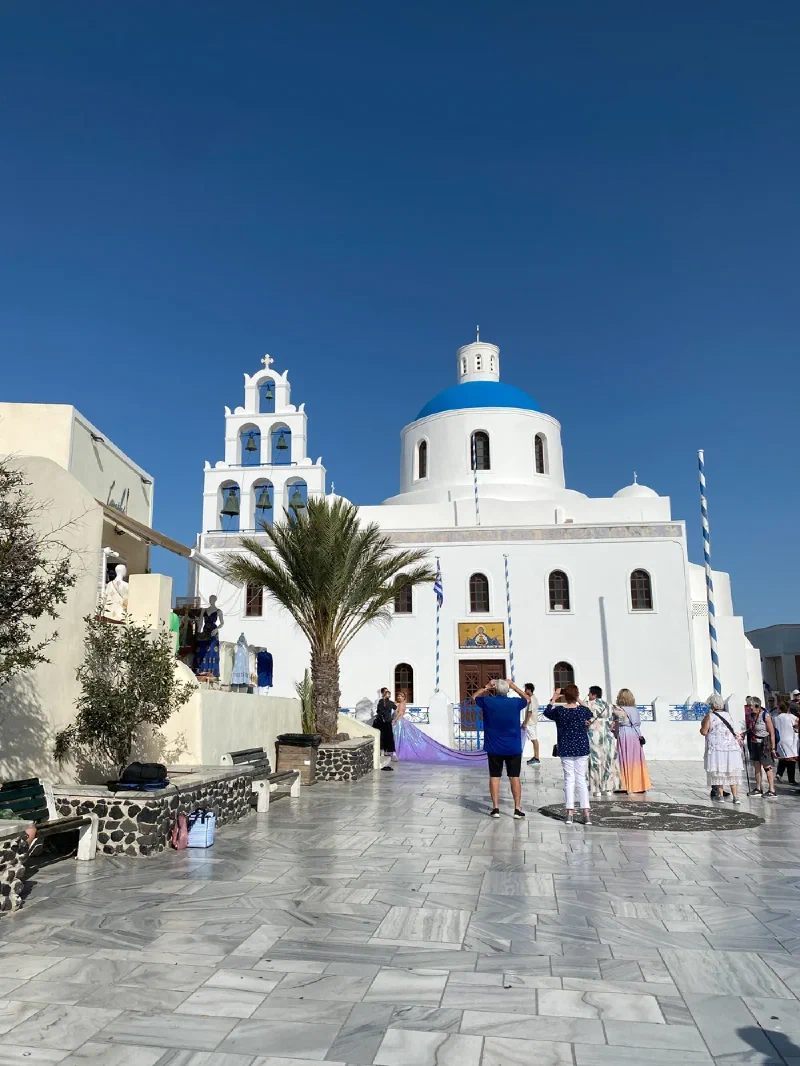
While we were waiting by the church, the bells started clanging in cacophonic waves. “Square” on the side of a caldera where space is precious is a generous descriptor, meaning we were right on top of the bells.
“How do people here handle this?” I wonder, something like 10 minutes into the bell ringing.
Turns out the church is only open a couple times a year for a religious ceremony and we won th lottery on being there on that day.
Knowing that made at least the procession more interesting.
At about 10:30, our guide, Dimi showed up. She’s one of several guides with the company, which was founded by a couple Laura, and Aristoeles who were passionate about travel and spreading their love of food. As the story goes, they ended up going on a food tour overseas quite by accident, and realizing there was no equivalent in Santorini, started this business to bring it to Santorini.
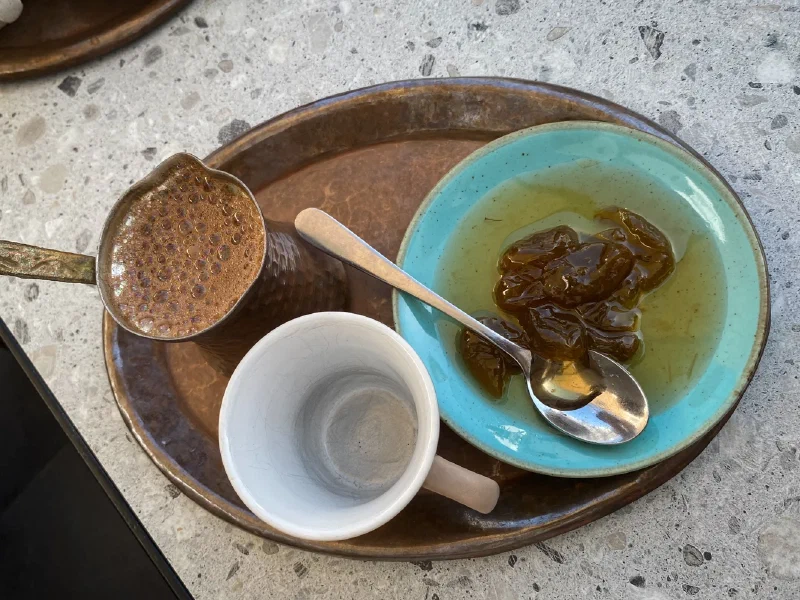
We started our first stop at a coffee shop, where we got to try a traditional Greek coffee. It turned out to be quite like Turkish coffee, because really the two countries are next to each other. “One of the things people don’t realize about Greece is how middle eastern we are, “Dimi explained. We sipped our Greek coffee as we had our spoonsweets (sweetened fruits), before making our way to the next stop – a local brewery.
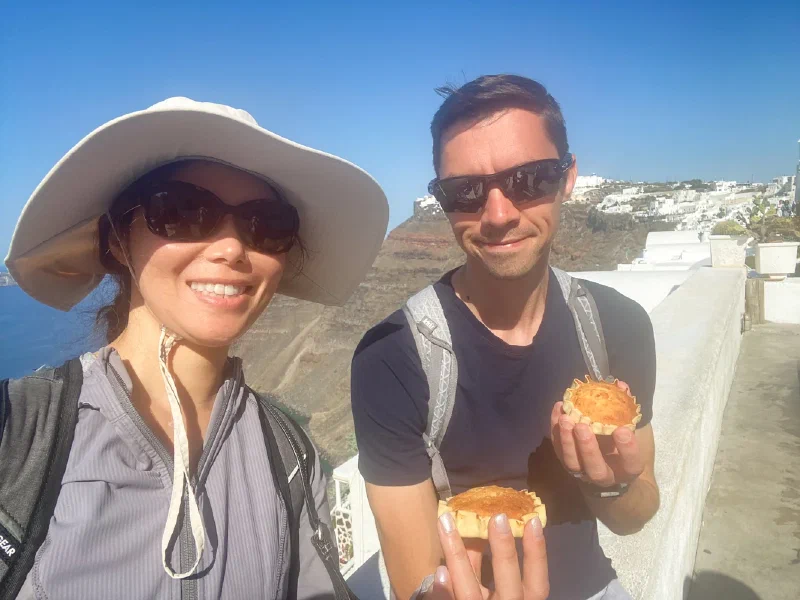
Before that though, we stopped by the Three Bells where Dimi had a treat for us – easter pastries that were seasoned with Mastiha. Mastiha is a type of local pine that is used to make a liquor aperitif, as well as other sweets. This pastry is normally hard to find outside of the holiday season, but Dimi found a year round bakery and got some for us all to try.
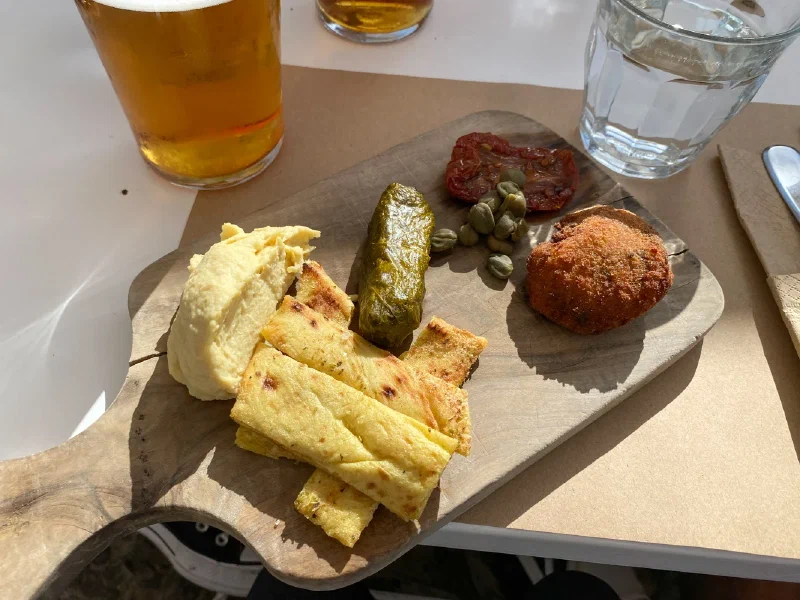
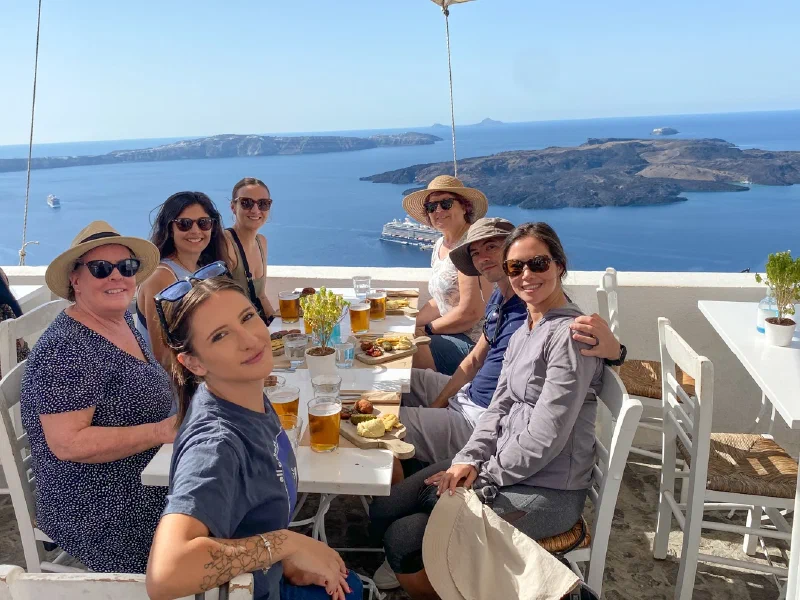
Because it’s already end of season, we only had one type of beer to try, which was one more beer than I needed, but I was plenty fine for my bud. Here we got to try fava, some Santorini tomatoes, and some fried zucchini as we perched by the caldera.
The next stop was to olive oil tasting, where we started with a serving of “moonshine”, which tasted a lot like grappa.
We were reminded of how to do an olive oil tasting, and we tried the olive oil by itself as well as with some cheeses, tomatoes, and cured meats. We washed it down with more moonshine and went to the next stop.
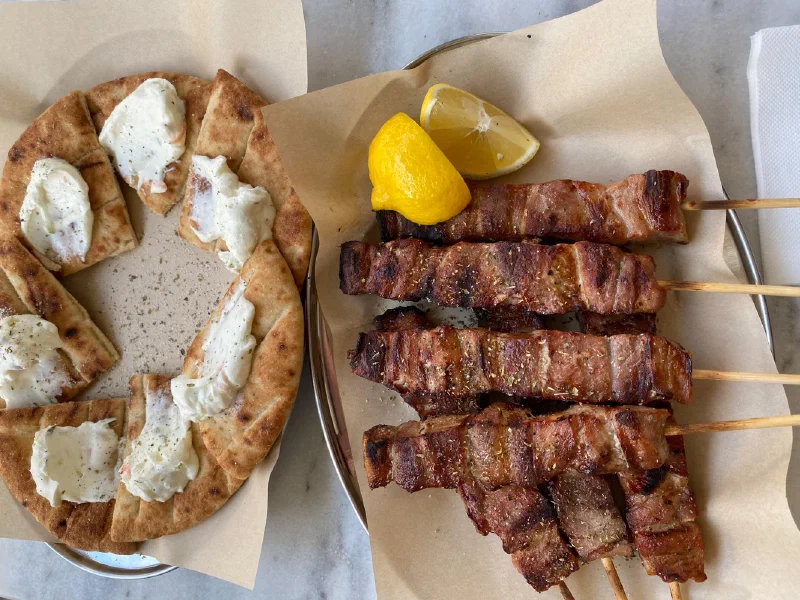
We next stopped for some streetfood – souvlaki.
By now we were getting close to our next tour and Pokin started to get worried, but Dimi offered to call the tour company for us.
“You have to understand we all know one another. It’s a very small industry so it’s no problem” She calls and speaks to them.
“Don’t worry. They’ll wait for you.” And that was that!
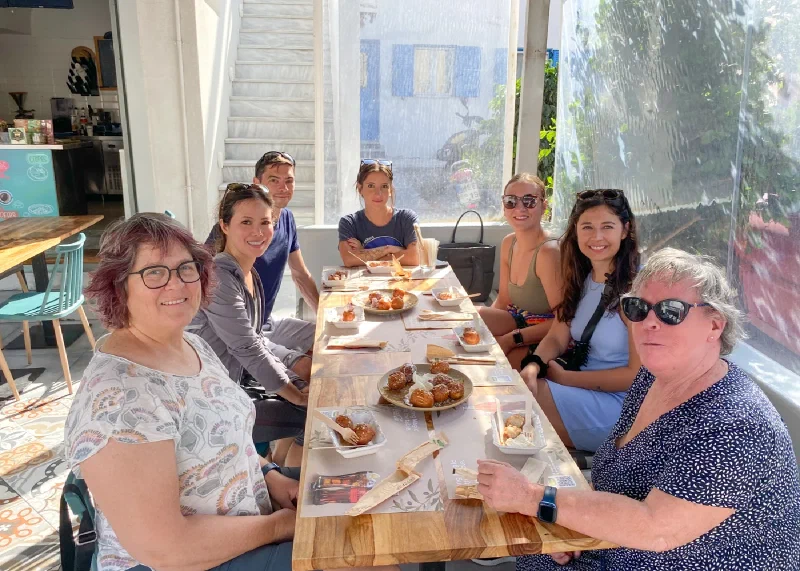
We’re at the last stop, and we wrap up with donuts to finish up at the food tour.
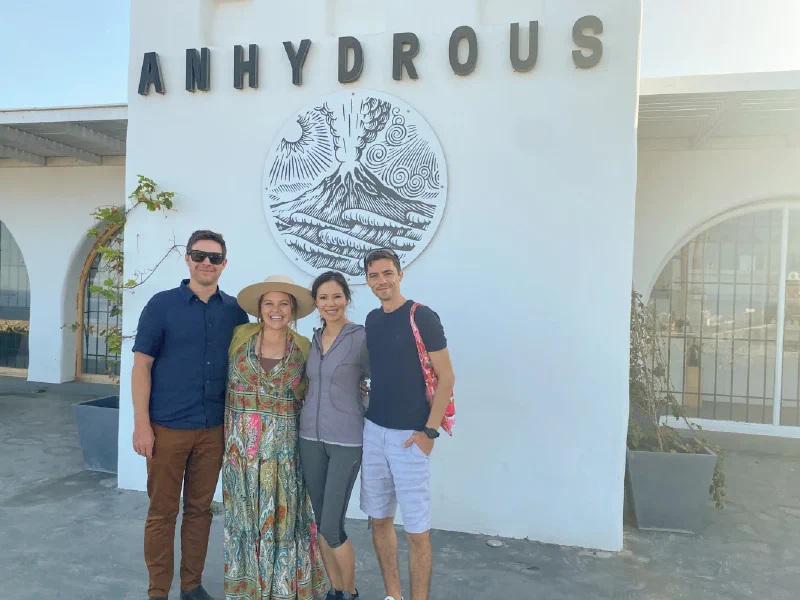
Onwards to the wine tour.
Santorini is actually a really dry, windy climate. So it’s tough to survive as grape vines. To maximize their chances of survival, santorini grape vines are woven into a circular basket shape to protect the vines. They are allowed to be on a drip system for a couple years, and afterwards the irrigation has to be removed and the wines are watered via ocean mist.
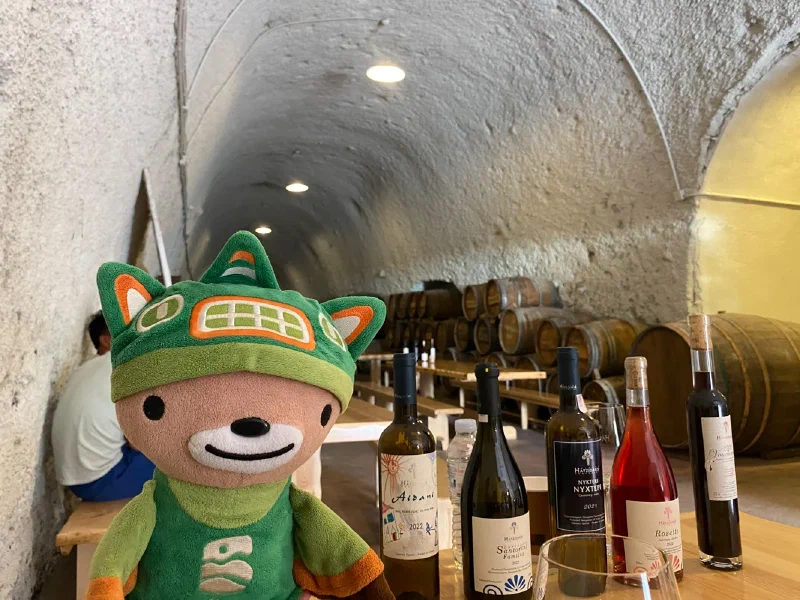
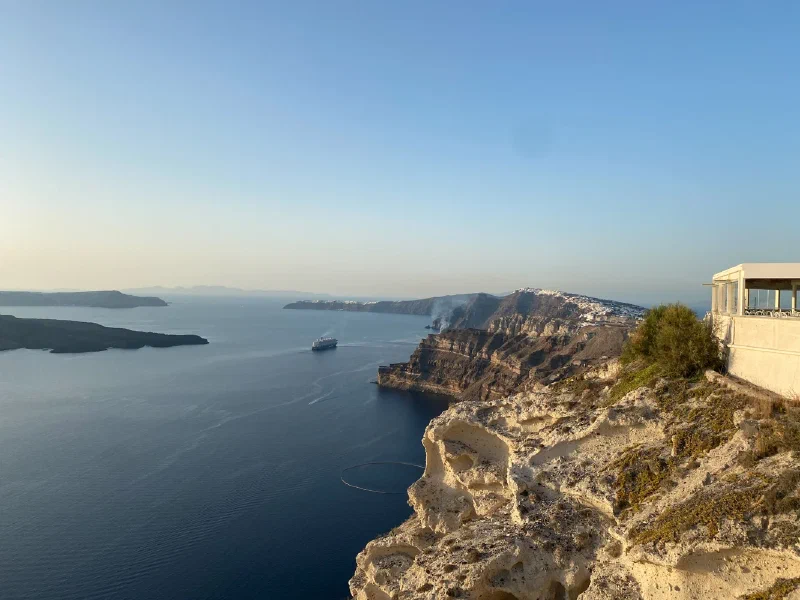
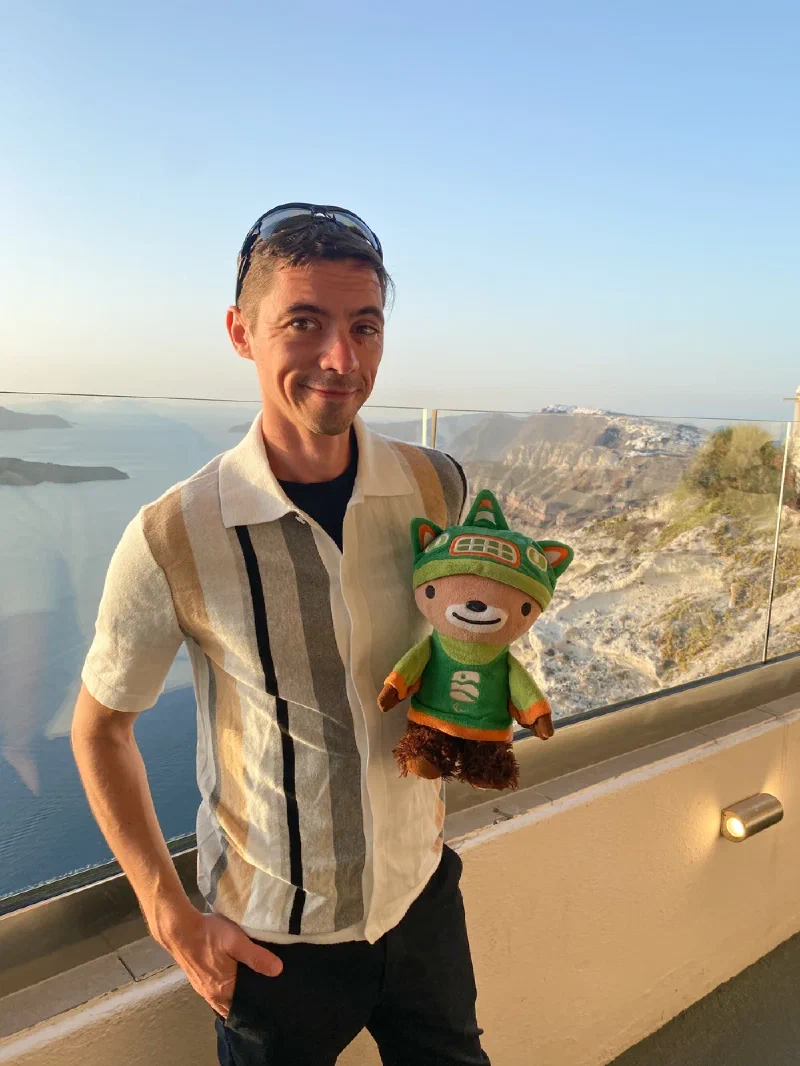
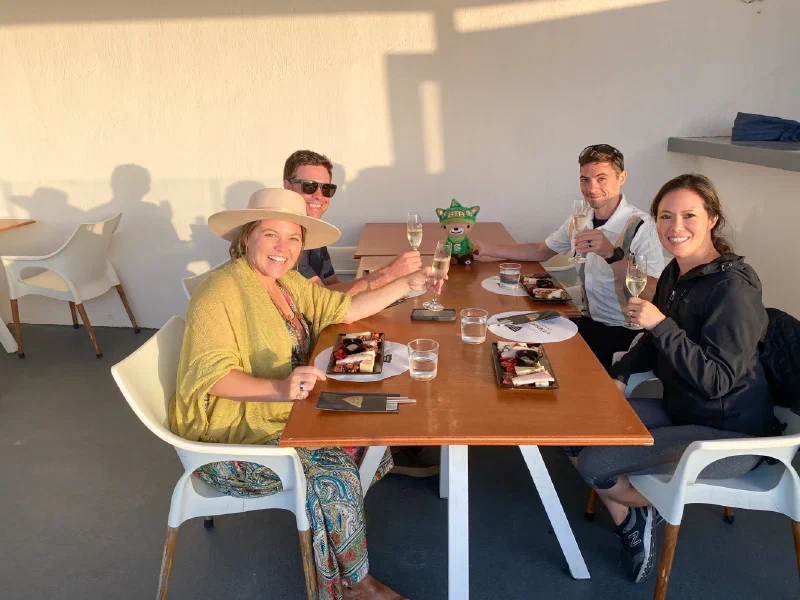
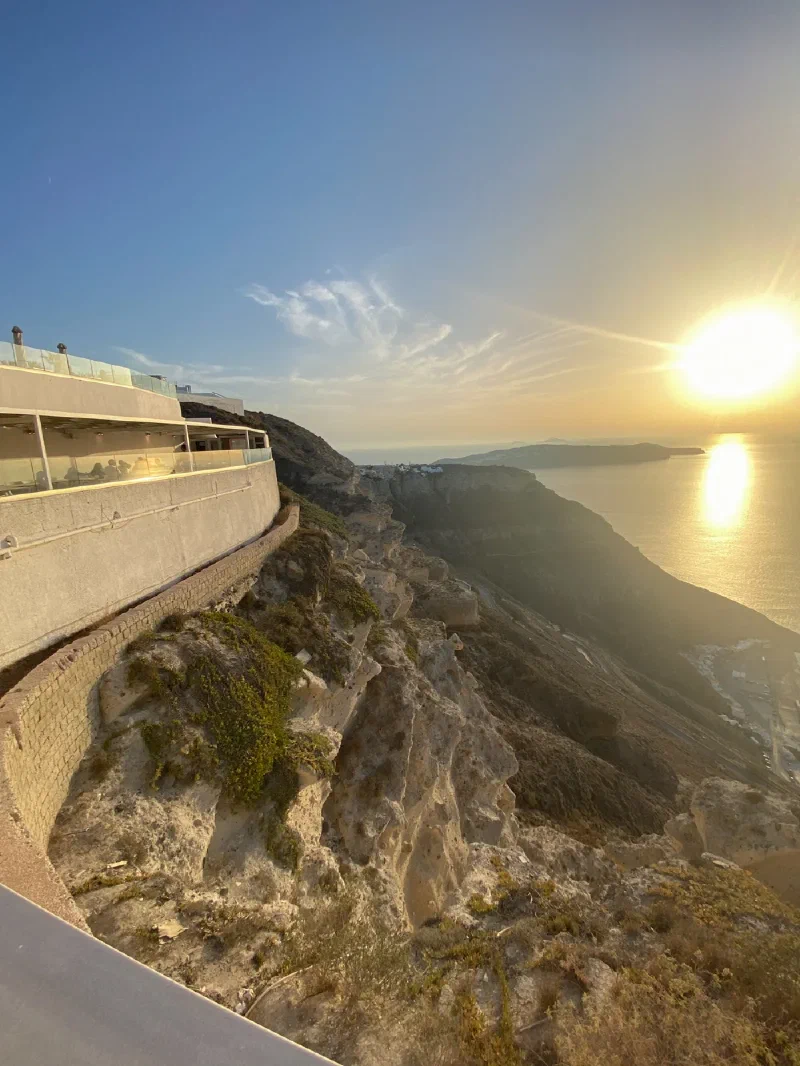
The most popular type of wine is Vinsanto, made from grapes dried in the sun, and the most popular grape varietals are Athiri , Aidani, Assyrtiko and Mandelaria. We went to 3 different wineries to check out the wines, before ending up at sunset in the most scenic of the wineries. Was fine. Cocoa is better.
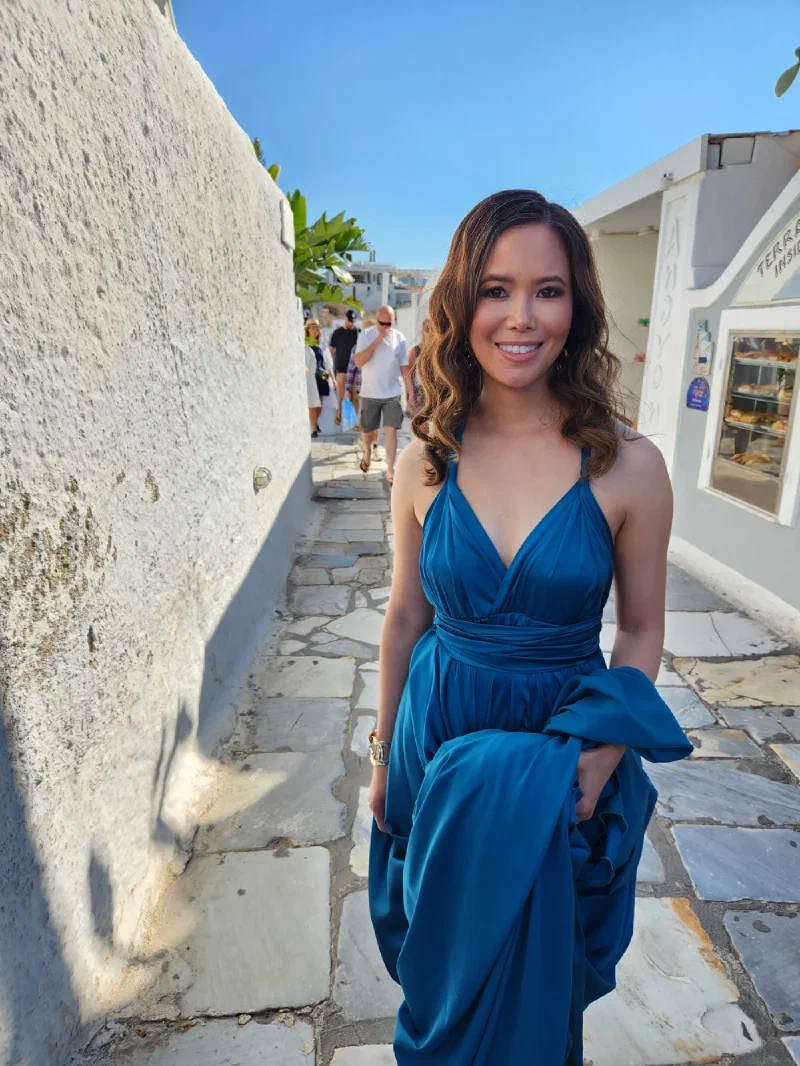
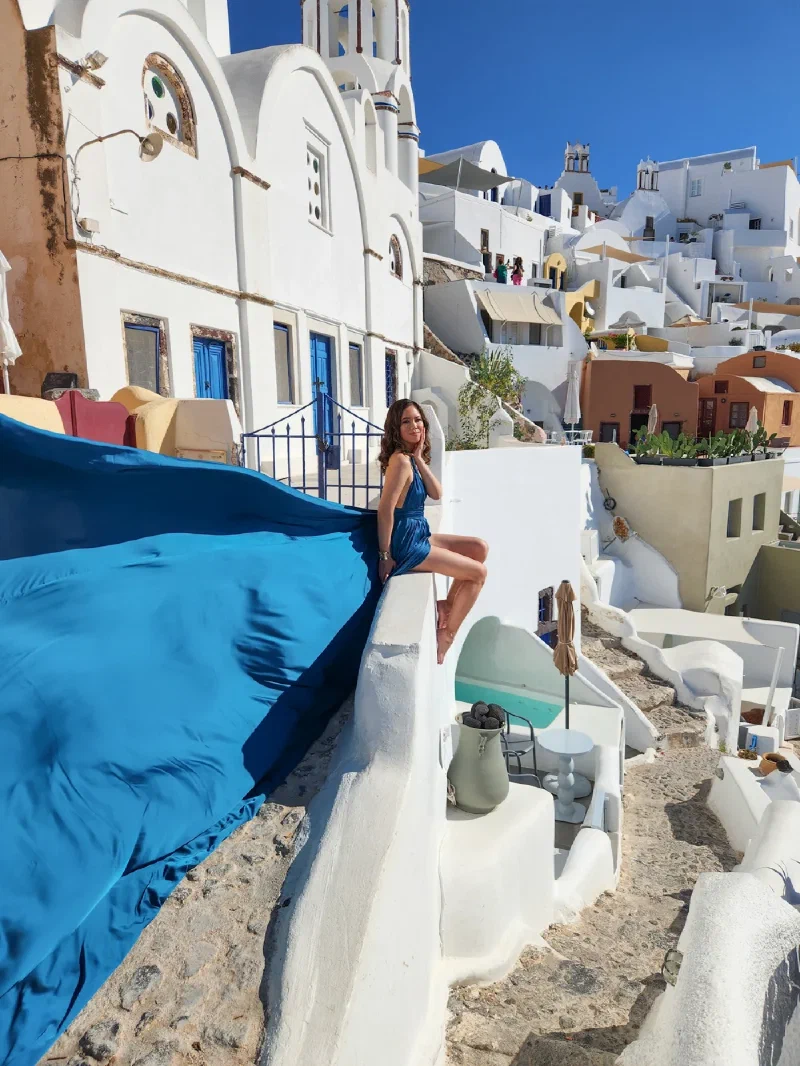
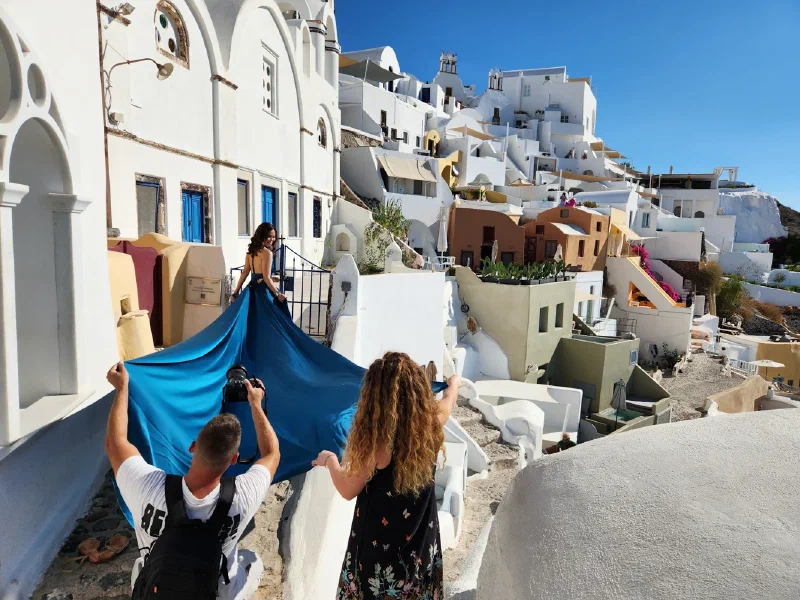
Pokin had booked a photoshoot this morning. There’s this thing called a flying dress. With Santorini being pretty windy, it’s a thing to wear these long flowy dresses, hog up the prime spots around town and look stupid in front of the tourists with these dresses as you stick your legs out in funny positions.
I didn’t get the appeal but Pokin thought it’d be fun. She got a package for her and my bud, and then another one for Chris and Julia. She booked makeup and hair as well, meaning all of us had to get up at 7AM in the morning to do hair and makeup in time for a 9:30AM photoshoot.
It’s early.
I sat and listened as the hair and makeup artists got to work.
Tasha is from the Ukraine. She was displaced during the war and settled here to work. She works on everything from photoshoots to weddings and is one of the seasonal workers. She will be back to Athens in November. The other makeup artist grew up in Santorini, but is pregnant and will be having her baby soon. She also spends her winters in Athens. Both of them have been working non-stop 10+ hour days to get as much business as possible before the dead season.
I meant it when I said Santorini is seasonal. The whole island shuts down by November and about 5000 residents remain.
At 9:30, the photographer and the assistant Edward and Irene arrive. They help Pokin change into her first dress and I am super impressed. I was very skeptical when they said the dress sizes were XS – L, and L – XXL, but it turns out the fabrics twist and turn very accommodatingly. So they twisted and turned and adjusted the fabrics and voila, it fit.
We started the photoshoot on the hotel property before moving all around town. My bud was dressed in a suit and as the day got progressively hotter, I felt bad for him. But he was a good spot and we moved from spot to spot.
Now that I knew what a flying dress photoshoot looked like, I saw them all around town. All the girls and their buds looking uncomfortably hot with their entourage. At one point there were so many of these groups we had to wait in line for our spots. Until now, little did I realize how busy things were. Luckily some areas were chained off only for photographers, or else we wouldn’t have been able to elbow through crowds.
Two hours later, the shoot was over and it was time to scramble, as we were headed to our next destination. A boat.
Nicholas decided that the one thing you had to do in Santorini was do a boat cruise. And it had to be on a catamaran.
So we booked one with food for sunset. The cruise location was pretty far away and required an hour commute (mostly because of the windy roads), so we had to be picked up at 1pm for a 2pm boat time.
What Pokin didn’t tell Chris and Julia is that she had booked a private catamaran cruise. And so when we pulled up to the dock, Julia wondered – “where is everyone?”
“This is it, the boat is just for us,” my bud responded just as the crew came out to greet us.
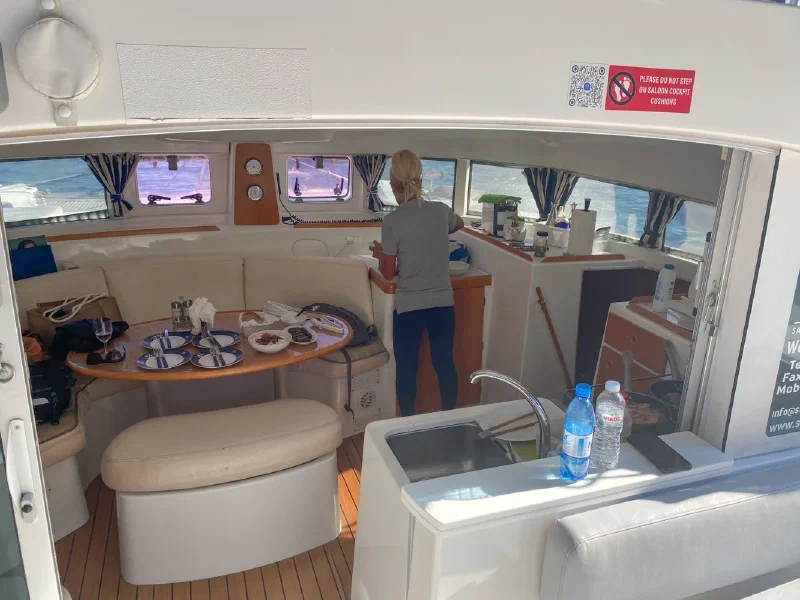
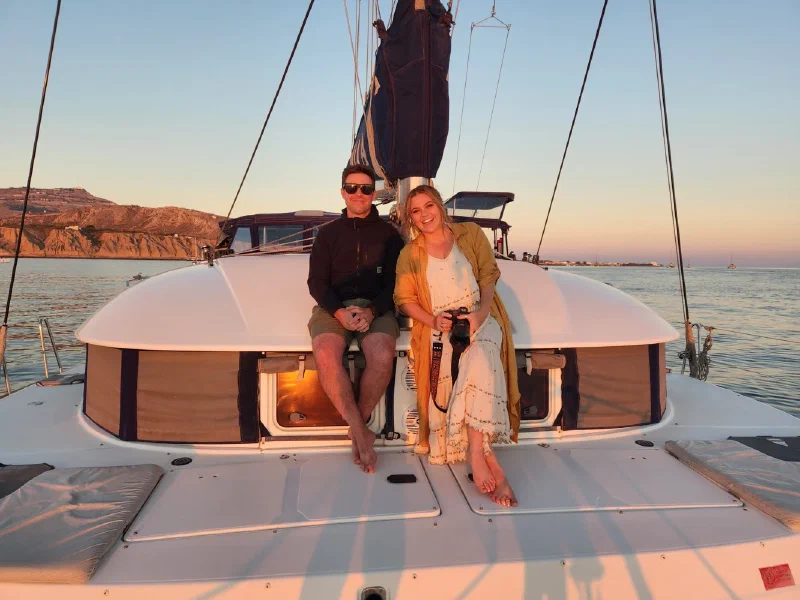
There were 3 crew total – the captain, the chef, and an extra person. We got settled in (shoes off), and off we went.
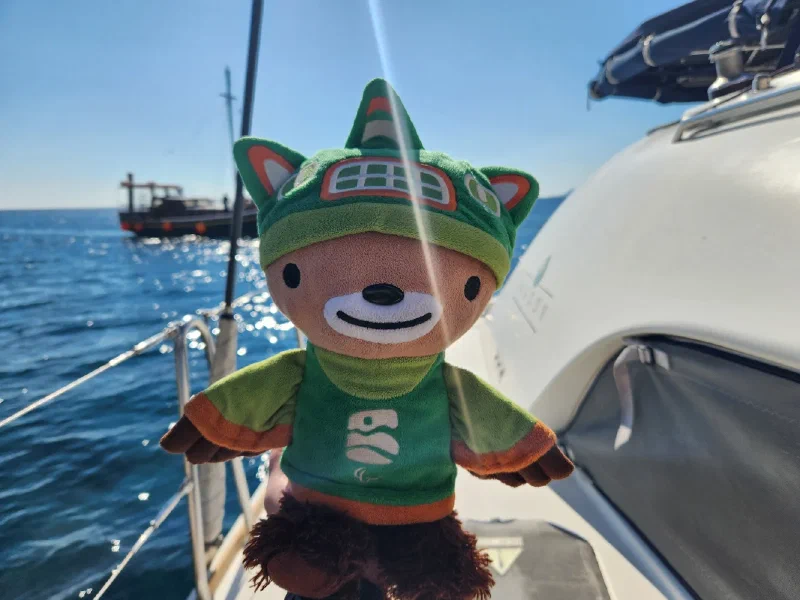
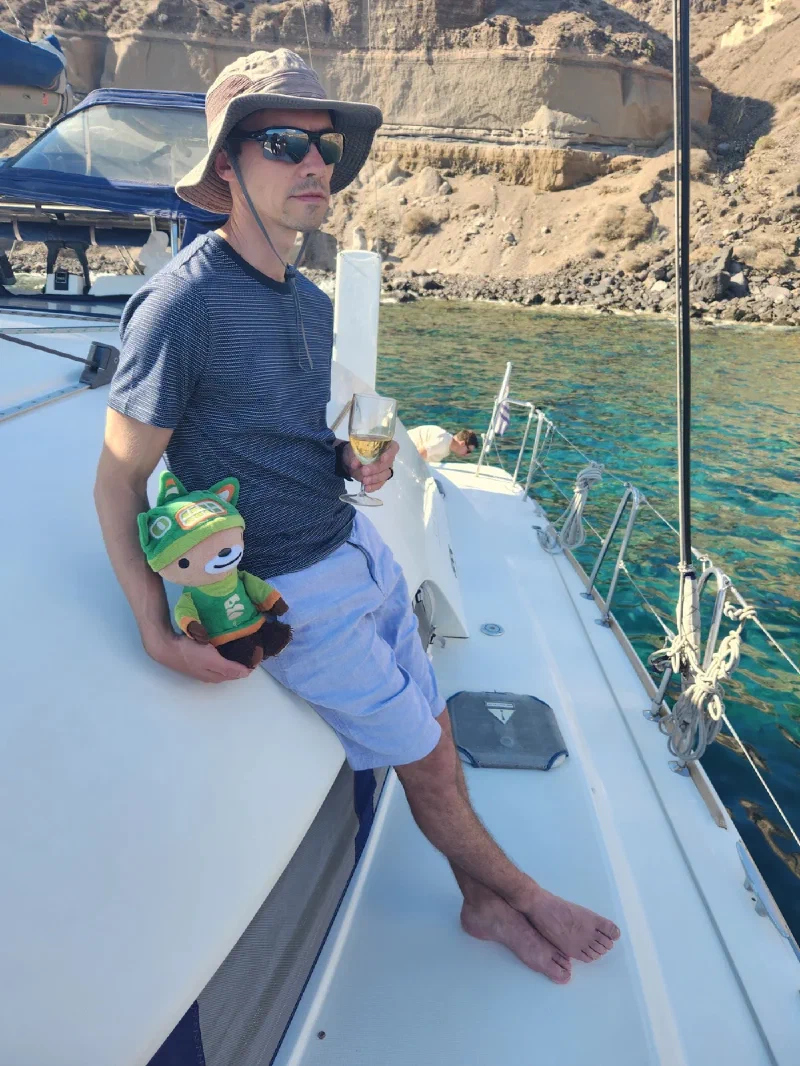
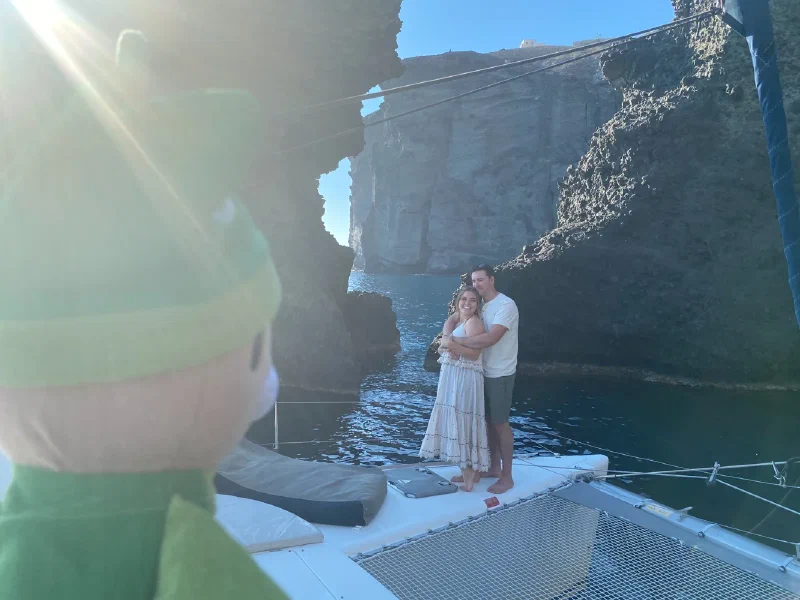
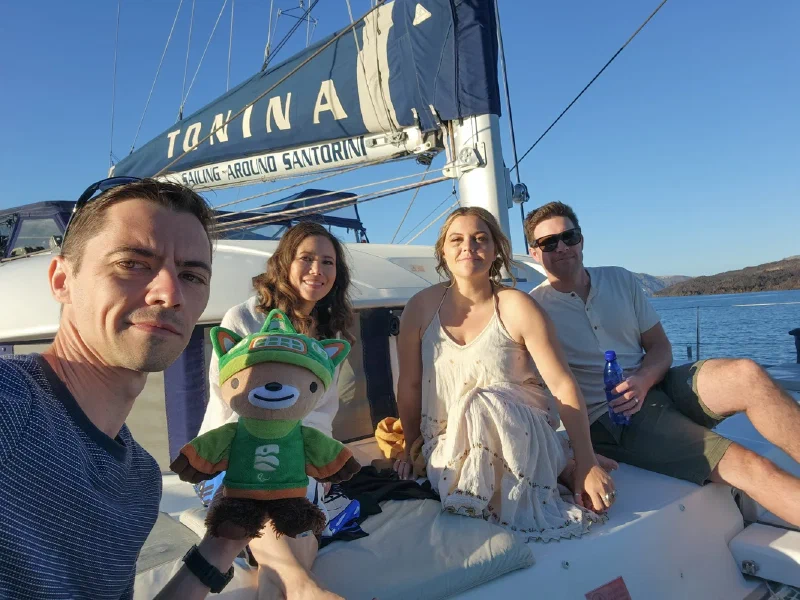
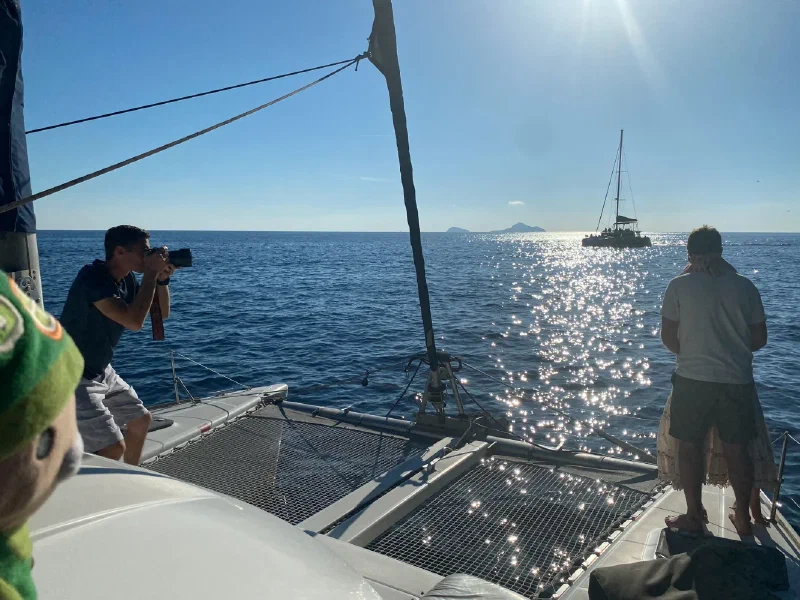
I have to admit, I wasn’t such a fan of being on a boat, but it was pretty worth it – especially doing it on our on boat. We got to go at our own pace, to explore all the islands and photograph everything.
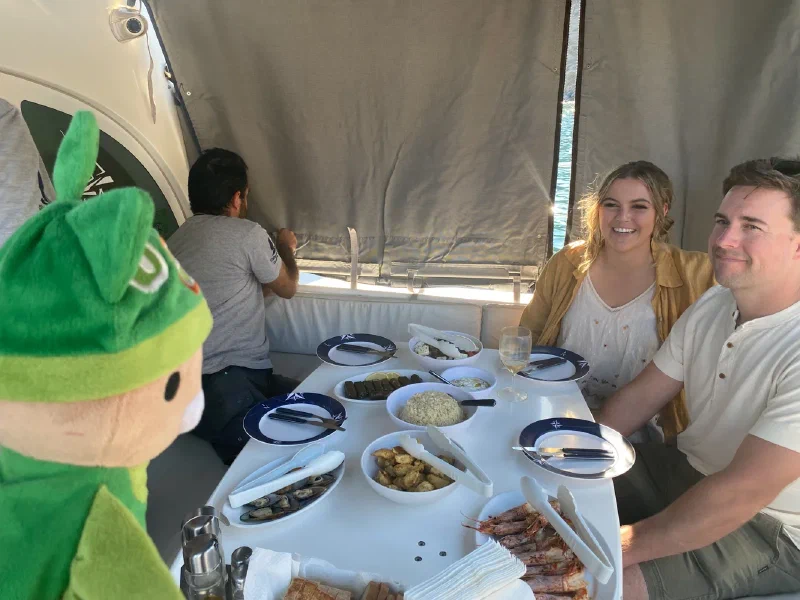
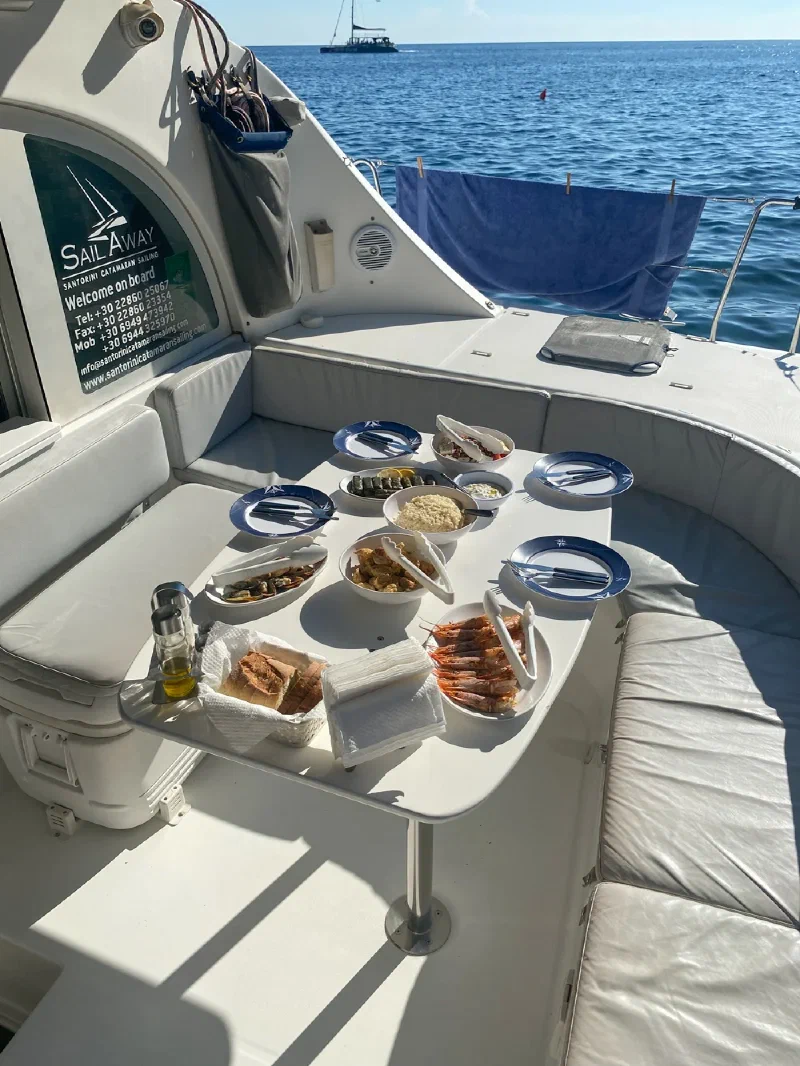
We even had food made by a chef. I took note. No cocoa.
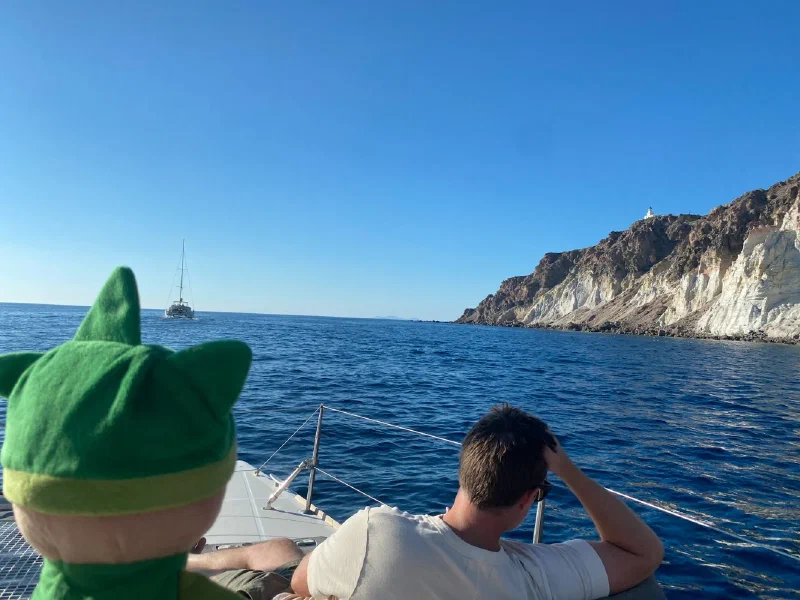
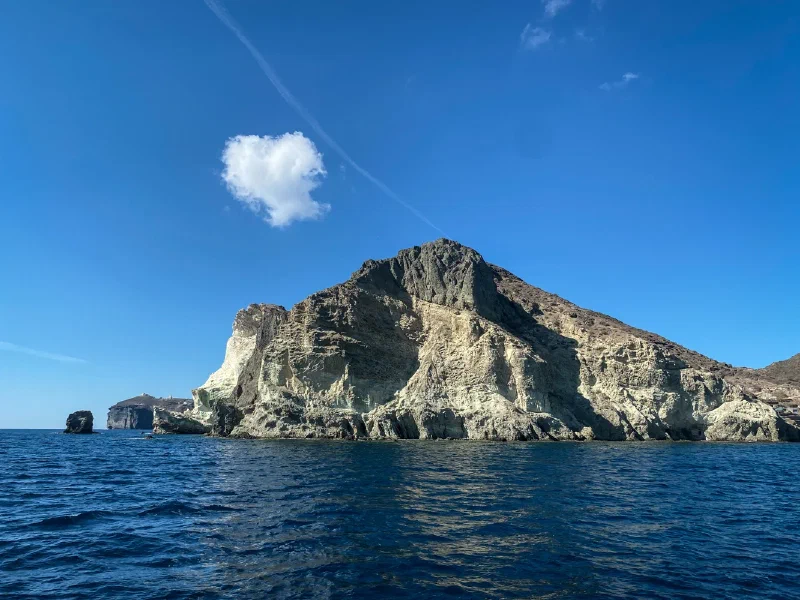
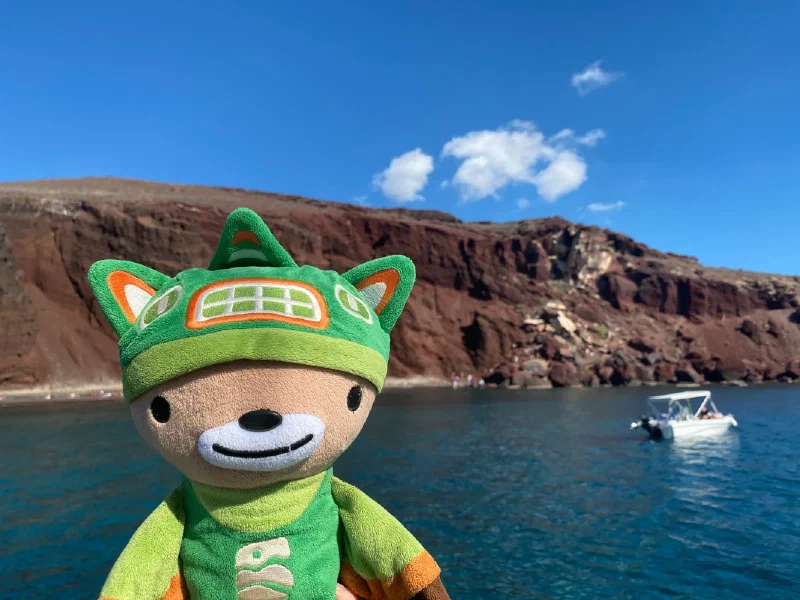
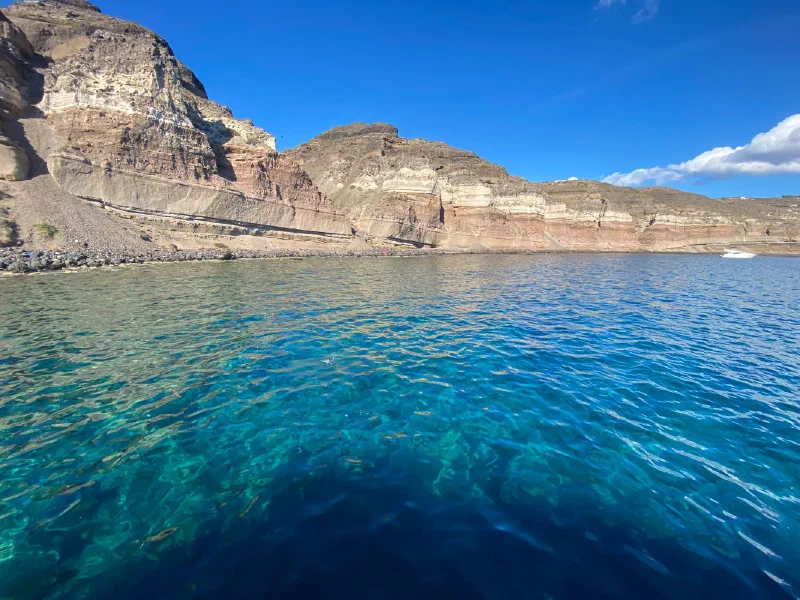
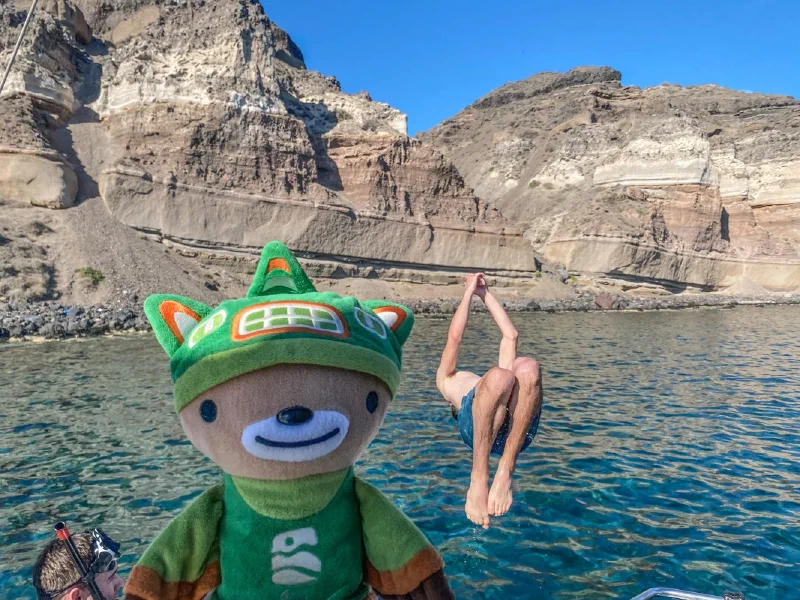
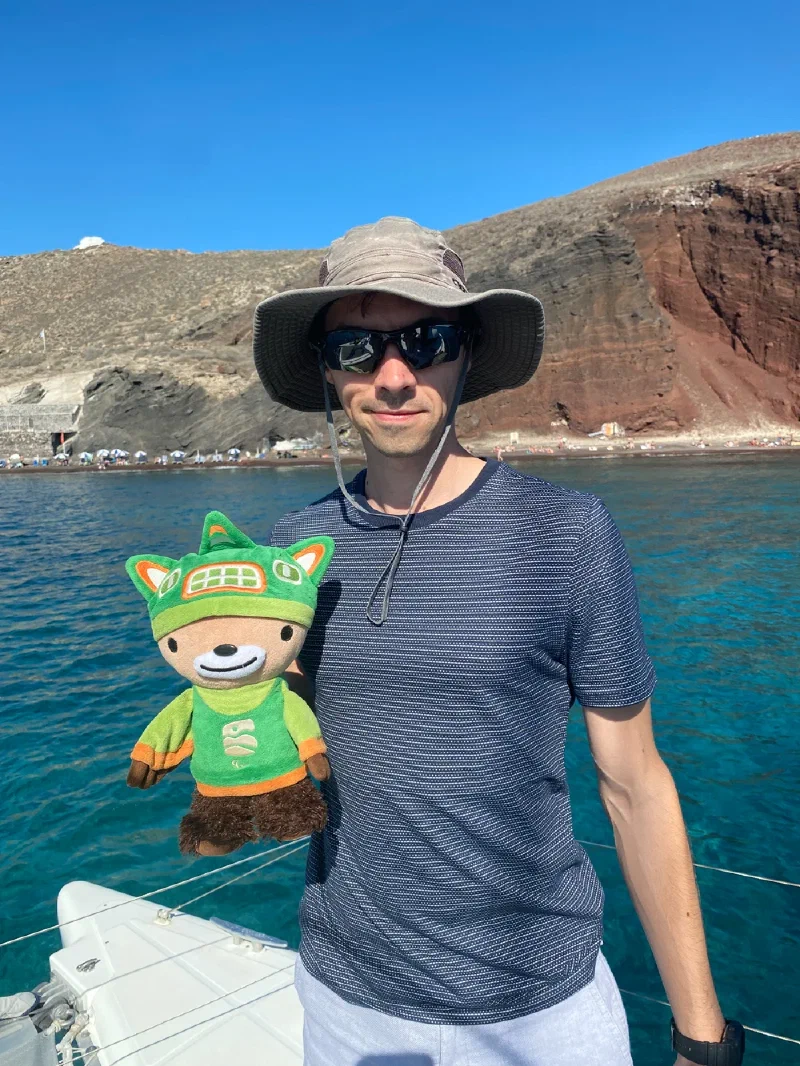
We went from red cliff to white cliff to a diving spot, before making our way around towards the volcano.
The whole round trip took 5 hours, which was a lovely leisurely pace.
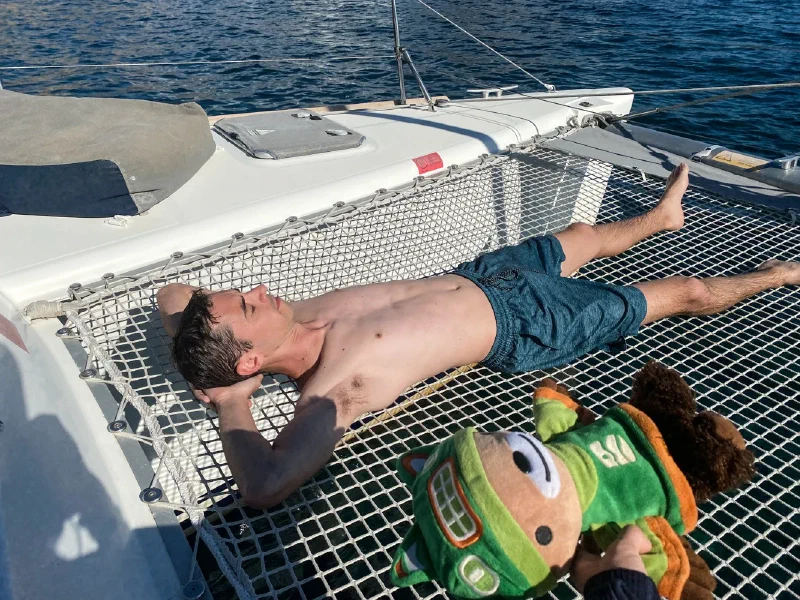
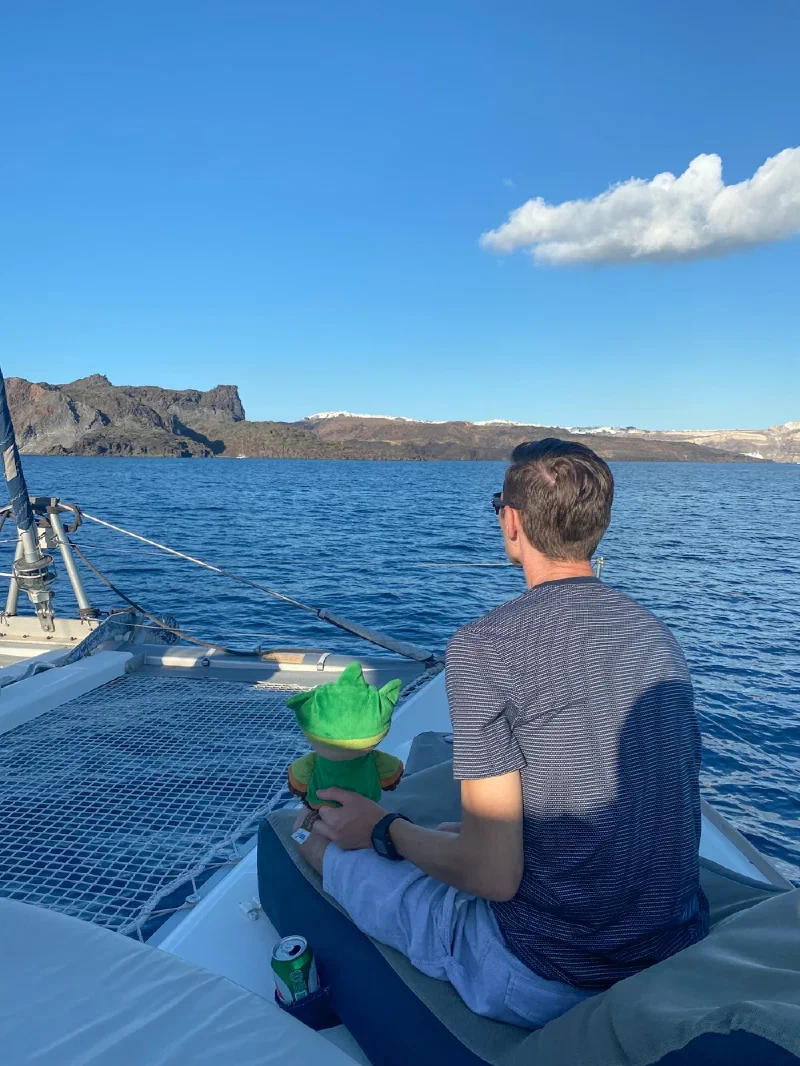
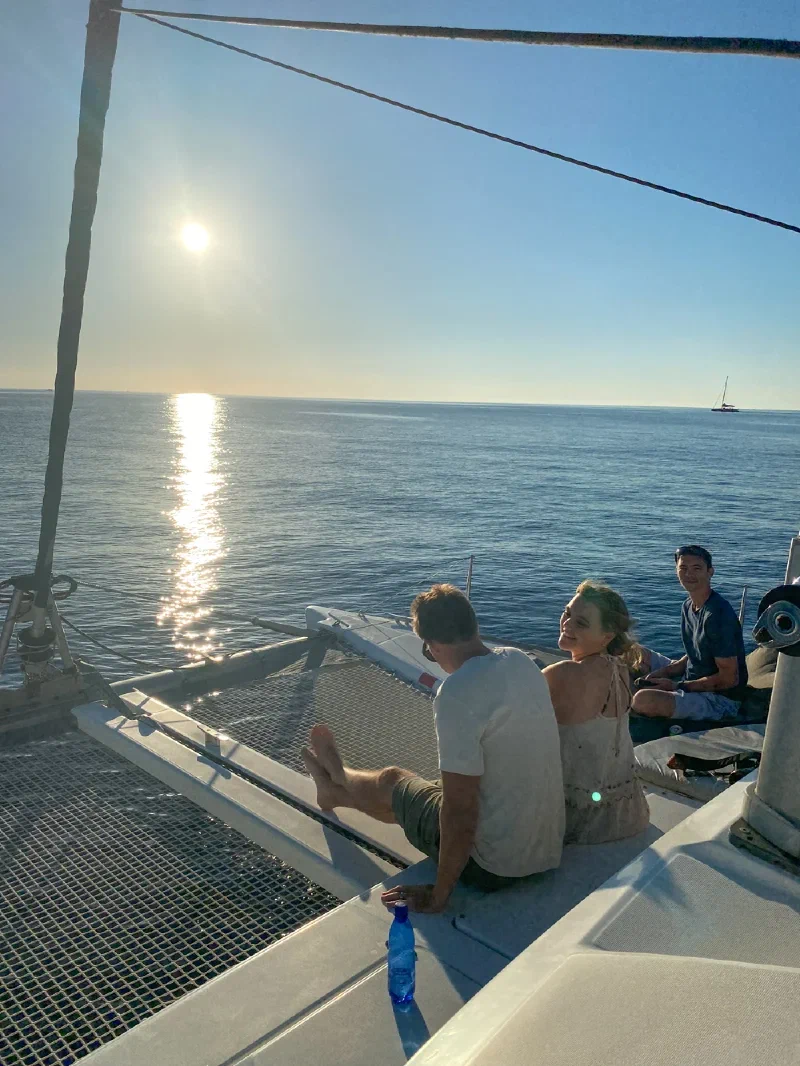
Pokin took Dramamine and was still recovering so she passed out at one point, but I hung out with my bud on the front of the boat.
When we got to the volcano centre, I noticed a hut and a church – “what’s going on?” I wondered.
“Oh that’s the fisherman who has no wife” came the answer. Cryptic.
Turns out there was a BBC documentary made about this person. He wasn’t a fisherman, but rather a lovestruck sailor who had fallen in love with an Italian lady who promised to return and never did, but not from lack of trying.
Turns out she had already been betrothed to someone in the Italian mafia, and when they found out tried to hunt him down, leading him to escape to this island.
He is now around 87 years old, and apparently can still be sighted on the island in just his speedos or no clothes, yelling at the tourists who float by.
Suckers. I’m glad my priority is just gaming and hanging with my bud.
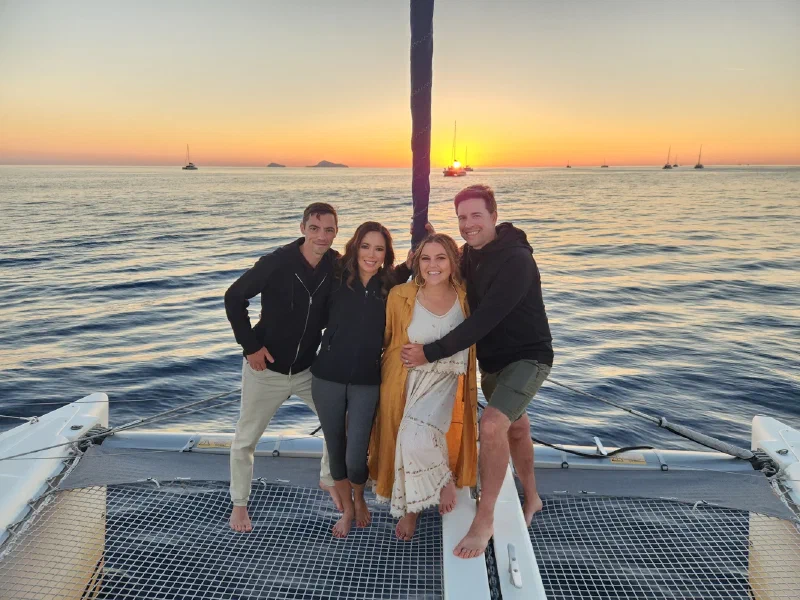
The volcano was the turning point, so we turned around and headed back to the harbour as the sun set behind us.
The next day Pokin decided it was time to see a doctor. My bud’s family was arriving and we needed to make sure we could all share a room.
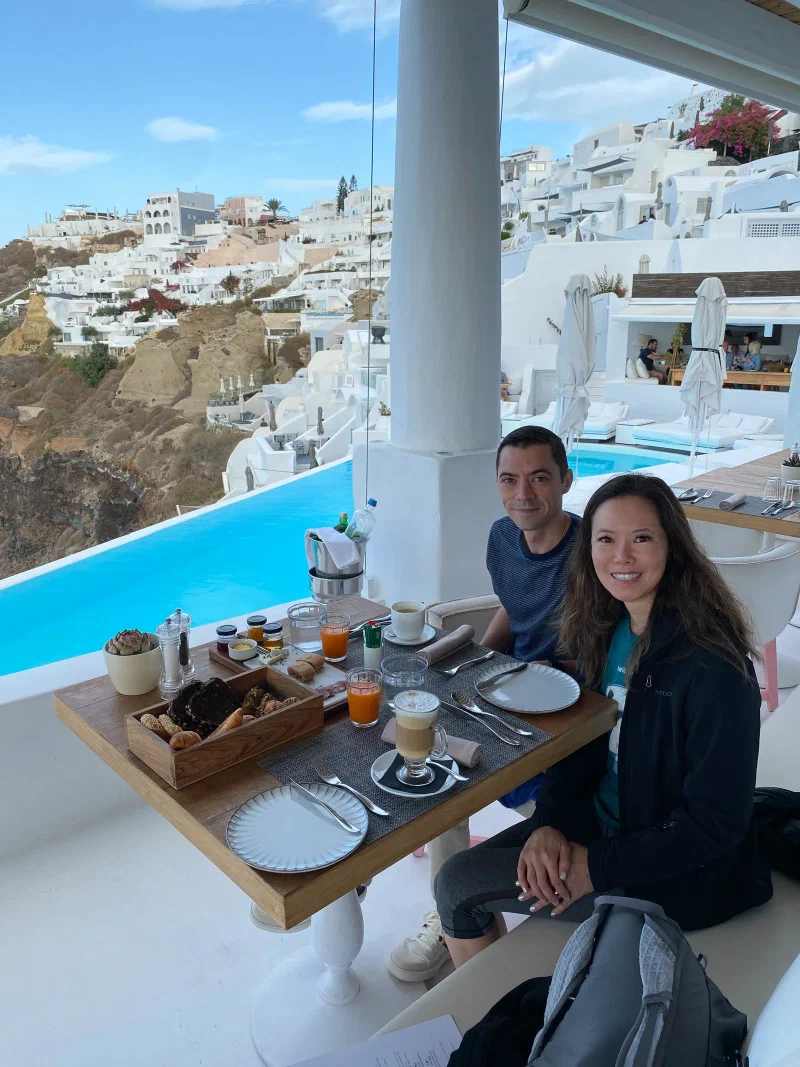
We went downstairs for breakfast by the pool area. Ate a nice assortment of breads.
And then it was time to search for a doctor.
A quick online search revealed there was actually a doctor in Santorini, and in fact luckily the doctor was located right in Oia only a few minutes walk away.
Since check out was at 11am and check in wasn’t until 3pm, Pokin decided to first crawl to bed till check out time before going to the clinic.
The clinic is located right by the main church square a few steps down. On arrival, it turns out the doctor wasn’t available (he was at the hospital), but they arranged for him to arrive 30 minutes later. Before seeing Pokin, they required a Covid test (negative) and shortly after, she was seen.
The doctor determined Pokin had a chest infection, put her on a nebulizer to dry out her lungs, checked out my bud for a good measure, and it all came to €200 – much more reasonable than we expected given the lack of insurance. The drugs next door came to another €80, and Pokin was all drug stocked up in time for Julia and Chris’ arrival.
The room wasn’t ready, spo at first we chilled out on the roof top deck. Apparently the highest point in Oia.
We were now settled into a new hotel, Canaves Sunday Suites. Pokin picked this place because it was one of the properties that had a 2 bedroom suite, allowing us to stay together while still having our privacy. The staff were kind enough to allow us an early check in, so Pokin was actually able to get in by 1:30pm.
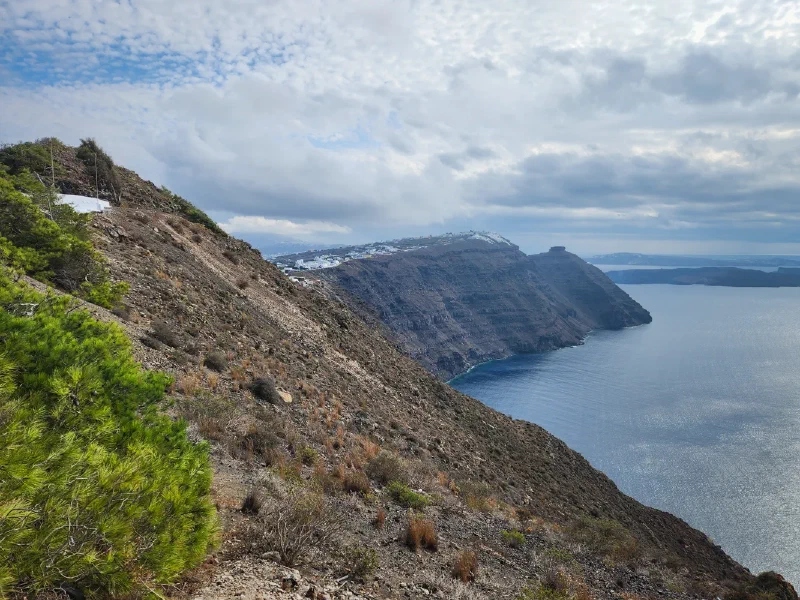
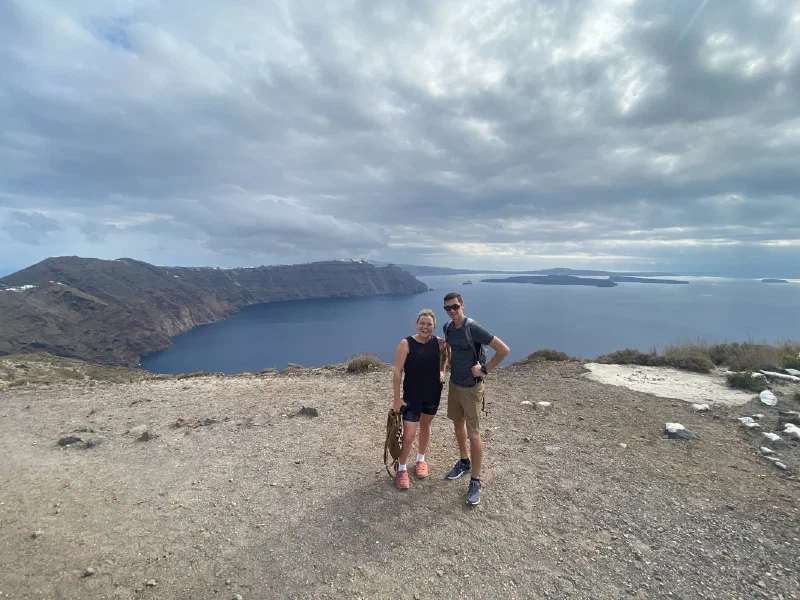
This was the only day to do the famed Oia to Fira hike, but Julia had an evening photoshoot planned, so the guys only had a few hours to do the hike. Online accounts said it could take up to 4-6 hours, so everyone got ready fast, ditched Pokin and off we went.
The hike basically connects two of the main tourist cities in town, across streets and dirt roads. Families used to take this trail between celebrations and so it was well marked and easy to do.
My bud, Julia, and Chris flew across the trail, me bumping around in the bag, and we managed to finish the hike in under 2 hours before grabbing an Uber back into the hotel.
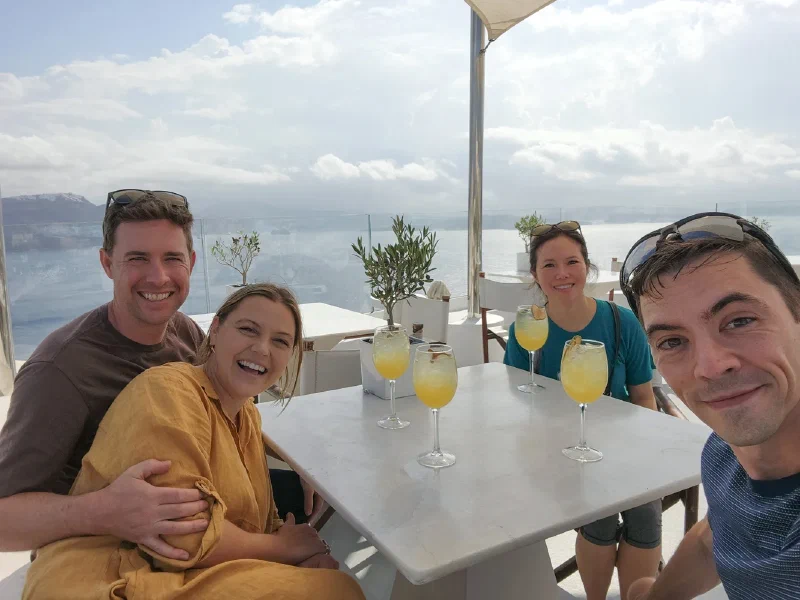
That night Julia had a photoshoot so she took off, and we all sat on the rooftop to get drinks while we waited. I chillaxed.
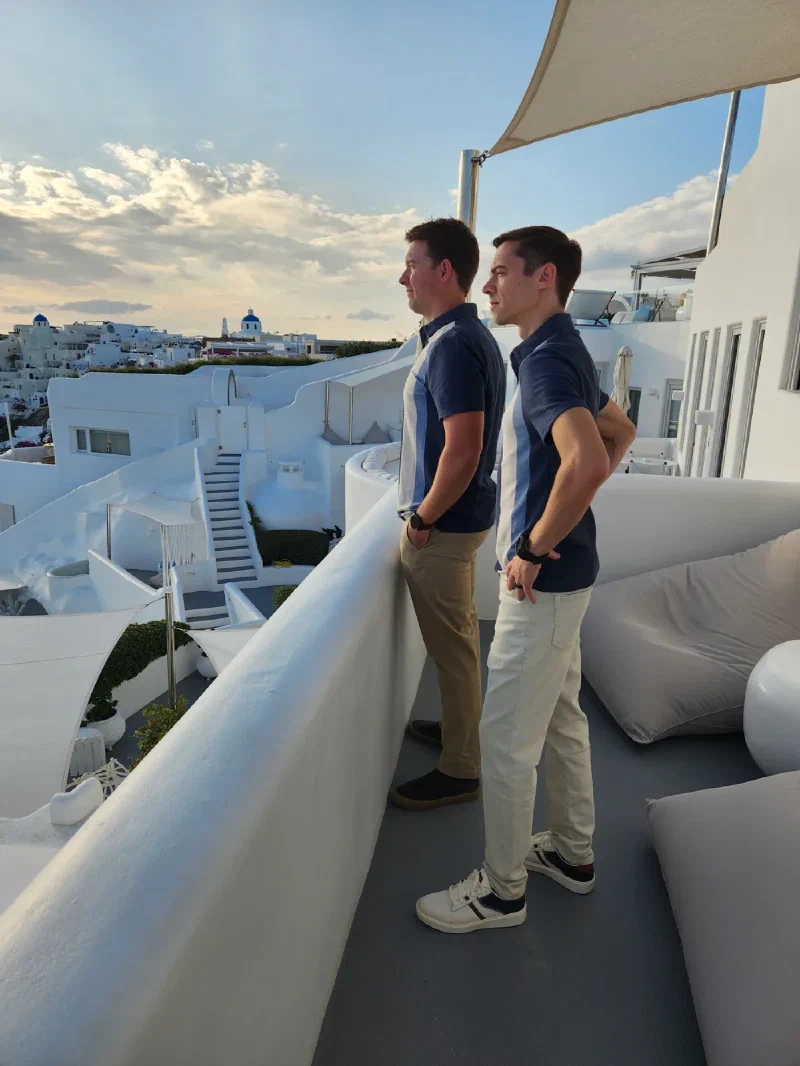
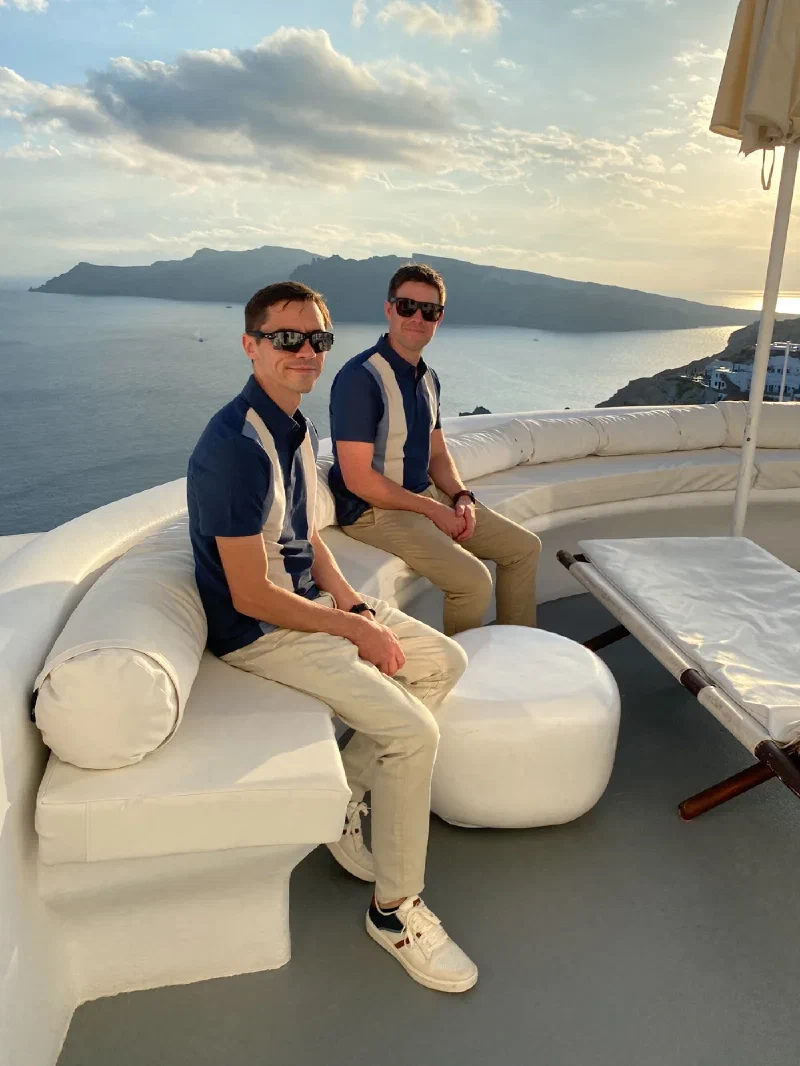
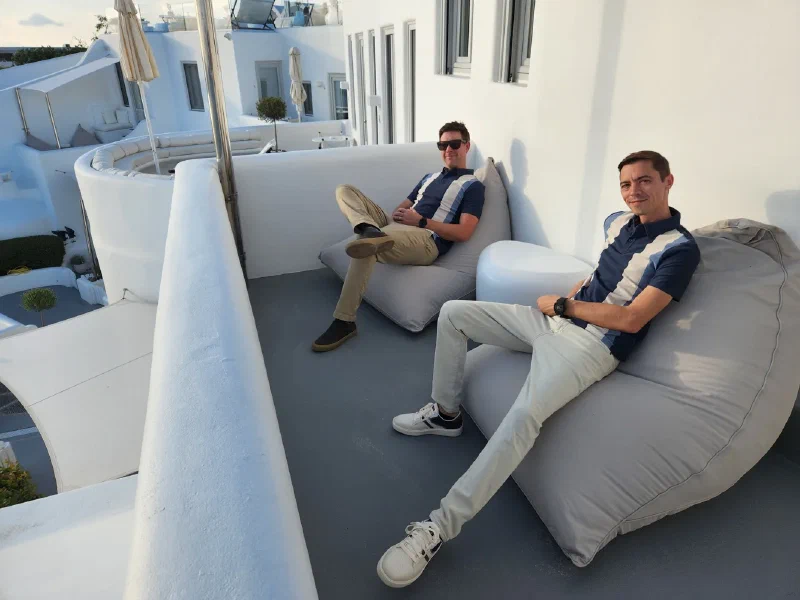
My bud had the idea to get matching outfits with Chris so we spent time getting photos of the matching guys.
Julia came back. I watched her at work.
It was getting close to time to eat. Pokin asked the hotel for restaurant recommendations, and the restaurant wrote back with one.
Roka.
Ok, I guess if that’s the recommendation, that’s where we went.
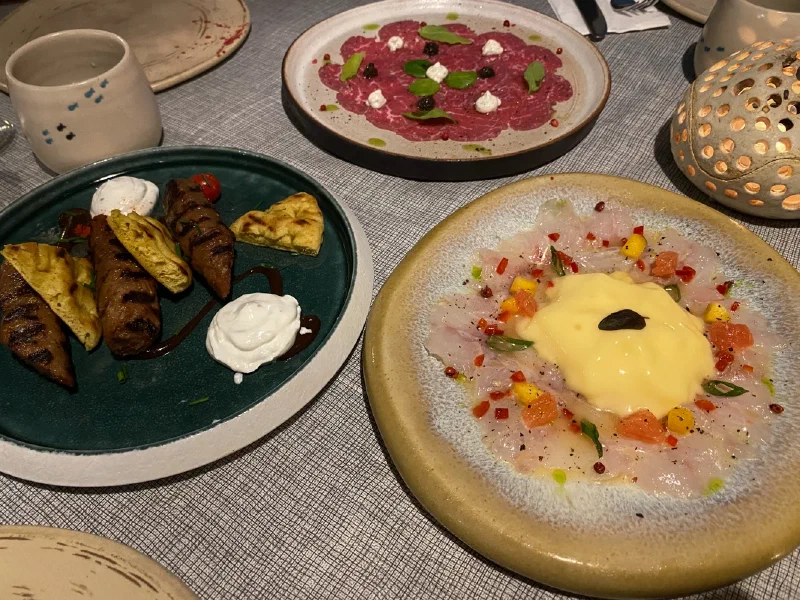
Turned out to be probably the best restaurant on the island apparently. Everyone liked everything they ordered. And the best part is the restaurant is open year round!
Because I didn’t know this – Santorini is incredibly seasonal. Most people come in some time between February and November because the pay is much higher on Santorini before spending the winter seasons in Athens.
I had remembered the country was struggling but I am really reminded of it when I hear of the wages.
In Athens, guides might expect to earn 8 euros an hour whereas they can get closer to 16 an hour in Santorini. Yet most people didn’t start with the intention of guiding. They often had very advanced degrees but just realized tourism was better pay.
Everyone had a very early photoshoot so we all went to bed early.
The drugs helped a little but Pokin still kept everyone up a bunch all night. I’m getting so tired.
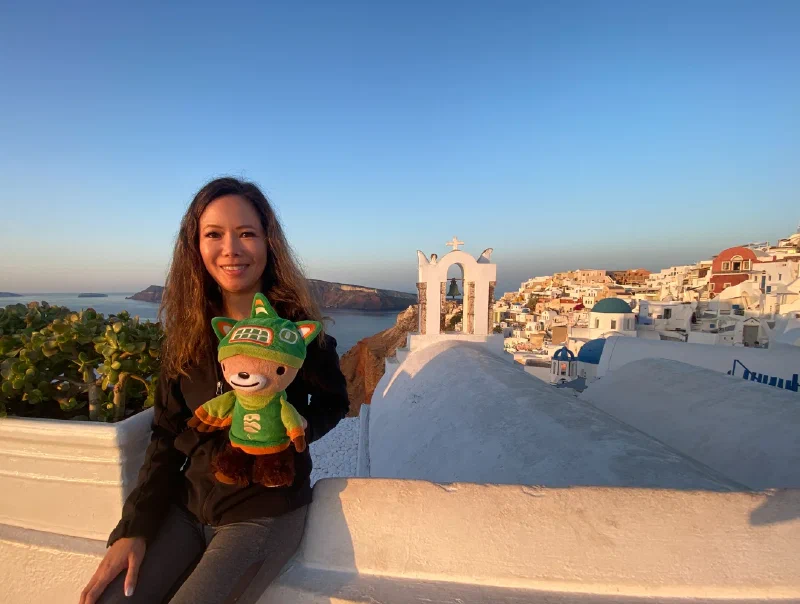
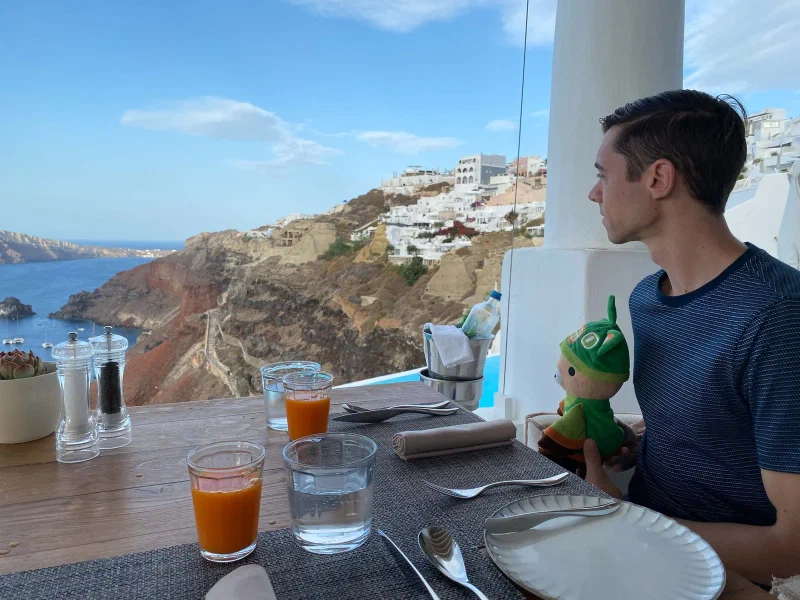
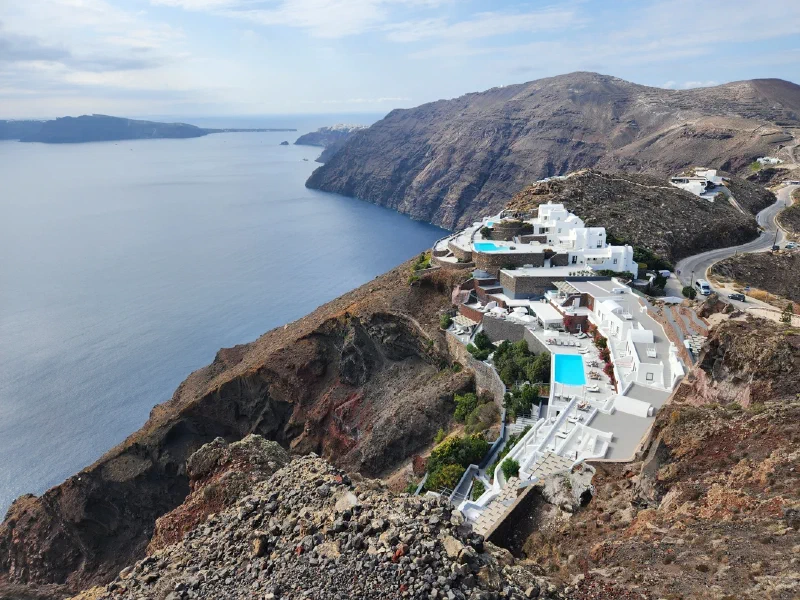
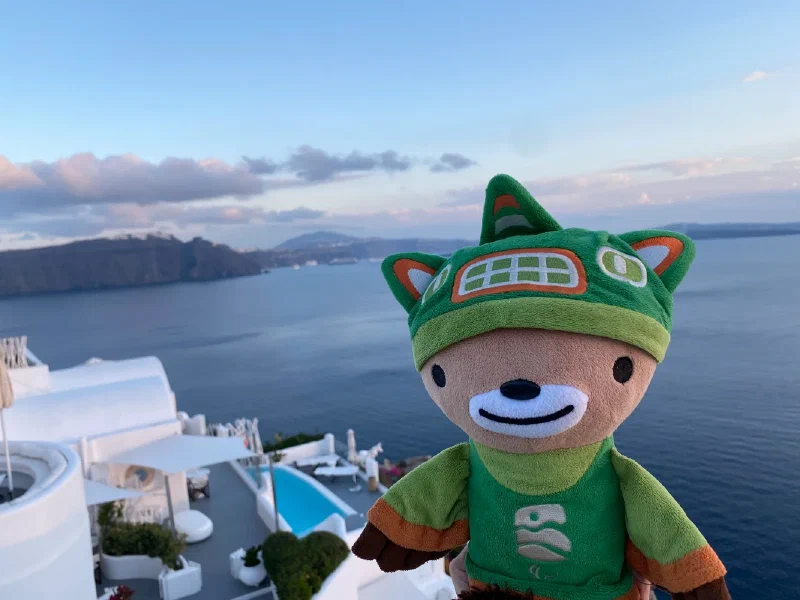
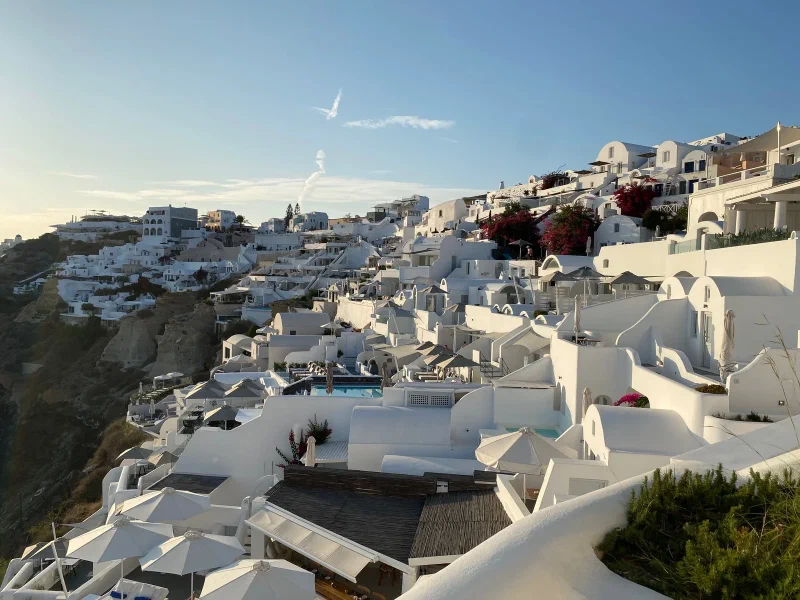
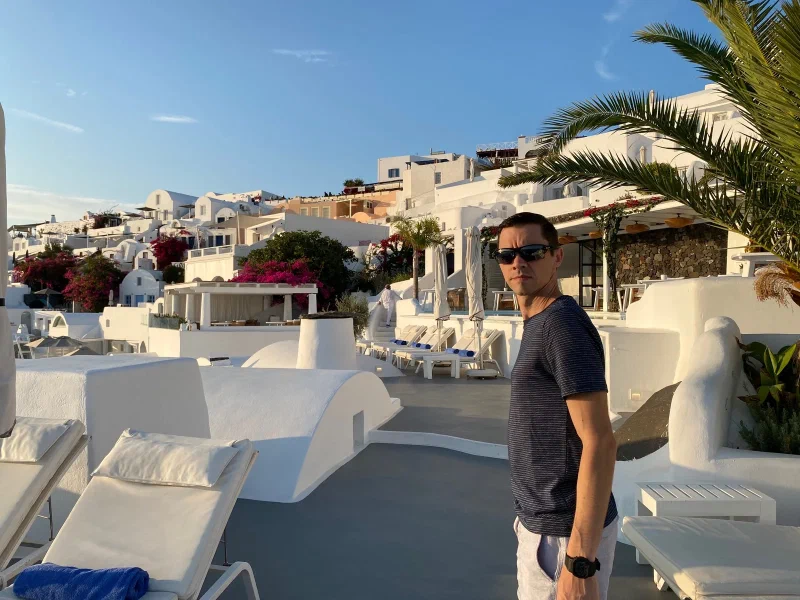
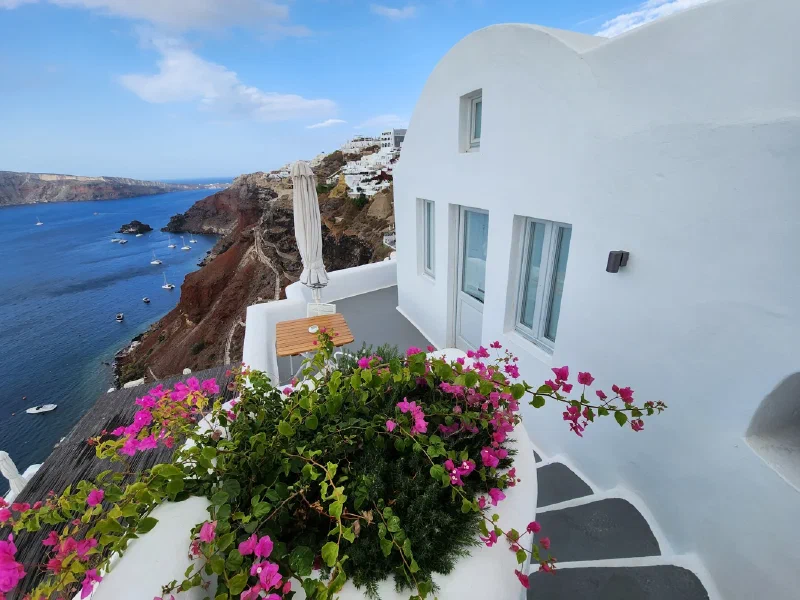
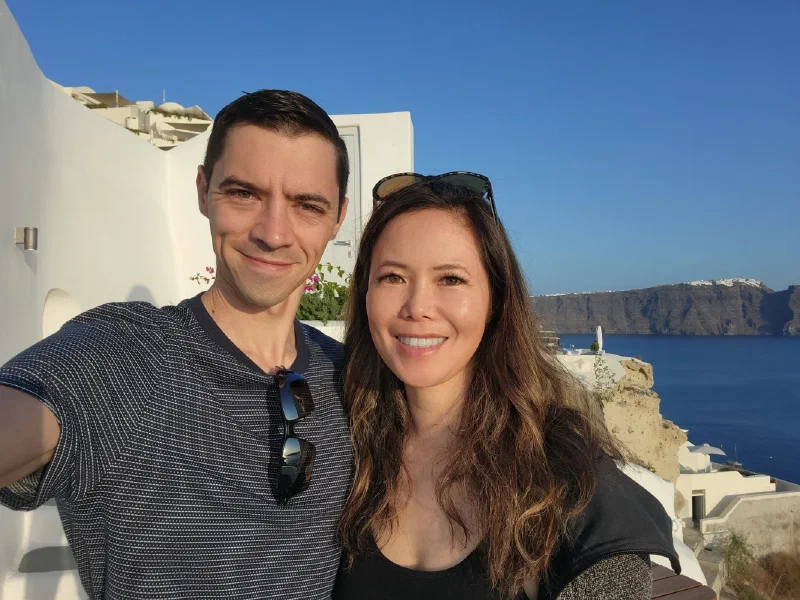
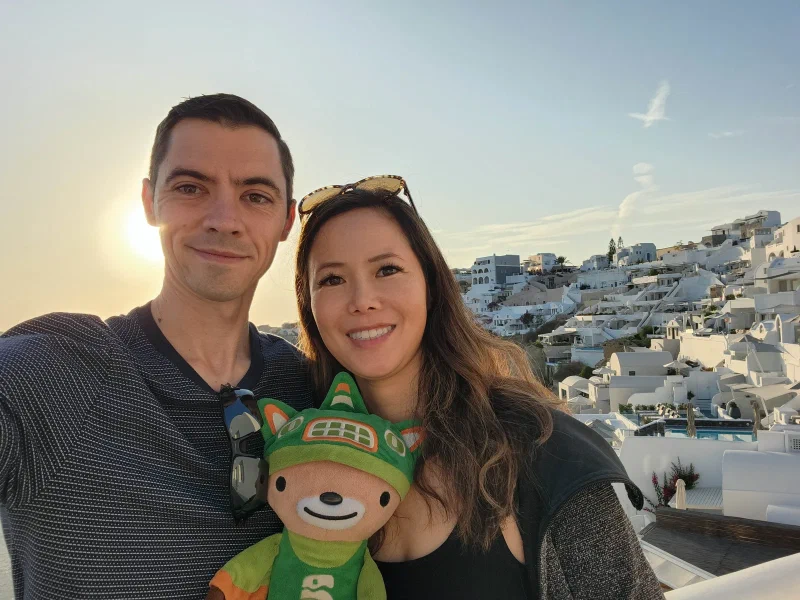
Oia (pronounced E-ah) is where all the stereotypical photos of Greece come from. It’s a town perched on top of a caldera seeming to come right out of the cliffs.
From afar, the clusters of buildings on top of the caldera look like clumps of snow.
Oia was originally inhabited by ship builders and their crew. The region faced constant attacks by pirates (particularly from North Africa) and to help fend off pirates, a lot of the steps were designed to be irregular to make it more difficult to run up in the event of an attack. Because the area was seismically active, ironically oceanfront land wasn’t considered valuable until the 1980s, where the world began to recognize the area as a tourist destination. Oia is located on the island of Thira, and the whole cluster of islands is known as Santorini. This ring of islands was formed by a partially submerged volcano, of which the centre core is still considered active.
To save on building costs, the initial cave houses were carved out of the naturally occurring pumice stone. This also made it easier to keep the buildings cool as the region got very hot in the summer, and very windy in the winter. The houses get their signature white colour from a mixture of ground up limestone and salt, because those building materials were the most easily accessible. The white white helped reflect light and keep the buildings cooler, and as a bonus, this combination created a slick finish that allowed rainwater and fog to be captured and funneled to water basins.
We weren’t supposed to be in Oia yet. We were originally going to be in Imerovigli but due to Pokin being sick, we thought less transfers were better.
So after we waved goodbye to Artemis and his wife Ana we got onto a transport towards Katikies Oia Santorini.
The main throughway is not open to pedestrians (it used to be open to donkeys), so we were dropped off on the main road where hotel staff greeted us to help transport our luggage.
And help we needed! There is hardly any flat ground here, and the entire hotel complex was spread across multiple steps and levels.
At reception we were greeted by a fellow who helped us sort out the remainder of our travel hiccups, before giving us a quick tour of the property.
We were settled into room 14, which was luckily one of the most secluded buildings on the property. One word of warning – depending on what you book you could find yourself situated in a high traffic or high noise area, but not our room – it was located at the far end of a pool tucked in its own nook.
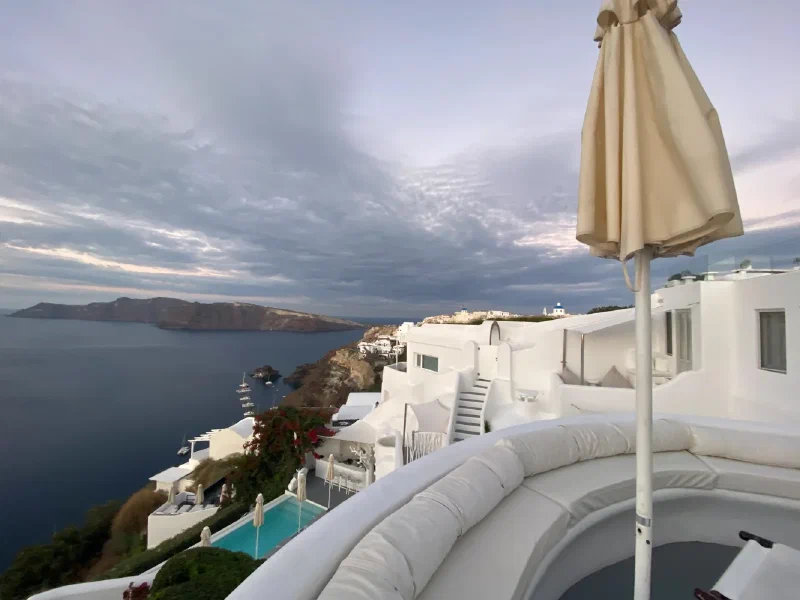
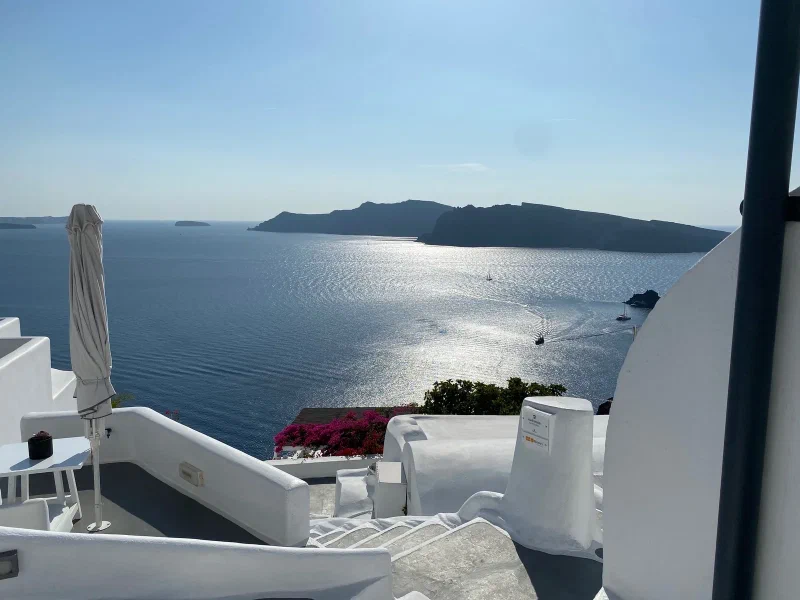
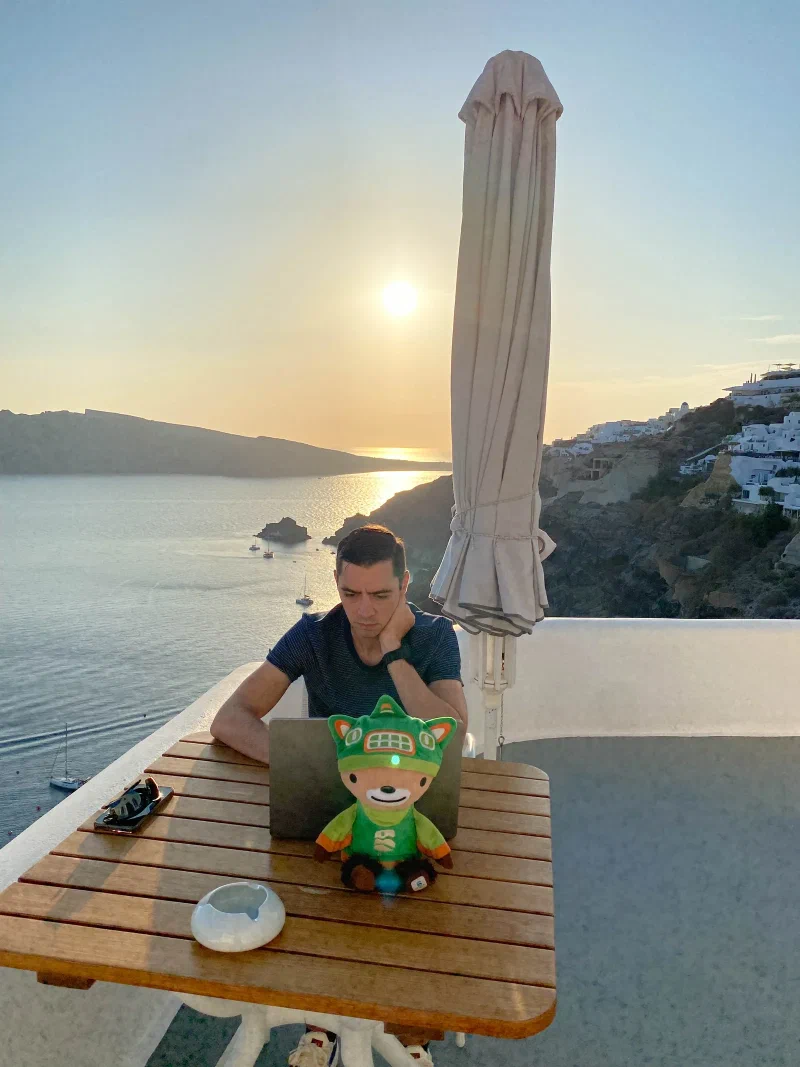
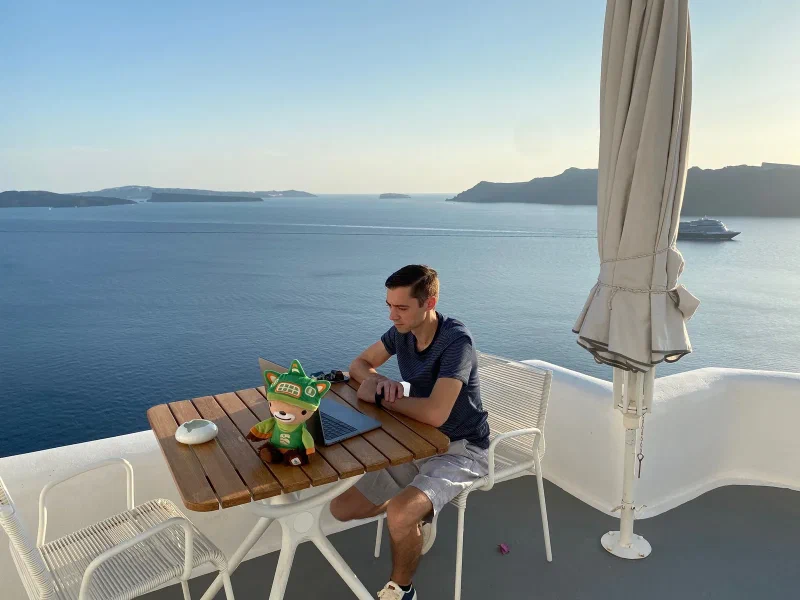
Once we got situated, Pokin crawled into bed, and my bud and I settled into working on the balcony deck. Pretty nice. Pretty nice view.
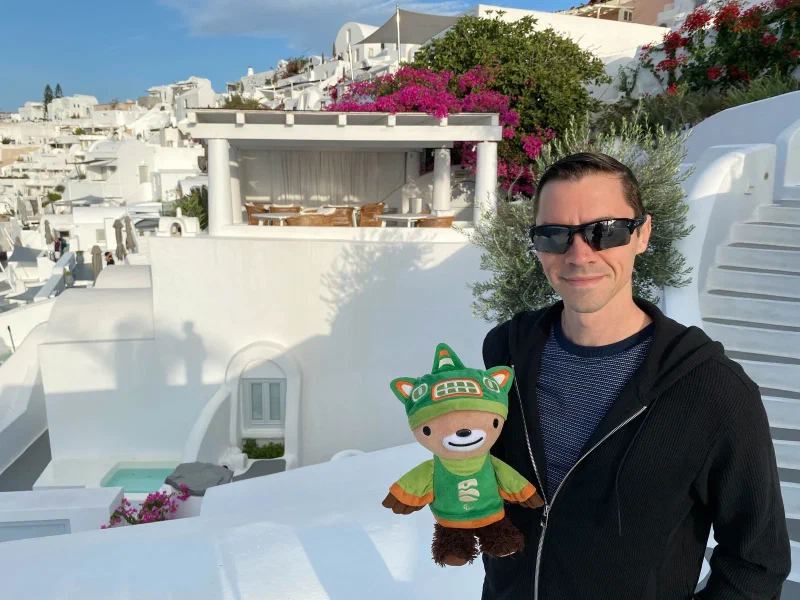
At one point it was nice enough that my bud wondered if we needed to have a mid life crisis and just move to Oia and run our own hotel. I like the sound of Bear Villas.
Before we knew it, it was night time. Pokin surfaced for us to try a hotel recommended restaurant -Melitini.
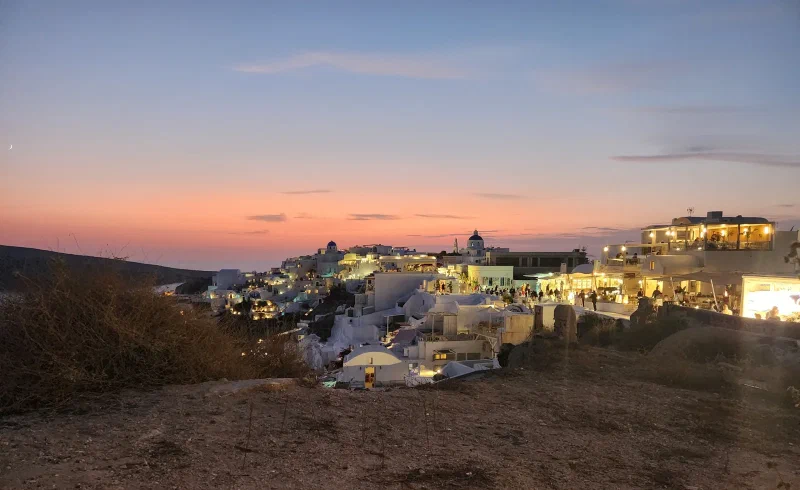
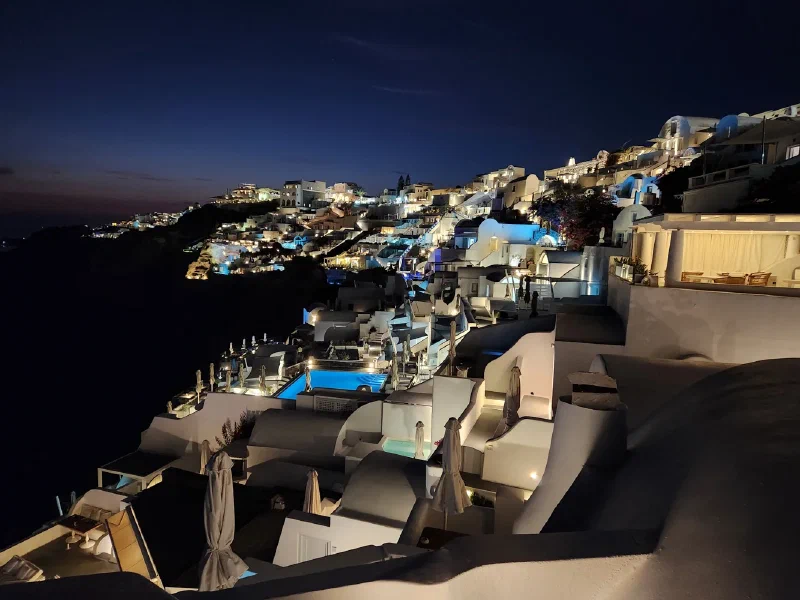
Then she crawled back to bed. I got to check out the night view of Oia though first. It gets abruptly dark once the sun goes behind the caldera.
That night none of us slept. Pokin wouldn’t stop coughing. Basically all night long. It was a long night.
And it looks like things aren’t going to go quite according to plan.
First of all, Pokin was really sick the whole flight. She tried to rest a tonne before the flight, but after all sorts of flight delays and missed flights we arrived to Santorini airport at 12:30AM and she was exhausted.
In order to get to bed as soon as possible, Pokin booked us a car transport to our hotel so we would have someone to pick us up.
Except when we got to Santorini there wasn’t anyone there for us.
Confused, Pokin called the hotel only to be informed the driver had just left, after waiting for a while.
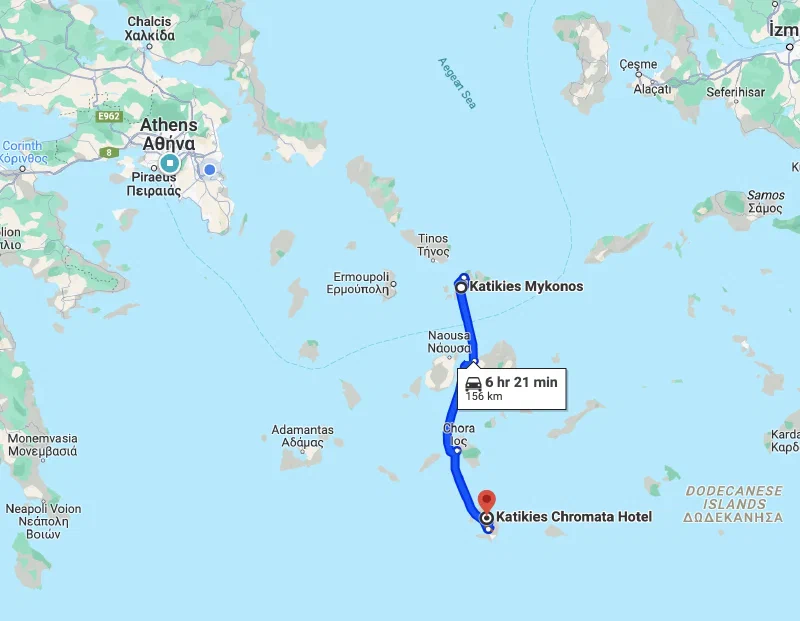
After some back and forth with the hotel reception, it turns out not only did we have no ride, but actually our travel agent had booked us a hotel in Katikies Mykonos, instead of Katikies Chromata.
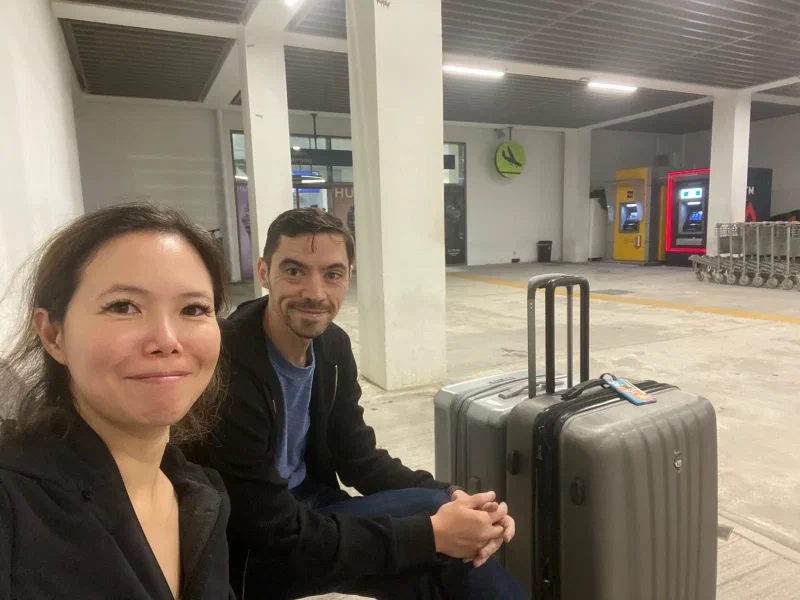
By now it’s like 1:30AM in the morning as we are trying to figure out what to do. The airport is deserted. The travel agent is closed and no one is answering the emergency line.
As we are at the airport trying to figure out what to do as the Katikies hotels try to figure out if there’s any way to accommodate us, Nicholas was approached by a fellow.
“You need a room to stay?” He asks.
Nick eyes him suspiciously. “I think we’re ok,” Nicholas answers.
“Well if you need something, I’m just 7 minutes away. I’ll give you a special price, 50 euro.” Pokin gets a phonecall from the hotel - they are are still figuring things out as they need permission from our travel agent.
“What’s the name of your place?” Nicholas asks, and tries to look it up online.
Everyone is exhausted. We don’t have our lodging resolved.
“Screw it, let’s just go stay at this sketchy guy’s place for 50 euro, we probably won’t die.” Nicholas decides.
And in we pile into a white van drive by the fellow, who introduces himself as Artemis.
We drive through the dark, past the airport and down all sorts of windy roads. A few minutes later we arrive at a property.
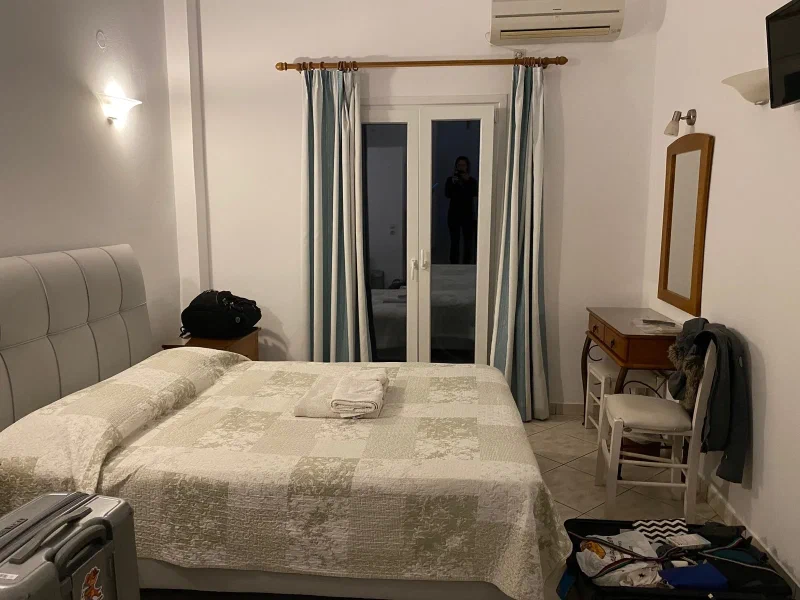
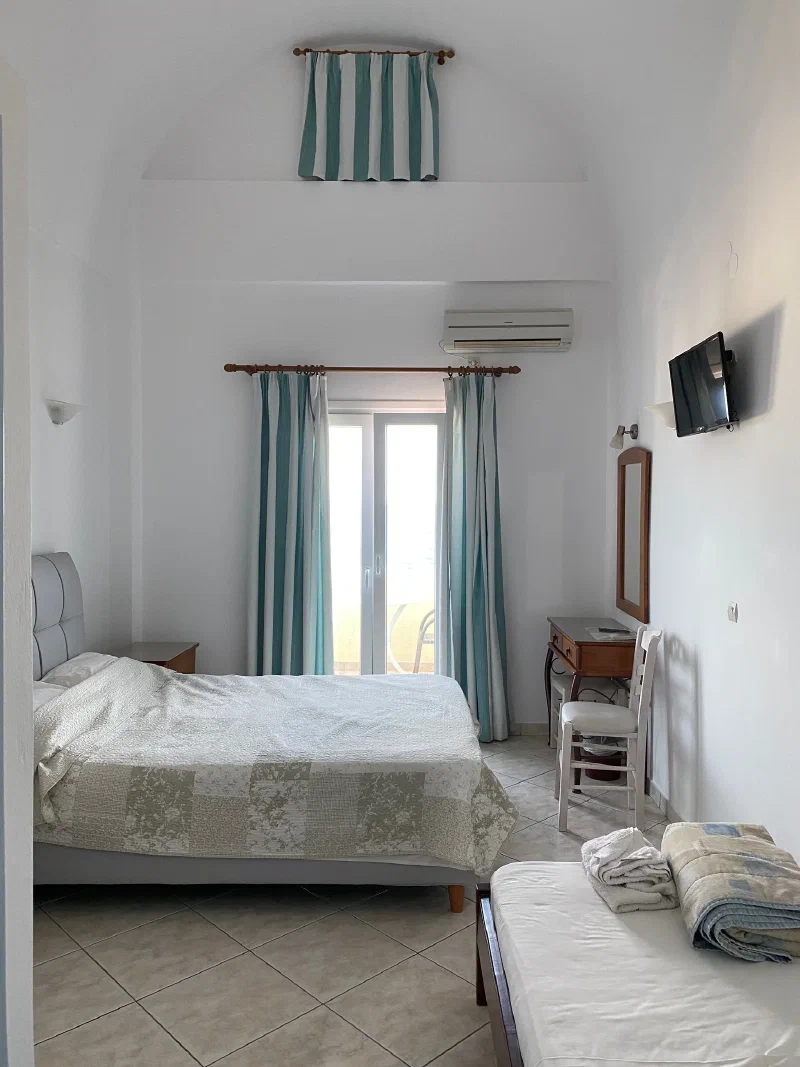
Artemis takes us to this room, gives us a quick run down on the room, and we pass out.
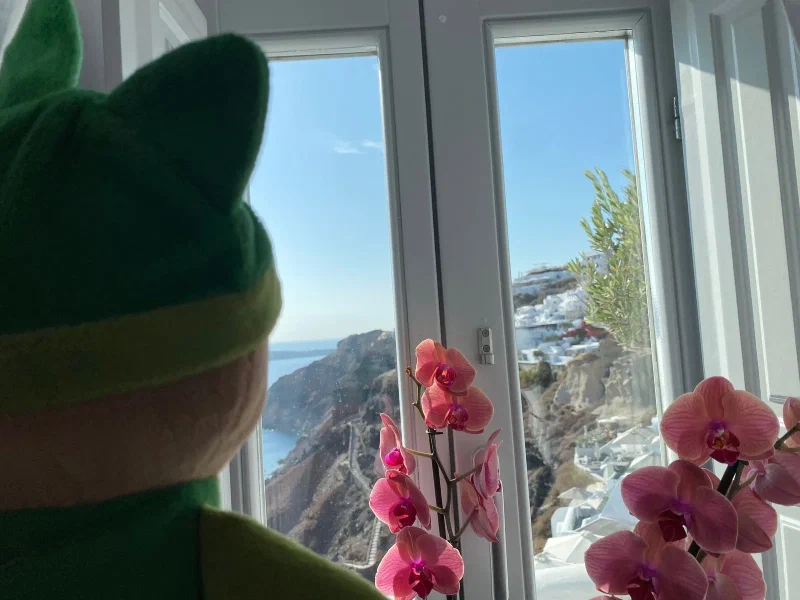
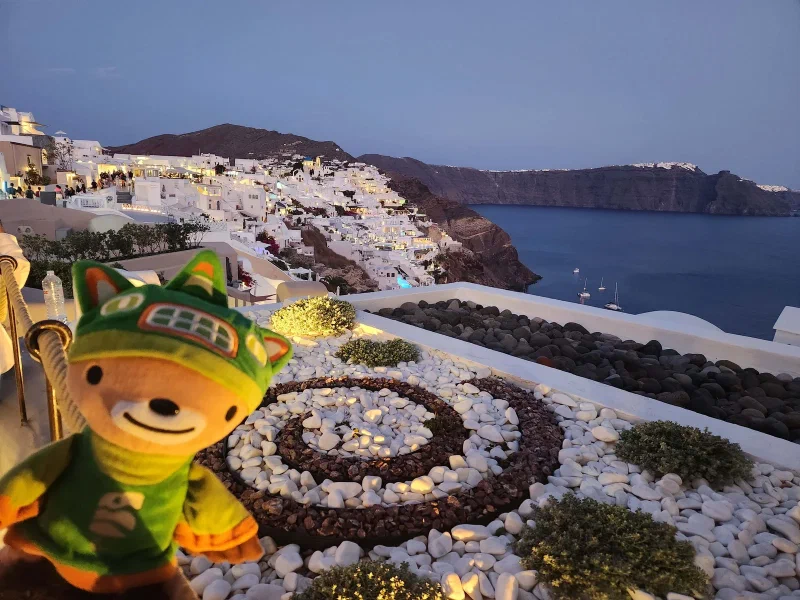
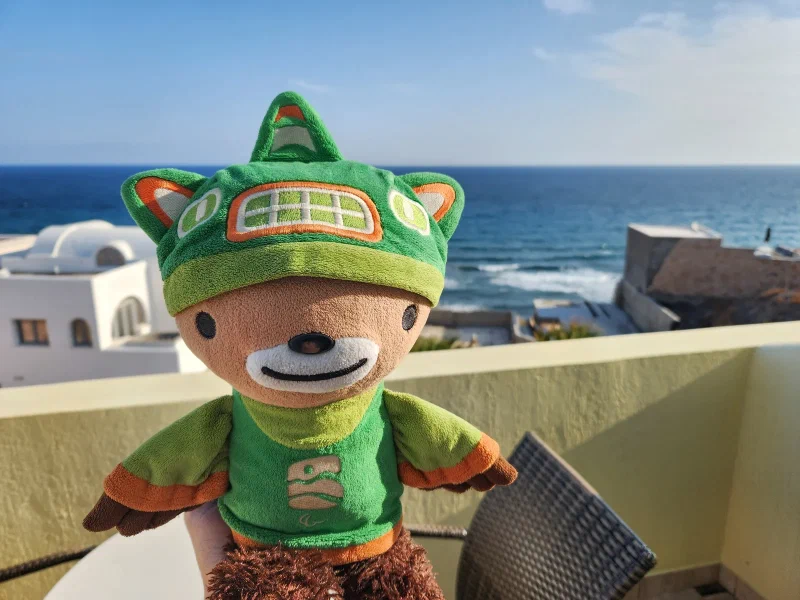
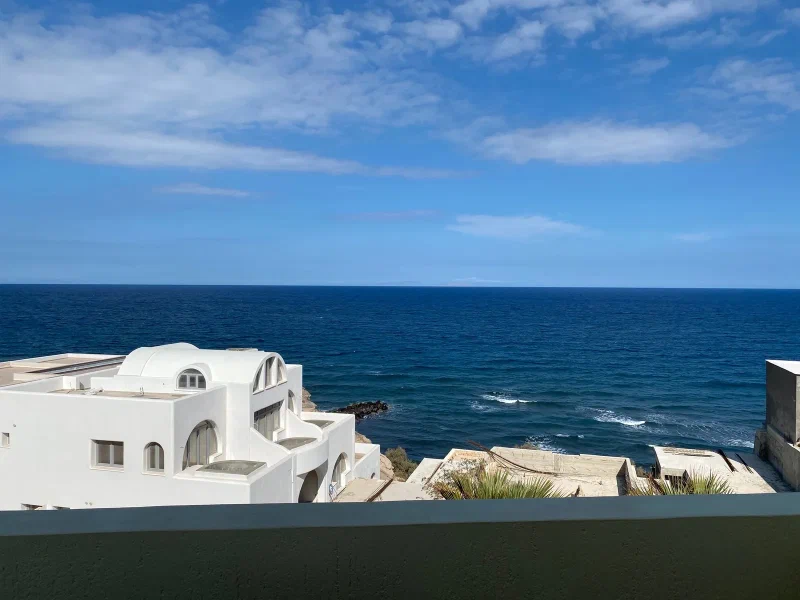
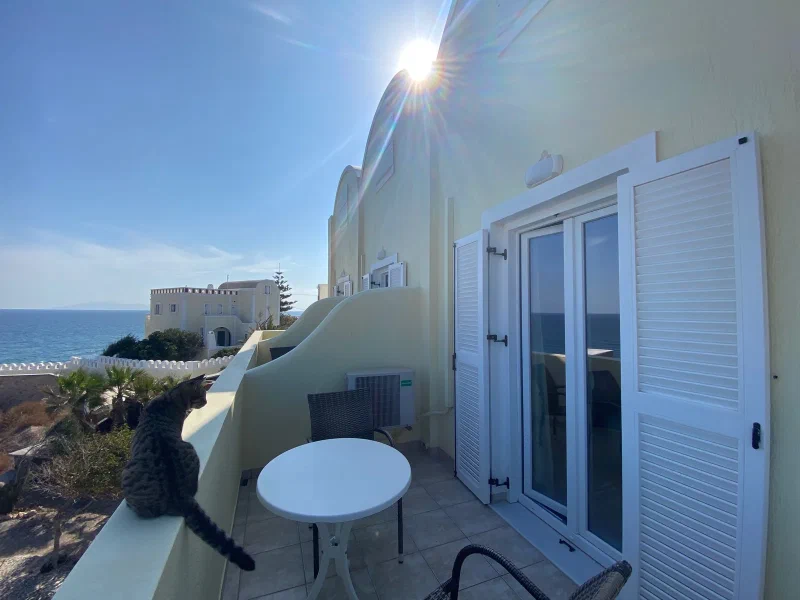
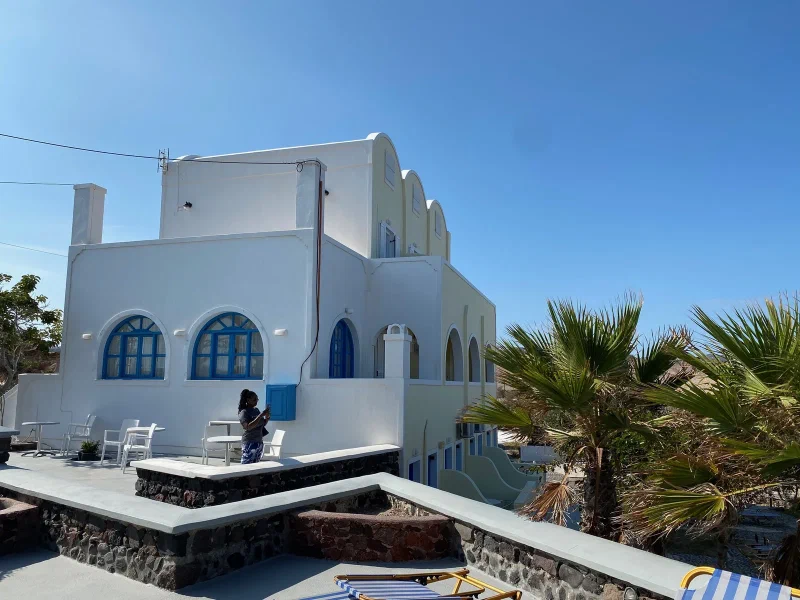
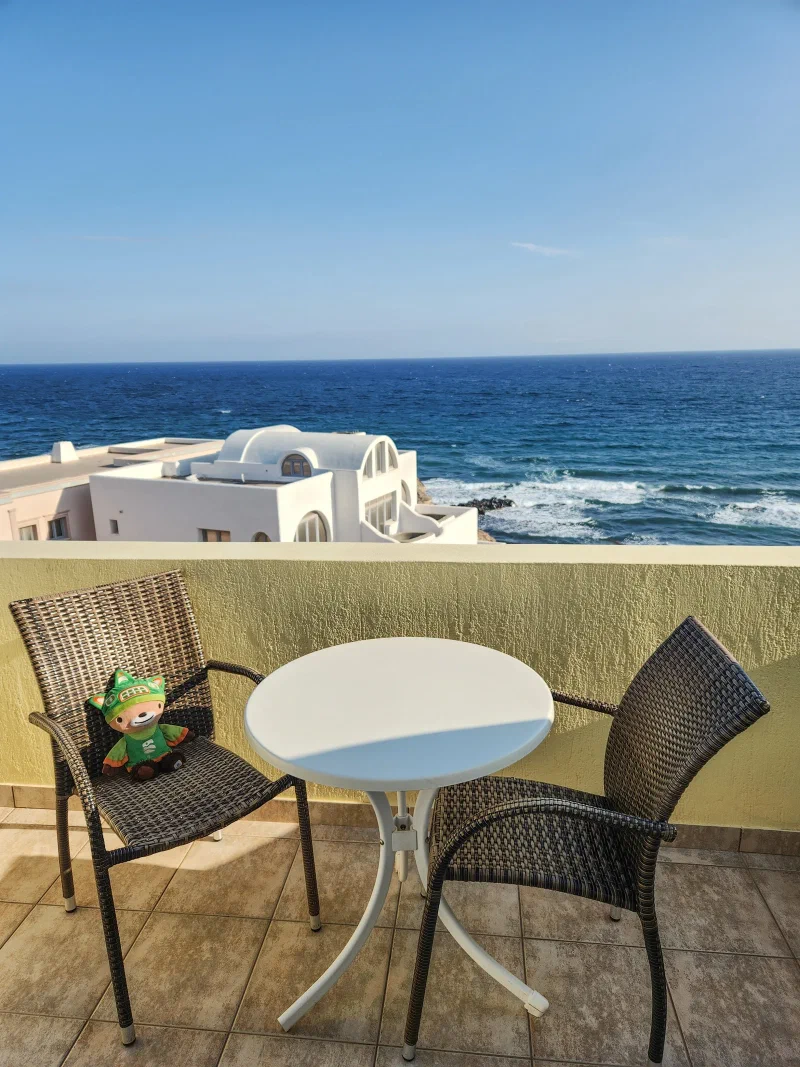
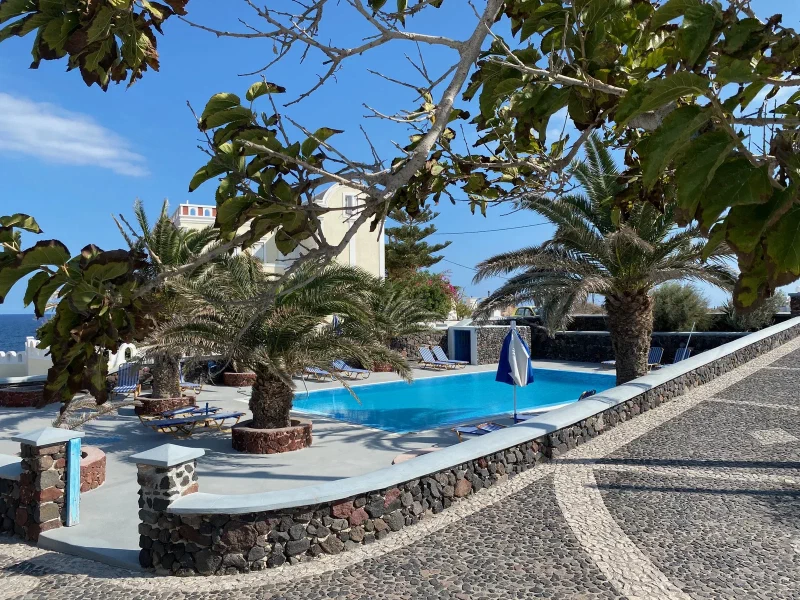
We wake up the next morning and it turns out we actually had a pretty incredible view. We were situated beside the ocean with this view.
Pokin was pretty sick so Nicholas went and scouted the property. He ordered some breakfast boxes, talked to Ana (Artemis’ wife) and learned more about their property. Artemis grew up nearby and this was the land his family would come to view the ocean. When he grew up, his mother spilt the property between all his siblings and he converted his parcel into a hotel. Artemis frequently goes to the airport late because many hotels shut down during the pandemic, and he often finds travellers that land only to discover their hotel doesn’t exist anymore.
By this time, the original hotel situation was getting partially resolved, and Pokin and my bud decided to move early to Oia to make transiting the next day go easier. Artemis waited till we actually got a ride before we all waved goodbye to continue to our next destination.
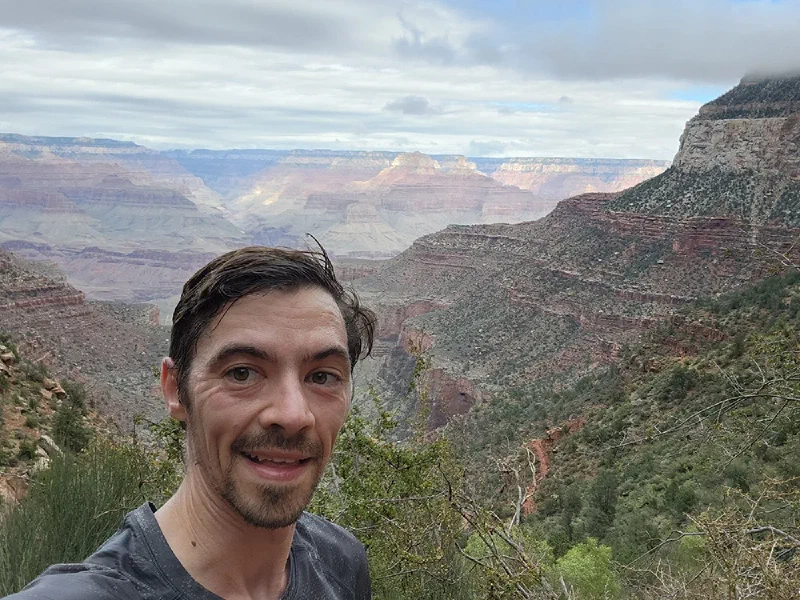
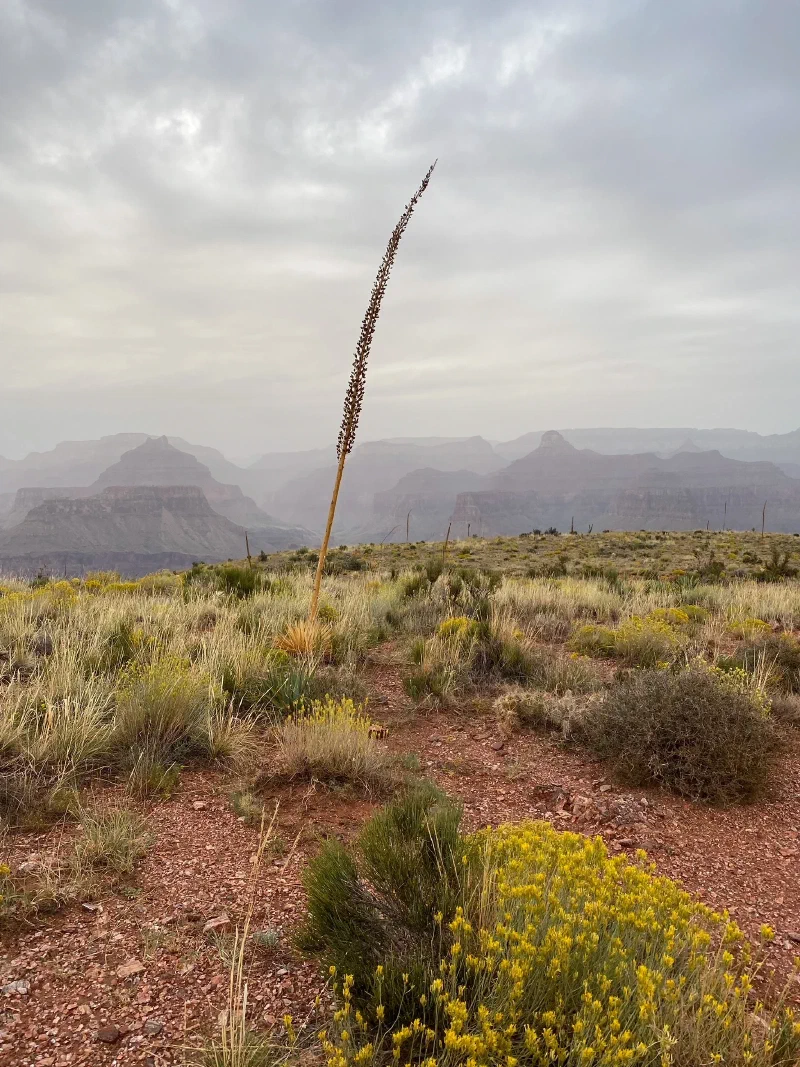
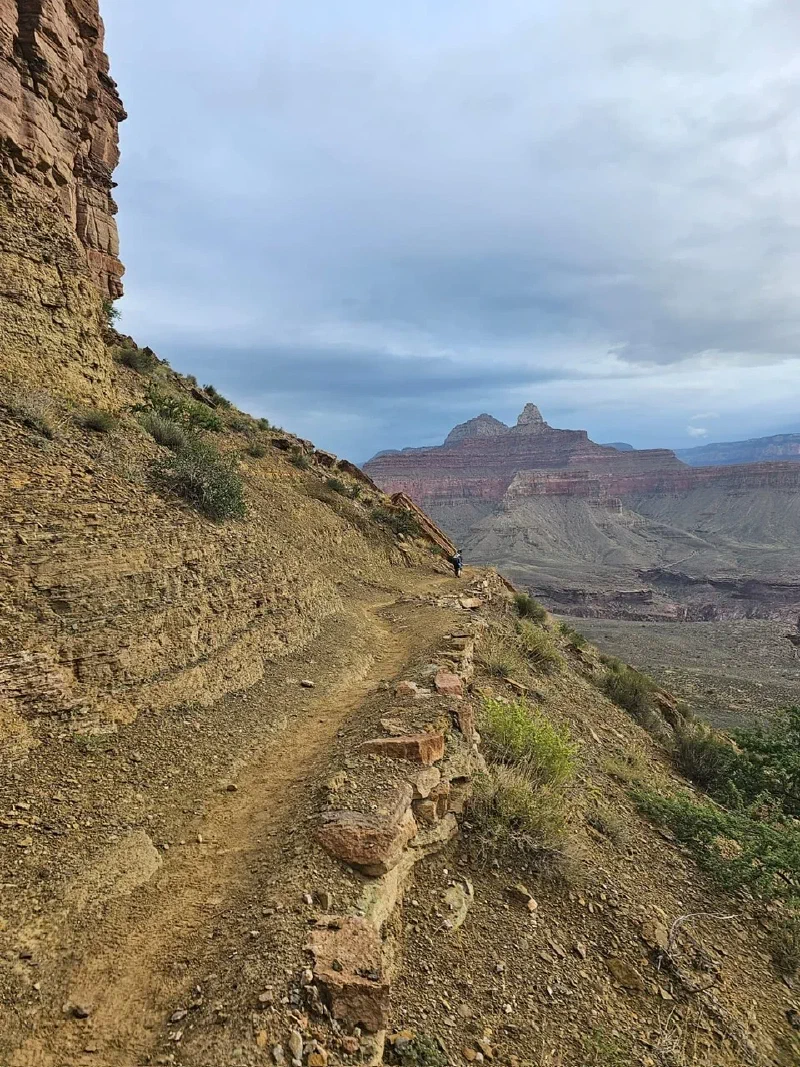
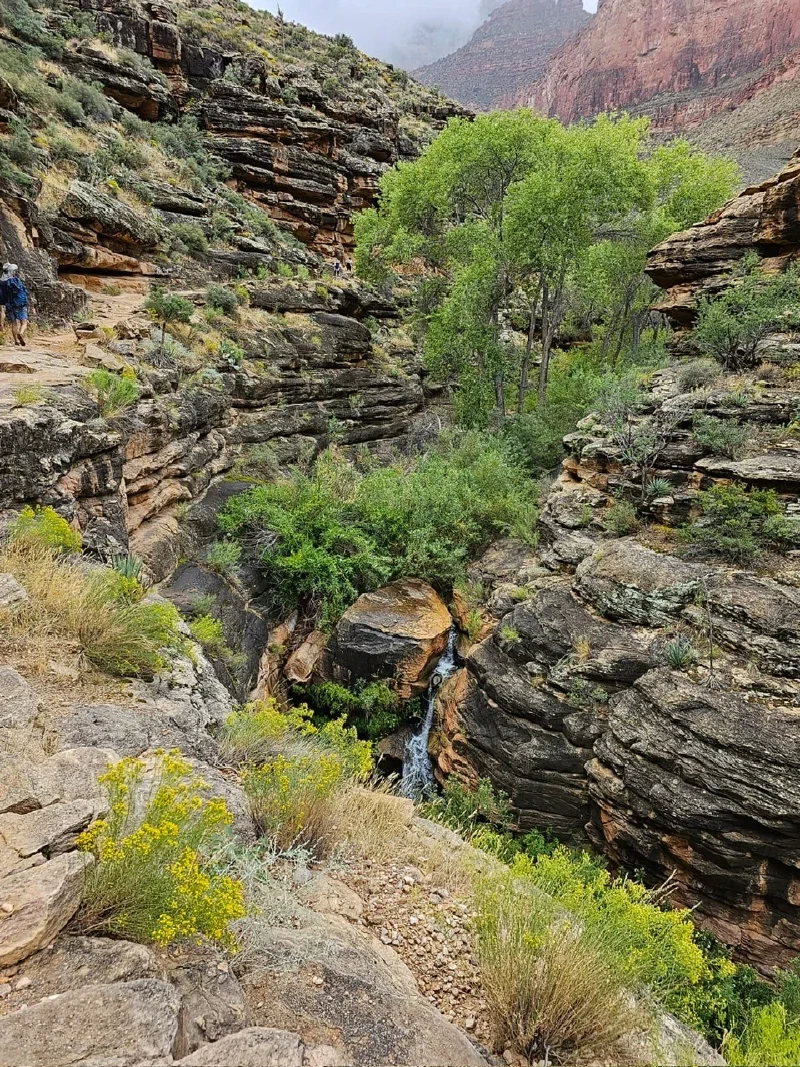
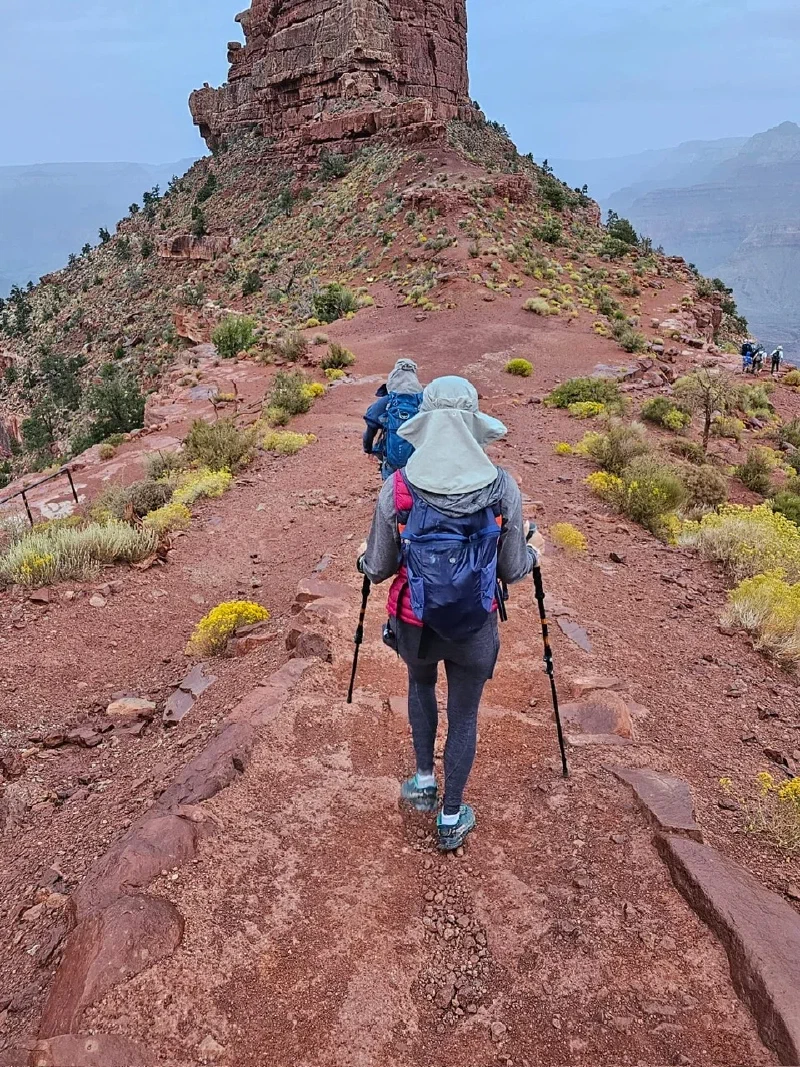
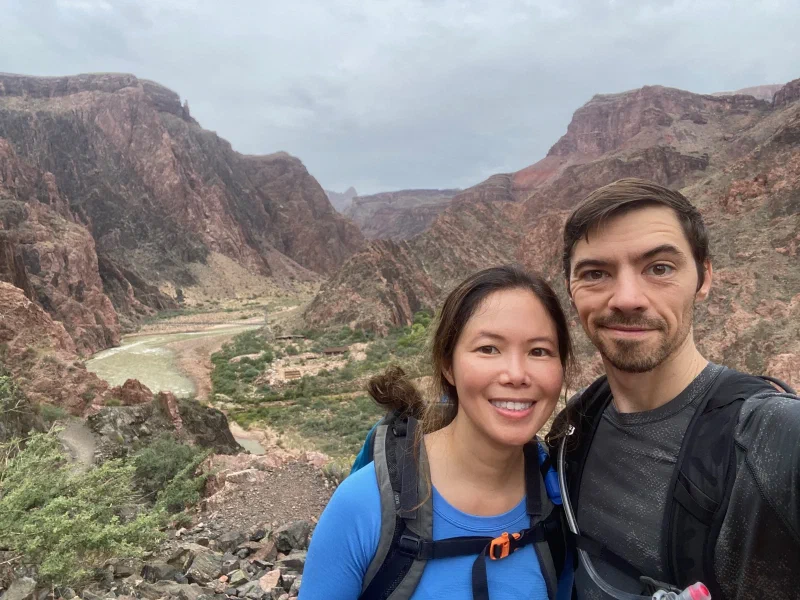
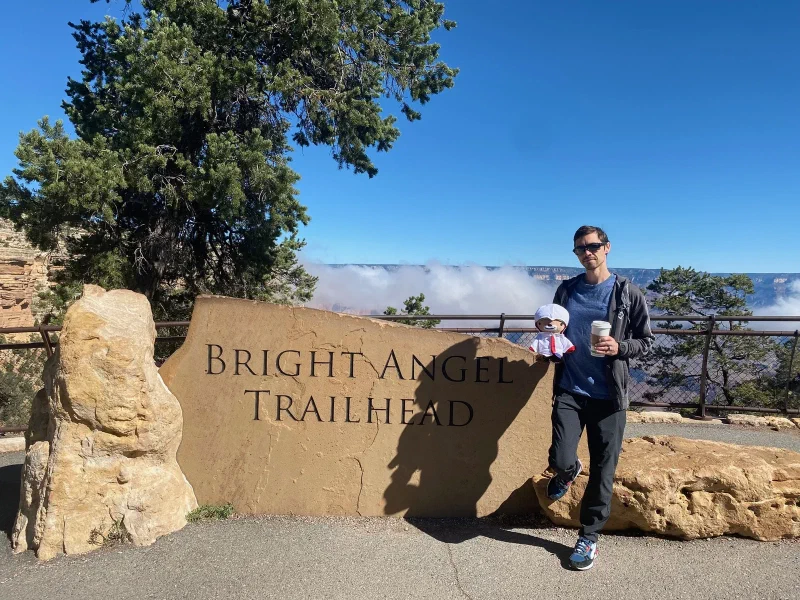
Remember last year when I said I was going to make my bud run the Grand Canyon next time? Well, I did it. Here he is all sweaty after running back up. New year, new attempt at the Bright Angel Trail. Pokin and Wing didn’t do the whole hike last year, so they went back to try again.
The morning started bright and early. We were taking the shuttle over and because Pokin was worried about having enough time to do the hike, she made them take the first shuttle out. It meant they started the hike when it was still dark.
It being dark apparently didn’t prevent all the runners from booking it as soon as we got off the shuttle. I was trying to be considering and so I was with Pokin as I watched all the lights blink and rapidly disappear down the canyon.
I could see my bud was feeling jealous and feeling impatient. But we all stuck together at first.
Soon the sun came out, and it appears like it’ll be an overcast cloudy day! Lucky for Pokin, as it’d be otherwise a scorcher of a day.
What started out as relief of the cool day turned into worry as it looked like it was going to start to pour. I wasn’t feeling thrilled.
My bud though - he got the opportunity to run! Wing and his friend weren’t feeling great from the hike (because they started injured) so my bud ended up running up Grand Canyon - first back to the hotel to drop off his bags to come back and assist.
In the end we all made it up, and I managed to stay dry, so everyone was happy. Grand Canyon 2023 edition was a success!
It’s been a while. Apparently 9 years ago was when I went on the same route as the Titanic from London to Boston.
Despite growing up in the Northwest in the Vancouver Costal Mountains, I’d never been up to Alaska.
Last minute, Pokin’s mom decided she would like to go on a cruise, so my bud, my bud’s work bud Gabe, Pokin, and I hopped on a flight up to Anchorage for a cruise aboard the Majestic Princess down from Whittier Alaska down to Vancouver.
The first days were predictably very wet. No way I was going out anywhere.
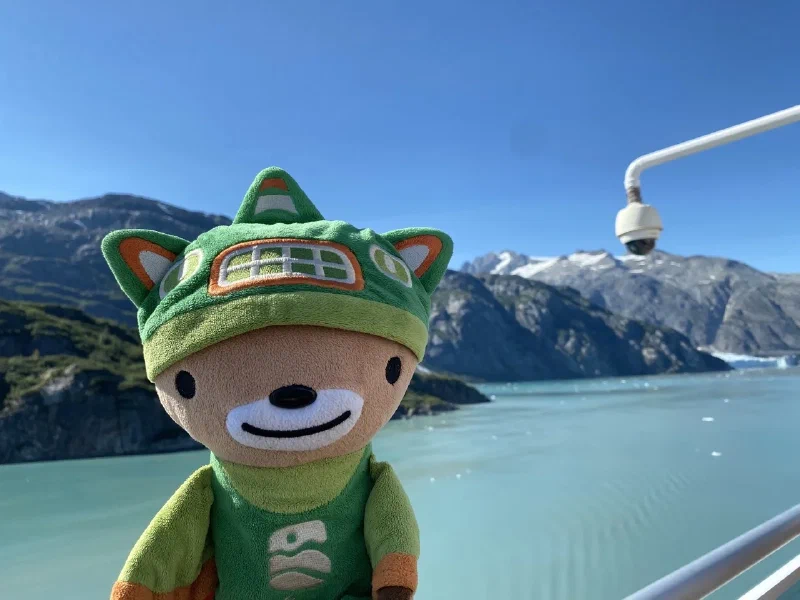
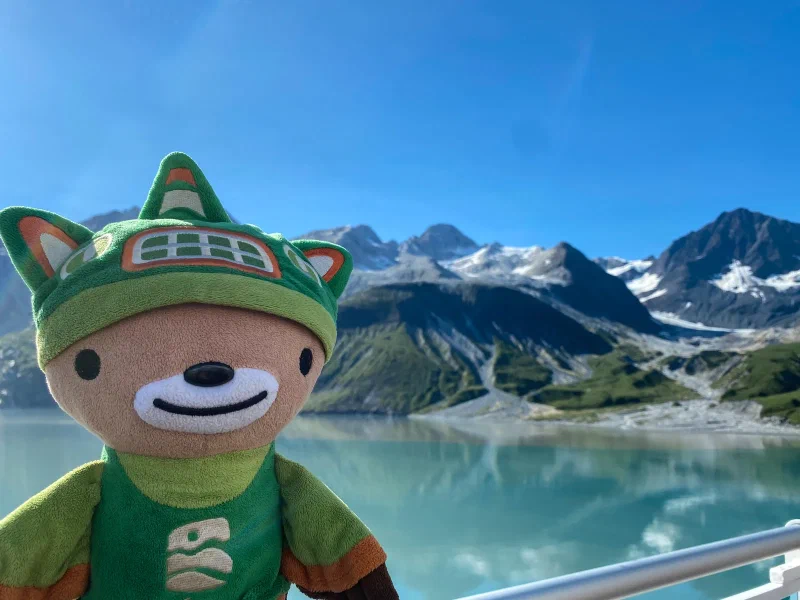
Then we got lucky. The day we were supposed to be in Glacier Bay turned out beautiful.
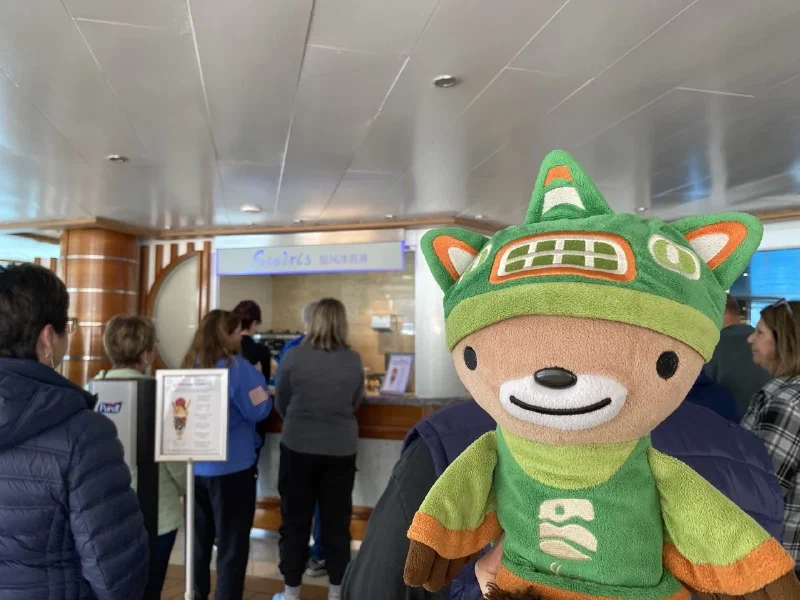
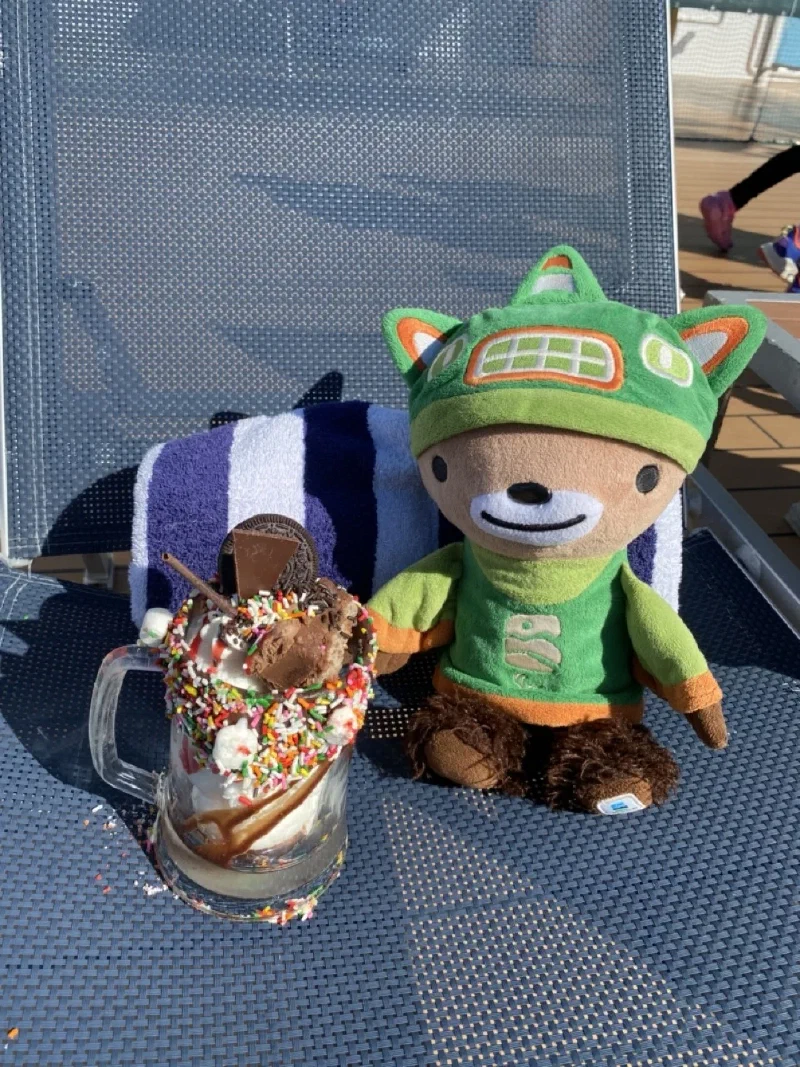
After some time I decided I wanted some ice cream.
Turns out so did the rest of the ship.
Pokin had to wait a long time for my ice cream.
Eventually I got it.
It wasn’t very good.
Thank goodness I didn’t have to do the waiting in line. It took over an hour for her to get this sundae.
But I’m feeling good. Nice to be back in my home turf.