Finding my cocoa
Real cocoa.
That’s right, this bear knows how to sniff out his cocoa stash as well.
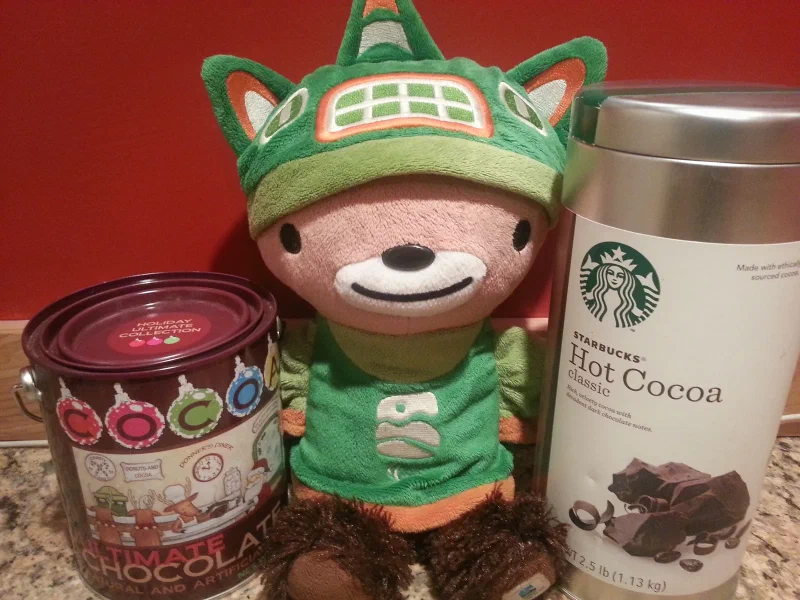


Real cocoa.
That’s right, this bear knows how to sniff out his cocoa stash as well.
I’m back home!
You know what that means!
Use my bear sense to sniff out my Facebook hoodie.
Take Nicholas’ credit card and promptly make up for lost time.
Item #1 - check.
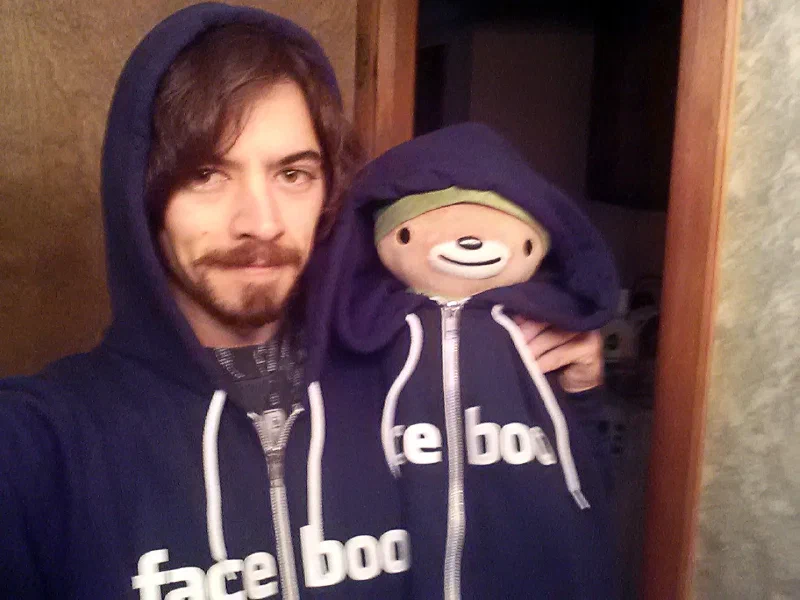
Onto item #2.
Well, it’s been almost 7 months in Chile and now it’s time to say goodbye.
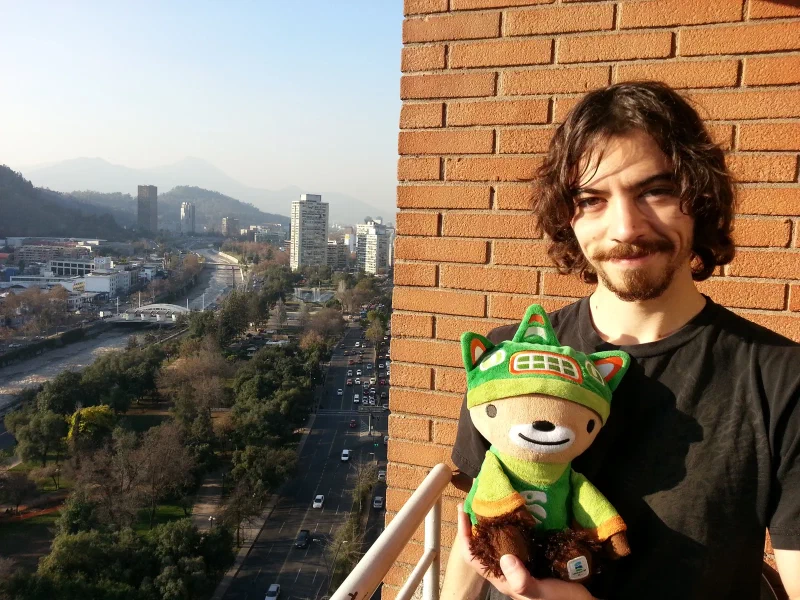
Chile, it’s been fun. I liked playing tourist. I didn’t like my lack of internet. I tolerated my amount of gaming and I enjoyed hoarding alfajores – but let’s be real. It’s time to get back on a plane and get back to some real gaming and bear tin growing!
Adios! Let’s go Nicholas!
Nicholas got me my own my-sized Moai statue-pisco!
This is going into my gaming bear cave. Because ever serious gaming bear cave needs a moai statue in it.
I like it so much I go to sleep with it.
My best bear bud Nicholas hates metros in Santiago.
This one time, it was so crowded, he got pushed all the way to the back of the train and when it came time for his stop, he couldn’t get out.
That might have been the last time he took the metro for months.
I decided I had to see what the metro was like so before we left Chile Nicholas took me on one.
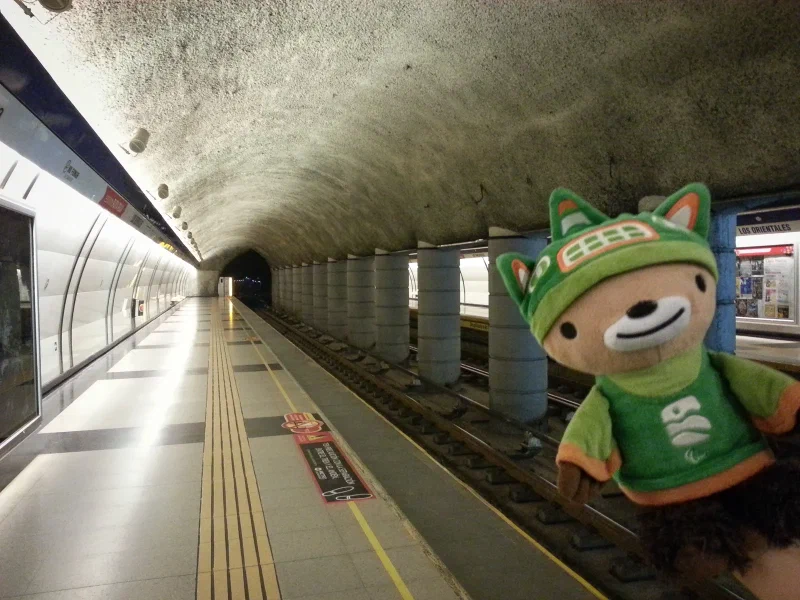
Just as I was starting to think that the metro was actually pretty quiet, a train full of singing and dancing freshly drunk football watching Chileans showed up.
So I can say I got a Santiago metro experience after all.
Today we went sight-seeing in Santiago. It’s not like we had a lot of time left so I thought we should get to it.
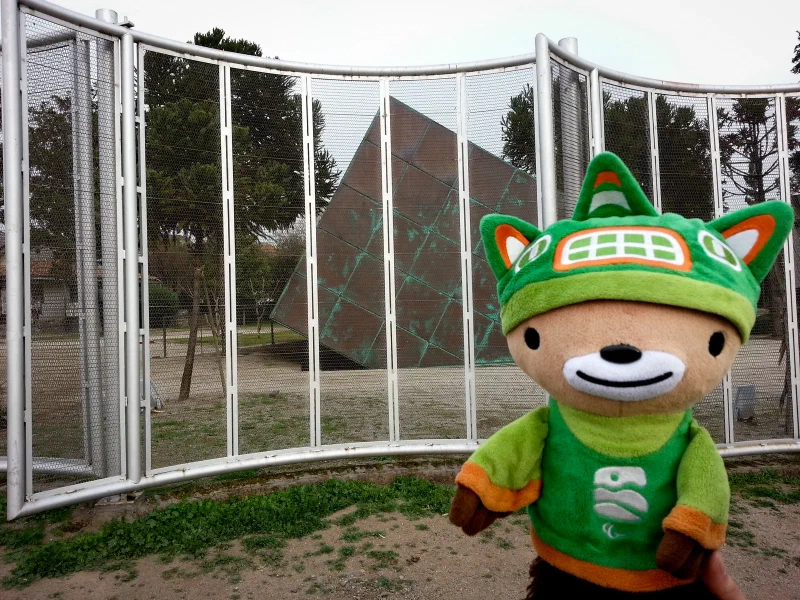
We went to Parque por la Paz. It’s is a memorial for all the victims that were tortured during the Pinochet era. This trip took about 3 hours because Nicholas wanted to walk.
Here it is.
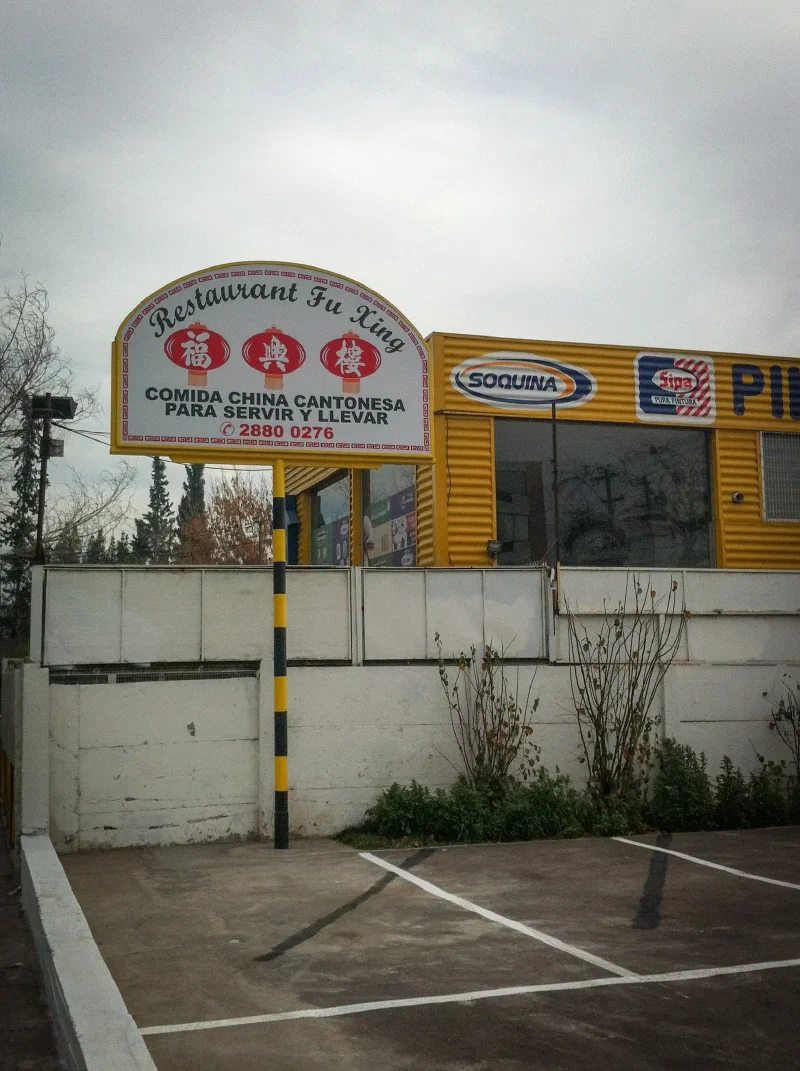
Oh and here’s an asian restaurant!
And a dog.

And now I can say I’ve done some Santiago touristing.
When guests come over, I like to greet them from my bed throne.
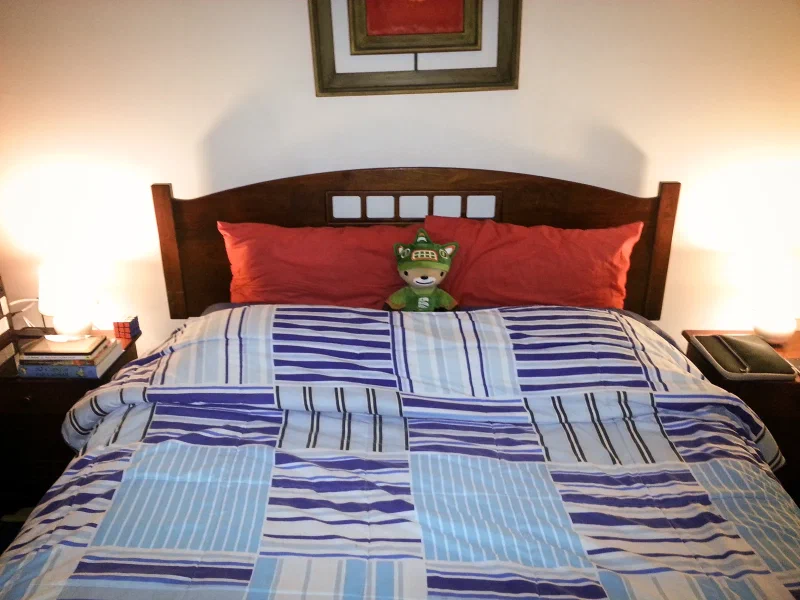
I like them to know who’s boss of the abode.
I am one of the best!
I made sure Nicholas got Pokin a chocolate cake for her birthday. And since it was chocolate and raspberry flavoured, I even let her have one of my raspberry and chocolate alfajores to go with it.
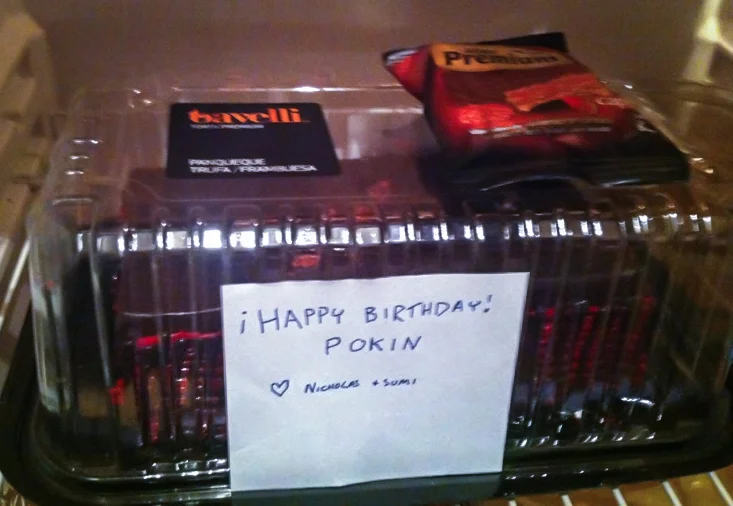
I am definitely looking forward to trying the product of my thoughtfulness!
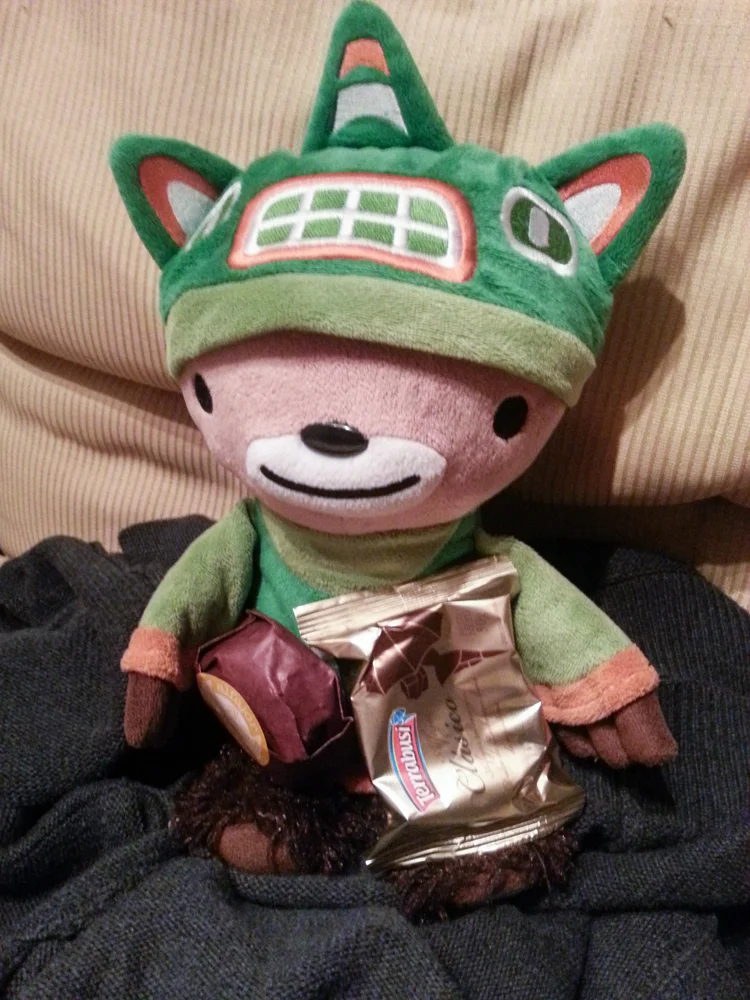
I can be a pretty non-discriminating bear.
Give me chocolate-covered alfajores? I’ll take them.
On the drive back to the airport we made one last stop and pulled over at Aha Hanga.
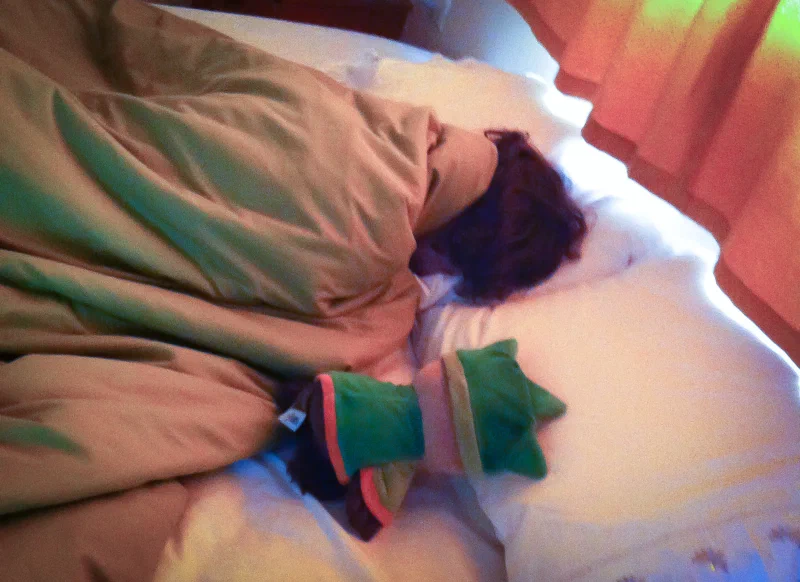
I couldn’t resist. These statues were resting the way I like to nap.
Actually though, by 1722, this is the condition in which all the moai on the island were found – face down.
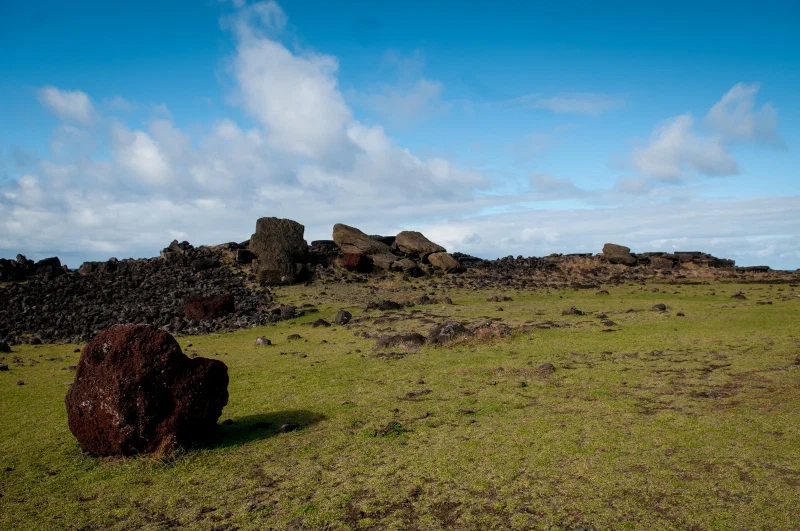
Once seen as a sign of prosperity and an hommage to ancestors, the twilight years saw a thriving civilization descend into inter-tribal warfare, starvation and cannibalism. The moai were now a poor reminder of those past times. So down they went. By the 1680s, the last of the chiefs and priests were overthrown by the military and the Birdman era began – with its corresponding craziness.
And with that, I am content to going back to my cocoa sipping chocolate eating gaming ways. Easter Island, it’s been a peach. Or should I say chocolate-covered peach? Time to go back home Nicholas!